
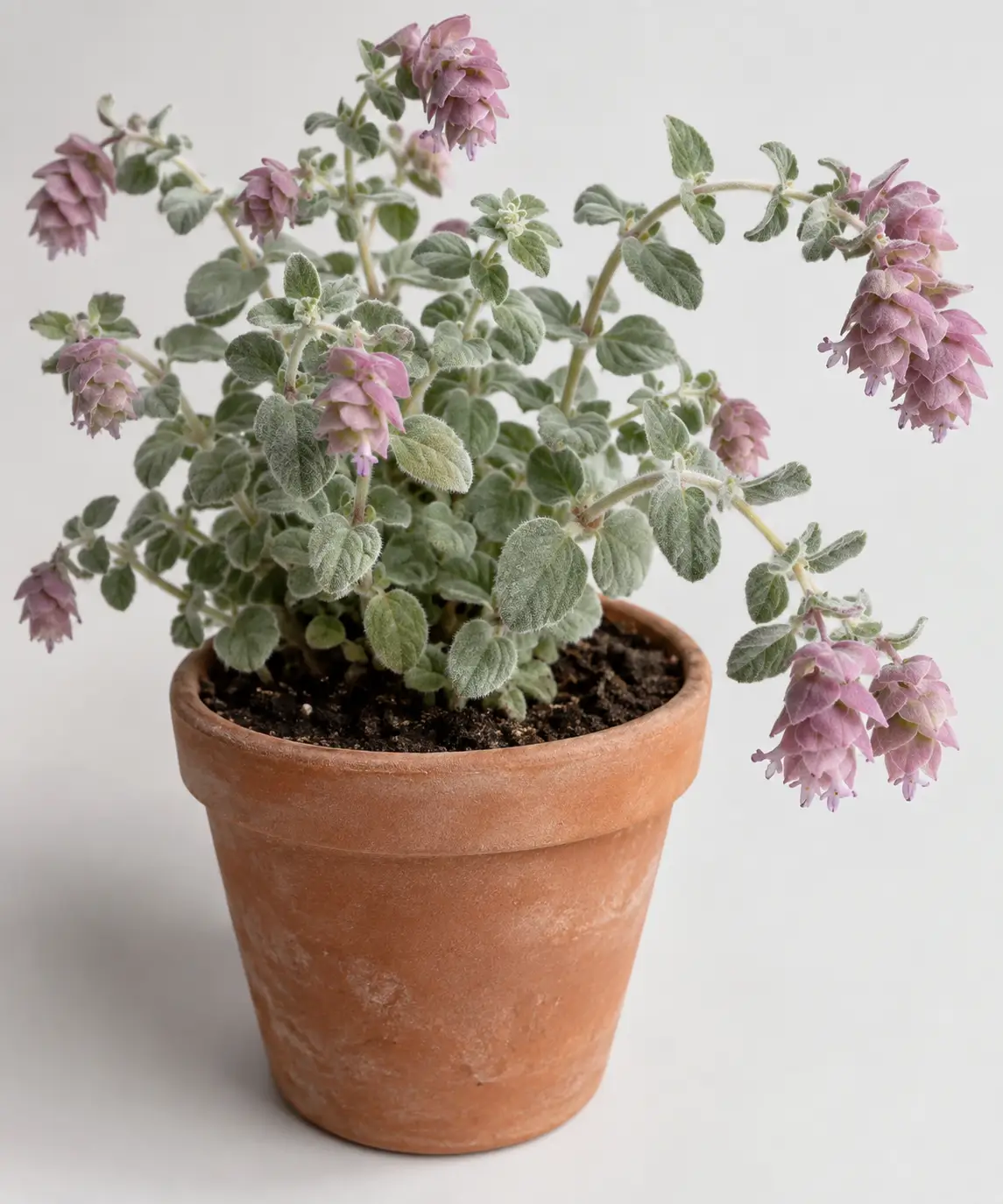
When an occult correspondence list mentions “dittany of Crete,” it brings together three distinct layers:
- Botanical identity: the name refers specifically to Origanum dictamnus, a member of the mint family found naturally only on Crete.
- Cultural history: the plant has longstanding traditional uses and appears in an ancient story about wounded goats shedding embedded arrows.
- Spiritual interpretation: occult traditions may derive symbolic meanings from that history, but neither legend nor traditional use demonstrates a magical effect.
Keeping these layers separate provides a useful mental model. Botanical evidence establishes which plant is meant. Historical sources explain why it became culturally significant. A spiritual correspondence describes how a tradition or practitioner interprets it. Evidence in one layer does not automatically prove claims in another.
This distinction prevents two common errors. The first is substitution: assuming that white dittany, ordinary oregano, or anything sold as “dittany” must be the same plant. The second is treating a compelling ancient story as proof of healing or supernatural power. Accurate identification allows readers to engage with the tradition respectfully without turning symbolism into a guaranteed promise.
What “Dittany of Crete” Actually Names
Dittany of Crete is Origanum dictamnus. Botanical sources place it in Lamiaceae, the mint family, and identify it as endemic to Crete. In botanical terms, endemic means that the species occurs naturally within a particular geographic area and nowhere else. Crete is therefore not merely an association preserved in the common name; it is the plant’s unique natural range.
The scientific name is the clearest anchor for identification because “dittany” alone is ambiguous. A plant or product bearing that common name should not automatically be assumed to contain Origanum dictamnus. White dittany is not an interchangeable name for dittany of Crete, and neither is generic oregano.
The genus name Origanum can create additional confusion. Although O. dictamnus belongs to the same genus associated with oregano, a label saying only “oregano” does not identify this particular species. The relevant name is the complete binomial: Origanum dictamnus.
That precision is the foundation for interpreting correspondence lists responsibly. Before asking what a plant symbolizes, establish which plant the text names. If a list specifies dittany of Crete, casually replacing it with another “dittany” or an unspecified oregano changes the botanical subject, even if the substitute has a similar common name.
Correct naming does not answer every question about commercial material. A printed scientific name cannot by itself prove authenticity, origin, or cultivation history. It does, however, make a specific botanical claim that can be distinguished from vague wording.
The essential identity is straightforward:
> Dittany of Crete = Origanum dictamnus, a member of Lamiaceae naturally restricted to Crete.
That definition remains stable even when legends, spiritual interpretations, and commercial descriptions vary around it.
How the Wounded-goat Legend Entered the Tradition
One of the best-known stories attached to dittany of Crete is attributed to the ancient Greek writer Theophrastus. As quoted in the Getty guide to ancient herbs, the account says that wounded goats ate Cretan oregano and then shed arrows embedded in their bodies.
The narrative is unusually memorable. It combines an injured animal, an embedded weapon, instinctive plant use, and sudden release from the injury. These features help explain why the plant acquired a powerful reputation and why later readers might associate it symbolically with extraction, release, protection, or recovery.
The account is nevertheless an ancient story, not a demonstrated physical effect. The supplied evidence does not establish that eating or applying Origanum dictamnus expels arrows, treats wounds, or produces an equivalent medical result. It should not be converted from historical literature into health guidance.
The same limit applies to occult interpretation. A correspondence list may draw on the goat-and-arrow narrative, but that connection shows how symbolism can develop—not that the symbolism has been objectively verified. Stories often provide later traditions with themes and images through which plants are interpreted. Their influence can be culturally important without making their events reproducible facts.
A legend and a test result answer different questions. The legend shows that a striking idea became associated with the plant. It does not demonstrate a biological mechanism, a clinically supported benefit, or a supernatural property. Even where an occult correspondence clearly reflects the arrow story, the connection identifies a strand of cultural meaning rather than validating the correspondence as fact.
Readers can therefore recognize the story’s importance without either dismissing it or treating it literally. Within a personal practice, someone might use it as a symbolic narrative if that interpretation fits their tradition. It should not be presented as proof that the herb heals injuries, removes physical objects from the body, or guarantees a comparable ritual result.
What Longstanding Use Establishes—and What It Does Not
Dittany of Crete has a broader cultural history than the wounded-goat story alone. A botanical and ethnopharmacological review describes use of the plant since antiquity and notes its connections with Greek mythology. IUCN also records its longstanding preparation as a traditional herbal tea in Greece.
These sources establish that people have known, used, and interpreted the plant across a long period. The tea tradition documents one form of cultural use, while mythology documents part of the symbolic context surrounding the species.
That record is meaningful, but evidence of use is not the same as evidence from clinical trials. Historical documentation can establish continuity, familiarity, and cultural significance. By itself, it cannot show that a traditional use produces a clinically established benefit. IUCN distinguishes the record of traditional use from clinical evidence.
Each kind of source therefore answers a different question:
- Botanical evidence identifies the species and its natural range.
- Historical literature records what people said about the plant.
- Documentation of traditional use shows how communities prepared or valued it.
- None of these, by itself, proves medical efficacy or supernatural action.
The same boundary applies when dittany of Crete appears in occult literature. Its antiquity, mythological associations, and connection with the arrow-shedding story help explain why it became symbolically compelling. Historical depth, however, does not objectively confirm a magical effect.
An occult correspondence is an interpretive association between a material and a theme, intention, story, or ritual role. Such an association may come from a particular tradition, author, or practitioner. It can be spiritually meaningful without functioning as a factual promise that the material will produce a specified outcome.
This distinction leaves room for respectful personal practice. A practitioner might contemplate the ancient narrative, use cultivated material as a symbol, or interpret the plant through the teachings of a particular tradition. That meaning remains a matter of spiritual interpretation rather than a guaranteed mechanism.
The historical record also provides no basis here for advice about dosage, safety, or treatment. Knowing that a plant was prepared as tea does not establish how any individual should use it or whether it is appropriate for them. Historical preparation and modern clinical evidence are separate matters.
The balanced conclusion is neither that tradition proves every later claim nor that tradition has no value. The evidence establishes that Origanum dictamnus has a substantial cultural history. That history helps explain its presence in occult correspondence lists, but it does not validate every medical or magical claim attached to it.
Applying the Distinction When Sourcing Material
The first sourcing principle follows directly from the plant’s identity: look for Origanum dictamnus on the label or product description. “Dittany,” “Cretan herb,” or “oregano” alone does not identify the species precisely enough. Botanical sources consistently identify dittany of Crete by its complete scientific name.
Its restricted natural range also makes origin and cultivation claims relevant. Because the species occurs naturally only on Crete, another similarly named plant cannot be treated as equivalent merely because its common name includes “dittany.” Likewise, generic oregano is not established as O. dictamnus simply because both belong to the same genus.
Readers seeking cultivated material can look for several basic forms of disclosure:
- the complete scientific name, Origanum dictamnus;
- an explicit statement that the material is cultivated;
- a stated geographic origin;
- enough botanical detail to distinguish it from generic oregano or another plant called dittany.
These details support a more informed inquiry, but they do not provide certainty. The supplied sources do not offer a method for testing commercial authenticity, confirming cultivation claims, evaluating vendors, or measuring the conservation impact of a product. They also do not establish that every item printed with the correct scientific name has been accurately identified.
Transparent labeling should therefore be treated as a minimum basis for consideration, not an absolute guarantee. If a seller provides only an evocative occult name, the description does not establish that the contents are Origanum dictamnus. References to rarity, antiquity, or spiritual authority cannot substitute for botanical specificity.
Nor does the word “Cretan” automatically mean “responsibly sourced.” The species’ uniquely Cretan natural range makes sourcing information more relevant, but geographic language alone reveals little about how commercial material was produced. An occult label or high price likewise says nothing reliable about cultivation or collection practices.
The supplied evidence does not assess wild-harvesting impacts or provide a responsible collection method. It therefore offers no basis for encouraging collection from the plant’s natural habitat. A restrained approach is to seek material explicitly described as cultivated and accompanied by clear disclosure, while recognizing that the available evidence cannot independently verify those claims.
If adequate information is unavailable, declining to purchase or substitute is more accurate than pretending that any oregano or any “dittany” fulfills the same role. In personal practice, honest adaptation may be preferable to preserving a label while changing the plant. A practitioner can acknowledge that the specified species is unavailable and choose another symbol openly, according to their own tradition and circumstances.
Respectful use rests on three practical distinctions:
- Name the plant correctly: Origanum dictamnus.
- Interpret the record carefully: history and legend establish cultural meaning, not guaranteed medical or magical effects.
- Seek sourcing transparency: favor clearly identified cultivated material without assuming that a label verifies authenticity or responsibility.
This approach preserves what is genuinely distinctive about dittany of Crete—its precise botanical identity, uniquely Cretan natural range, and long cultural history—while avoiding substitution, exaggerated claims, and unsupported certainty.