
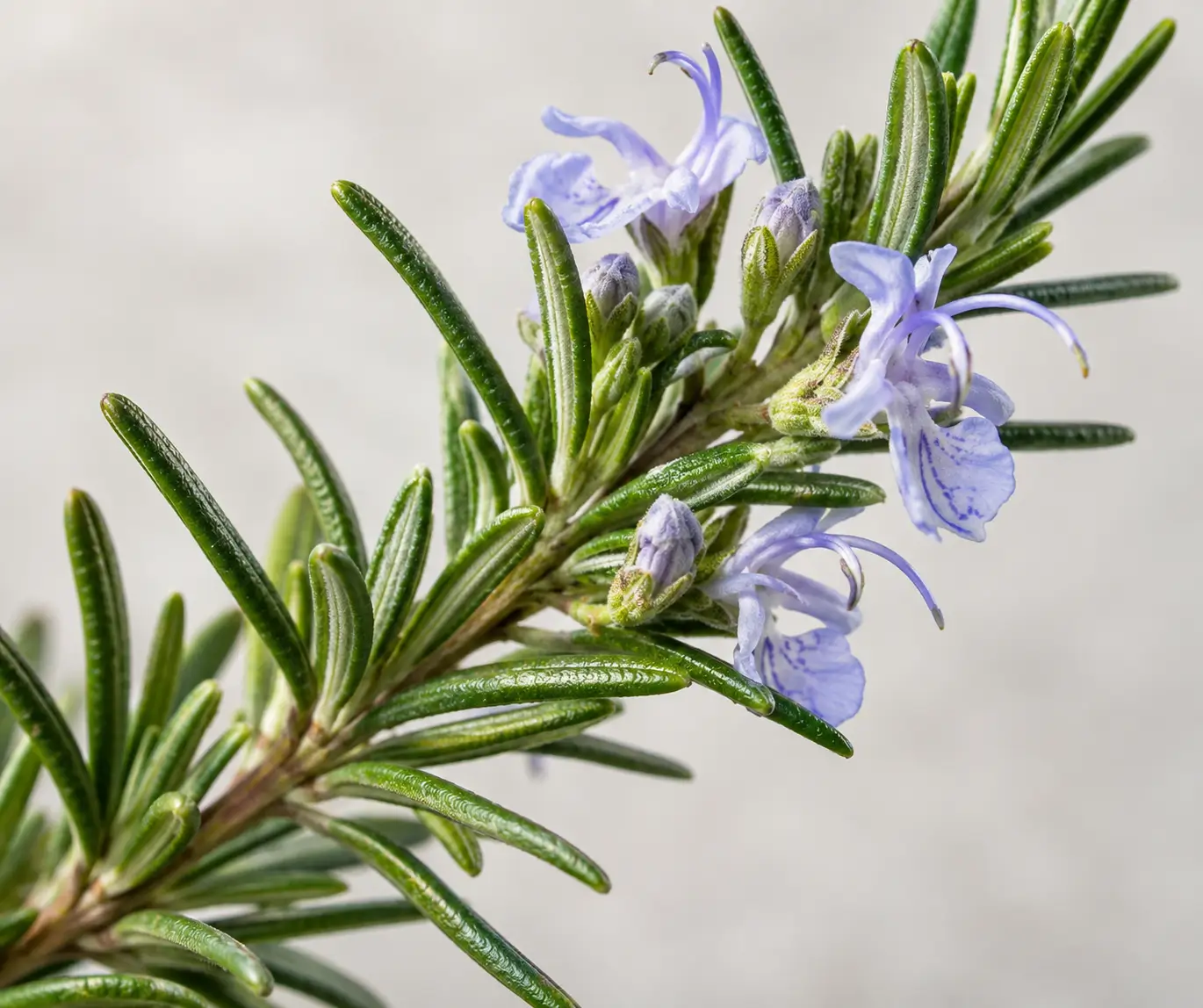
What Rosemary’s “Magickal Properties” Mean
Rosemary’s “magickal properties” are best understood as meanings people have attributed to the herb. In spiritual or ritual contexts, a property may be a symbolic association, such as remembrance, or a purpose assigned to an action, such as carrying rosemary while reflecting on fidelity. It is not necessarily a measurable quality of the plant.
The supplied historical and ethnobotanical sources support several recurring associations: memory, remembrance, fidelity, love, death, and protection from danger. Ancient Greek and Roman traditions connected rosemary with memory, love, and death. Later literature and folklore treated it as an emblem of fidelity and remembrance, while historical writing also presented it as a protective amulet.
It helps to distinguish three kinds of statements:
- A documented historical association: People in a particular time and setting connected rosemary with an idea or practice. For example, rosemary was described as an herb of memory in ancient Greece and Rome.
- A personal spiritual interpretation: Someone today may use rosemary as a private symbol of remembrance, loyalty, love, mourning, or protection.
- A factual claim requiring evidence: Saying that rosemary reliably prevents danger, treats illness, or causes a supernatural result goes beyond documenting symbolism. The supplied sources do not establish such effects.
These categories may overlap in practice, but they are not equivalent. A historical belief can inspire a modern ritual without proving the belief’s literal efficacy.
Nor does rosemary have one universal symbolic definition. The records show several meanings across different periods and settings rather than a fixed system shared by everyone. Similarities among traditions can be meaningful, but they do not make every practice culturally interchangeable or show that every association came from a single origin.
How Memory, Love, Death, and Fidelity Became Linked with Rosemary
Rosemary’s modern association with remembrance has much older precedents. Getty garden guidance describes the herb in ancient Greece and Rome as an herb of memory and a symbol of both love and death. These meanings form a related symbolic cluster: memory preserves a relationship, love gives that relationship emotional importance, and death makes remembrance a way of maintaining connection after loss.
This relationship is a useful way to understand the symbolism, but it is not a single historical origin story. The source shows that these associations appeared in ancient Greek and Roman contexts. It does not establish that every later use descended unchanged from one ceremony, text, or community.
Later literature and folklore continued to associate rosemary with remembrance while also presenting it as an emblem of fidelity. Fidelity can refer to loyalty, constancy, or continued devotion. It therefore fits closely with remembrance: remembering someone may itself be understood as remaining faithful to a person, relationship, promise, or obligation. This connection can be especially resonant in commemoration, where memory and loyalty are expressed together.
The ethnobotanical record also documents rosemary symbolism involving death, love, remembrance, and fidelity. This grouping shows that rosemary has carried several related meanings. It does not reduce the herb to one “property,” nor does it show that every community interpreted those themes in the same way.
The pattern is easier to understand as a cluster of associations rather than a list of separate powers:
- Memory and remembrance concern keeping a person, relationship, or event present in thought.
- Love and fidelity concern attachment, loyalty, and continuity.
- Death places memory and attachment within mourning or commemoration.
- Protection reflects another historically documented use: rosemary as an object believed to guard against danger.
This layered history corrects the misconception that rosemary became a remembrance symbol only through modern Anzac observance. Wearing rosemary for Anzac Day is a documented modern custom, but the broader connection between rosemary and memory is far older. It appears in ancient Mediterranean associations as well as later literature and folklore.
That does not make ancient symbolism and modern commemoration the same practice. It means that remembrance has appeared as a recurring theme in more than one historical setting. Its particular significance still depends on the community, period, and purpose in which rosemary is used.
What Historical Protection Claims Do—and Do Not—Establish
Protection is among rosemary’s documented historical meanings, but this association requires careful interpretation. The Metropolitan Museum of Art discusses a historical treatise that presented rosemary as an amulet against physical and spiritual dangers.
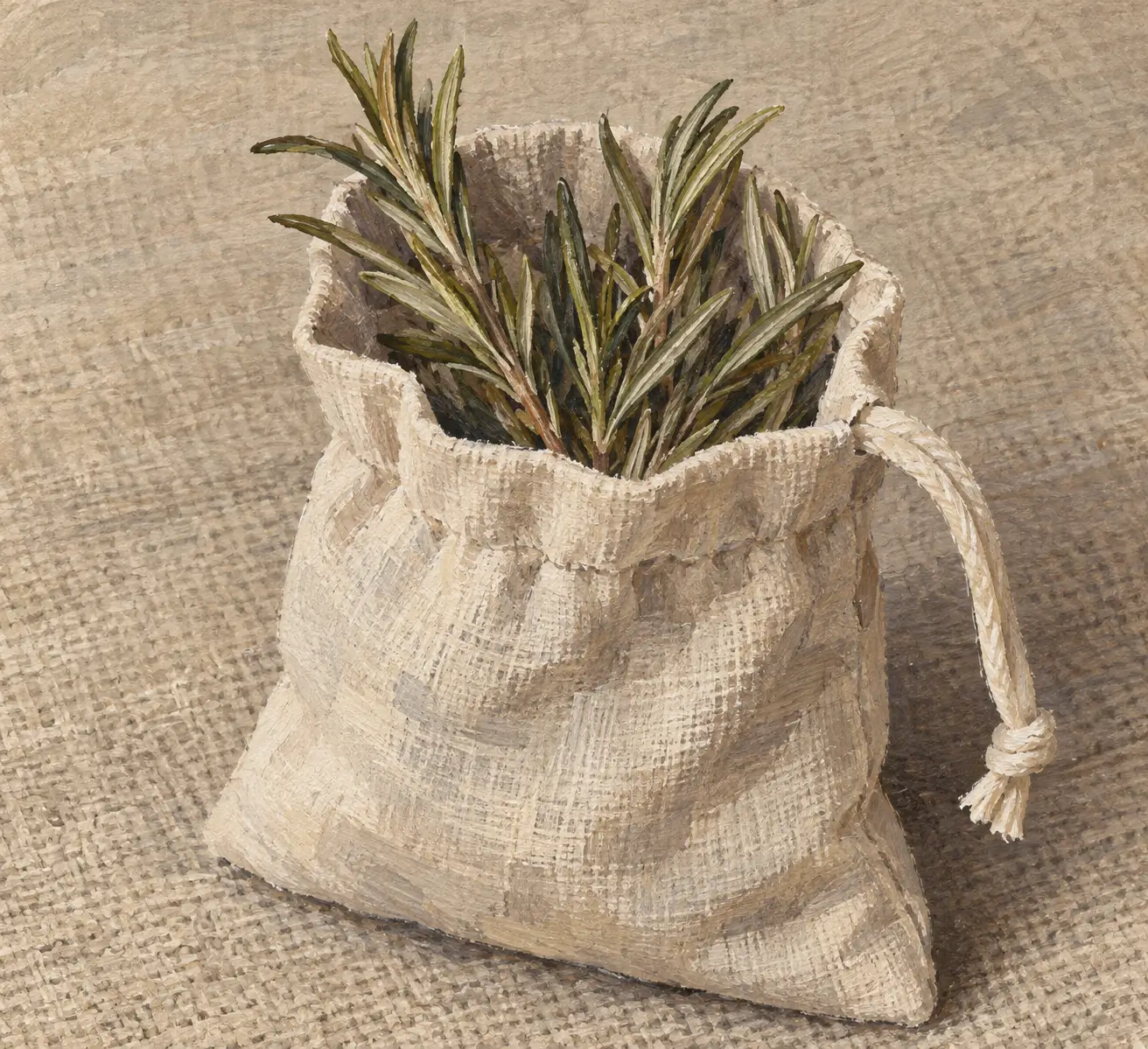
An amulet is an object believed to offer protection. Describing rosemary as an amulet therefore tells us how the herb was understood or used within that historical account. It documents a protective belief and practice.
It does not demonstrate that rosemary prevents injury, illness, misfortune, or spiritual harm. A historical text can establish that people made or accepted a claim without establishing that the claimed effect occurs. Keeping two questions separate makes the evidence clearer:
- What did people believe or do?
- What effects can be established as fact?
The Met source helps answer the first question by documenting protective language surrounding rosemary. The supplied research does not answer the second by demonstrating protective efficacy.
The wider ethnobotanical record reinforces this distinction. Rosemary symbolism includes death, love, remembrance, and fidelity, not protection alone. Other sources describe it as an herb of memory, a symbol of love and death, and an emblem of fidelity and remembrance. Together, these records show how an herb can accumulate different meanings according to its setting and use.
Recurring themes can still tell us something important. When remembrance, fidelity, love, or death appears in more than one record, the recurrence shows that the symbolism is not confined to one modern interpretation. Resemblance, however, does not prove that the traditions share one origin, remained unchanged over time, or can be treated as culturally interchangeable.
The same caution applies to protection. A modern practitioner might choose rosemary as a symbol of safety, boundaries, or reassurance because of the documented amulet tradition. That is a personal interpretation inspired by history. It is more accurate to say, “This rosemary represents protection to me,” than to promise that the herb will prevent harm.
Respecting a historical belief does not require presenting it as botanical science. The belief can be studied, commemorated, or adapted symbolically while its evidentiary limits remain clear.
Using Rosemary in a Responsible Modern Practice
One clearly documented modern use of rosemary is commemorative. According to the Australian War Memorial, rosemary sprigs are traditionally worn on Anzac Day and sometimes on Remembrance Day. In this setting, rosemary belongs to a public custom with a specific historical and commemorative context.
Participating in that custom differs from creating a private ritual. A person wearing rosemary for Anzac Day is engaging with a documented observance. Someone placing rosemary beside a loved one’s photograph, carrying it as a symbol of fidelity, or using it during personal reflection is making an individual adaptation. Both practices may involve remembrance, but they should not automatically be described as the same tradition.
Before using rosemary symbolically, consider where the intended meaning comes from:
- Is it part of a particular commemorative custom?
- Is it inspired by a documented historical association?
- Is it mainly a personal interpretation?
- Does it combine personal meaning with an inherited spiritual tradition?
These questions help prevent a private adaptation from being presented as a universal or ancient rule. They also leave room for rosemary to mean different things to different people.
A simple intentional practice can begin by choosing one supported association and stating the purpose without promising a result. Rosemary might represent remembrance during quiet reflection, fidelity while considering a commitment, or love and death in a private act of mourning. Those themes appear in the supplied historical and ethnobotanical material.
For example, a person might place a sprig beside a photograph and say, “I use this rosemary to remember this person and honor my continuing love for them.” The action gives physical form to an intention without claiming that the herb itself causes an external effect. Readers working within an established tradition should adapt any practice respectfully to that tradition and their circumstances rather than assuming that one method applies everywhere.
Protection calls for similarly careful wording. Someone may use rosemary to represent a wish for safety or to mark a personal boundary, drawing inspiration from the historical amulet tradition. It would be misleading, however, to claim that rosemary guarantees physical or spiritual protection. Symbolic reassurance should accompany—not replace—practical precautions.
The form of rosemary also matters. Burning rosemary involves fire and smoke concerns. Handling the plant or a rosemary product may raise allergy concerns. Ingestion requires confirming that the particular product is intended for use as food; decorative, ritual, or aromatic products should not be assumed edible. The supplied research is historical and ethnobotanical rather than detailed product-form safety guidance, so it does not support more specific safety instructions. Appropriate fire-safety, product-label, allergy, and professional guidance should take priority over ritual preferences.
Symbolic use must also remain separate from medical care. Historical descriptions of rosemary as protection against physical dangers document belief; they do not establish medical effectiveness. Rosemary should not replace diagnosis, treatment, emergency precautions, or other necessary care.
Responsible practice therefore preserves three distinctions:
- Documented tradition concerns meanings or customs supported by historical and ethnobotanical records.
- Personal spiritual meaning concerns what rosemary represents within an individual practice.
- Scientific or medical claims require suitable evidence that these sources do not provide.
Rosemary’s symbolic richness does not depend on turning folklore into guaranteed fact. Its associations with memory, remembrance, fidelity, love, death, and protection can provide a meaningful vocabulary for commemoration, ritual, and reflection. Used responsibly, those associations remain what the evidence supports: layered historical meanings, living commemorative symbols, and personal interpretations—not fixed botanical powers.