
Building relationship with north earth and your ancestors is a grounded ritual practice that combines direction, place, altar work, offerings, and listening. In many earth-centered practices, the north is associated with soil, bones, winter, memory, stability, and the wisdom of what came before. To begin, choose a quiet place, create a simple ancestor earth altar, ground your body, call only on benevolent and well ancestors, give an appropriate offering, listen without forcing signs, and close the ritual clearly. Over time, the relationship grows through consistency: tending the altar, keeping promises, recording impressions, and living in ways that honor the gifts and lessons of your lineage.
Before You Begin: What North Earth Represents
North earth is best approached as a direction of steadiness, patience, ancestry, and embodied truth. It is not only “north” on a compass; it can also mean the earth beneath your home, the bones of your family line, the dark soil that receives and transforms, and the wisdom that comes through time.
When working with ancestors, keep the practice respectful and culturally humble. Use prayers, songs, symbols, and ritual forms that belong to your own lineage, training, or sincere personal practice. You do not need to borrow closed traditions to build a strong ancestor earth relationship.
Prerequisites: What You Need for a Safe and Respectful Practice
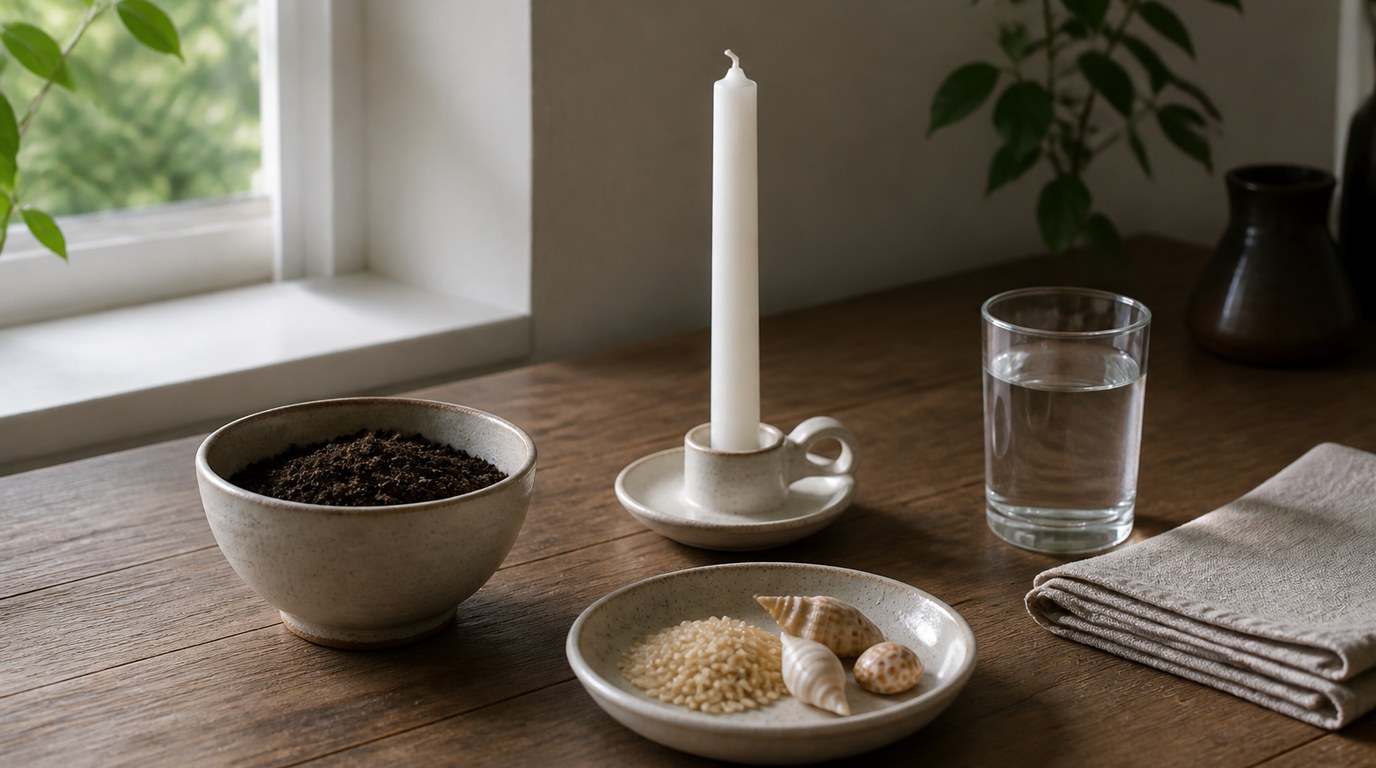
Gather only what you can tend safely:
- A small clean surface, cloth, tray, or shelf
- A bowl of clean soil, stone, salt, or dried herbs
- A glass of water
- A candle or electric candle
- Photos, names, heirlooms, or written family lines, if available
- A small offering such as bread, grain, tea, coffee, milk, fruit, or flowers
- A journal and pen
Use clean soil from a safe source, not contaminated ground. Do not leave food offerings where they attract pests. If using flame, keep it away from cloth, paper, pets, and children. If your family history includes harm, set firm boundaries: invite only healed, benevolent, protective ancestors who support your well-being.
Step 1: Choose Your North-facing or Earth-centered Place
Find a quiet place where you can sit undisturbed for 10 to 20 minutes. If possible, face north or place the altar on the north side of a room. Use a compass app if helpful, but do not become rigid about it.
If north-facing is not practical, choose an earth-centered place: near a plant, by a stone, beside a low shelf, or close to a window where you can see land, trees, or sky. The main requirement is that the space feels stable, clean, and easy to return to.
Step 2: Create a Simple Ancestor Earth Altar
Set your cloth, tray, or shelf in place. Put the earth element first: a bowl of soil, a stone, a small dish of salt, or a potted plant. Add water for refreshment and life. Place ancestor items behind or beside the earth element: photos, written names, family objects, or a paper that says “my benevolent ancestors, known and unknown.”
Keep the altar uncluttered. Leave space for offerings and a candle if you use one. If there are ancestors you do not wish to invite, do not place their photos on the altar. An ancestor altar is not a display of obligation; it is a tended space of relationship and discernment.
Step 3: Open the Practice with Grounding
Sit comfortably with both feet on the floor or the ground. Take three slow breaths. Notice the weight of your body. Imagine your breath moving down through your legs into the earth. You do not need to visualize perfectly; simply feel supported.
Say aloud or silently:
“I arrive in my body. I arrive in this place. I ask to be steady, protected, and clear. May this practice be rooted in respect, truth, and care.”
If you feel dizzy, overwhelmed, or emotionally flooded, stop and return to ordinary grounding: drink water, name five things you see, and touch a solid object.
Step 4: Call on the North Earth and Your Benevolent Ancestors
Speak plainly. A simple invocation is often stronger than elaborate words:
“North earth, ground of memory, stone, soil, root, and bone, I greet you with respect. Benevolent ancestors of my blood, bone, spirit, adoption, culture, and chosen family, I invite only those who are well, wise, loving, and aligned with my highest good. Stand near as guides and witnesses. Help me build a relationship based on respect, protection, healing, and truth.”
Adapt the words to your beliefs. If “ancestors” feels too broad, say “loving dead,” “well ancestors,” “family guides,” or “those who came before me in goodness.”
Step 5: Give an Earth-based Offering
Place your offering on the altar with both hands if possible. Suitable earth-based offerings include bread, oats, cornmeal, rice, root vegetables, fruit, coffee, tea, clean water, flowers, or a pinch of herbs. Choose something modest and sincere.
Say what you are giving:
“I offer this water and bread in gratitude. May it nourish the bond between us. May what is heavy be composted into wisdom. May what is strong and loving be carried forward.”
Do not offer alcohol if it is unsafe for you or your lineage. Do not leave offerings to rot. Remove food within a day, sooner in warm climates.
Step 6: Listen, Journal, and Notice What Arises
After the offering, sit quietly for five to ten minutes. Pay attention to your body, emotions, memories, images, or phrases that arise. Do not force a message. Do not treat every sound, dream, or sensation as proof of contact.
Write down what you notice in simple language: “I felt calmer,” “I remembered my grandmother’s kitchen,” “I felt sadness,” or “nothing happened.” All of these are valid observations. The goal is not performance. The goal is relationship, and relationships deepen through honest attention over time.
Step 7: Close the Ritual and Return to Daily Life
Close the practice clearly so your mind and body know the ritual is complete. Say:
“North earth, thank you for grounding and holding this work. Benevolent ancestors, thank you for your presence, protection, and guidance. Stay if you are meant to bless this home; depart if you are meant to depart. This ritual is complete.”
Blow out the candle or turn off the electric light. Touch the floor, drink water, and do one ordinary action: wash your hands, sweep, eat, or step outside.
How to Build the Relationship Over Time
Return on a rhythm you can keep: weekly, monthly, on ancestral birthdays, during seasonal changes, or when you need grounding. Refresh the water often. Keep the altar clean. Make small offerings rather than dramatic promises.
Build relationship through action, not only ritual. Cook family recipes, learn names and stories, repair harmful patterns, care for elders, protect children, tend land, and speak truthfully about your lineage. If you ask ancestors for support, follow through with practical steps in daily life. Consistency teaches your spirit that this connection is trustworthy.
Mistakes and Troubleshooting
Common mistakes are easy to correct. If the altar feels heavy or chaotic, simplify it: remove extra objects, refresh the water, clean the surface, and restate your boundary of “benevolent and well ancestors only.” If you feel anxious, shorten the practice and focus on grounding rather than messages.
If offerings attract pests, switch to water, flowers, stones, or a sealed cup of tea for a short time. If candle use is risky, use an electric candle. If grief becomes intense, pause the ritual and seek support from a trusted person, therapist, elder, or spiritual caregiver.
Avoid copying ceremonies from cultures you are not part of or trained in. Respect grows through sincerity, consent, and right relationship.
Result Check: How to Know the Practice Is Working

A healthy ancestor earth practice usually brings more steadiness, clarity, emotional honesty, and respectful connection over time. You may notice better grounding, meaningful memories, stronger boundaries, or a desire to care for your home and lineage more intentionally.
The practice is not working well if it leaves you fearful, obsessed with signs, disconnected from daily life, or pressured to obey harmful messages. In that case, stop, ground, cleanse the space simply, and return only with clearer boundaries or trusted guidance.
FAQ
Do I Have to Face North to Do This Ancestor Earth Ritual?
No. Facing north can strengthen the symbolic focus, but it is not required. If you cannot face north, work with an earth-centered anchor such as soil, stone, salt, a plant, or the ground beneath you. Respectful attention matters more than perfect direction.
What If I Do Not Know My Ancestors’ Names?
You can still practice. Address “my benevolent ancestors, known and unknown” or “the well and loving ones who came before me.” You may also honor ancestors of place, craft, adoption, chosen family, or spiritual lineage, as long as you do so respectfully and with clear boundaries.
Can I Do This If My Family History Is Painful?
Yes, but move carefully. Invite only healed, benevolent, protective ancestors and exclude anyone connected to harm. Keep sessions short, ground before and after, and stop if you feel overwhelmed. Ancestor work should support healing, not force contact with painful family patterns.
What Should I Do with the Soil or Offerings Afterward?
Keep altar soil if it remains clean and feels settled. Replace it when it feels dusty, stale, or symbolically complete. Dispose of food offerings respectfully in compost or trash, depending on safety. Do not bury salt, alcohol, or non-biodegradable items in the earth.