
Waning crescent moon energy rituals are best for letting go, resting, cleansing softly, and preparing your spirit for the next lunar cycle. This is not the phase for forceful action or dramatic change. It is a quiet threshold: the old cycle is closing, and your body, home, altar, and mind may need space to exhale.
A simple ritual can include dim lighting, gentle cleansing, a candle, written release work, an offering to water, earth, or flame, and a few minutes of silence. If you keep an ancestor altar, this is also a good time to ask your well ancestors for peace, protection, and help releasing what no longer belongs to you.
What Waning Crescent Moon Energy Is Best for

The waning crescent is the final visible sliver of the moon before the dark moon or new moon. In ritual work, it supports release, rest, surrender, spiritual hygiene, and closure. Think of it as the phase for putting things down rather than picking up new responsibilities.
Use waning crescent moon energy rituals for clearing emotional residue, ending habits gently, making peace with the past, cleaning your altar, giving thanks to ancestors, and preparing for a new beginning. It is especially helpful when you feel spiritually cluttered, tired, overstimulated, or ready to stop carrying something.
Before You Begin: Prerequisites and Ritual Safety
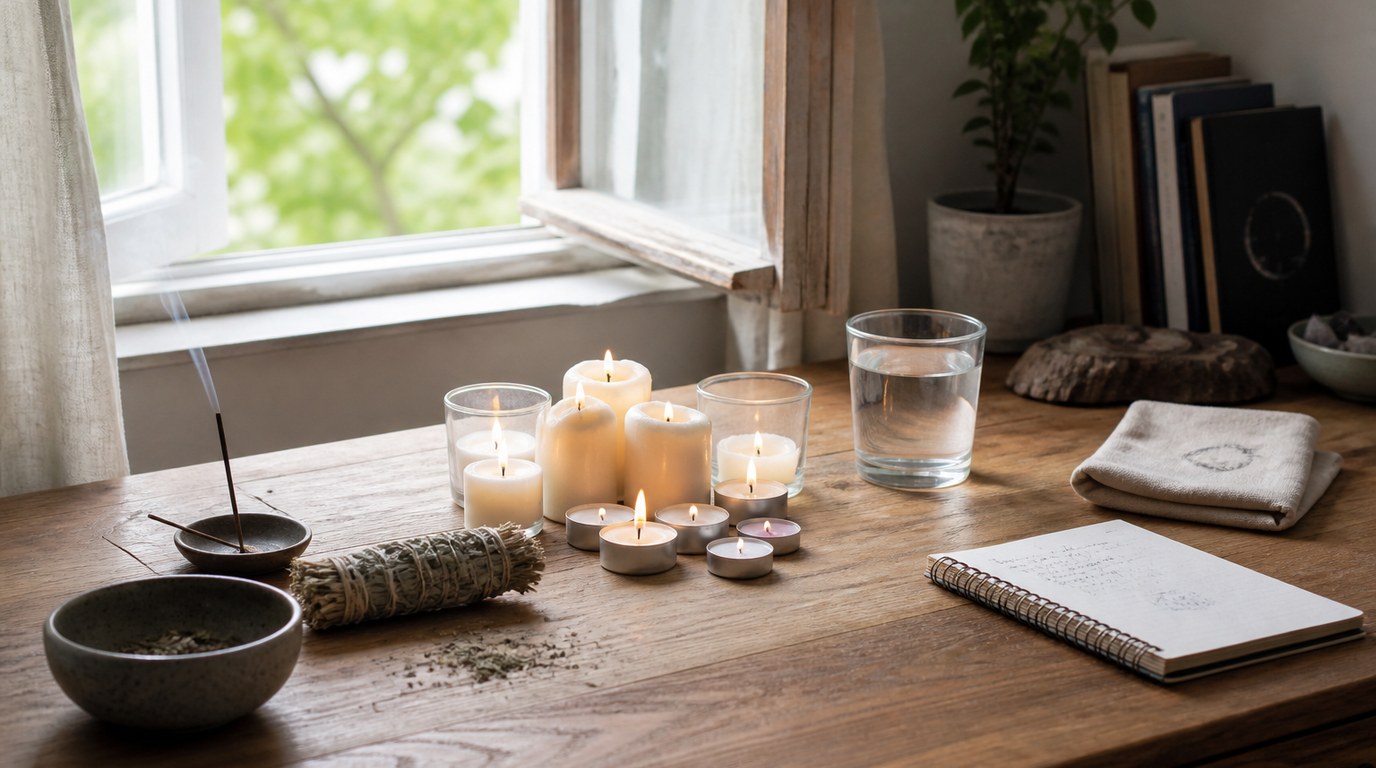
Choose a quiet time when you will not be rushed. You do not need many tools, but helpful materials include a white, black, blue, or purple candle; a bowl of water; paper and pen; a fire-safe dish; salt; incense, herbs, or sound; and a small offering if you work with ancestors.
Keep safety practical. Never leave a candle unattended. Do not burn paper near curtains, pets, children, or open windows. If smoke affects your breathing, cleanse with sound, water, prayer, or fresh air instead. If you feel emotionally overwhelmed, pause the ritual, drink water, and return later. Spiritual release should not require distress or self-punishment.
Step 1: Prepare the Space for Quiet Release
Begin by making the room calm and simple. Put away clutter from the surface you will use. Dim the lights, silence notifications, and place your ritual items where you can reach them easily.
If you have an ancestor altar, refresh it first: remove old offerings, wipe the surface, replace water, and straighten photos or objects. This signals respect and readiness.
Say aloud: “This space is prepared for peace, release, rest, and protection.” Speak plainly. You are not performing for anyone; you are creating a container your nervous system and spirit can trust.
Step 2: Cleanse Gently, Not Aggressively
Waning crescent cleansing should feel like rinsing, not scrubbing. Use light smoke, a bell, clapping, a singing bowl, Florida water, moon water, salt water, or your own breath and prayer.
Move slowly around the space. Pay attention to corners, doorways, windows, and the altar. Instead of declaring war on bad energy, invite heaviness to leave.
You might say: “What is complete may depart. What is heavy may soften. What is not mine may return to its proper place.” Keep the tone steady and calm.
Step 3: Light the Candle and Name the Moon Phase
Place your candle in a stable holder and light it with intention. If open flame is not safe for you, use an LED candle.
Name the phase directly: “Under the waning crescent moon, I enter a time of release, rest, and return.” This anchors the ritual in the lunar moment.
If you work with ancestors, add: “Well and wise ancestors, those who come in love and protection, witness this work and guide me toward peace.” Only invite benevolent, healed, and protective ancestral presence.
Step 4: Write Down What You Are Ready to Release
Take your paper and write what you are ready to put down. Be specific, but do not spiral into self-criticism. The goal is release, not punishment.
Use prompts such as:
- “I am ready to release…”
- “I no longer need to carry…”
- “This cycle has taught me…”
- “I forgive myself for…”
- “I return what is not mine…”
Examples might include resentment, fear of rest, guilt, comparison, ancestral shame, a draining attachment, or a habit that kept you small. When finished, read the paper once. Notice what your body feels.
Step 5: Offer the Burden to Water, Earth, or Flame
Choose one safe method to complete the release.
For water, place the paper under a bowl of water or tear it into small pieces and dispose of it respectfully afterward. Do not put inked paper into natural waterways.
For earth, bury the paper in a potted plant or garden only if the materials are biodegradable and safe. Otherwise, place it in the trash with intention.
For flame, burn the paper in a fire-safe dish, outdoors or in a ventilated area, with water nearby. Burn only small pieces.
Say: “I release this from my body, my home, my altar, and my path.”
Step 6: Sit in Silence and Let the Energy Settle
After the release, do not rush to fill the space. Sit quietly for three to ten minutes. Let your breathing slow. Place one hand on your heart and one on your belly if that feels comforting.
This stillness is part of the ritual, not an empty pause. Waning crescent energy teaches that rest is sacred work. You may feel peaceful, sleepy, emotional, or simply quiet. Let the candle burn safely while you sit, or extinguish it first if you need to close your eyes deeply.
Step 7: Close the Ritual and Ground Yourself
Thank the moon, your spirit, your guides, and any ancestors you invited. Say: “This ritual is complete. What has been released may remain released. What is mine returns to me cleansed and steady.”
Extinguish the candle safely; do not blow it out if your tradition avoids that. You may snuff it, pinch it with care, or use a candle tool.
Ground yourself with ordinary actions: drink water, eat something simple, wash your hands, step outside, or touch the floor. If you used an ancestor altar, leave fresh water or a small offering in thanks.
How to Know the Ritual Worked
A waning crescent ritual does not always create instant dramatic change. Look for subtle signs: your body feels softer, your breathing deepens, your home feels quieter, or you feel less attached to the issue you named.
You may also notice practical movement over the next few days: easier sleep, a needed conversation, less urge to repeat an old pattern, or clarity about what must end. The strongest result is not intensity; it is spaciousness. If you feel even slightly more able to rest, the ritual did its work.
Common Mistakes and Troubleshooting
One common mistake is trying to manifest aggressively during this phase. If you feel the urge to make big demands, write them down for the new moon instead. Use the waning crescent to clear the ground.
Another mistake is over-cleansing. Too much smoke, noise, or repeated ritual can make you feel unsettled. Keep it simple.
If you feel nothing, do not assume failure. Repeat the ritual in a shorter form, or focus on one clear release instead of many.
If you become sad, pause and ground. Release work can uncover grief. Drink water, speak kindly to yourself, and seek support if heavy emotions continue.
A Simple 10-minute Waning Crescent Ritual
If you are short on time, do this:
- Dim the lights and place a bowl of water near you.
- Light a candle or turn on an LED candle.
- Say: “Under the waning crescent moon, I release what is complete.”
- Write one thing you are ready to let go.
- Fold the paper away from you three times.
- Place it beneath the water bowl.
- Sit quietly for three minutes.
- Thank the moon and your ancestors.
- Dispose of the paper respectfully.
- Drink water and rest.
FAQ
What Should I Do During a Waning Crescent Moon Ritual?
Focus on release, rest, cleansing, and closure. You can clean your altar, refresh offerings, write down what you are ready to let go, pray, meditate, or sit in silence. Keep the ritual gentle and simple rather than intense or demanding.
Can I Manifest During the Waning Crescent Moon?
You can prepare for manifestation, but this is not the strongest phase for active calling-in work. Use the waning crescent to clear fear, doubt, clutter, and old attachments. Then set new intentions during the new moon or waxing moon.
What Offerings Are Good for a Waning Crescent Moon Ancestor Ritual?
Good offerings include fresh water, unsweetened tea, flowers, a simple candle, cooked food, fruit, or quiet prayer. Choose offerings that fit your lineage, culture, and household safety. The most important offering is respectful attention, not expense.
What If I Feel Sad or Tired After the Ritual?
Sadness or tiredness can happen after release work. Ground yourself with food, water, rest, and warmth. Avoid repeating the ritual immediately. If the feelings are intense or continue, reach out to a trusted person, counselor, or spiritual support.
Do I Need to See the Waning Crescent Moon for the Ritual to Work?
No. The ritual can still be done if the moon is hidden by clouds, buildings, weather, or daylight. The phase is still present. You can mark it with a calendar, moon app, or simple spoken intention.