
An embracing your shadows tarot spread is a guided self-reflection practice for meeting the parts of yourself you usually avoid: fear, envy, grief, shame, anger, old survival patterns, or unmet needs. This spread is not meant to predict your future, diagnose trauma, or replace therapy. It helps you ask better questions, listen to your inner life, and choose one grounded action for integration.
Use this reading when you feel emotionally steady enough to be honest, but not so overwhelmed that the cards become a source of fear. Approach the spread slowly, with respect for yourself, your ancestors, your spirits, and your limits.
What You Need Before You Start
Gather your tools before you begin so the reading feels contained and intentional. You will need:
- A tarot deck you feel comfortable using
- A journal or paper
- A pen
- A quiet place where you will not be interrupted
- A candle, water, incense, flowers, or another simple ritual item, if desired
- A grounding object such as a stone, cloth, prayer beads, or cup of tea
- At least 30 to 45 minutes of unhurried time
Choose a time when you are alert, sober, and emotionally resourced. Shadow work can bring up tender material, so do not start this spread in the middle of an argument, panic, intoxication, or deep exhaustion. If you are currently in crisis, focus first on immediate support: contact a trusted person, therapist, hotline, or local emergency resource.
Before touching the cards, name your boundary. You might say:
> “I ask to see what I am ready to understand, in a way that supports healing, responsibility, and protection.”
If you work with ancestors, spirits, or deities, invite only well, elevated, and benevolent guides. You do not need elaborate ritual tools. A clean surface, a glass of water, and a sincere intention are enough.
Decide how you will close the reading before you open it. This matters. Shadow work should not leave you emotionally scattered. Plan to ground afterward by eating, washing your hands, stepping outside, praying, stretching, or writing one clear next action.
Step 1
Prepare the space, settle your body, and lay out the spread.
First, clear the surface where you will read. This can be an altar, desk, floor cloth, or bedside table. Place your candle, water, or grounding object nearby if you are using one. If you are at an ancestor altar, refresh the water or simply greet your people with respect before beginning.
Sit comfortably. Put both feet on the floor or cross your legs in a stable way. Take three slow breaths. On each exhale, release the need to force an answer. Shadow work becomes clearer when you are curious instead of combative.
Shuffle your deck while focusing on this question:
> “What shadow within me is ready to be seen, understood, and integrated?”
When you feel ready, draw five cards and place them in this order:
- The Shadow — What part of me is asking to be seen?
- The Mask — How do I hide, deny, or perform around this shadow?
- The Root — Where does this pattern come from?
- The Medicine — What does this shadow need from me now?
- The Integration — What practical action helps me work with this insight?
Turn the cards over one at a time. Do not rush into interpretation. Look at the images first. Notice color, posture, symbols, facial expressions, direction, and atmosphere. Write down your first impressions before checking a guidebook.
For each card, complete this sentence in your journal:
- “This card may be showing me…”
- “I feel this in my body as…”
- “One honest thing I do not want to admit is…”
If a card immediately makes you defensive, pause. That reaction may be part of the reading. Instead of judging yourself, write: “I notice resistance.” Resistance is information, not failure.
Step 2
Interpret the spread as a conversation, then choose one grounded response.
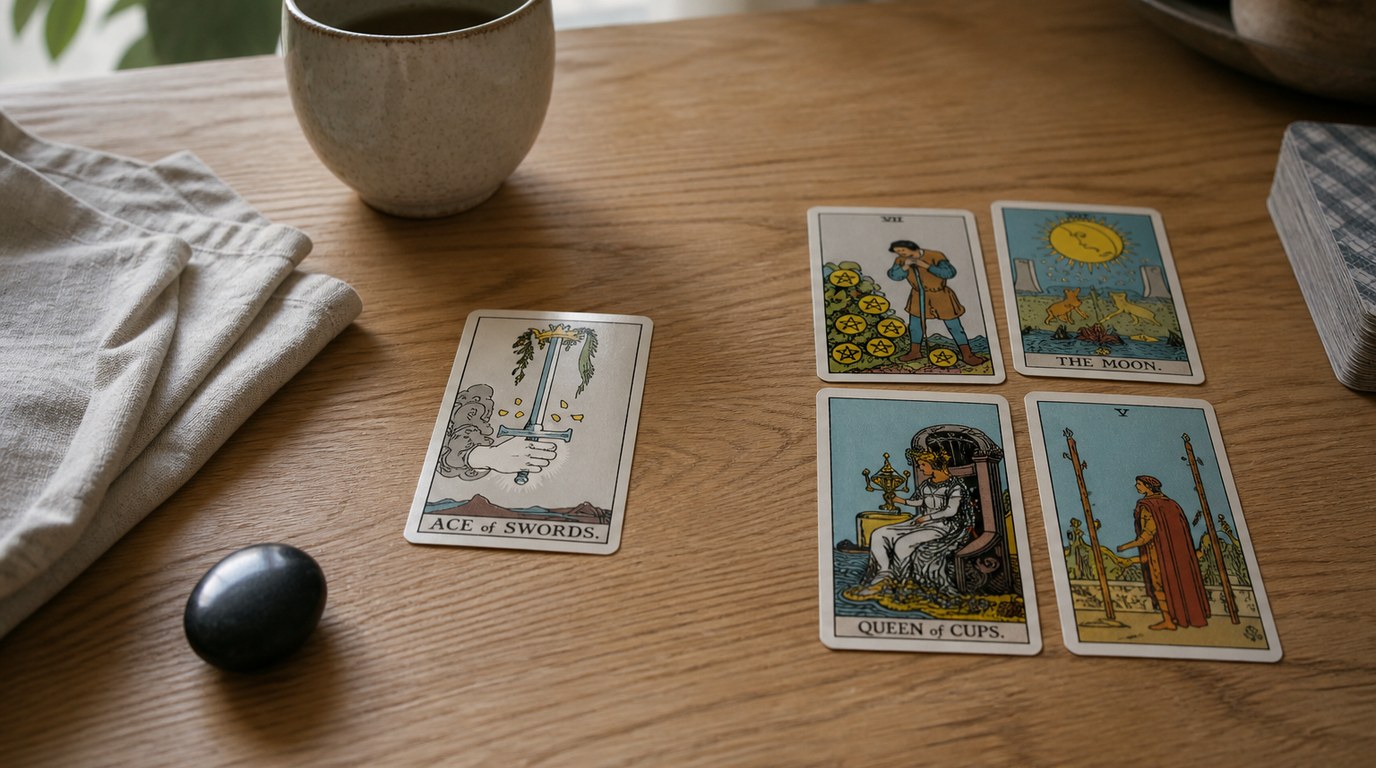
Start with Card 1, The Shadow. This card names the energy you are meeting. A Cups card may point toward grief, longing, emotional dependency, or tenderness. A Swords card may reveal fear, harsh self-talk, avoidance, or mental loops. A Wands card may expose anger, ambition, jealousy, or blocked desire. A Pentacles card may speak to scarcity, control, body shame, work, money, or safety.
Move to Card 2, The Mask. This position shows your coping style. For example, The Emperor here might suggest over-control. The Fool may show avoidance through distraction. The High Priestess could point to silence, secrecy, or withholding. Remember: a mask is not always “bad.” Often it once protected you. Thank it before asking whether it still serves you.
Card 3, The Root, needs patience. Do not force a dramatic origin story. The root might be a family pattern, an old humiliation, a cultural wound, a childhood message, or a repeated choice. If you read with ancestors, this card may also suggest inherited themes. Keep your language responsible: “This may be connected to…” is safer than declaring certainty.
Card 4, The Medicine, shows what the shadow needs. It may ask for grief, apology, boundaries, rest, truth-telling, creativity, discipline, forgiveness, or professional support. Card 5, The Integration, must become practical. Turn it into one action you can complete within seven days.
Caution: do not use this spread to punish yourself. If your interpretation becomes cruel, absolute, or hopeless, stop. Say out loud, “This reading is not complete unless it supports healing.” Pulling difficult cards does not mean you are broken, cursed, or doomed.
Common troubleshooting:
- If the spread feels confusing, read only Cards 1 and 5.
- If every card feels negative, take a break and return later.
- If you feel numb, describe the images instead of forcing emotions.
- If you keep asking the same question, stop reshuffling and journal the answer you already received.
- If the reading brings up trauma, consider taking it to a therapist, counselor, elder, or trusted spiritual advisor.
Close the reading by thanking your cards, your inner wisdom, and any benevolent ancestors or guides you invited. Blow out the candle if you lit one. Drink water. Touch the floor. Come back to the present.
How to Check the Result
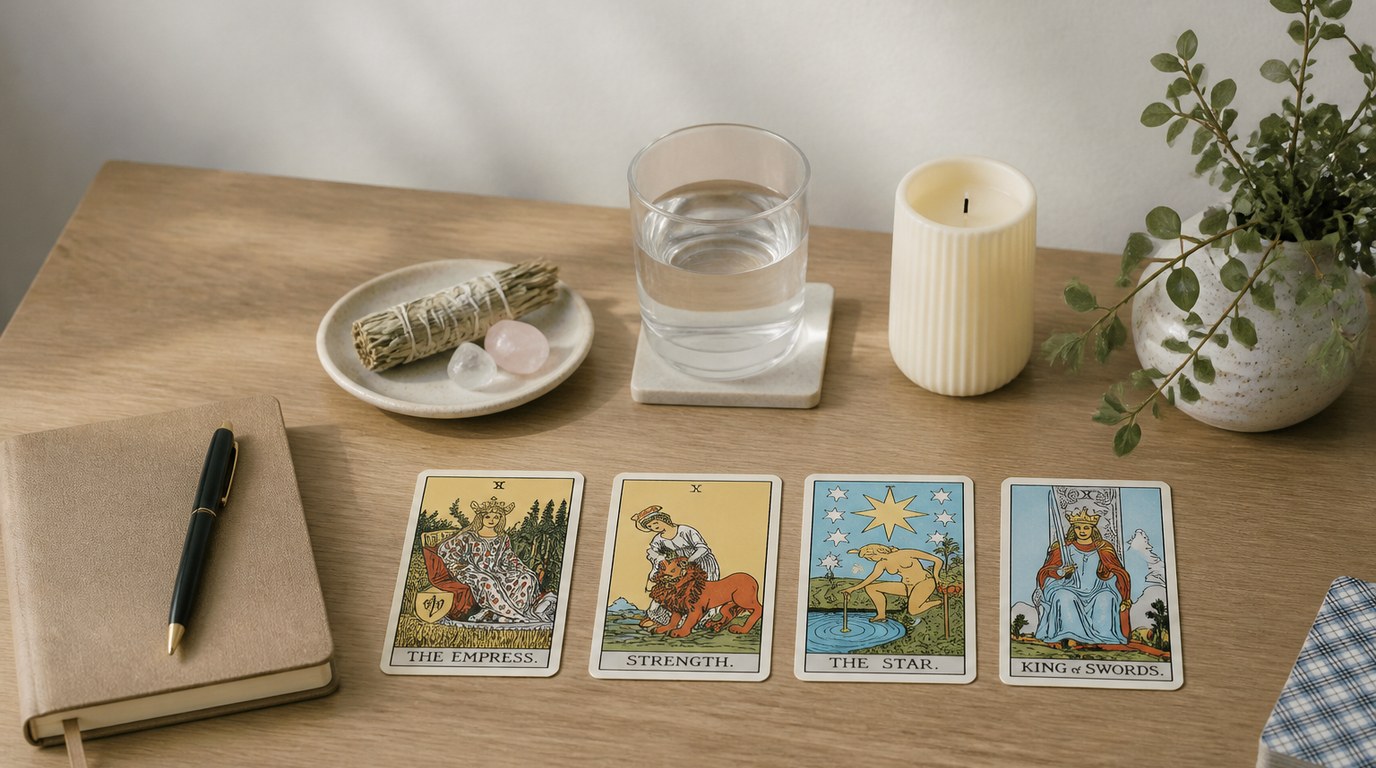
A successful embracing your shadows tarot spread does not always feel comfortable. It should, however, feel clarifying, honest, and containable. You are looking for grounded insight, not emotional chaos.
Check your result with these questions:
- Can I name the shadow pattern in one sentence?
- Do I understand how I usually hide or defend against it?
- Did I identify a possible root without turning it into a fixed story?
- Did the reading offer medicine, not just criticism?
- Do I have one practical integration action?
- Do I feel present enough to continue my day?
Your final integration action should be specific. “Heal my abandonment wound” is too large. “Text my therapist,” “write a letter I will not send,” “decline one obligation,” “make an ancestor offering for guidance,” or “practice five minutes of self-compassion after work” is usable.
If the reading leaves you activated, simplify. Put the cards away. Wash your hands. Eat something. Step outside and name five things you can see. You can return to the journal later.
A good result often sounds like: “I see that my anger is protecting grief,” or “I use perfectionism to avoid feeling unsafe,” or “My envy is pointing toward a desire I have not admitted.” The point is not to eliminate the shadow. The point is to build a wiser relationship with it.
FAQ
How often should I do an embracing your shadows tarot spread?
For most people, once a month or once per season is enough. Shadow work needs integration time. If you repeat the spread too often, you may stay in analysis instead of changing behavior. Use smaller daily pulls between deeper readings.
Can beginners use this shadow work tarot spread?
Yes, beginners can use it if they go slowly and journal honestly. You do not need to know every traditional card meaning. Start with the images, your body response, and simple keywords. If the reading feels intense, use fewer cards.
What if I pull a scary card?
Pause before assuming the worst. Cards like Death, The Tower, The Devil, or Ten of Swords often point to change, attachment, rupture, or an ending—not literal disaster. Ask, “What pattern is this showing?” If fear escalates, stop and ground.
Can I do this spread at my ancestor altar?
Yes, if that fits your practice and feels respectful. Refresh water, tidy the altar, and invite only well and benevolent ancestors. You might ask them to help you see inherited patterns with compassion, not blame. Close by thanking them.
What should I do after the reading?
Choose one integration action and do it within seven days. Then rest. Drink water, eat, pray, clean the space, or take a walk. Revisit your notes after a few days and look for one behavior you can shift gently.