
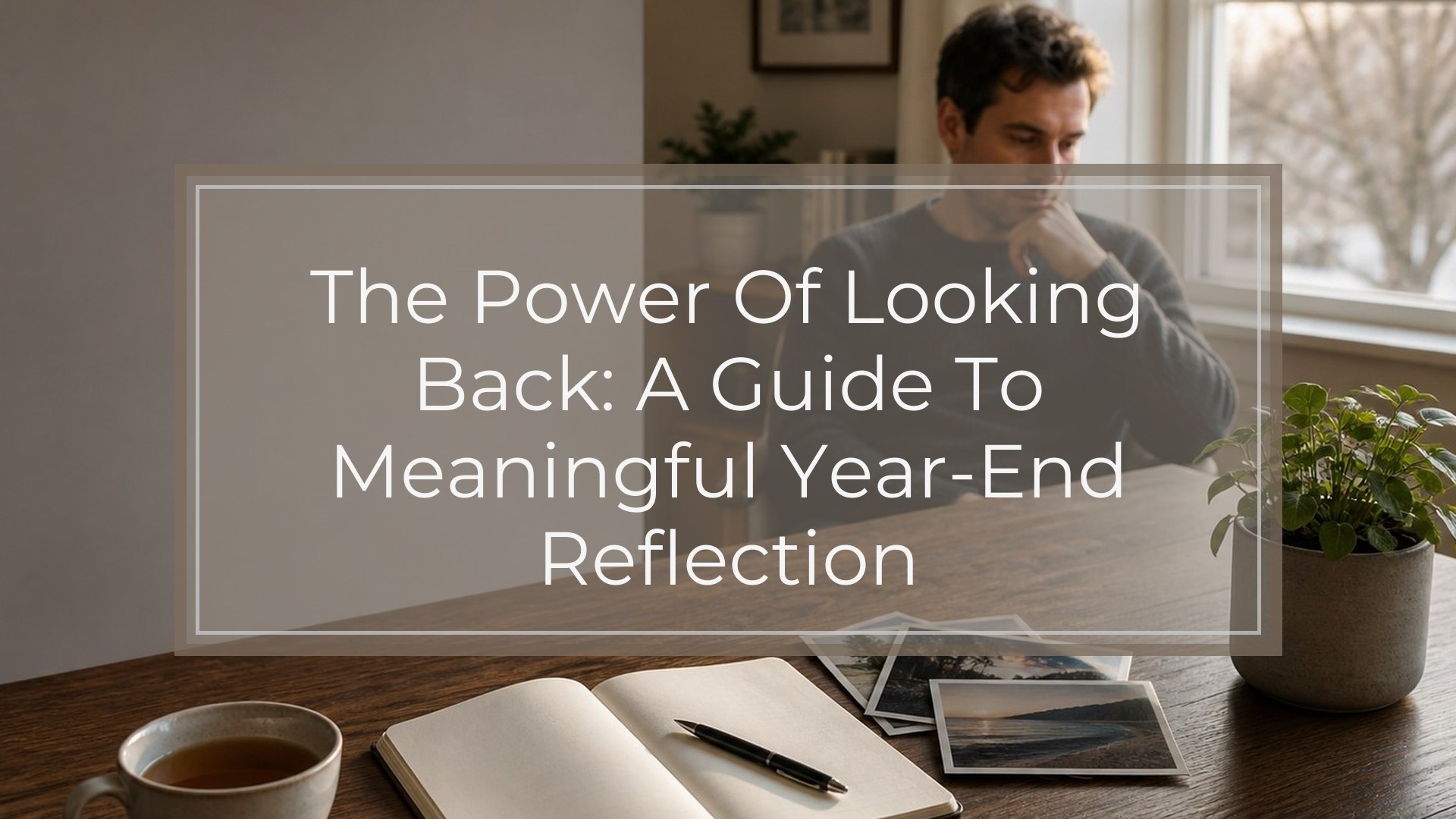
Meaningful year-end reflection is the practice of looking back over the past twelve months with honesty, gratitude, grief, and spiritual attention. It is not about judging yourself or forcing a perfect lesson from every event. It is about witnessing your life clearly.
At the end of a year, journaling, quiet ritual, prayer, or time at an ancestor altar can help you gather what happened, honor what changed, and notice what your spirit is ready to release. This guide offers a practical way to reflect: create a quiet space, review the year gently, write with useful prompts, include your ancestors if that is part of your practice, and turn insight into grounded intention.
Why Looking Back Has Spiritual Power
Looking back is powerful because it restores relationship with your own life. Many people move through a year in survival mode, handling responsibilities, losses, celebrations, and changes without time to fully understand them. Reflection says: I was here. This mattered. I am allowed to learn from it.
Spiritually, year-end reflection helps you notice patterns. You may see where you were protected, where you ignored your intuition, where help arrived, or where an old family story repeated itself. This kind of looking back is not nostalgia. It is discernment.
For those who practice ancestor veneration, reflection can also become a form of remembrance. You are not only reviewing personal events; you are considering how your choices, healing, and growth sit within a larger lineage.
Create a Quiet Space for Reflection
Begin by choosing a time when you will not be rushed. You do not need an elaborate setup. A clean table, a journal, a pen, a candle, a cup of water, or a warm drink can be enough. If you keep an ancestor altar, you may sit nearby or place your journal close to it.
Before writing, take a few breaths and let your body arrive. Silence your phone if possible. You might say a simple opening phrase:
“May I see this year clearly. May I honor what was difficult, what was beautiful, and what is ready to be released.”
The goal is not to create a perfect spiritual atmosphere. The goal is to signal to your mind and spirit that this time is intentional.
A Simple Year-end Reflection Framework
Use a five-part framework: remember, honor, grieve, release, and carry forward. This keeps reflection balanced, especially if the year held both blessings and hardship.
| Step | Guiding Question | Practice |
|---|---|---|
| Remember | What actually happened this year? | List key events, changes, and turning points. |
| Honor | What deserves gratitude or recognition? | Name efforts, support, growth, and moments of grace. |
| Grieve | What hurt, ended, or disappointed me? | Write honestly without minimizing the pain. |
| Release | What am I ready to stop carrying? | Name burdens, beliefs, resentments, or expectations. |
| Carry Forward | What wisdom belongs in the new year? | Choose one to three lessons or intentions. |
This framework gives your reflection a clear path. You are not trying to summarize your entire life. You are gathering the year into a form you can understand. Move slowly through each step, and pause when something feels emotionally charged.
Journal Prompts for Meaningful Year-end Reflection

Use these prompts in one sitting or spread them across several days. Answer only what feels useful.
Remember
- What were the major events of this year?
- Which month or season changed me the most?
- What did I survive that I have not fully acknowledged?
Honor
- What am I proud of, even if no one else noticed?
- Who supported me this year?
- Where did I show courage, patience, or love?
Grieve
- What did I lose, outgrow, or have to accept?
- What still feels tender when I think about this year?
- What expectation did I need to release?
Release
- What story about myself no longer feels true?
- What habit, relationship pattern, or fear am I tired of feeding?
- What am I allowed to put down before the year closes?
Carry Forward
- What wisdom did this year teach me?
- What do I want to protect in the new year?
- What one word or phrase describes the energy I want to cultivate?
A Gentle Ancestor-inspired Reflection Ritual
If ancestor veneration is part of your spiritual practice, you can include your beloved dead in a simple year-end ritual. Keep it respectful, calm, and sincere.
Place a glass of water, a candle, flowers, or a small food offering on your altar or clean surface. Sit with your journal. Light the candle if safe, and speak aloud:
“Honored ancestors, known and unknown, well and wise ones who walk with love, I thank you for the life that carried me through this year. Witness my reflection. Help me receive the lessons without shame and release what does not belong to my path.”
Write for ten to twenty minutes using the framework above. When finished, read one insight aloud. Thank your ancestors, extinguish the candle, and dispose of offerings according to your tradition. If you do not have an altar, a quiet seat with a cup of water can still be meaningful.
How to Reflect Without Shame or Spiritual Pressure

Reflection should not become a trial where you prosecute yourself for every mistake. If you notice shame rising, soften the question. Instead of “Why did I fail?” ask, “What was I carrying at the time?” Instead of “Why didn’t I know better?” ask, “What do I know now?”
Avoid forcing gratitude for painful experiences. You can be grateful for your survival without being grateful for the harm. You can recognize a lesson without pretending the situation was good.
A compassionate reflection practice leaves room for complexity. Some years are messy. Some growth happens quietly. Some blessings are simply that you made it through.
Turning Reflection Into New-year Intention
After looking back, choose a small number of insights to carry forward. Do not turn every lesson into a major resolution. Let your intentions be clear, humane, and rooted in what the year taught you.
For example:
- “I will listen sooner when my body says no.”
- “I will make more space for family stories and ancestral remembrance.”
- “I will stop confusing urgency with guidance.”
- “I will protect one quiet morning each week.”
A good intention feels like a doorway, not a punishment. It should help you live with more alignment, not create another standard you fear failing.
Common Mistakes to Avoid
Avoid rushing through the year as a checklist. Reflection needs enough stillness for truth to surface.
Avoid only focusing on what went wrong. Hardship may be real, but so are effort, care, support, and survival.
Avoid spiritualizing everything. Not every event needs a grand meaning.
Avoid comparing your year to someone else’s. Your path, timing, grief, and growth are your own.
Finally, avoid ending without integration. Choose one insight, one release, or one intention so the practice has somewhere to land.
FAQ
What Is Year-end Reflection?
Year-end reflection is the practice of reviewing the past year with attention and honesty. It may include journaling, prayer, meditation, ritual, or conversation. The purpose is to understand what happened, honor growth and loss, release what is complete, and carry useful wisdom forward.
How Do I Start a Meaningful Year-end Reflection?
Start simply. Choose a quiet time, gather a journal and pen, and take a few breaths. List the major events of the year, then write about what you are grateful for, what hurt, what you learned, and what you are ready to release.
Can I Include My Ancestors in Year-end Reflection?
Yes, if that aligns with your beliefs and traditions. You might sit near an ancestor altar, offer water or a candle, speak a short prayer, and ask your well and wise ancestors to witness your reflection. Keep the practice respectful, grounded, and sincere.
What If This Year Was Painful and I Do Not Feel Grateful?
You do not have to force gratitude. Begin with truth: name what hurt, what exhausted you, and what you survived. If gratitude comes later, let it come naturally. Meaningful reflection can include grief, anger, numbness, and tenderness. Honesty is a sacred starting point.