
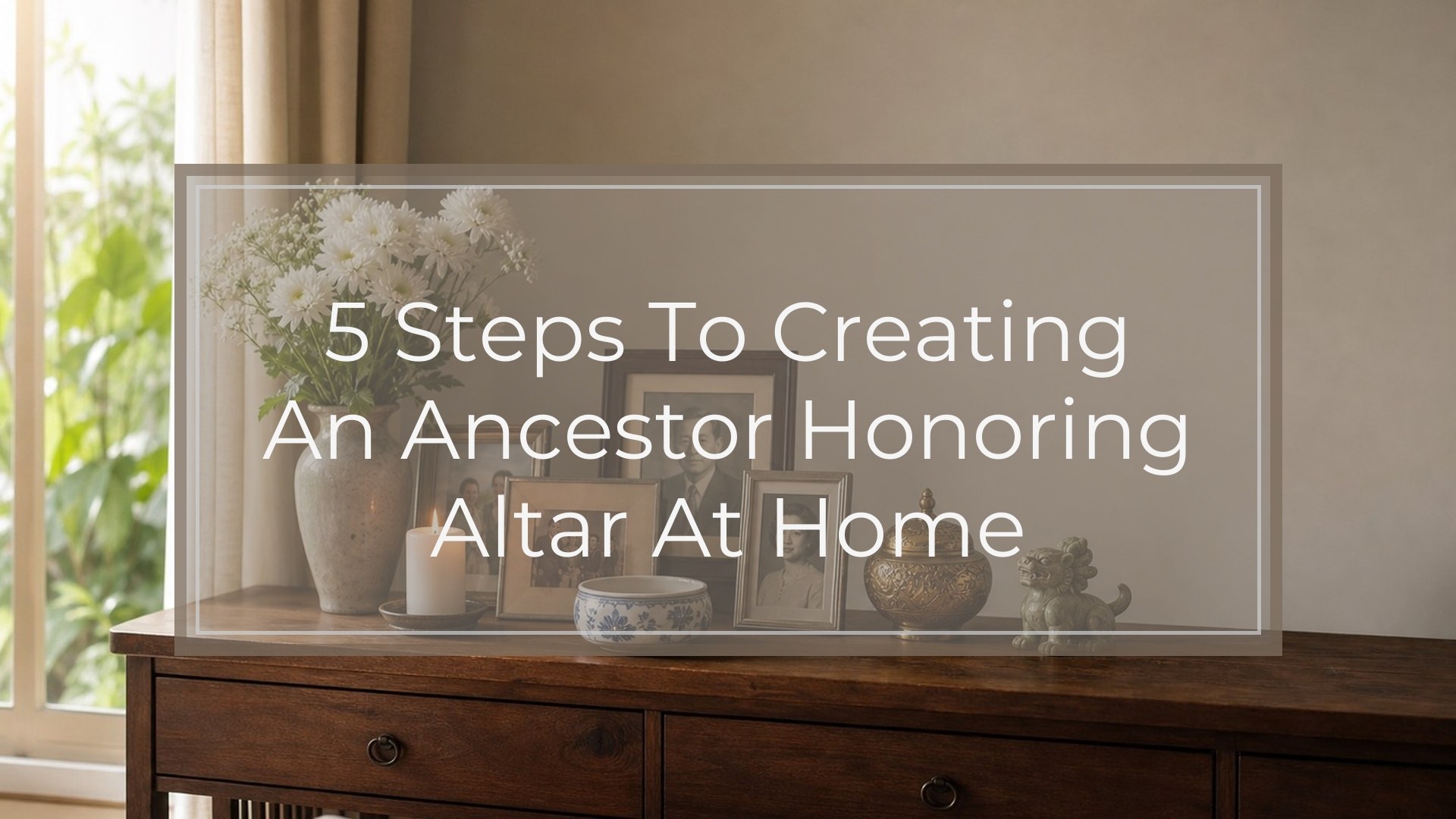
To create an ancestor honoring altar, choose a clean and respectful location, gather meaningful items connected to your ancestors, arrange the altar with intention, open the space with prayer or gratitude, and maintain it with regular offerings and care. The altar does not need to be large, expensive, or perfect. It should feel sincere, safe, and connected to your lineage.
A simple ancestor altar may include a cloth, a glass of water, photos or names, a candle, flowers, and small offerings such as fruit, coffee, tea, or a favorite food. Begin with the ancestors you feel safe honoring, keep the space clean, and build the relationship over time.
Introduction: a Simple Way to Honor the Ancestors
An ancestor honoring altar is a dedicated place where you remember, thank, and spiritually connect with those who came before you. It can be a shelf, small table, windowsill, or quiet corner of your home. What matters most is not how elaborate it looks, but the respect and consistency you bring to it.
For beginners, the goal is simple: create a clean, intentional space where remembrance becomes part of daily or weekly life. Your altar can grow slowly. Start with what you have, honor whom you trust, and let the practice become personal.
Before You Begin: Prerequisites and Spiritual Boundaries
Before setting up the altar, take a moment to decide who you are inviting into the space. Many people begin with loving, protective, or well-intentioned ancestors rather than every deceased relative. You may say clearly, “Only ancestors who come in love, wisdom, and protection are welcome here.”
Prepare emotionally as well. Ancestor work can bring grief, memories, and family complexity to the surface. Move gently, and pause if you feel overwhelmed.
Gather basic supplies: a clean surface, cloth, water glass, photos or written names, candle or electric candle, and a small bowl or plate for offerings. If using candles or incense, keep fire safety in mind. Avoid adopting rituals from closed or initiatory traditions unless they are part of your own lineage or you have proper permission and guidance.
Step 1: Choose a Clean, Respectful Location
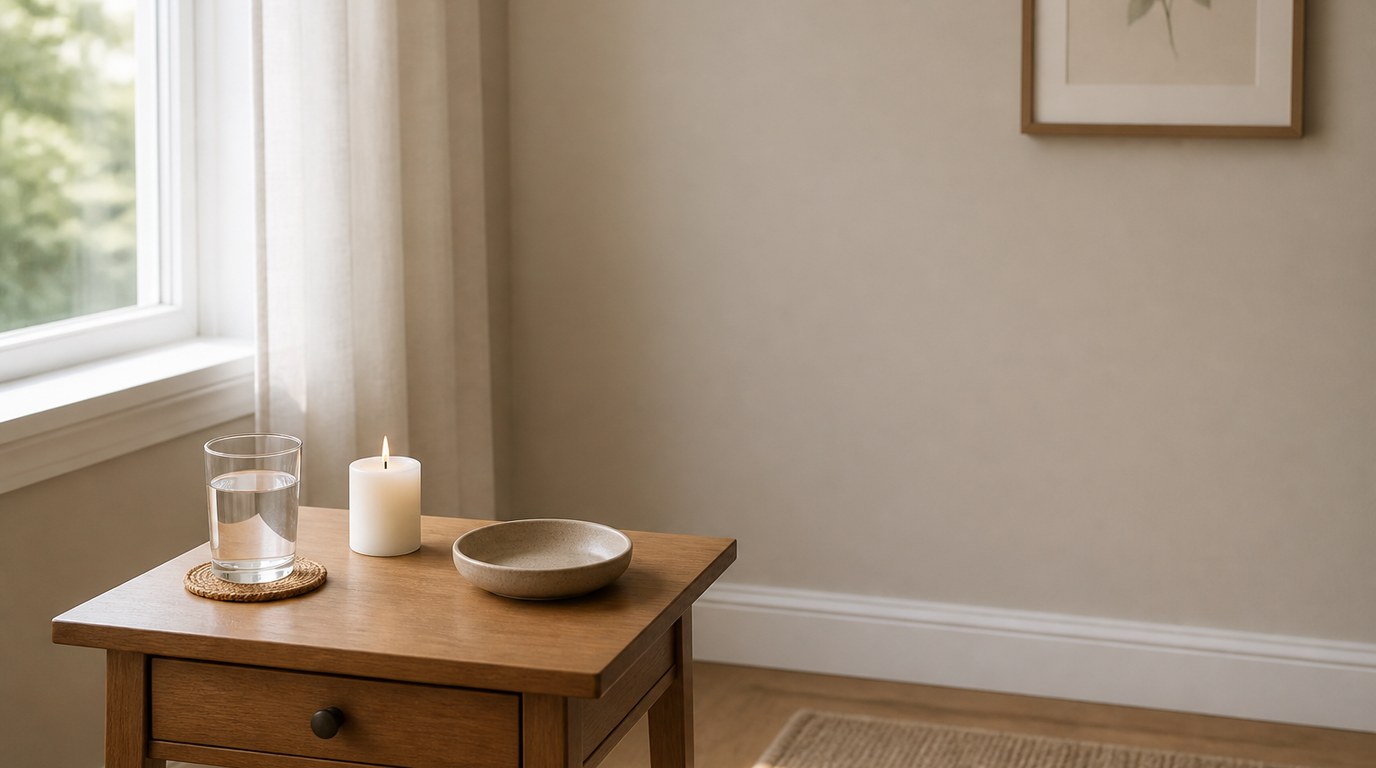
Choose a location that feels peaceful, stable, and easy to maintain. A small table, shelf, dresser top, or cabinet space can work well. The altar should not be in a place where it will be knocked over, cluttered with unrelated items, or treated casually.
If possible, avoid placing it in the bathroom, directly on the floor, or in a chaotic household area. If privacy is important, use a small box altar, covered shelf, or discreet arrangement.
Clean the area physically before you begin. Dust the surface, remove unrelated objects, and wipe it down. You may also open a window, ring a bell, say a short prayer, or sit quietly for a few breaths to mark the space as intentional.
Step 2: Gather Items That Represent Your Ancestors
Choose items that help you remember and honor your people. Photos are useful, but they are not required. You can use written names, family surnames, a family tree, a piece of fabric, jewelry, a recipe card, a small object from your homeland, or symbols of your family’s work and values.
If you do not know your ancestors’ names, write “my known and unknown ancestors of love, protection, and wisdom.” If your family history is painful or unclear, begin with the ancestors who are spiritually well, healed, and benevolent.
Common altar items include a white cloth, water, flowers, candle, stones, religious symbols from your own tradition, and offerings your ancestors may have enjoyed. Keep the selection simple. A crowded altar is harder to care for and can feel unfocused.
Step 3: Prepare and Arrange the Altar with Intention
Place a clean cloth on the surface if you have one. Set photos, names, or symbolic items toward the back or center. Put the water glass in a visible place, often near the front. If you use a candle, place it on a stable holder away from fabric, paper, curtains, and dried flowers. An electric candle is a good option if fire is unsafe.
Add a small plate or bowl for offerings. Keep food offerings separate from decorative items so they are easy to remove. Flowers, shells, stones, or meaningful objects can be placed around the main ancestor items.
As you arrange, move slowly. You might silently say each ancestor’s name or think of the qualities you want to honor: courage, survival, tenderness, skill, faith, creativity, protection. The arrangement should look orderly enough that you can clean it and use it regularly.
Step 4: Open the Altar with Words, Prayer, or Quiet Gratitude
Once the altar is arranged, take a few moments to open the space. You do not need a formal ritual unless your tradition provides one. Stand or sit before the altar, breathe steadily, and speak from the heart.
You might say:
“Ancestors of my blood, spirit, and lineage who come in love, wisdom, and protection, I honor you. Thank you for the life, lessons, strength, and gifts that have reached me. May this space be one of respect, remembrance, healing, and right relationship.”
If speaking aloud feels uncomfortable, write the words in a journal or sit quietly in gratitude. You can light a candle, pour fresh water, or place flowers as your first act of devotion. When finished, thank the ancestors and close respectfully.
Step 5: Make Offerings and Maintain the Altar Regularly
Offerings are gestures of respect and relationship. They do not need to be expensive. Fresh water is one of the simplest and most common offerings. You can also offer coffee, tea, fruit, bread, flowers, cooked food, music, prayer, incense, or acts of service done in your ancestors’ honor.
Set a rhythm you can sustain: daily water, weekly flowers, monthly food, or a short prayer on Sundays. Consistency matters more than complexity.
Remove food before it spoils. Replace cloudy water, wilted flowers, and burned candles. Keep the altar dusted and uncluttered. If offering alcohol, tobacco, or other substances, consider your family history and your own boundaries. You are not required to offer anything that feels harmful, triggering, or unsafe.
Maintenance is part of the devotion. Each time you refresh the altar, you renew the relationship.
How to Know Your Ancestor Altar Is Set up Well
Your ancestor altar is set up well when it feels clean, respectful, and usable. You should be able to identify who or what the altar honors, make a simple offering, and maintain the space without stress.
A good altar does not have to feel dramatic. It may simply feel peaceful, steady, or meaningful. Practical signs also matter: offerings have a clear place, candles are safe, spoiled items are removed, and unrelated clutter does not take over the space.
Common Mistakes and Troubleshooting
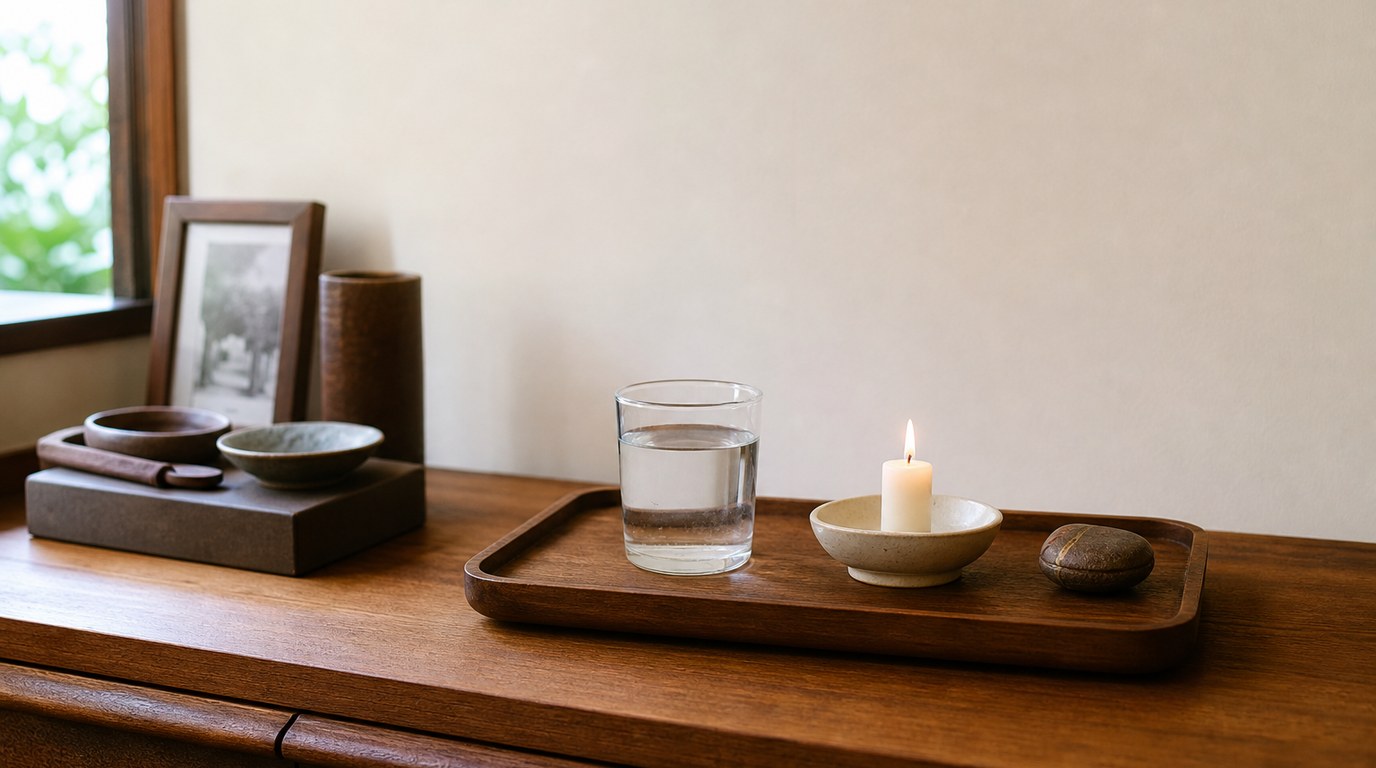
One common mistake is trying to make the altar perfect before beginning. Start small instead. A glass of water, a name, and a sincere prayer are enough.
Another mistake is placing too much on the altar. If the space feels chaotic, remove items until each one has a purpose.
If you feel emotionally heavy after working at the altar, slow down. Honor only benevolent ancestors, shorten your sessions, or take a break. Ancestor work should not push you beyond your capacity.
If offerings spoil quickly, use smaller portions or offer water, flowers, or wrapped items instead. If candles worry you, use battery-powered lights. If family history feels complicated, focus on healed ancestors, chosen ancestors, spiritual elders, or unknown ancestors of love and protection.
Conclusion: Begin Small and Build the Relationship Over Time
Creating an ancestor honoring altar is less about objects and more about relationship. Begin with a clean space, a clear intention, and simple offerings. Speak with respect, maintain the altar regularly, and let the practice deepen naturally.
Your first altar may be modest, but it can become a steady place of remembrance, gratitude, guidance, and healing over time.
FAQ
What Is the First Step Someone Should Take with 5 Steps to Creating an Ancestor Honoring Altar?
The first step is choosing a clean, respectful location. Select a stable surface where the altar will not be disturbed or treated casually. Clean the area, remove clutter, and decide that this space is dedicated to remembrance, gratitude, and respectful connection.
What Can Go Wrong When Following 5 Steps to Creating an Ancestor Honoring Altar Advice?
Common problems include using unsafe candles, leaving food until it spoils, overcrowding the altar, or inviting in ancestors without boundaries. Emotional overwhelm can also happen. Keep the altar simple, remove offerings promptly, use fire safety, and welcome only ancestors of love, wisdom, and protection.
How Long Does It Usually Take to Work Through 5 Steps to Creating an Ancestor Honoring Altar?
A simple altar can be created in 20 to 60 minutes if you already have basic items. Gathering photos, names, or meaningful objects may take longer. The setup is only the beginning; the deeper work develops through regular offerings, prayer, cleaning, and remembrance.
How Can a Beginner Tell Whether 5 Steps to Creating an Ancestor Honoring Altar Worked?
It worked if you have a clean, intentional space where you can honor your ancestors consistently and safely. You should know who is being honored, have a place for offerings, and feel able to return to the altar without confusion, fear, or pressure.