
The 8 yoga poses for grief and grounding are: Easy Seat, Child’s Pose, Cat-Cow, Low Lunge, Supported Forward Fold, Legs Up the Wall, Reclined Bound Angle, and Savasana. Practiced slowly, they help you feel your body, soften guarded places, and create a safe container for sorrow without forcing release.
This sequence is not meant to “fix” grief. It is a gentle way to breathe, rest, and return to the present moment. You can practice it on a yoga mat, beside an ancestor altar, or in any quiet corner where you feel protected. Move with care, use props generously, and let each pose become an offering of steadiness to yourself.
Introduction: a Gentle Practice for Grief
Grief often lives in the body: a tight chest, heavy limbs, shallow breath, clenched jaw, or a sense of floating outside yourself. Yoga can offer a grounded path back to sensation and breath.
This practice is spiritual and practical. It can support mourning, remembrance, and nervous system regulation, but it is not a cure or a substitute for therapy, medical care, or community support. Let the sequence be simple: breathe, feel the floor, and move only as much as your body allows today.
Before You Begin: Prerequisites, Props, and Safety
Choose a quiet space where you will not be interrupted for 20 to 40 minutes. Gather a mat or blanket, two pillows or bolsters, a folded towel, and a wall or chair. If practicing near an ancestor altar, make sure candles, incense, water glasses, and offerings are placed safely away from your movement space.
Avoid forcing deep stretches when you are emotionally raw. If you have injuries, vertigo, recent surgery, pregnancy considerations, high blood pressure, or severe pain, adapt the poses or ask a qualified yoga teacher or clinician. Stop if you feel dizzy, numb, panicked, or unsafe. Grounding should feel steadying, not overwhelming.
How to Set an Intention for Grief and Grounding
Before moving, sit or stand still. Place one hand on your heart and one on your lower belly. Take three slow breaths.
Set an intention that is honest but gentle, such as: “May I be held as I grieve,” “May my body feel safe,” or “I honor my love and my loss.” If you are near an altar, you may speak the name of your loved one, light a candle, or offer a quiet bow before beginning.
Step 1: Easy Seat for Arrival
Sit cross-legged on a folded blanket, cushion, or chair. Let your hips be slightly higher than your knees so your lower back can soften. Rest your hands on your thighs, palms down for grounding or palms up for receiving.
Close your eyes or lower your gaze. Feel the points of contact beneath you. Inhale for a count of four, exhale for a count of six. Stay for 1 to 3 minutes, noticing: “I am here. I am supported.”
Step 2: Child’s Pose for Feeling Held
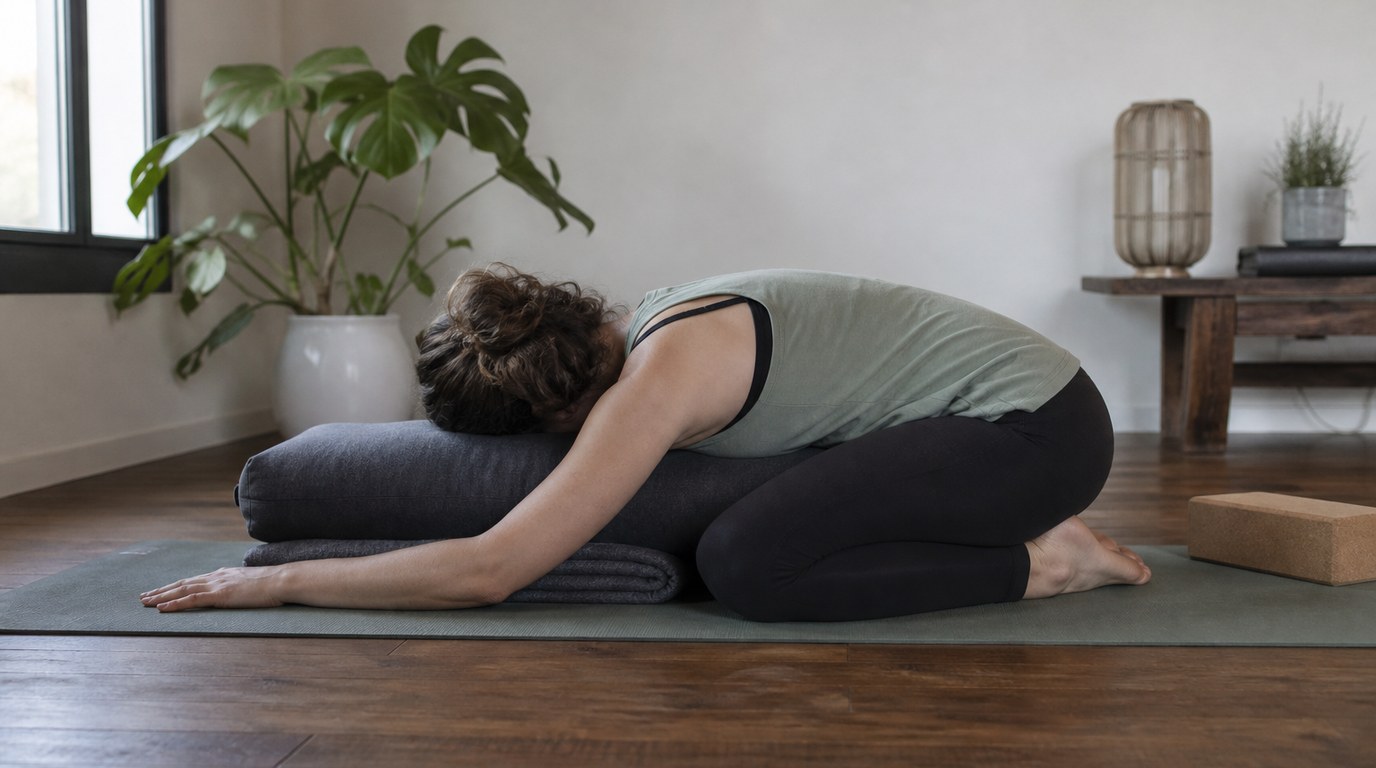
Come to hands and knees. Bring your big toes together and widen your knees, then fold your torso toward the floor. Place a pillow or bolster under your chest if the ground feels too far away. Turn your head to one side, then switch halfway through.
Let your belly and ribs be supported. If Child’s Pose feels emotionally too vulnerable, stack your fists under your forehead or stay higher on your forearms. Hold for 1 to 3 minutes, breathing into your back body.
Step 3: Cat-cow for Moving Stuck Grief
Return to hands and knees, with wrists under shoulders and knees under hips. As you inhale, lift your chest and tailbone gently for Cow Pose. As you exhale, round your spine, tuck your chin, and press the floor away for Cat Pose.
Move slowly for 6 to 10 rounds. Imagine the breath loosening places where grief has become rigid. Keep the motion small if your body feels tender. This is not a workout; it is a way to let sorrow move without needing to explain it.
Step 4: Low Lunge for Opening the Front Body
From hands and knees, step your right foot forward between your hands. Pad your back knee with a blanket. Keep your hands on blocks, pillows, or your front thigh so you do not collapse into the pose.
Gently lengthen through the front of the back hip and lift your chest only as much as feels safe. Grief can make the body curl inward; this pose invites careful openness without demanding it. Hold for 5 to 8 breaths, then switch sides. Come out slowly.
Step 5: Supported Forward Fold for Quieting the Nervous System
Sit with your legs extended or slightly bent. Place a pillow, bolster, or stacked blankets over your thighs. Hinge forward from your hips and rest your chest, arms, and head on the support.
Keep your knees bent if your hamstrings or lower back pull. Avoid pressing yourself down. The goal is quiet, not depth. If forward folding makes you feel trapped or emotionally flooded, sit upright and rest your forehead on stacked pillows instead. Stay for 1 to 3 minutes, breathing gently.
Step 6: Legs up the Wall for Rest and Grounding
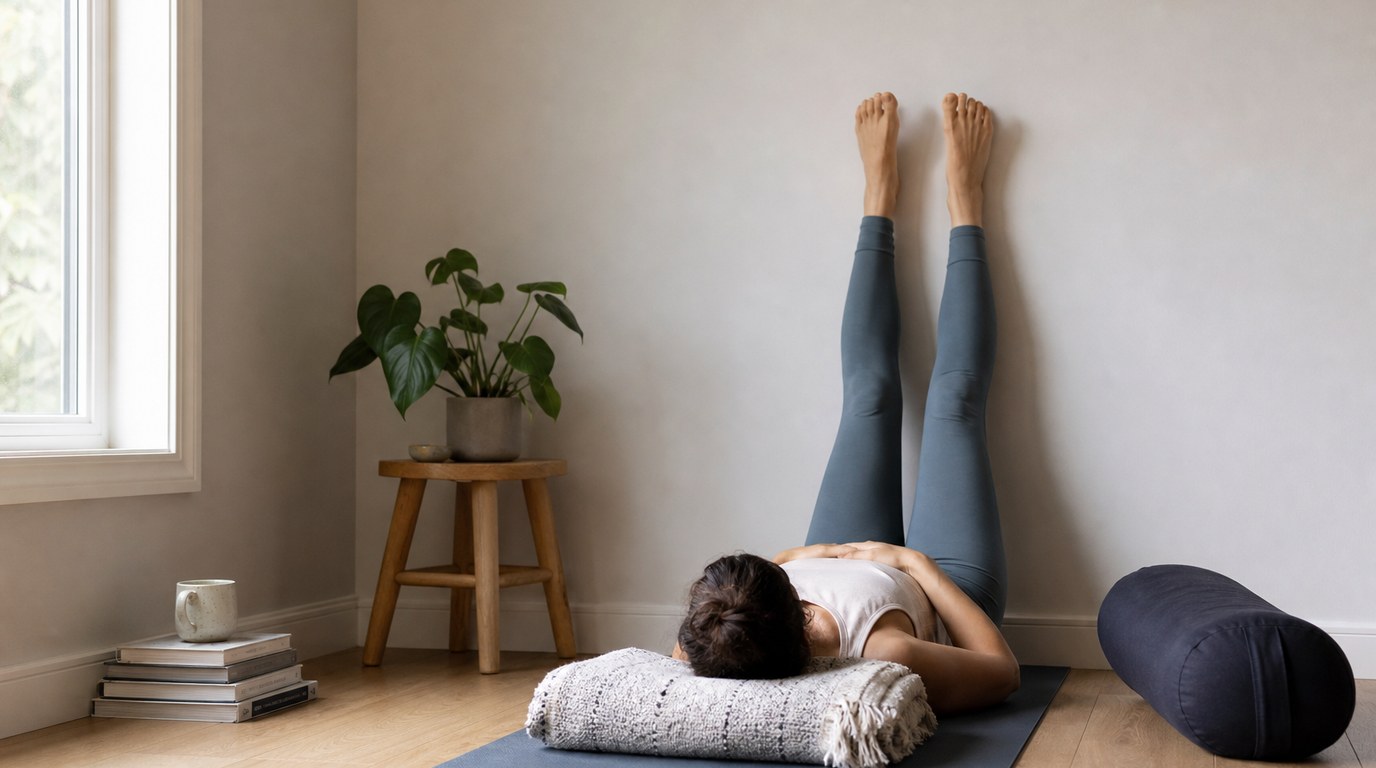
Sit sideways beside a wall, then slowly lower your back to the floor as you swing your legs up. Your hips can be close to the wall or several inches away. Place a folded blanket under your head or hips if comfortable.
If the wall is not available, rest your calves on a chair. Let your arms fall by your sides or place one hand on your heart. Stay for 3 to 7 minutes. Come out by bending your knees, rolling to one side, and pausing before sitting.
Step 7: Reclined Bound Angle for Softening the Chest and Hips
Lie on your back. Bring the soles of your feet together and let your knees open outward. Support each knee with pillows or blocks so your inner thighs do not strain. For extra comfort, place a bolster or folded blanket lengthwise under your spine.
Rest your hands on your belly, heart, or the floor. This pose can feel tender because it opens the chest and hips. If it feels too exposed, bring your knees closer together or cover yourself with a blanket. Stay for 2 to 5 minutes.
Step 8: Savasana for Integration and Closure
Extend your legs or keep your knees bent with a pillow underneath them. Cover yourself with a blanket if warmth feels comforting. Let your arms rest naturally, and allow your body to be completely supported by the ground.
Stay for 5 minutes, or longer if you have time. To check the result, ask: Is my breath a little slower? Do I feel more connected to the floor? Is there even one place in my body that feels softer? The shift may be subtle. That is enough.
After the Practice: How to Ground Before Re-entering the Day
Do not rush up. Roll to one side and pause. Press your hands into the floor, then sit slowly. Look around the room and name five ordinary things you see.
Drink water or tea. Touch something textured, such as a blanket, bead, stone, or altar cloth. If you practiced near an ancestor altar, close with thanks: “May this love be remembered. May I return to my day with steadiness.” Eat something simple if you feel lightheaded.
Common Mistakes and Troubleshooting
A common mistake is trying to make grief “release” on command. Instead, measure the practice by presence: steadier breath, softer shoulders, or feeling your feet again.
If you feel numb, shorten the sequence and use more touch: hands on heart, weighted blanket, or feet pressed into the wall. If you feel overwhelmed, open your eyes, sit up, and name the date, place, and room you are in. If a pose hurts, leave it immediately and choose a supported version. If silence feels too intense, play soft instrumental music, a prayer, or nature sounds. Gentle consistency matters more than perfect form.
How Often to Practice This Grief-grounding Sequence
Practice when you need support, not as another obligation. Once or twice a week may be enough during intense grief. On difficult anniversaries, birthdays, or ritual days, choose only three poses: Easy Seat, Child’s Pose, and Savasana.
You can also practice for 10 minutes before tending an ancestor altar, after lighting a memorial candle, or before sleep. Let your body decide the length. Some days grounding is movement; other days it is simply lying down and breathing.
FAQ
What Is the Best Yoga Pose for Grief?
Child’s Pose is often the best yoga pose for grief because it feels protective, quiet, and held. Use pillows under your chest and head so the body can soften. If Child’s Pose feels too vulnerable, try Legs Up the Wall or Savasana instead.
Can Yoga Help with Grief?
Yoga can help grief by calming the nervous system, reconnecting you with the body, and giving emotion a safe place to move. It does not erase loss. Think of it as support alongside mourning rituals, therapy, prayer, community, rest, and time.
How Long Should I Hold Yoga Poses for Grief?
Hold gentle poses for 1 to 5 minutes, depending on comfort. Movement like Cat-Cow can be done for 6 to 10 slow rounds. If you feel anxious, dizzy, or emotionally flooded, come out sooner. Short, steady practice is better than forcing endurance.
Can I Do This Practice at an Ancestor Altar?
Yes, if the space is safe. Keep candles, incense, glass, and offerings away from your mat. You might begin with a name, prayer, or offering, then practice nearby. Let the yoga support remembrance rather than distract from it.
What Should I Do If I Start Crying During Yoga?
If crying begins, pause and breathe. You do not have to stop unless you feel overwhelmed. Place a hand on your heart, open your eyes, or move into Child’s Pose or Savasana. If the emotion feels too big, sit up, ground, and seek support.