
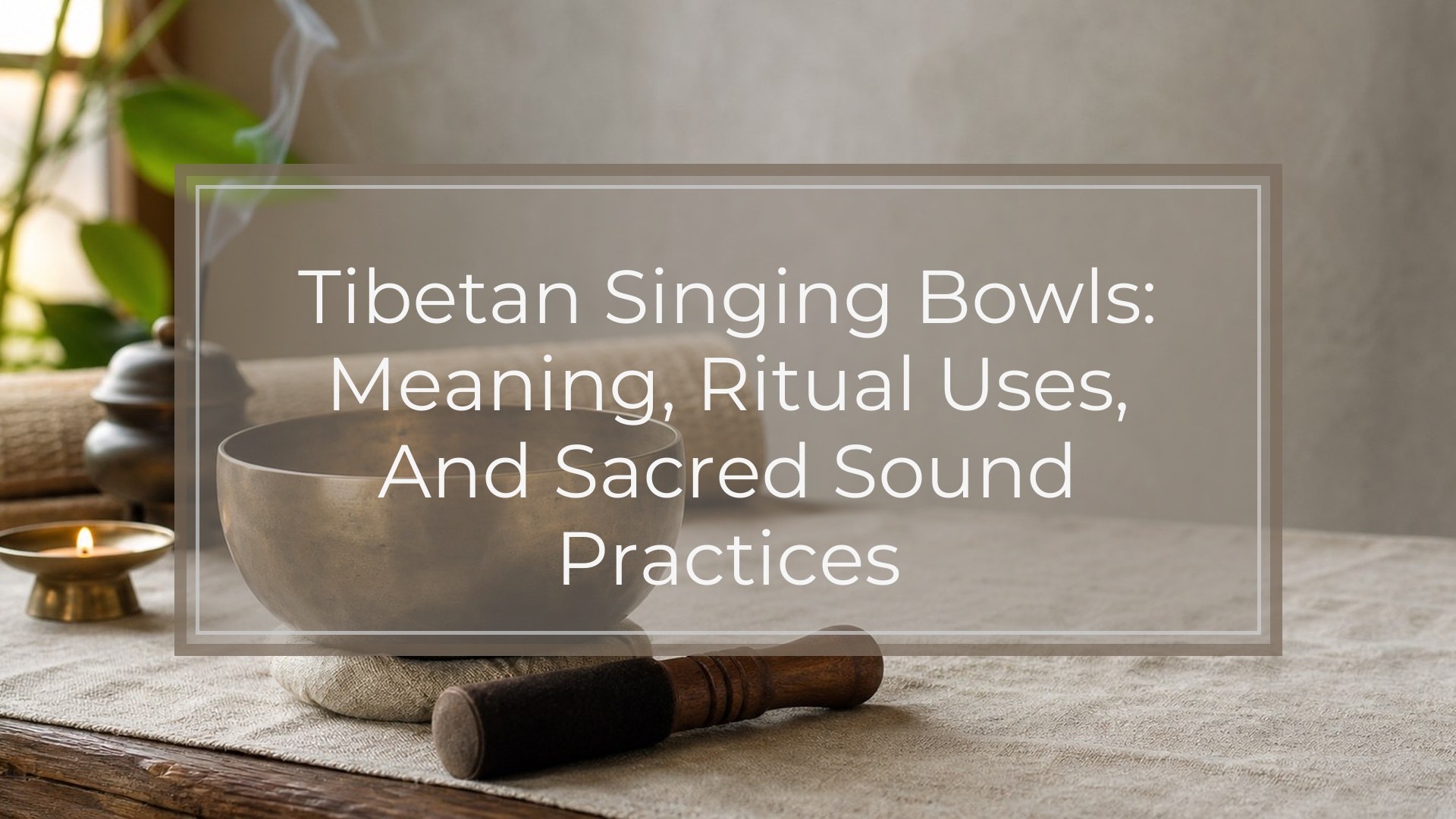
Tibetan singing bowls are ritual sound tools used to create steady tones, vibrations, and moments of focused attention. In meditation, they can mark the beginning or end of practice, support breath awareness, and help settle the mind. In home ritual, their sound can create a clear transition from ordinary time into sacred time. For ancestor altar work, a bowl may be used respectfully to open a prayer, call attention to the altar, or close an offering with gratitude. The bowl itself is not a shortcut to spiritual depth; its value comes from mindful use, respectful sourcing, and the intention carried through sound.
What Are Tibetan Singing Bowls?
Tibetan singing bowls are bowl-shaped instruments that produce a resonant tone when struck or circled with a mallet. Many are made from metal alloys, though modern versions may also be made from crystal. They are often associated with Himalayan spiritual traditions, meditation spaces, yoga studios, and sound healing practices.
A singing bowl is both an object and an experience. Visually, it may look simple: a rounded metal bowl resting on a cushion or held in the palm. In practice, its sound can feel spacious, grounding, or clarifying. The tone may ring briefly or bloom into layered overtones that linger in the room.
For ritual use, the bowl’s main purpose is not decoration. It creates sound that helps focus attention.
Why Tibetan Singing Bowls Matter in Ritual Practice
Ritual depends on thresholds. A candle is lit, water is poured, incense is offered, a prayer is spoken. Tibetan singing bowls support that threshold by giving it a sound. One clear tone can signal, “Now I am present. Now this space is being honored.”
The sound can also regulate the body. A slow, sustained tone invites slower breathing and deeper listening. This makes the bowl useful before prayer, meditation, divination, ancestor offerings, or quiet reflection.
Spiritually, many people use singing bowls to cleanse, bless, or harmonize a space. Whether you understand that literally, symbolically, or energetically, the practical effect is similar: the sound gathers attention and gives ritual a beginning, center, and ending.
Key Traits: Tone, Material, Size, and Feel
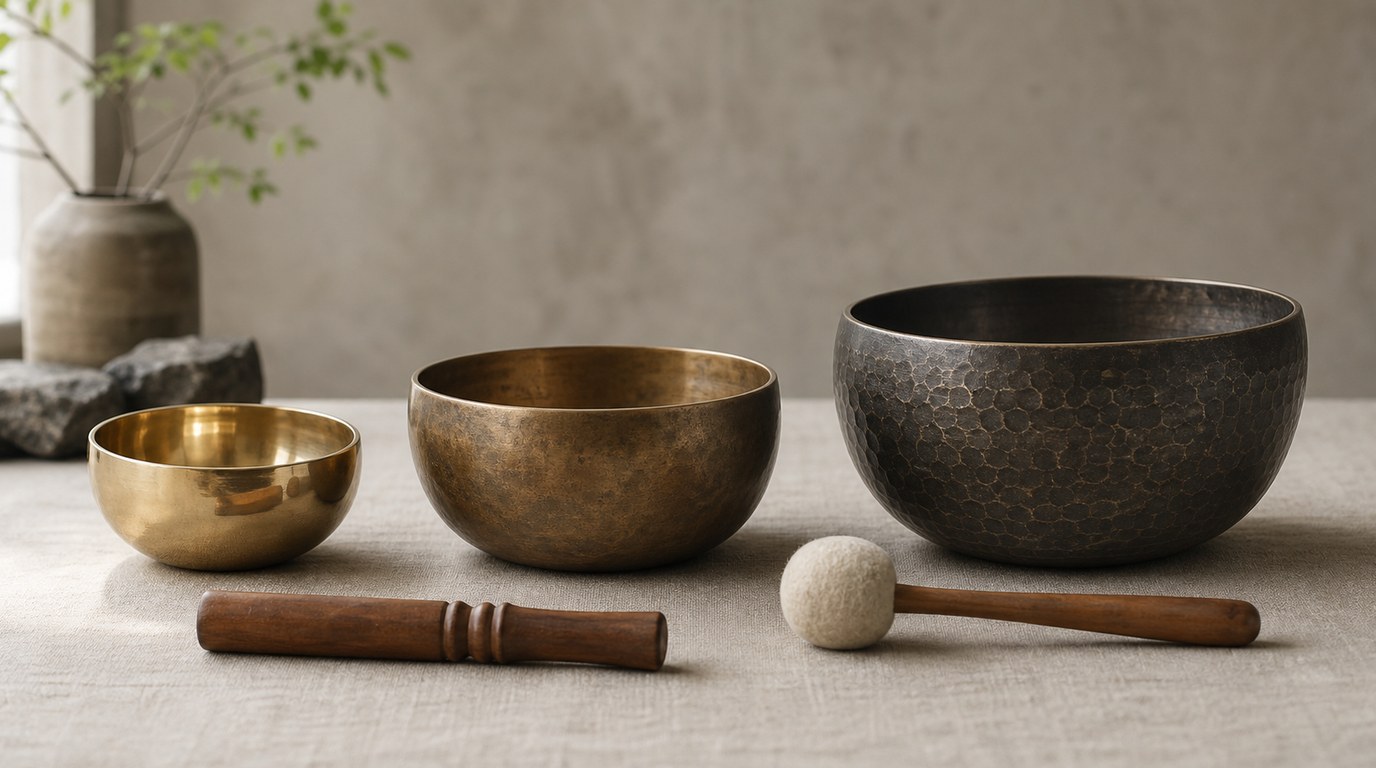
Not all Tibetan singing bowls sound or feel the same. Tone is the first difference most people notice. Some bowls have a high, bright ring; others sound low, warm, and earthy. A tone that feels peaceful to one person may feel sharp to another, so listening before buying is helpful.
Material also matters. Traditional-style metal bowls often produce complex overtones and a grounded resonance. Crystal bowls tend to sound clearer, louder, and more sustained, though they are a different type of modern sound tool.
Size affects both pitch and volume. Smaller bowls are easier to hold and store, while larger bowls may create deeper tones. The feel of the bowl in your hand matters too: it should invite care, not performance.
How to Use a Tibetan Singing Bowl
Begin by placing the bowl on a cushion, mat, or the flat palm of your non-dominant hand. Avoid gripping the sides, because that can stop the vibration. Hold the mallet gently in your other hand.
To strike the bowl, tap the outer rim lightly and let the sound open. You do not need force. One clean tone is often more effective than repeated loud strikes.
To make the bowl “sing,” tap it first, then move the mallet slowly around the outside rim with steady pressure. Keep your wrist relaxed and your movement even. If the sound wavers or stops, slow down rather than pressing harder.
Use the tone with your breath. Inhale as the sound rises, exhale as it fades, and let silence be part of the practice.
Using a Singing Bowl with an Ancestor Altar
A Tibetan singing bowl can be used with an ancestor altar when it supports reverence rather than spectacle. The sound may help you shift from daily activity into a state of remembrance. Before approaching the altar, you might ring the bowl once, breathe, and greet your ancestors by name or lineage.
The bowl can also close the ritual. After offering water, flowers, food, incense, or prayer, ring the bowl gently and sit in silence. Let the fading tone carry your gratitude.
If your ancestral traditions already have specific sound tools, songs, bells, drums, or spoken forms, consider those first. A singing bowl does not need to replace inherited practice. It can be a companion tool when used humbly, especially in a mixed or personal home altar practice.
Practical Examples of Simple Bowl Rituals
For a morning grounding ritual, sit near your altar or a quiet space. Ring the bowl once, place one hand on your heart, and say, “May I move through this day with guidance and steadiness.” Listen until the tone fades.
For ancestor remembrance, refresh the altar water, light a candle if appropriate, and ring the bowl softly. Speak the names you know. For unknown ancestors, say, “For those whose names are forgotten but whose lives made mine possible.”
For cleansing a room, stand near the entrance and sound the bowl once. Walk slowly through the space, pausing in corners or heavy-feeling areas. Keep your intention simple: clarity, peace, and blessing.
For meditation, ring the bowl at the beginning and end instead of using a timer alarm.
Respectful Use and Sourcing
Because Tibetan singing bowls are linked in the public imagination to Tibetan and Himalayan cultures, use them with respect. Avoid treating them as exotic props or making exaggerated claims about ancient secrets. Learn from reputable teachers, makers, or sellers when possible.
Ethical sourcing matters. Buy from transparent vendors who can explain where the bowl was made, who benefits from the sale, and whether the description is honest. A respectful practice does not require the oldest, rarest, or most expensive bowl. It requires care, humility, and consistency.
Related Ritual Sound Tools
Tibetan singing bowls sit among other ritual sound tools, but each has a different feel. Bells create clear openings and closings. Tingsha cymbals offer a bright, precise tone often used for attention and transition. Drums create rhythm, movement, and trance. Rattles can clear or awaken space through texture and repetition.
A singing bowl is most useful when you want sustained resonance, stillness, and listening. If your practice needs rhythm, a drum may fit better. If it needs a brief signal, a bell may be enough.
Choosing a Bowl for Your Practice
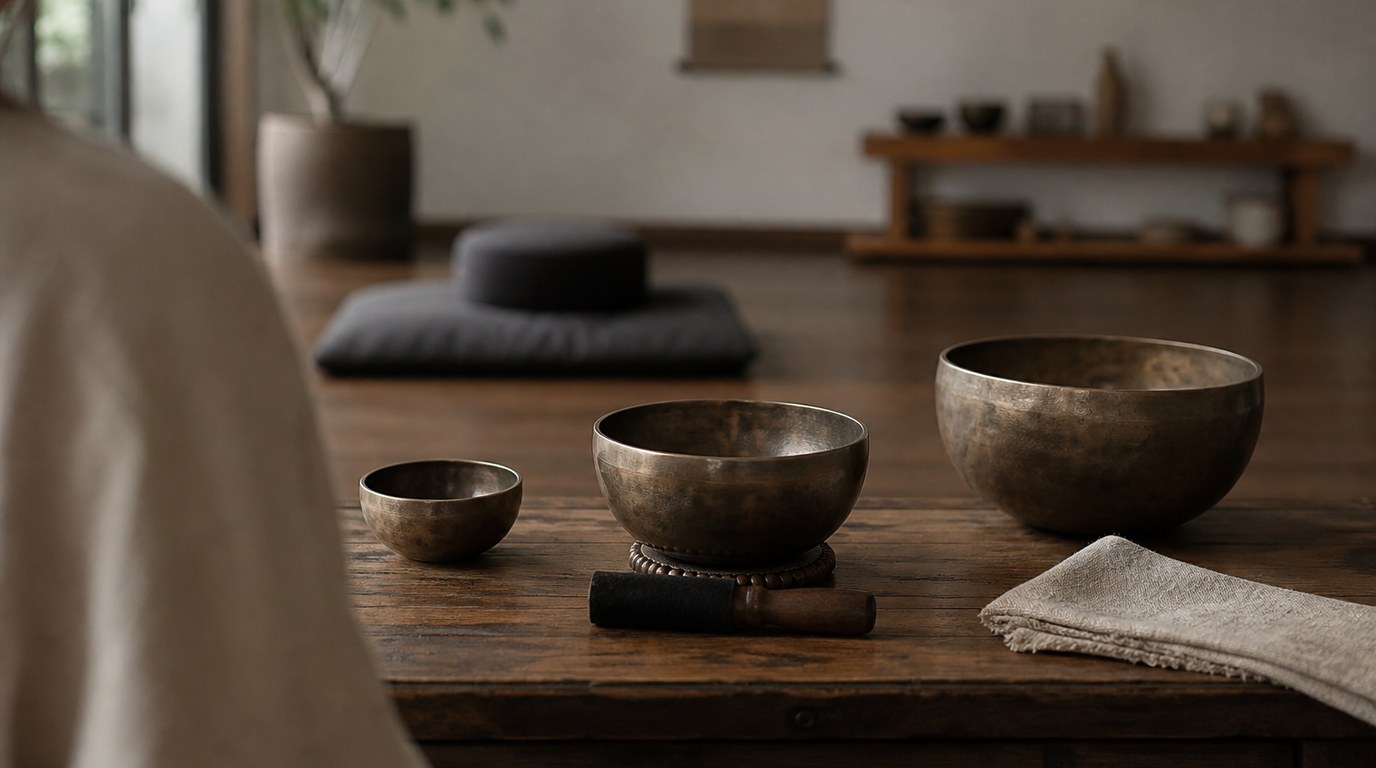
Choose a bowl by listening first. The “right” bowl is not always the most ornate or expensive one; it is the one you will use with sincerity. Notice whether the tone relaxes your body, irritates your ears, or feels emotionally supportive.
For a small altar, a modest metal bowl is often enough. For group meditation, a larger bowl may carry better. If you live with others, consider volume. If you travel or keep a discreet altar, choose something compact.
A Tibetan singing bowl is relevant when sound helps you focus, mark sacred time, or deepen prayer.
FAQ
Are Tibetan Singing Bowls Religious?
Tibetan singing bowls can be used in religious, spiritual, or secular settings. They are often associated with meditation and Himalayan traditions, but many people use them for mindfulness, relaxation, or ritual focus. The meaning depends on the context, intention, and respect of the practitioner.
Can I Use a Tibetan Singing Bowl on an Ancestor Altar?
Yes, if it supports reverence and does not conflict with your lineage traditions. Use it to open prayer, mark silence, or close offerings with gratitude. If your family or culture has its own sound practices, honor those first or allow the bowl to complement them gently.
Do Tibetan Singing Bowls Cleanse Energy?
Many practitioners use singing bowls for energetic cleansing, believing the sound helps clear heaviness and restore harmony. Others understand the effect as psychological or symbolic. Either way, the sound can help reset attention, shift the mood of a room, and support intentional spiritual practice.
What Is the Best Way to Play a Singing Bowl?
Start simply. Place the bowl on a cushion or open palm, tap the rim gently, and listen until the sound fades. To make it sing, circle the rim slowly with steady pressure. Avoid forcing the tone; relaxed movement usually creates the clearest sound.
Is a Metal or Crystal Singing Bowl Better?
Neither is universally better. Metal bowls often have warm, complex overtones and suit altar work, meditation, and intimate ritual. Crystal bowls can be louder, clearer, and more sustained. Choose based on sound, setting, budget, and how the vibration feels in your body.