
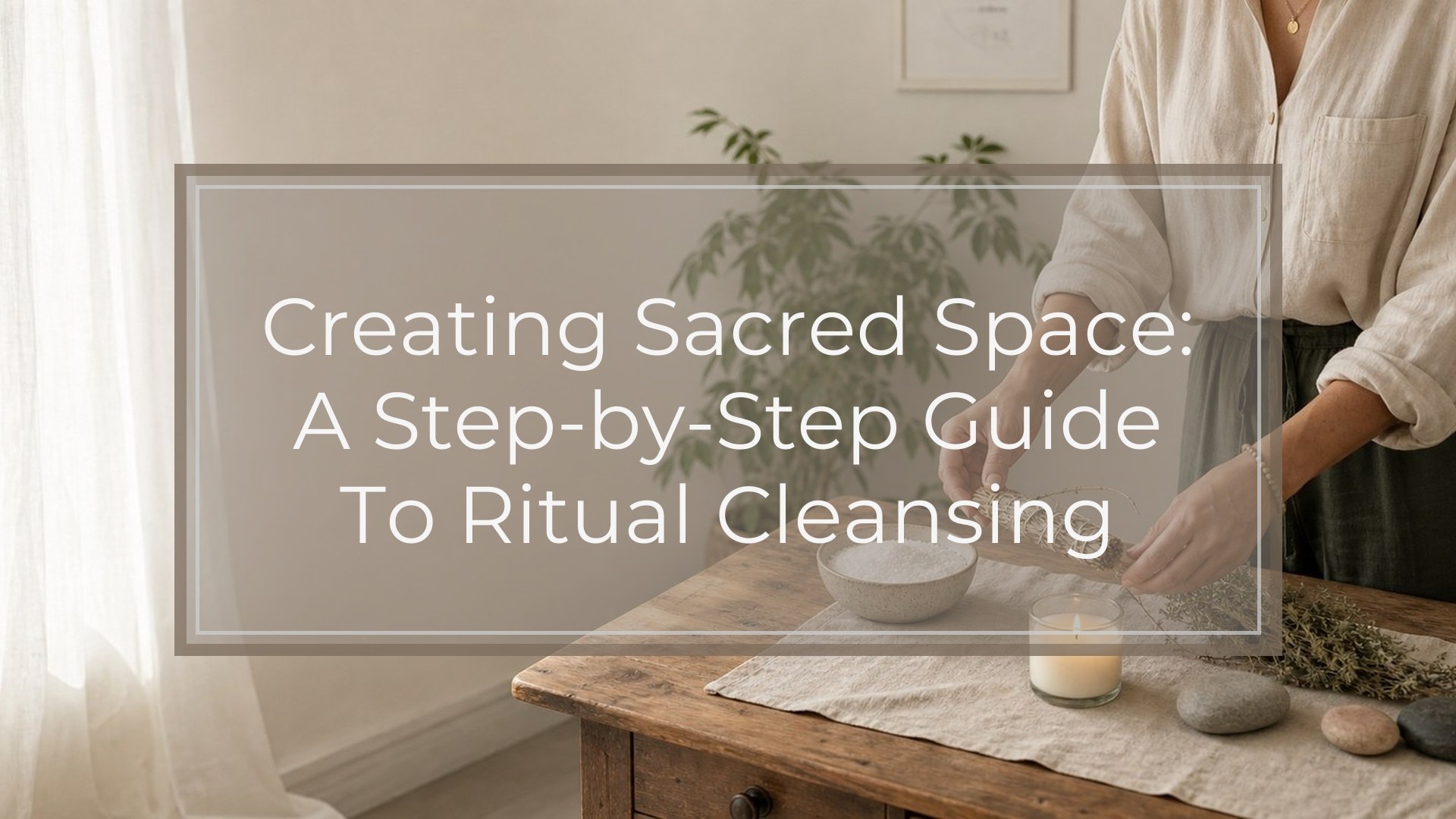
Creating sacred space means preparing a physical area so it supports prayer, meditation, ancestor veneration, altar work, offerings, or other ritual practice. It does not have to be elaborate, expensive, or permanent. A small shelf, clean corner, bedside table, or cloth on the floor can become sacred when it is chosen with care, cleaned, dedicated, and maintained.
The process is simple: choose a suitable location, clean it, bless or cleanse it in a respectful way, set your intention, arrange meaningful items, and care for the space over time. The goal is not perfection. The goal is a place that helps you become present, respectful, and spiritually focused.
What Sacred Space Is—and What It Is Not
Sacred space is an intentionally prepared place where ordinary attention shifts toward spiritual attention. It may be used for speaking with ancestors, lighting a candle, making offerings, praying, journaling, meditating, or sitting quietly.
It is not a decoration trend, a way to collect objects without purpose, or a substitute for responsibility in your daily life. A sacred space should support reverence and consistency. It can be beautiful, but beauty is not the main requirement. Cleanliness, intention, respect, and appropriate use matter more than style.
Before You Begin: Prerequisites for Creating Sacred Space
Before you begin, decide three practical things.
First, know the purpose of the space. Will it be for ancestor veneration, daily prayer, meditation, seasonal ritual, or general reflection? A clear purpose helps you choose objects and boundaries.
Second, consider household safety. If you live with children, pets, roommates, or elders, choose a place where candles, glass, water, food offerings, incense, or fragile objects will not create risk.
Third, gather simple supplies before starting: a cleaning cloth, a bowl of water, a candle or battery candle, a small cloth, and any meaningful ritual items. Avoid buying too much at once. Sacred space grows through relationship, not shopping.
If you are using practices from a specific culture or lineage, follow that tradition’s guidance and avoid borrowing closed rituals without permission.
Sacred Space Essentials and Their Purpose
Use only what supports your purpose. A simple space is often easier to maintain than a crowded one.
| Item | Purpose | Practical caution |
|---|---|---|
| Clean cloth | Marks the area as intentional | Wash regularly |
| Water bowl or glass | Represents life, clarity, offering | Refresh often |
| Candle or light | Focus, prayer, presence | Never leave flame unattended |
| Photo or name | Ancestor or spirit connection | Use respectfully |
| Offering dish | Holds food, flowers, or tokens | Remove old offerings |
| Journal or prayer card | Records messages or intentions | Keep private if needed |
Step 1: Choose the Right Location
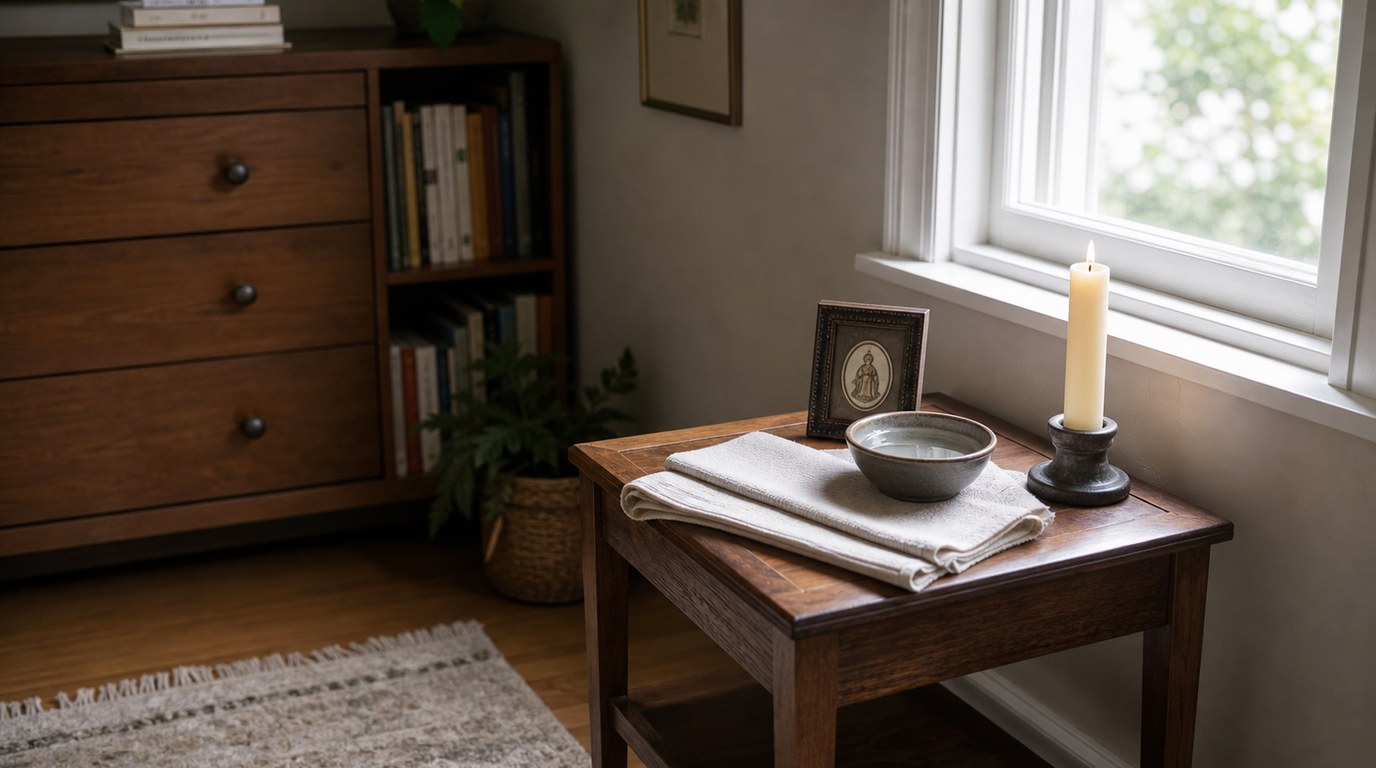
Choose a location that is quiet enough for attention and safe enough for regular use. A shelf, dresser, small table, windowsill, or floor mat can work. If the space is for ancestor veneration, select a place that feels respectful rather than hidden in clutter.
Avoid areas next to trash bins, dirty laundry, heavy foot traffic, or anything that makes care difficult. If privacy is limited, use a small box or tray that can be opened for ritual and stored afterward. The best location is one you can actually tend.
Step 2: Physically Clean the Area
Clean the area before doing any spiritual work. Dust the surface, sweep or vacuum the floor, remove old items, wipe away spills, and clear unrelated clutter. If you are using a cloth, shake it out or wash it first.
This step matters because physical disorder can distract the mind and weaken the feeling of intention. Cleaning also shows respect. You are preparing a place to receive prayer, offerings, memory, or spiritual attention.
Do not skip this step and rely only on incense, sprays, or spoken blessings. Spiritual cleansing works best when the space is physically clean.
Step 3: Spiritually Cleanse or Bless the Space
After cleaning, use a simple spiritual cleansing or blessing method that fits your beliefs and background. You might say a prayer, ring a bell, sprinkle clean water, use sound, pass your hands over the area, or sit quietly and breathe with intention.
If you burn incense, herbs, or resin, use good ventilation and a fireproof holder. Do not use smoke around people with respiratory issues, babies, pets, or smoke-sensitive housing rules. A candle, sound, or spoken blessing can be just as sincere.
Be culturally respectful. Do not copy ceremonies, sacred medicines, chants, or tools from traditions you have not been taught to practice. Choose methods you can use honestly.
Step 4: Set a Clear Intention
Now name the purpose of the space out loud or in writing. Keep it direct. For example: “This space is for honoring my loving and well ancestors,” or “This space is for prayer, clarity, and protection.”
A clear intention gives the space boundaries. It tells you what belongs there and what does not. If the area is for ancestor work, you may specify that only ancestors who come in love, wisdom, and blessing are welcome.
Write your intention on a card if that helps you stay focused.
Step 5: Place the Foundation Items
Begin with a clean cloth or surface. Place your main focus item first: a candle, lamp, bowl of water, prayer card, symbol, or empty center point. Then add only the items needed for the purpose of the space.
Keep the arrangement stable. Put water where it cannot spill onto electronics or paper. Keep candles away from curtains, dried flowers, loose fabric, and shelves above them. If fire is unsafe, use a battery candle or small lamp.
Leave some open space. A crowded altar or ritual area becomes harder to clean, harder to use, and easier to neglect.
Step 6: Add Ancestor, Spirit, or Ritual Objects with Care
If the space will include ancestor veneration, add photographs, written names, heirlooms, or items connected to loved ones. Choose objects that carry respect, not unresolved chaos. If a relationship was harmful or complicated, you do not have to place that person on your altar.
Many people begin with well ancestors, loving family members, spiritual elders, or unknown ancestors who wish them healing and protection. If you use offerings, keep them fresh and appropriate: water, flowers, a small portion of food, coffee, tea, or another meaningful item.
Do not leave food until it rots. Remove offerings respectfully and dispose of them according to your practice.
Step 7: Dedicate the Space with a Simple Opening Ritual
Stand or sit before the space. Take three slow breaths. Light the candle or turn on the lamp. Place your hands over your heart, on the table, or in prayer position.
Say something simple:
“This space is set apart for prayer, remembrance, and right relationship. May it hold peace, clarity, protection, and respect. May all work done here be aligned with blessing.”
Pause for a moment. Offer water, silence, song, or a spoken greeting to your ancestors or spiritual supports. When you are finished, thank the space and safely extinguish the candle if you used flame.
Step 8: Maintain the Sacred Space
Sacred space stays alive through care. Refresh water regularly, remove old offerings, dust the surface, and straighten items after use. If you light candles, check wax buildup and replace unsafe holders.
Set a rhythm you can keep: daily, weekly, or before each ritual. A neglected space can feel heavy, not because you failed spiritually, but because unattended objects collect dust, stale offerings, and unfinished attention.
If the purpose of the space changes, rededicate it. Remove items that no longer belong, clean again, and speak a new intention.
How to Know Your Sacred Space Is Ready
Your sacred space is ready when it is clean, safe, intentional, and usable. You should be able to approach it without needing to move clutter, worry about hazards, or wonder what it is for.
A ready space often feels calmer than the surrounding area, even if it is simple. You may notice that your breathing slows, your prayer feels easier to begin, or your attention settles more quickly.
Use this practical check: Is it physically clean? Is the purpose clear? Are offerings safe and fresh? Can you maintain it? If yes, begin.
Common Mistakes and Troubleshooting
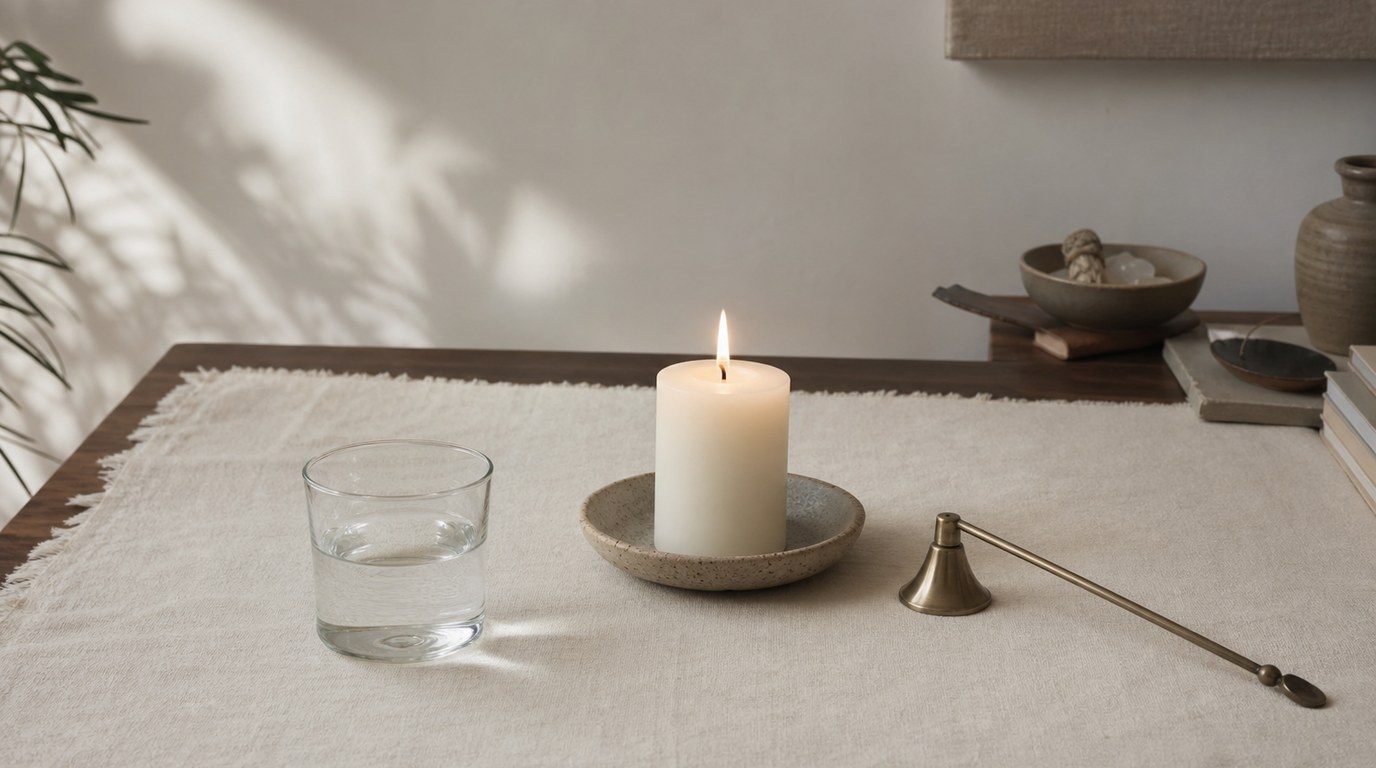
A common mistake is making the space too complicated. If you avoid using it because setup feels overwhelming, remove half the items and return to the basics: cloth, water, light, intention.
Another mistake is ignoring safety. Never leave candles burning unattended. Keep smoke away from pets, children, and sensitive lungs. Secure breakable items.
If the space feels heavy, clean it physically first. Refresh water, remove old offerings, open a window if possible, and repeat a short blessing.
If you feel unsure, do not add more objects. Instead, clarify the purpose. A sacred space becomes stronger through consistent respect, not constant rearranging.
FAQ
What Is the First Step Someone Should Take with Creating Sacred Space?
The first step is choosing a clear purpose. Decide whether the space is for ancestor veneration, prayer, meditation, offerings, or another ritual focus. Once the purpose is clear, choose a safe location and clean it before adding spiritual items.
What Can Go Wrong When Following Creating Sacred Space Advice?
The most common problems are clutter, unsafe candle use, stale offerings, too much smoke, and borrowing rituals without cultural understanding. These are easy to correct: simplify the setup, use fire-safe alternatives, refresh offerings, ventilate well, and practice respectfully.
How Long Does It Usually Take to Work Through Creating Sacred Space?
A simple sacred space can be created in 20 to 45 minutes if you already have basic items. A more detailed ancestor altar or ritual area may take longer, especially if you are sorting photos, choosing offerings, or preparing prayers.
How Can a Beginner Tell Whether Creating Sacred Space Worked?
It worked if the area is clean, safe, clearly dedicated, and easy to use. You do not need dramatic signs. If you can approach the space, focus more easily, make offerings respectfully, and maintain it consistently, the space is serving its purpose.