
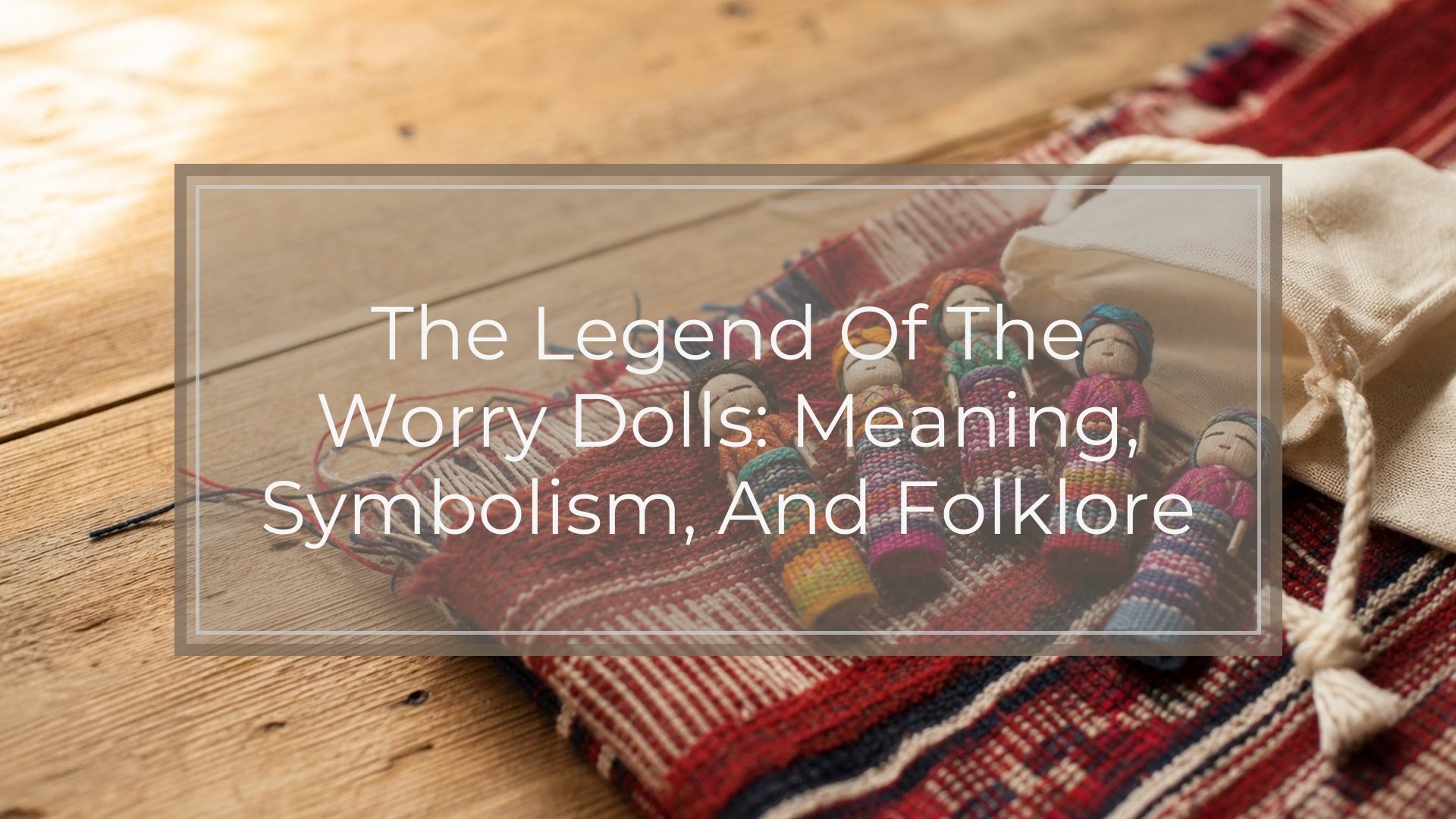
The legend of the worry dolls says that when a person cannot sleep because of fear, sadness, or anxious thoughts, they may tell each worry to a tiny handmade doll before bed. The doll is then placed under the pillow, where it symbolically carries the worry through the night so the person can rest.
Worry dolls are most commonly associated with Guatemala and with Indigenous Maya cultural influence, though the exact history is often shared through oral tradition rather than a single fixed source. Today, they are used as folk objects, comfort tools, children’s gifts, and gentle ritual items for release, trust, and emotional relief.
What Are Worry Dolls?
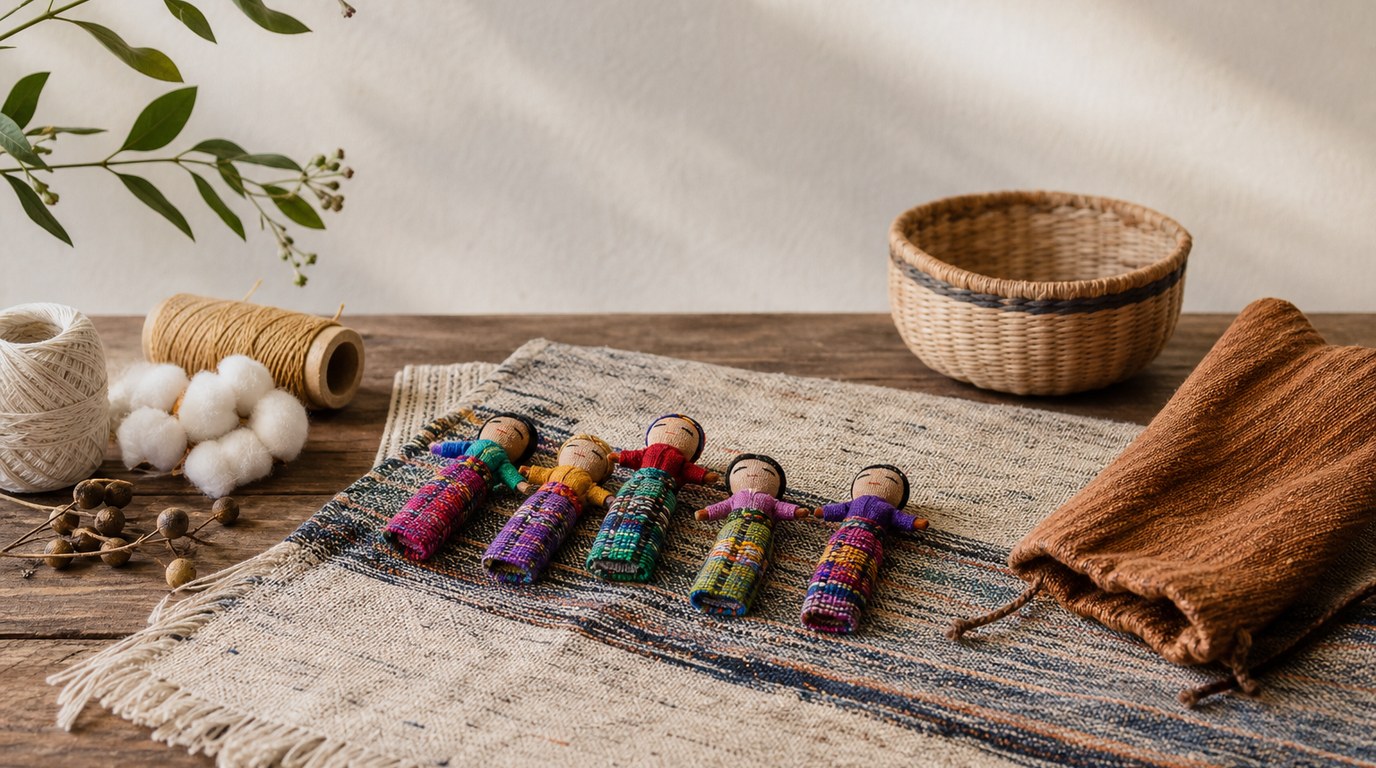
Worry dolls are small handmade figures, often only one or two inches tall. They are usually made from bits of wood, wire, thread, fabric, and colorful woven textiles. Many are dressed in bright clothing that reflects Guatemalan craft traditions.
A set may include several dolls kept in a small pouch or box. Their size is part of their charm: they are tiny enough to hold in the hand, place beneath a pillow, or keep near a bedside. They are not “magic” in a dramatic sense. Their power is symbolic, emotional, and ritual-based: they give a worry somewhere to go.
The Legend of the Worry Dolls
The central legend of the worry dolls is simple and tender. A child, troubled by fears and unable to sleep, is given a set of tiny dolls. Before bed, the child tells one worry to each doll. The dolls are then placed under the pillow. While the child sleeps, the dolls take the worries away, allowing the child to wake with a lighter heart.
In many retellings, the dolls are connected to a princess or wise figure who receives the gift of solving human worries. Other versions focus less on one named character and more on the practice itself: speaking the worry, giving it to the doll, and resting in trust.
Because folklore shifts as it is told across families, markets, books, and communities, there is not one official version of the legend. What remains consistent is the emotional pattern: name the burden, entrust it to a small helper, and let the night hold what the mind cannot solve.
Where the Tradition Comes from
Worry dolls are widely associated with Guatemala, especially with Maya-influenced craft traditions. They are often sold as muñecas quitapenas, meaning “dolls that remove worries” or “worry-removing dolls” in Spanish.
It is important to speak carefully about their origins. Many sources describe them as Guatemalan or Maya, but the exact historical development of the dolls is not always documented in a single clear line. Like many folk objects, their meaning has been shaped through storytelling, family use, artisan practice, tourism, and spiritual imagination.
Rather than treating worry dolls as a relic from a frozen past, it is more respectful to understand them as living folk art: small objects carrying cultural memory, handmade skill, and a deeply human need for comfort.
What Worry Dolls Symbolize
Worry dolls symbolize the act of transferring a burden from the racing mind into a visible, holdable form. They remind us that worries often become heavier when they remain unnamed. By speaking a fear aloud, even softly, a person begins to separate themselves from it.
They also symbolize trust. Placing the doll beneath the pillow is a small ritual of surrender: “I have done what I can tonight. I do not have to carry this alone until morning.”
| Element | Symbolic meaning |
|---|---|
| Tiny size | A large worry made small enough to hold |
| Handmade body | Human care, craft, and intention |
| Bright clothing | Hope, protection, and cultural artistry |
| Pillow placement | Rest, release, and night protection |
| Multiple dolls | One worry at a time, named clearly |
Spiritually, worry dolls can represent the helpers we call upon when our own strength feels thin: ancestors, guardians, saints, spirits, the Divine, or the wisdom of the heart. Practically, they create a pause between anxiety and sleep.
How Worry Dolls Are Traditionally Used
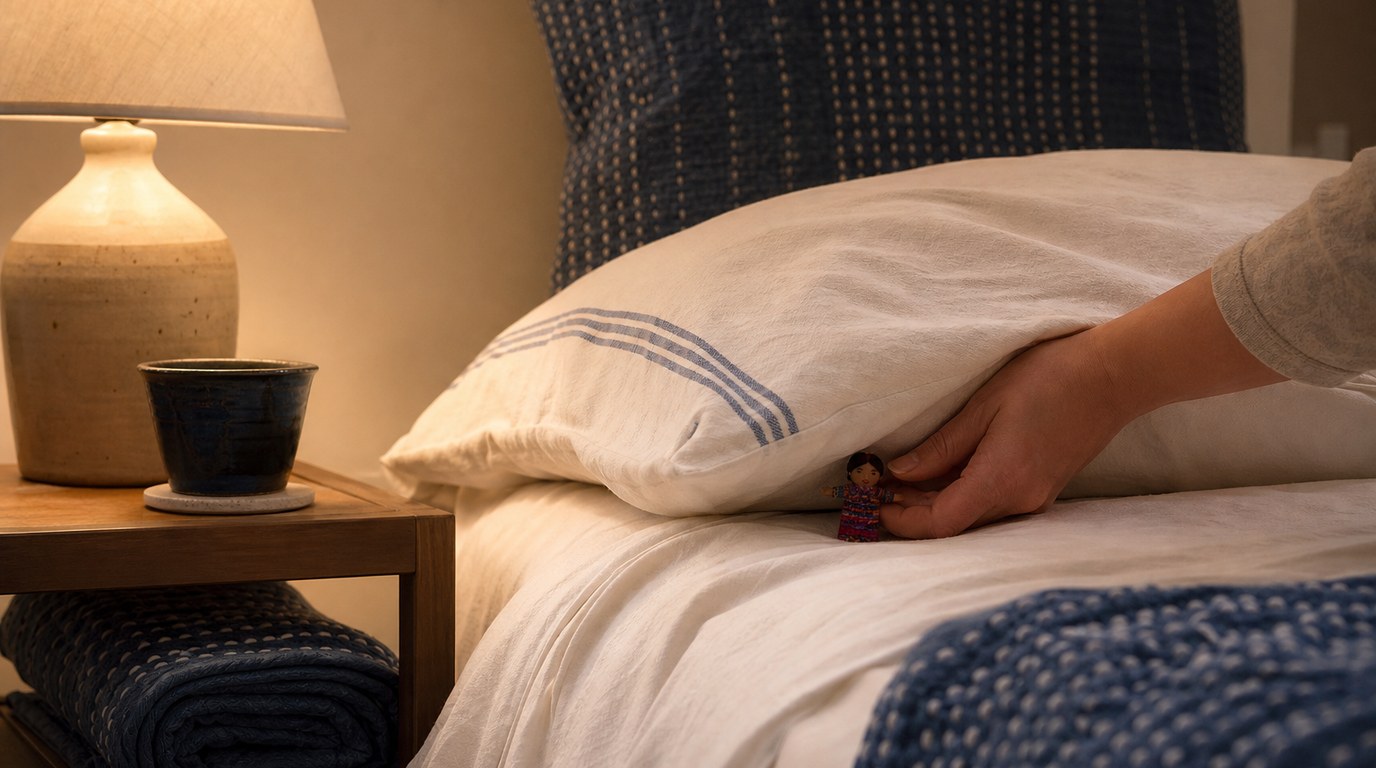
A traditional-style use of worry dolls is simple. At bedtime, choose one doll for each worry. Hold the doll in your hand and speak the worry clearly. You might say, “I am worried about tomorrow,” or “I am afraid I will not know what to do.”
After naming the concern, place the doll under your pillow or near your bed. Some people use only one doll at a time; others use a small set. In the morning, the dolls may be returned to their pouch with gratitude.
The key is not complexity. The practice works through repetition, gentleness, and intention. It gives the mind a closing gesture, which can be especially helpful when thoughts keep circling at night.
A Simple Worry Doll Ritual for Rest and Release
For a quiet home ritual, begin by dimming the lights and taking three slow breaths. Hold the worry doll in your palm. Name one worry without explaining or justifying it. Keep the sentence brief: “I release my fear about money tonight,” or “I ask for rest from this grief.”
Place the doll beneath your pillow, on a bedside table, or beside a small candle that has been safely extinguished before sleep. If you keep a home altar, you may place the dolls nearby during the day as a sign that your burdens are being witnessed.
Close with a simple phrase: “May this worry be held. May my body rest. May morning bring clarity.”
Using Worry Dolls Respectfully
Using worry dolls respectfully means remembering that they come from a cultural and artisan context, not just a decorative trend. If possible, buy from Guatemalan artisans, fair-trade shops, cultural cooperatives, or sellers who name the makers and source their items ethically.
Avoid claiming that worry dolls are guaranteed to remove problems or cure anxiety. It is also wise not to strip them of their background and present them as something newly invented. Respect includes learning the name muñecas quitapenas, honoring their Guatemalan association, and treating them as meaningful folk objects rather than disposable trinkets.
Worry Dolls, Anxiety, and Emotional Care
Worry dolls can be comforting, especially for children or for adults who appreciate symbolic ritual. They may support reflection, prayer, journaling, bedtime routines, and emotional release.
They are not a replacement for mental health care. If anxiety, panic, insomnia, or distress is ongoing or overwhelming, professional support matters. The dolls can still have a place as a gentle companion practice, but they should not carry the full weight of healing alone.
Final Reflection: Why the Legend Still Matters
The legend of the worry dolls still matters because it honors a truth people often forget: naming a worry can soften it. These tiny dolls do not erase life’s difficulties, but they offer a ritual language for rest, trust, and release.
In a world that encourages constant control, worry dolls invite a different practice. Speak the fear. Place it down. Let the night help you carry what cannot be solved before morning.
FAQ
What Is the Legend of the Worry Dolls?
The legend says that if you tell your worries to tiny dolls before sleeping and place them under your pillow, the dolls will carry those worries through the night. By morning, the person may feel lighter, calmer, or more able to face the day.
Are Worry Dolls Guatemalan or Mayan?
Worry dolls are most commonly associated with Guatemala and are often described as influenced by Maya culture and craft traditions. It is best to call them Guatemalan folk objects with Maya cultural associations, while avoiding overly certain claims about one fixed ancient origin.
How Many Worry Dolls Should You Use?
Many sets include several dolls, and a common practice is to give one worry to each doll. You can use one doll for one main concern or several dolls for separate worries. The number matters less than the intention and clarity of the practice.
Where Do You Put Worry Dolls at Night?
Traditionally, worry dolls are placed under the pillow after you tell them your worries. Some people place them on a bedside table, in a pouch near the bed, or near a quiet ritual space. The important part is creating a bedtime gesture of release.
Do Worry Dolls Really Work?
Worry dolls work symbolically and emotionally, not as a guaranteed supernatural cure. They can help by giving worries a form, creating a calming bedtime routine, and encouraging release. For serious anxiety or sleep problems, they are best used alongside appropriate emotional or professional support.