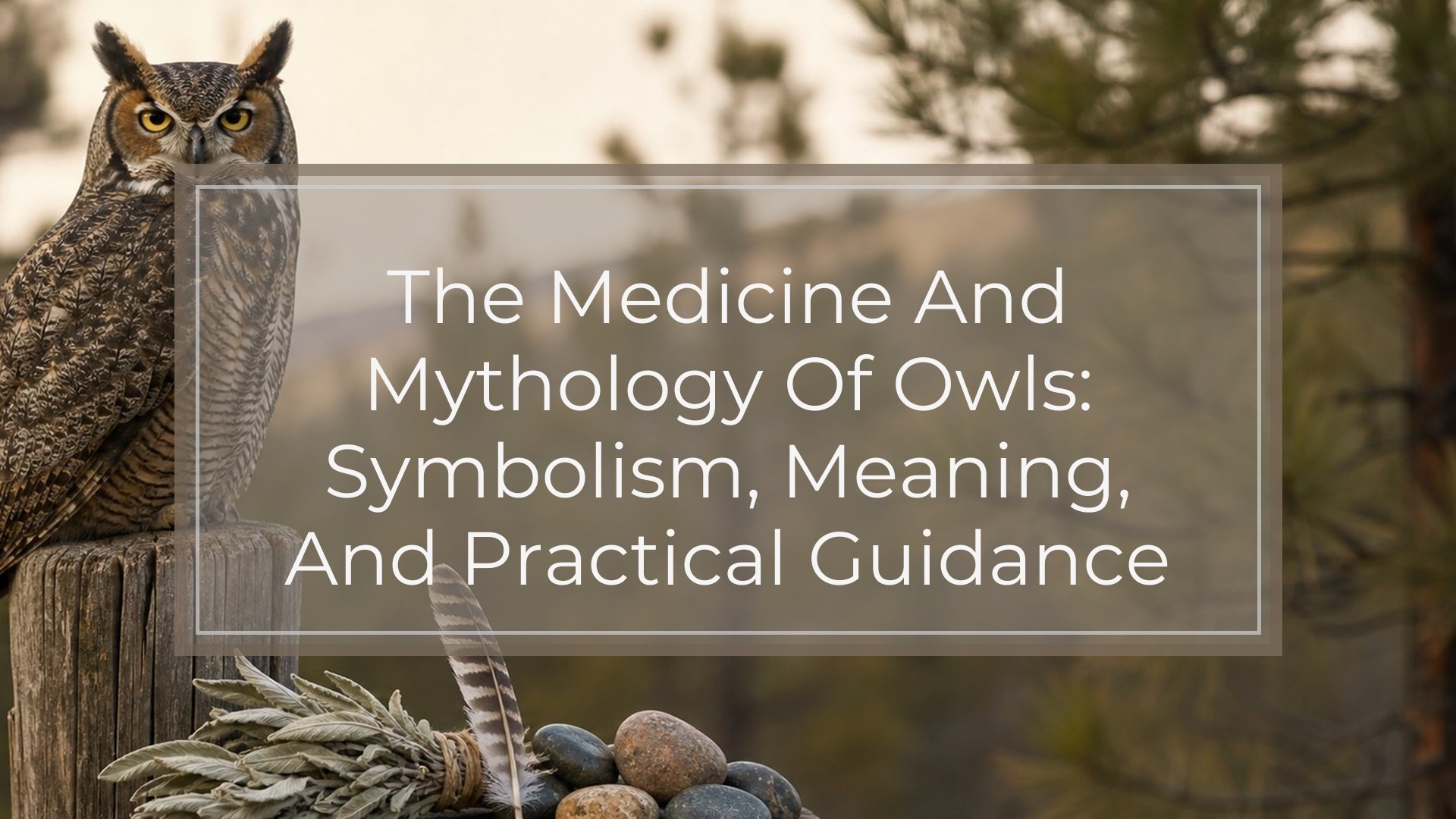
Owls carry a powerful spiritual reputation because they live between worlds: night and day, silence and sound, the seen and unseen. The medicine and mythology of owls often points to intuition, hidden knowledge, ancestral presence, death as transformation, and protection through awareness. Their symbolism is not one single meaning for every person or culture. In some traditions, owls are wise guides; in others, they warn of danger, illness, or spiritual imbalance.
A respectful approach begins with context. Ask where the meaning comes from, what your own experience was, and whether the owl appeared in waking life, dream, ritual, art, or memory. Owl medicine is rarely loud. It asks you to listen carefully.
Quick Answer
The main takeaway: owl symbolism is about seeing what others miss. Spiritually, owls are associated with intuition, night vision, secrets, ancestral messages, death and rebirth, protection, and the ability to move through darkness without panic.
In mythology, owls often appear as companions of wisdom, omens from the spirit world, or guardians of thresholds. The owl’s nocturnal nature makes it a natural symbol of hidden knowledge. Its silent flight suggests subtle power. Its direct gaze can feel like spiritual witnessing: nothing is being rushed, but nothing is being ignored.
For ancestor altar work, owl imagery may be appropriate when you are seeking clarity, protection, dream guidance, or help facing a family truth. It can also support rituals for discernment: deciding what to keep, what to release, and what needs deeper attention.
At the same time, owl medicine should not be flattened into “good luck” or “bad omen.” An owl can feel comforting, unsettling, protective, or cautionary depending on the situation. If an owl appears repeatedly in dreams or waking life, consider the pattern: What is being revealed? What are you avoiding? What boundary needs protection? What ancestor, memory, or truth is asking to be honored?
This same careful listening is at the heart of animal medicine, where each encounter is held with respect rather than forced into a fixed meaning.
The medicine of owls is quiet, precise, and honest. It teaches spiritual sight.
How to Think About This Topic
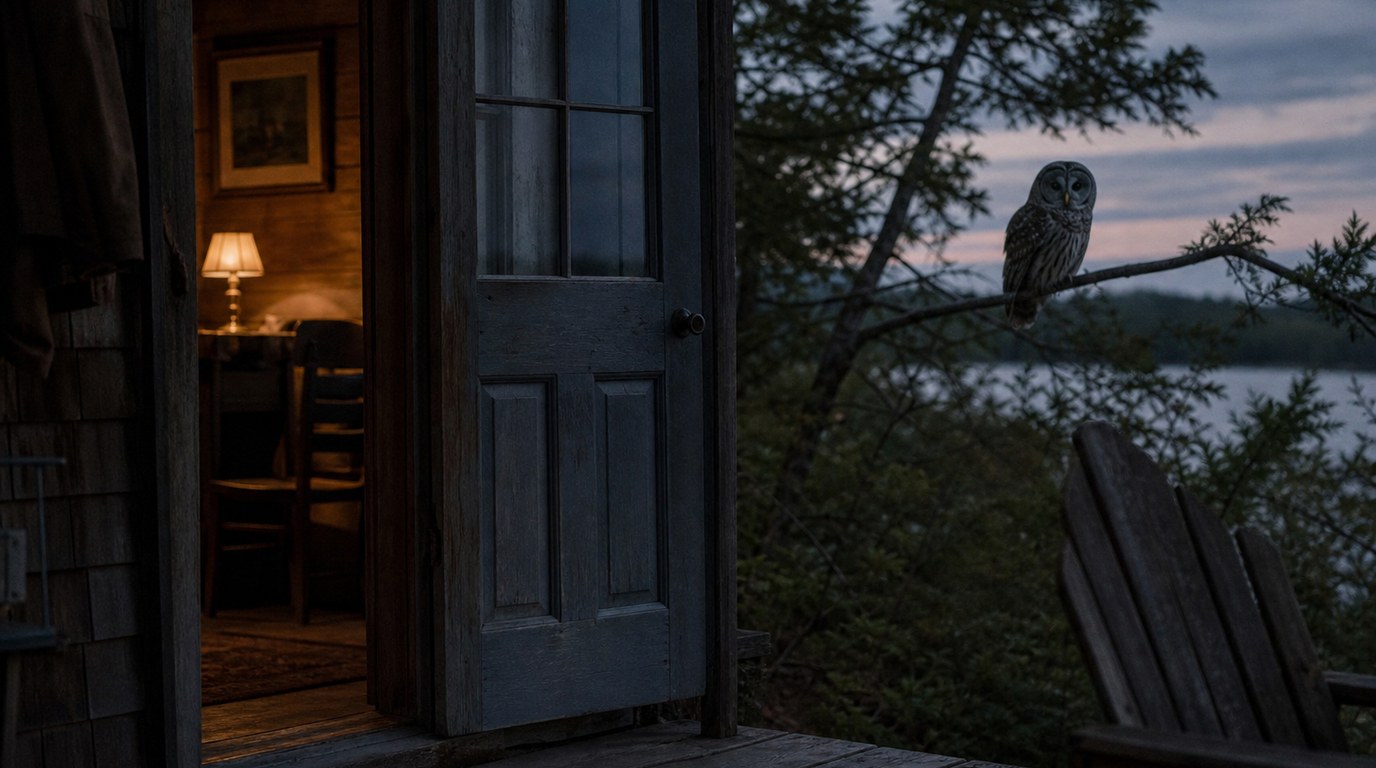
A practical mental model for owl symbolism is this: the owl is a threshold messenger. It does not simply represent darkness; it represents the ability to navigate darkness. That distinction matters. Owl medicine is not about fear for its own sake. It is about perception, timing, silence, and the courage to look beneath the surface.
Start with the owl’s natural qualities. Owls see well in low light, hear with extraordinary sensitivity, hunt quietly, and often become active when human visibility is limited. Spiritually, these traits translate into intuition, discernment, patience, and hidden awareness. When people speak of “owl medicine,” they usually mean the lesson or spiritual gift carried by the owl: look carefully, listen deeply, move quietly, and trust what your inner senses perceive.
Mythology adds another layer. In ancient Greek symbolism, the owl is strongly linked with Athena, wisdom, strategy, and clear judgment. In some Indigenous, African diasporic, European, and folk traditions, owls may be connected with death, witchcraft, prophecy, or warnings. These meanings vary widely, and it is important not to borrow sacred interpretations carelessly or claim that “all cultures say” one thing. A respectful reading allows complexity: the owl can be wise, protective, unsettling, and prophetic.
For people interested in ancestors, owls often feel connected to the boundary between the living and the dead. This does not mean every owl is a literal message from a deceased loved one. It means the owl’s symbolic field overlaps with ancestral themes: memory, night, dreams, silence, protection, and the mysteries beyond ordinary speech. If an owl appears during grief, family healing, or altar practice, it may invite you to slow down and listen rather than immediately interpret.
Dreams are another common place for owl symbolism. An owl in a dream may suggest that something unconscious is becoming visible. A calm owl might point to guidance or protection. A frightening owl may indicate fear around truth, death, intuition, or change. An injured owl could suggest neglected wisdom or a silenced inner voice. The exact meaning depends on the dream’s feeling, your life situation, and any cultural or family associations you carry.
The key is to avoid forcing a meaning. Owl symbolism works best as a mirror. It asks: What is hidden? What do I already know but hesitate to admit? What wisdom comes through silence?
Practical Guidance

If you feel drawn to the medicine and mythology of owls, begin with observation before ritual. Write down where the owl appeared, how you felt, what was happening in your life, and whether the encounter repeated. A single owl image on a sign may simply be an image. A recurring dream, a sudden emotional reaction, or an owl appearing during a time of mourning may deserve more reflection.
Use three questions for interpretation:
- What is being revealed? Owl symbolism often arrives when something hidden is ready to be seen.
- What needs protection? Owls can point to boundaries, secrecy, and guarding your energy.
- What is changing form? Because owls are linked with night and death symbolism, they may accompany endings, transitions, and rebirth.
For ancestor altar work, keep the practice simple and respectful. You might place a small owl image, feather-shaped charm, drawing, or candle near the altar if it feels connected to your lineage or current spiritual need. Avoid using real owl feathers unless you are certain it is legal and ethically sourced; in many places, possessing owl feathers is restricted. Symbolic items are enough.
An owl-themed ancestor practice could look like this: light a candle, offer water, speak the names of your ancestors, and ask for clear sight. You might say, “May I see what is true. May I hear what is wise. May my home and lineage be protected.” Then sit in silence for a few minutes. Do not demand a sign. Let the altar be a place of relationship, not control.
Owl medicine is especially useful in situations such as:
- discerning whether to trust a person or opportunity;
- facing a family secret or inherited pattern;
- grieving someone and seeking quiet connection;
- strengthening dream work or intuitive practice;
- setting spiritual boundaries in your home;
- preparing for a major ending or beginning.
Balance is important. Owls can symbolize wisdom, but wisdom includes discomfort. If an owl sign makes you uneasy, do not immediately assume danger. Ask whether the feeling is fear, reverence, grief, or recognition. Sometimes the owl unsettles us because it points toward something we have avoided.
Also avoid using owl symbolism to bypass practical action. If you feel warned, check your real-life circumstances: health, safety, relationships, finances, and emotional well-being. Spiritual signs should sharpen discernment, not replace common sense.
Finally, personalize the meaning. Your grandmother may have loved owls. Your family may have seen them as omens. You may associate them with study, night prayer, or childhood fear. These personal layers matter. The most grounded interpretation respects mythology, culture, lived experience, and the present moment together.
Owl medicine is not about collecting mystical meanings. It is about learning to see clearly in the dark.
FAQ
What Should a Beginner Know First About the Medicine and Mythology of Owls?
Begin with the idea that owls symbolize perception in darkness. They are often linked with intuition, wisdom, ancestors, death, protection, and hidden knowledge. Their meaning changes by culture and situation, so avoid assuming every owl is either lucky or dangerous.
What Matters Most When Evaluating the Medicine and Mythology of Owls?
Context matters most. Notice where the owl appeared, how you felt, what was happening in your life, and whether it connects to dreams, ancestors, grief, or decision-making. Respect cultural meanings, but also pay attention to your personal relationship with owl symbolism.
What Mistakes Should Readers Avoid with the Medicine and Mythology of Owls?
Avoid treating owls as a universal omen with one fixed meaning. Also avoid taking sacred cultural interpretations out of context. In altar work, do not use real owl feathers unless they are legal and ethical. Symbolic images, prayers, candles, and offerings are sufficient.
What Is the Next Logical Step After Learning About the Medicine and Mythology of Owls?
Keep a short journal of owl dreams, sightings, images, and emotions. If you maintain an ancestor altar, try a simple candle-and-water ritual asking for clear sight and protection. Let meaning emerge over time instead of forcing an immediate interpretation.