
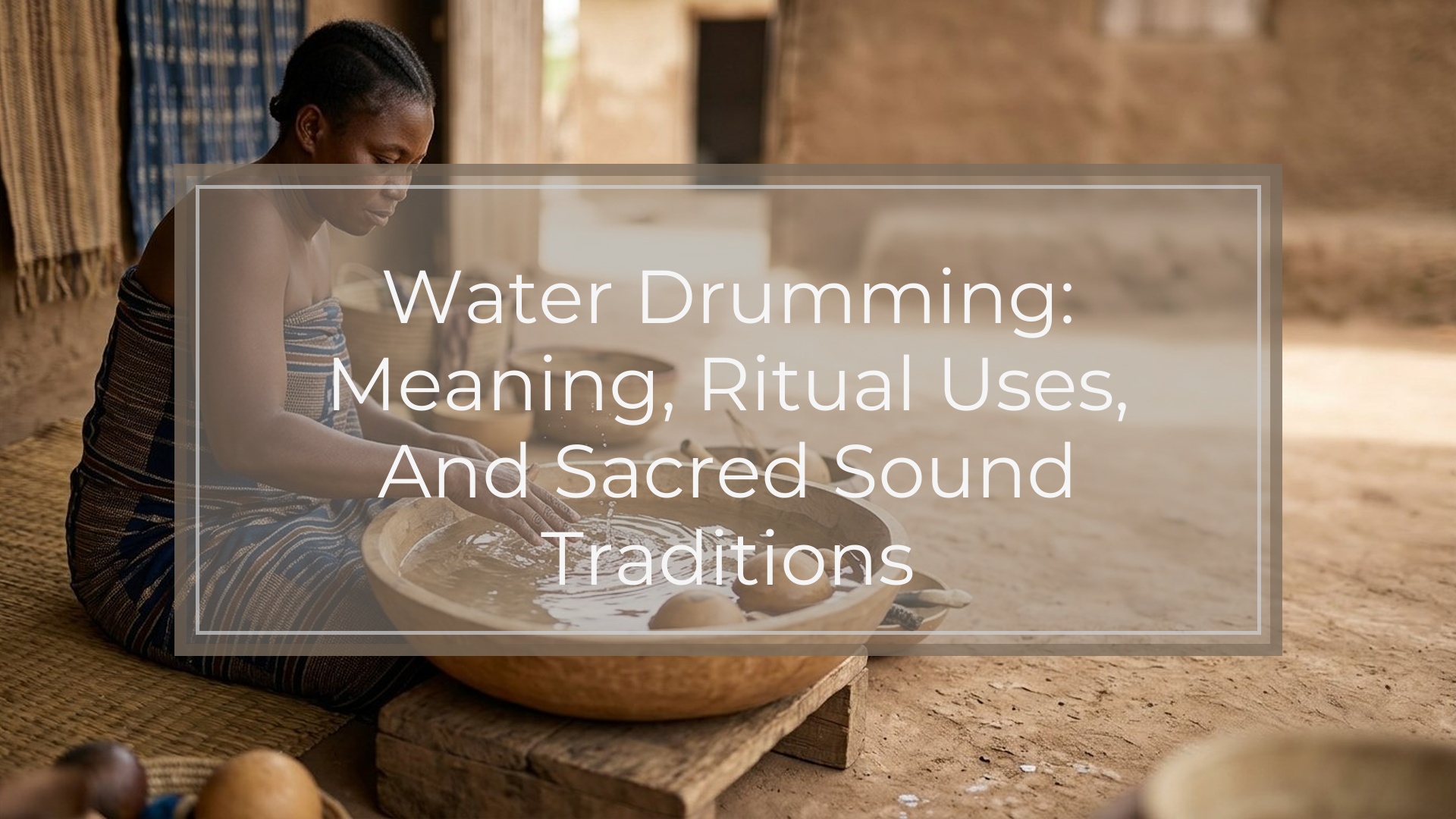
Water drumming is a form of rhythmic music-making that uses water as part of the instrument, the sound source, or the ritual setting. In some traditions, a drum may be partly filled with water to change its tone. In others, hands, gourds, bowls, or vessels strike the water itself to create rhythm.
As a ritual practice, water drumming can mark prayer, ceremony, healing, remembrance, initiation, celebration, or communication with the unseen. Its meaning depends on the culture, lineage, and context. It is best understood as both a sound technique and a symbolic act: the physical presence of water shapes the music, while the ritual setting shapes what the sound is understood to mean.
What Water Drumming Means
Water drumming means using water intentionally in rhythmic performance. The water may deepen, soften, echo, or transform the sound. It may also carry symbolic meaning connected to cleansing, life, emotion, memory, ancestors, spirits, or transition.
The important point is that water drumming is not one single universal practice. It appears in different forms across communities, and each form has its own history. Some uses are public and musical; others are ceremonial, restricted, or tied to specific teachings. A respectful explanation should separate what can be observed—the use of water and rhythm—from what a tradition says that action means.
How Water Drumming Works as Sound
As sound, water drumming often depends on vibration, resonance, and movement. Water changes how an object responds when struck. A drum with water inside may create a lower, shifting tone. A bowl or vessel may ring differently depending on the water level. Hands striking the surface of water can create sharp slaps, hollow pulses, or soft splashes.
Because water is unstable, the sound can feel alive. It moves, wavers, and changes as the rhythm continues. This quality makes water drumming especially suited to ceremonies where flow, transition, emotion, or spirit presence are being emphasized.
Water Drumming in Ritual Context
In ritual context, water drumming may do more than provide music. It can help gather attention, set a sacred mood, support chanting, accompany dance, or mark movement between ordinary and ceremonial space. The rhythm may help participants breathe together, listen together, or enter a prayerful state.
Still, it is important not to assume that every water drum is used for the same purpose. In one setting, it may honor ancestors. In another, it may accompany a community ceremony, healing rite, seasonal observance, or devotional song. In another, it may be primarily artistic. The ritual meaning comes from the people, prayers, lineage, and setting around the sound.
Common Forms of Water Drumming
Water drumming can appear in several practical forms. One form uses a drum body or vessel with water inside, so the pitch changes as the water moves. Another uses floating gourds, bowls, or containers struck with the hands or sticks. Some forms involve striking the surface of water directly, often in a basin, river, or ceremonial vessel.
There are also traditions where water is not the main sound source but is present as a sacred element beside the drum. In those cases, the drumming and the water work together ritually, even if the water does not physically produce the beat.
Table: Common Forms and Ritual Meanings of Water Drumming
| Form | How it works | Possible ritual meaning |
|---|---|---|
| Water inside a drum or vessel | Water shifts the tone and resonance | Movement, change, spirit presence |
| Hands striking water | The water surface becomes the percussion | Cleansing, vitality, emotional release |
| Floating gourds or bowls | Objects are struck while floating | Balance, community rhythm, offering |
| Drum beside sacred water | Water is present but not the sound source | Blessing, remembrance, purification |
Symbolism of Water in Drumming Traditions
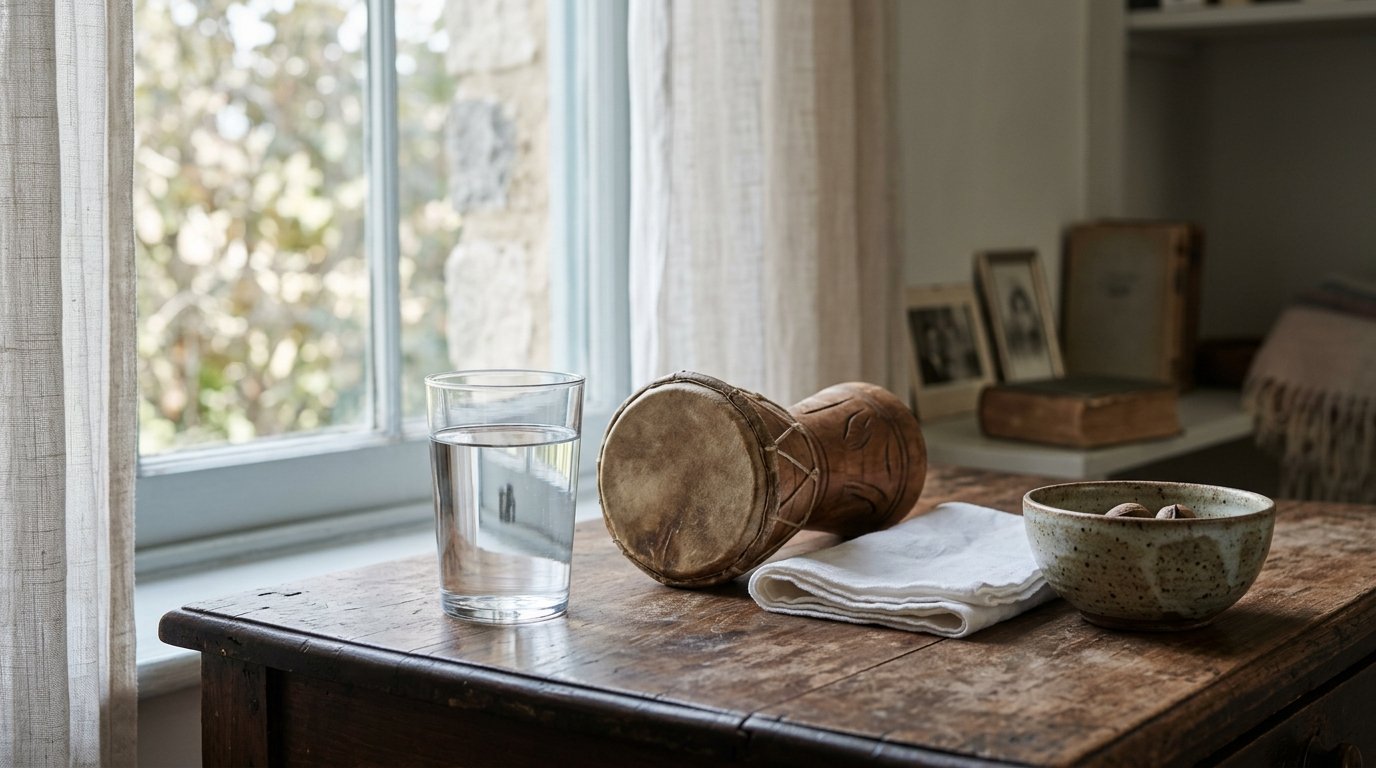
Water often symbolizes life, birth, cleansing, emotion, intuition, fertility, memory, and connection between worlds. In ancestor-focused practice, water is also commonly associated with refreshment, offering, and the continuity of lineage. A glass of water on an ancestor altar, for example, may represent hospitality, clarity, and care.
These meanings, however, are interpretations rather than universal facts. A specific tradition may teach a particular meaning for water that differs from another community’s understanding. When water and rhythm are combined, many practitioners experience the sound as fluid, receptive, and spiritually opening. That experience is meaningful, but it should not be presented as the only meaning.
Examples Without Overgeneralizing
Readers may encounter water drumming in Indigenous, African diasporic, ceremonial, folk, or contemporary spiritual contexts, though the exact practice varies widely. Some communities use water drums in specific songs or ceremonies. Some ritual musicians experiment with bowls, basins, or vessels of water to create meditative sound. Some home practitioners use gentle rhythmic tapping near a water offering to mark prayer or remembrance.
These examples show range, not sameness. It would be inaccurate to say that all water drumming comes from one source or serves one spiritual purpose. If a practice belongs to a living tradition, the most respectful approach is to learn from qualified teachers, community context, and clear permission.
Common Misconceptions About Water Drumming
One misconception is that water drumming is always ancient, shamanic, or secret. Some forms may be old or ceremonial, but others are modern, artistic, or devotional. Another misconception is that water automatically makes a rhythm “healing.” Sound can be soothing or powerful, but healing claims should be made carefully.
It is also mistaken to treat water drumming as interchangeable across cultures. A drum used in one tradition should not be copied casually from a video without understanding its context. Finally, water drumming does not require dramatic performance. In some settings, the most meaningful rhythm may be quiet, simple, and prayerful.
A Respectful Way to Approach Water Drumming at Home
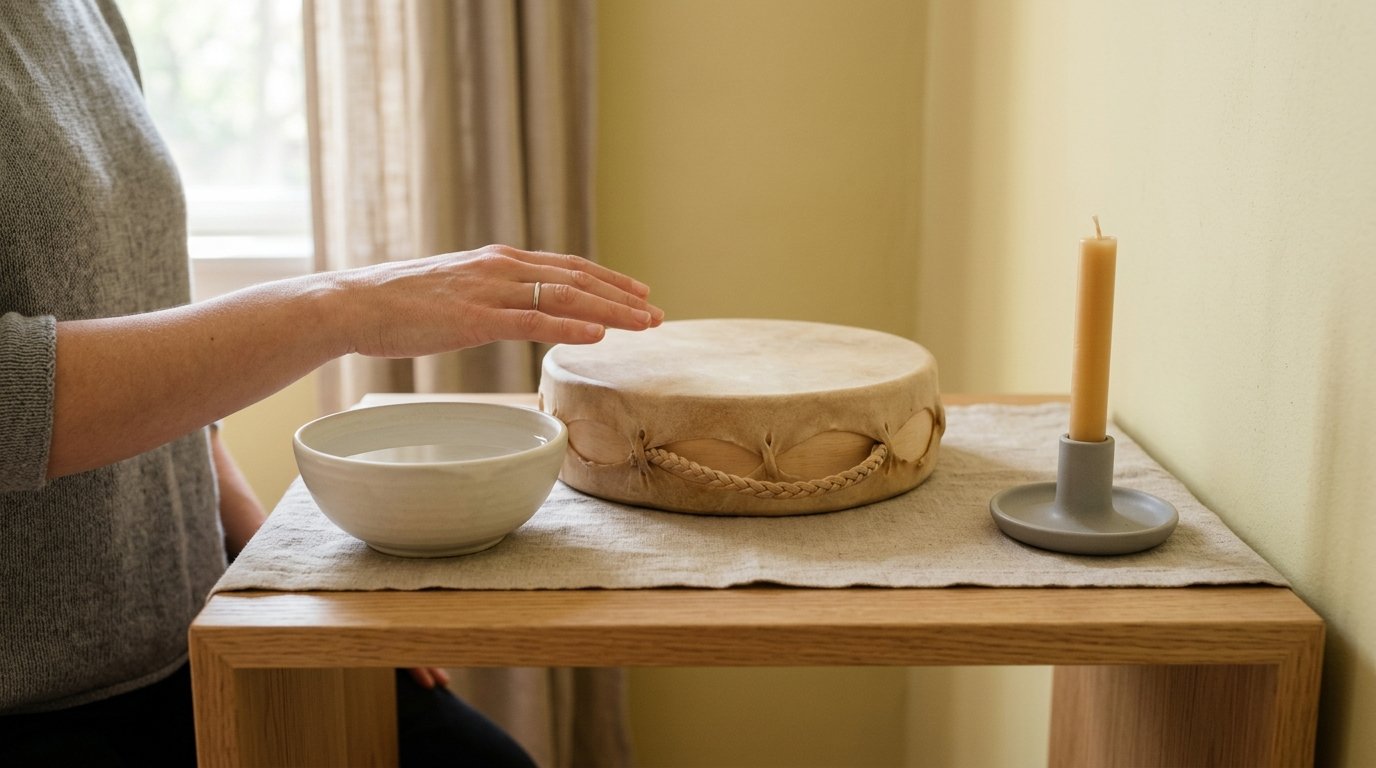
For home ritual, especially ancestor veneration, keep the practice simple and transparent. You might place a clean glass or bowl of water on your altar, speak your prayer, and gently tap a small rhythm beside it with your fingers, a bell, or a simple drum. Let the rhythm support attention rather than imitate a closed ceremony.
You can dedicate the sound to remembrance, gratitude, cleansing, or emotional release. Avoid claiming lineage-specific meanings unless you have been taught them. Respect grows from sincerity, humility, and care.
Key Takeaway
Water drumming is both a sound practice and, in some settings, a ritual act. Physically, water changes rhythm, tone, and resonance. Spiritually, it may suggest cleansing, life, memory, transition, or connection. Its exact meaning depends on context. Approach it with curiosity, respect, and caution about broad claims.
FAQ
Is Water Drumming a Specific Religious Practice?
Not always. Water drumming can appear in religious, ceremonial, community, artistic, or personal spiritual settings. Some forms belong to specific traditions, while others are creative sound practices. The safest answer is that water drumming describes a technique, but its religious meaning depends on context.
What Does Water Symbolize in Water Drumming?
Water may symbolize cleansing, life, emotion, fertility, memory, spiritual flow, or connection with ancestors and spirits. These meanings are common interpretations, not universal rules. A particular tradition may explain water differently, so the symbolic meaning should be understood within its own setting.
Can I Use Water Drumming for Ancestor Veneration?
Yes, if you approach it simply and respectfully. You might keep a bowl or glass of fresh water on your ancestor altar and use gentle rhythm to focus prayer or remembrance. Avoid copying restricted ceremonies. Let the practice be personal, humble, and rooted in honoring your own dead.
Is Water Drumming the Same as Sound Healing?
No. Water drumming may be used in healing-oriented settings, but it is not automatically the same as sound healing. Some people experience it as calming or spiritually cleansing. Still, specific healing claims should be made carefully and should not replace medical or mental health support.
Do You Need a Special Instrument for Water Drumming?
Not necessarily. Some traditions use specific water drums or vessels, but a simple home practice can use a bowl of water, hands, a small drum, or gentle tapping near a water offering. If an instrument belongs to a particular lineage, learn its context before using it ritually.