
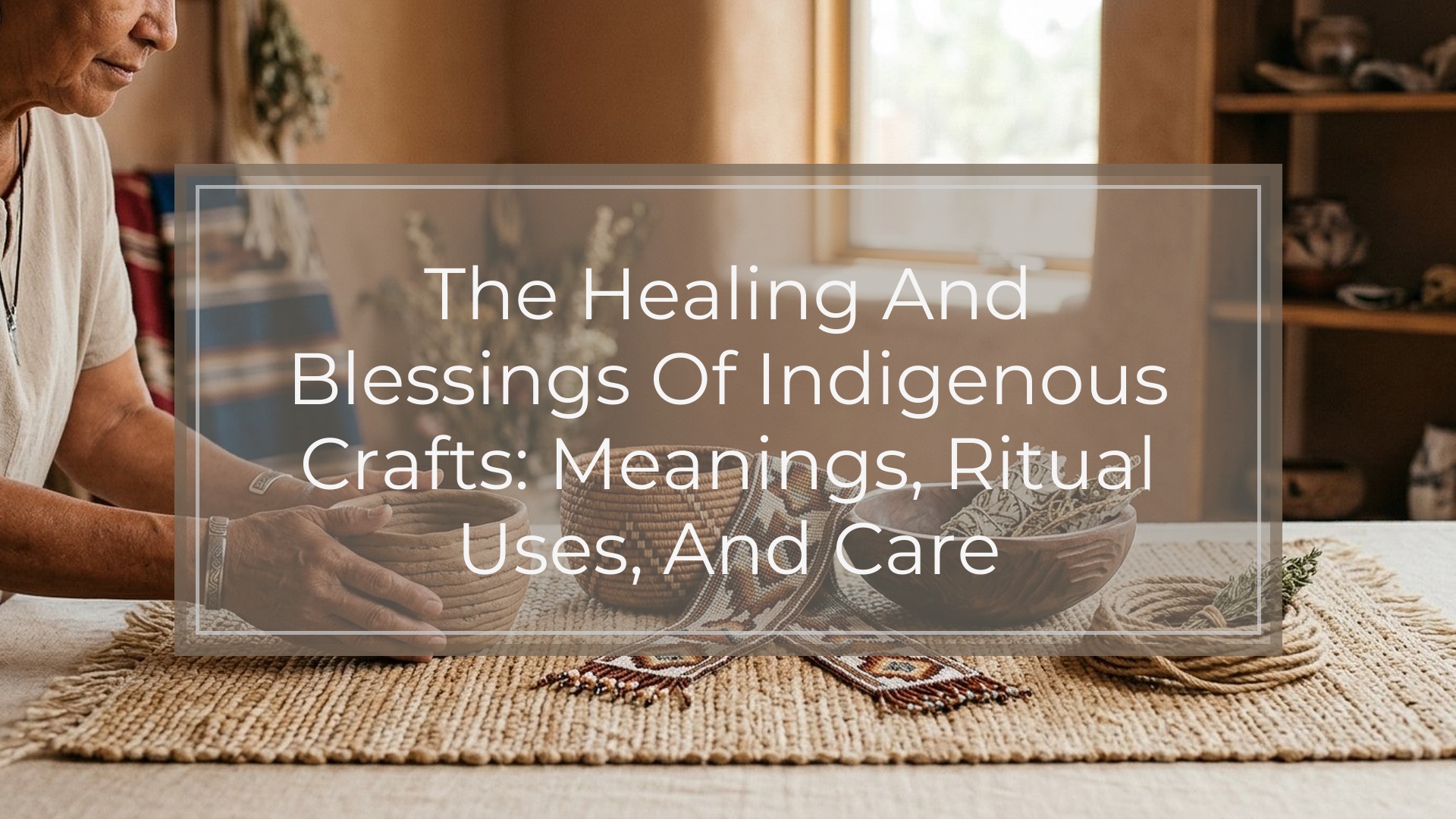
The healing and blessings of indigenous crafts come from relationship: relationship with land, ancestors, makers, materials, community, ceremony, and memory. A woven basket, beadwork, carving, textile, drum, clay vessel, or medicine pouch is not automatically a “spiritual tool” for everyone who sees it. Its meaning depends on the culture it comes from, the person who made it, how it was received, and whether it belongs in public, family, or ceremonial life.
For ancestor altars and home shrines, the most respectful approach is to treat Indigenous crafts as living cultural expressions, not decorative spiritual shortcuts. Learn the object’s origin, honor the maker, avoid closed ceremonial use, and care for it with humility.
What Makes an Indigenous Craft Healing or Blessed?
An Indigenous craft becomes healing or blessed through context, intention, and relationship. The material may come from a meaningful place: clay from ancestral ground, plant fibers gathered with prayer, shells from a familiar coast, wool dyed with local plants, or wood shaped according to inherited knowledge.
The maker’s hands also matter. Craft can hold skill, prayer, grief, resilience, teaching, and family memory. In some communities, certain objects are made for ceremony, protection, remembrance, initiation, or healing work. In others, similar-looking items may be made for daily use or trade.
So the object itself is not a generic magical item. Its power is relational: who made it, why it was made, how it was given, and how it is honored.
A Respectful Way to Understand Sacred Craft
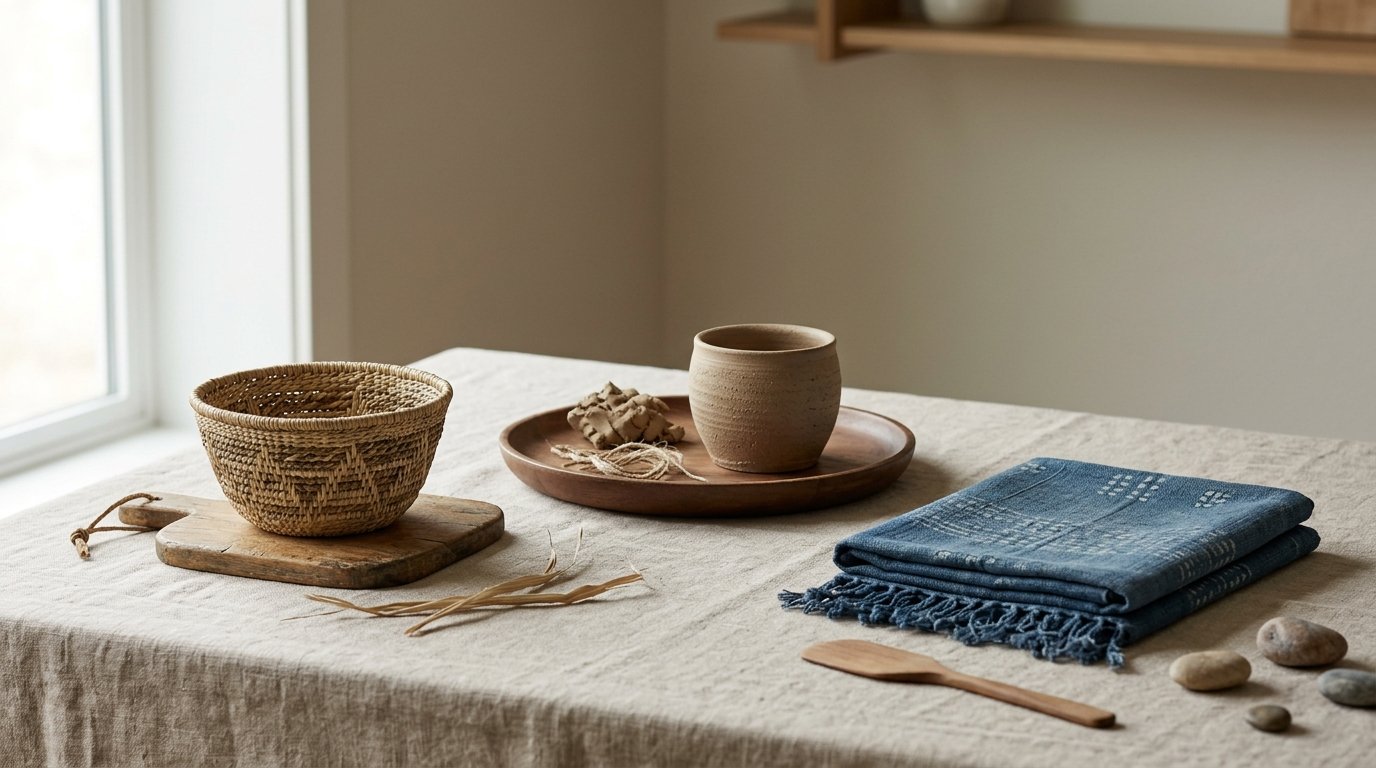
A respectful understanding begins with humility. “Indigenous” does not describe one single spiritual system; it includes many nations, peoples, languages, lineages, and protocols. A craft’s meaning in one community may not apply to another.
Before using any object ritually, ask: Do I know where this comes from? Was it made by an Indigenous artist or community? Is it appropriate for me to own, display, touch, wear, or place on an altar? Was it gifted, purchased ethically, inherited, or removed from its proper context?
Respect also means accepting limits. Some meanings are not meant to be explained publicly, and some objects should not be used outside their tradition.
Common Forms of Indigenous Crafts and Their Spiritual Meanings
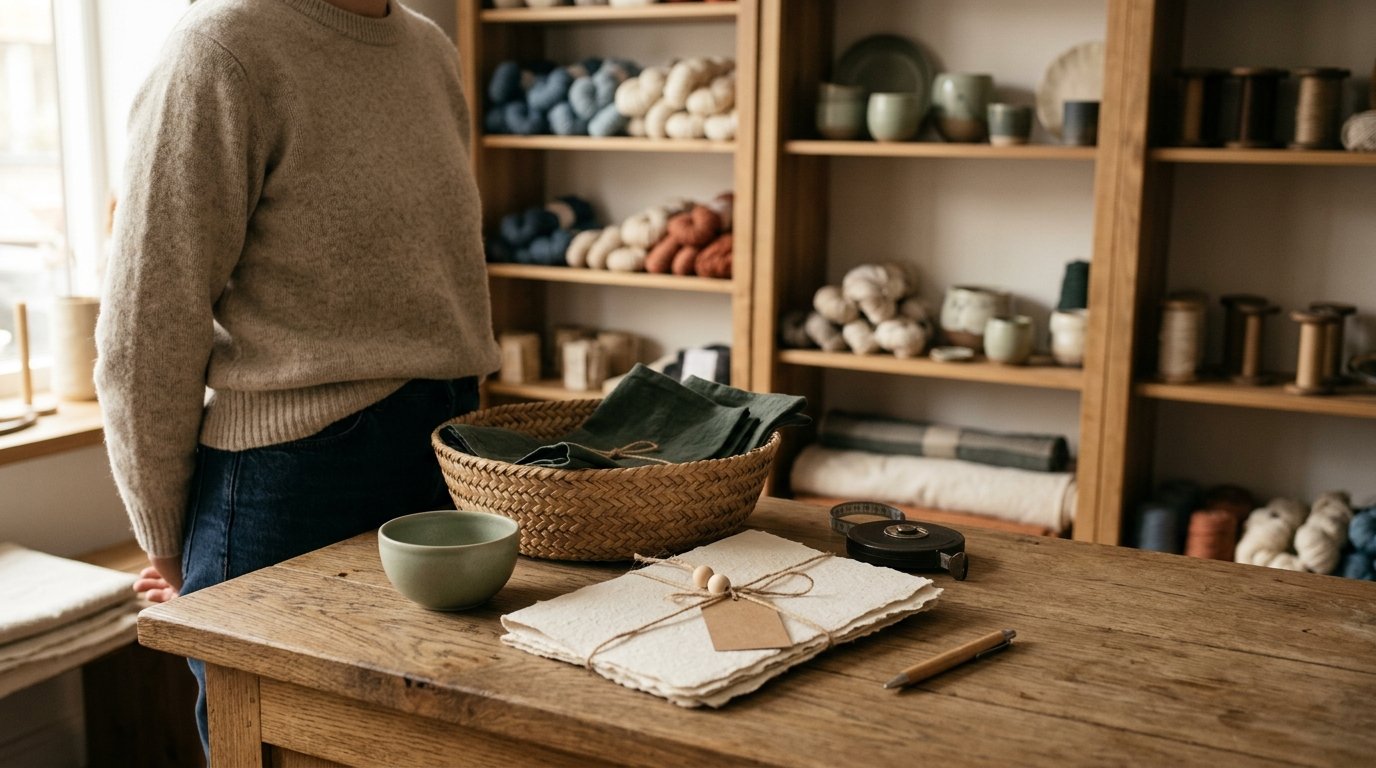
Indigenous crafts can take many forms, and their meanings vary widely. Textiles may carry family patterns, cosmology, protection, clan identity, or stories of land. Basketry may express gathering knowledge, seasonal cycles, nourishment, and interdependence. Beadwork can mark beauty, prayer, status, kinship, survival, or remembrance.
Carvings and masks may relate to ancestors, animal nations, teaching stories, guardianship, or ceremonial roles, though some are restricted. Pottery may connect to earth, water, food, offerings, and continuity of community life. Drums, rattles, and flutes can support song, prayer, healing, and gathering when used according to proper protocol.
Jewelry, amulets, and medicine bags may carry protection or identity, but they should never be treated as interchangeable charms. Always look for the specific community, artist, and context before assigning spiritual meaning.
Examples of Indigenous Crafts and Their Possible Ritual Associations
The table below offers broad examples, not universal definitions. Meanings depend on the specific Indigenous nation, maker, family, and use. If an item is ceremonial, restricted, or unfamiliar to you, seek community-based guidance rather than guessing.
| Craft form | Possible associations | Respectful altar or home use |
|---|---|---|
| Woven basket | Nourishment, gathering, care, ancestral skill | Hold written prayers, dried herbs, or family remembrance items if appropriate |
| Textile or blanket | Protection, warmth, identity, lineage | Lay beneath photos or offerings; avoid using sacred patterns casually |
| Pottery or clay vessel | Earth, water, food, continuity | Hold water, flowers, or non-perishable offerings |
| Beadwork | Beauty, prayer, kinship, resilience | Display as a treasured gift or family object, not as costume |
| Carving | Ancestors, guardians, animals, stories | Place respectfully if it was made for public or personal display |
| Drum or rattle | Song, ceremony, heartbeat, prayer | Use only if you have permission, teaching, or appropriate relationship |
How Indigenous Crafts May Support Healing
Healing through craft can be emotional, communal, spiritual, and ancestral. Making or receiving a handmade object may restore attention, patience, and connection. The rhythm of weaving, stitching, carving, or shaping clay can help a person process grief, remember elders, or return to the body after stress.
For descendants and community members, craft may support cultural healing by preserving language, pattern, technique, and story. For a household altar, a meaningful craft can create a point of focus: “I remember where I come from,” “I honor the hands that made this,” or “I ask for steadiness and repair.”
Healing is not only about cure. It can be about reconnection, dignity, memory, and belonging.
How Indigenous Crafts May Carry Blessings
Blessing is different from healing. Healing often addresses pain, rupture, or imbalance. Blessing affirms life, protection, gratitude, abundance, and right relationship. An Indigenous craft may carry blessing when it is made with prayer, given in love, received during ceremony, inherited through family, or used in a culturally grounded way.
A blessing is honored through conduct. Keep the object clean, handle it respectfully, speak gratitude, and do not use it for ego, trend, or display without care. If the maker shared instructions, follow them. If the object was gifted by an elder or relative, remember the relationship whenever you place it on your shrine.
Using Indigenous Crafts on an Ancestor Altar or Home Shrine
When placing Indigenous crafts on an ancestor altar, begin with consent and context. If the object comes from your own lineage, family, or community, ask elders or relatives how it should be treated. If it was gifted by an Indigenous maker, honor any instructions that came with it.
A craft can serve as an altar cloth, vessel, offering holder, memorial object, or symbol of protection. You might place a basket for prayer notes, a textile beneath ancestral photos, or a clay bowl for water offerings. Keep the arrangement simple and intentional.
Avoid mixing sacred items from many Indigenous cultures into a “universal” altar aesthetic. A respectful shrine tells the truth of relationship: who the object came from, why it is present, and how you are caring for it.
Ethical Sourcing: How to Buy or Receive Indigenous Crafts Respectfully
Ethical sourcing protects artists, communities, and sacred knowledge. Buy directly from Indigenous artists, tribally affiliated shops, Native-owned businesses, community markets, museum shops with clear sourcing, or verified cooperatives. Ask who made the item and whether the artist is properly credited and paid.
Avoid counterfeit “Native-inspired” goods, mass-produced sacred symbols, and sellers who use vague labels like “tribal style” without attribution. Be cautious with antique or estate items, especially ceremonial objects, burial-associated items, masks, medicine bundles, or items that may have been taken without consent.
Receiving a craft respectfully also matters. A gift carries relationship; treat it as more than an object.
Care, Cleansing, and Storage of Sacred or Meaningful Crafts
Care for both the material and the spirit of the object. Keep textiles away from harsh sunlight, moisture, smoke buildup, and pests. Handle beadwork, feathers, clay, wood, and fibers with clean hands. Store fragile items in breathable, protective materials when not displayed.
For spiritual cleansing, do not assume smoke, salt, water, or oils are safe or appropriate. Some materials stain, crack, rust, or absorb moisture. Instead, use gentle methods: spoken gratitude, clean placement, fresh air, soft cloth dusting, prayer, or quiet time on the altar.
If you know the object’s cultural protocol, follow it. If you do not, choose preservation and respect over dramatic ritual action.
Mistakes to Avoid
Avoid treating Indigenous crafts as exotic décor, generic “shamanic” tools, or instant spiritual power objects. Do not copy sacred designs for personal branding, tattoos, crafts, or altar art without permission.
Do not use closed ceremonial items because they look beautiful or powerful. Avoid mixing unrelated traditions into one display without understanding. Do not buy counterfeit crafts or haggle disrespectfully with artists.
Most of all, avoid assuming access. Respect grows from listening, learning, crediting, compensating, and accepting that some things are not yours to use.
FAQ
What Should a Beginner Know First About the Healing and Blessings of Indigenous Crafts?
Begin with relationship, not aesthetics. Indigenous crafts may hold healing or blessing through maker, lineage, land, ceremony, and community meaning. They are not universal spiritual tools. Learn the object’s origin, respect cultural boundaries, and use it only in ways that match your relationship to it.
What Matters Most When Evaluating the Healing and Blessings of Indigenous Crafts?
The most important factors are source, context, consent, and purpose. Who made it? Is the maker Indigenous and properly credited? Was it meant for sale, gifting, ceremony, or family use? Do you know whether it is appropriate to display, handle, wear, or place on an altar?
What Mistakes Should Readers Avoid with the Healing and Blessings of Indigenous Crafts?
Avoid appropriation, counterfeit goods, closed ceremonial use, and vague “tribal” interpretations. Do not assign meanings from one culture to another. Do not treat sacred designs or objects as trends. If you lack clear permission or knowledge, choose respectful display, learning, or non-use.
What Is the Next Logical Step After Learning About the Healing and Blessings of Indigenous Crafts?
Start by learning about one specific object, artist, or tradition rather than “Indigenous crafts” in general. If you own an item, document its source and story. If you want one for an altar, buy ethically, ask respectful questions, and keep the altar simple, grateful, and truthful.