
Icaros are sacred songs used in some Amazonian and shamanic healing traditions, especially in ceremonial contexts. The phrase “icaros the power of song” points to the belief that song can carry prayer, guidance, protection, memory, and relationship with spirit or plant teachers.
Their power is not simply musical performance. It comes from cultural context, intention, training, and the relationship between singer, community, ceremony, and tradition. To understand icaros responsibly, it helps to look beyond melody and lyrics and ask how song functions within a living ritual world.
What Does “Icaros The Power Of Song” Mean?
“Icaros” generally refers to sacred or ceremonial songs associated with Amazonian Indigenous and mestizo healing traditions. The word is often used in connection with curanderismo, vegetalismo, and plant medicine ceremonies, though practices vary widely by region, lineage, language, and teacher.
When people speak about “the power of song,” they are usually describing song as a ritual medium. In this view, a song may carry intention, prayer, protection, teaching, blessing, emotional focus, or connection with spiritual forces. It is not only something heard by the ears; it is something participated in by the singer, the listener, and the ceremonial space.
That does not mean icaros should be treated as a universal spiritual tool or a guaranteed form of medicine. Their meaning depends on context. A song sung by an apprenticed practitioner in a specific ceremony is not the same as a melody copied from a recording and repeated casually.
Icaros are also not just lyrics. In many traditions, the breath, tone, timing, silence, relationship, and spiritual preparation of the singer matter. The song is part of a larger web that may include apprenticeship, dietas, offerings, dreams, plant relationships, prayer, and community responsibility.
The Ritual Context: Where Icaros Are Sung
Icaros are most often discussed in relation to healing rituals, plant medicine ceremonies, protection work, cleansing, blessing, guidance, and the opening or closing of ceremonial space. In some settings, a practitioner may sing to support a participant, call in protection, calm the room, direct attention, or mark a transition in the ceremony.
Different traditions explain the origin of these songs in different ways. Some practitioners say they learn songs from elders. Others describe receiving songs through dreams, long apprenticeship, relationships with plants, or communication with spirits. These explanations belong to the worldview of the tradition and should be approached with respect rather than reduced to entertainment or metaphor.
Participants may experience icaros as grounding, emotionally moving, beautiful, protective, unsettling, or spiritually meaningful. The same song may feel different depending on the listener, the ceremony, and the singer’s intention.
A key point is that not all sacred songs are public songs. Some may be appropriate to share, teach, or record. Others may be private, ceremonial, lineage-based, or restricted. Responsible engagement begins with the understanding that sacred music is not automatically available for casual imitation, performance, or commercial use.
How Song Is Believed To Work In Ceremony
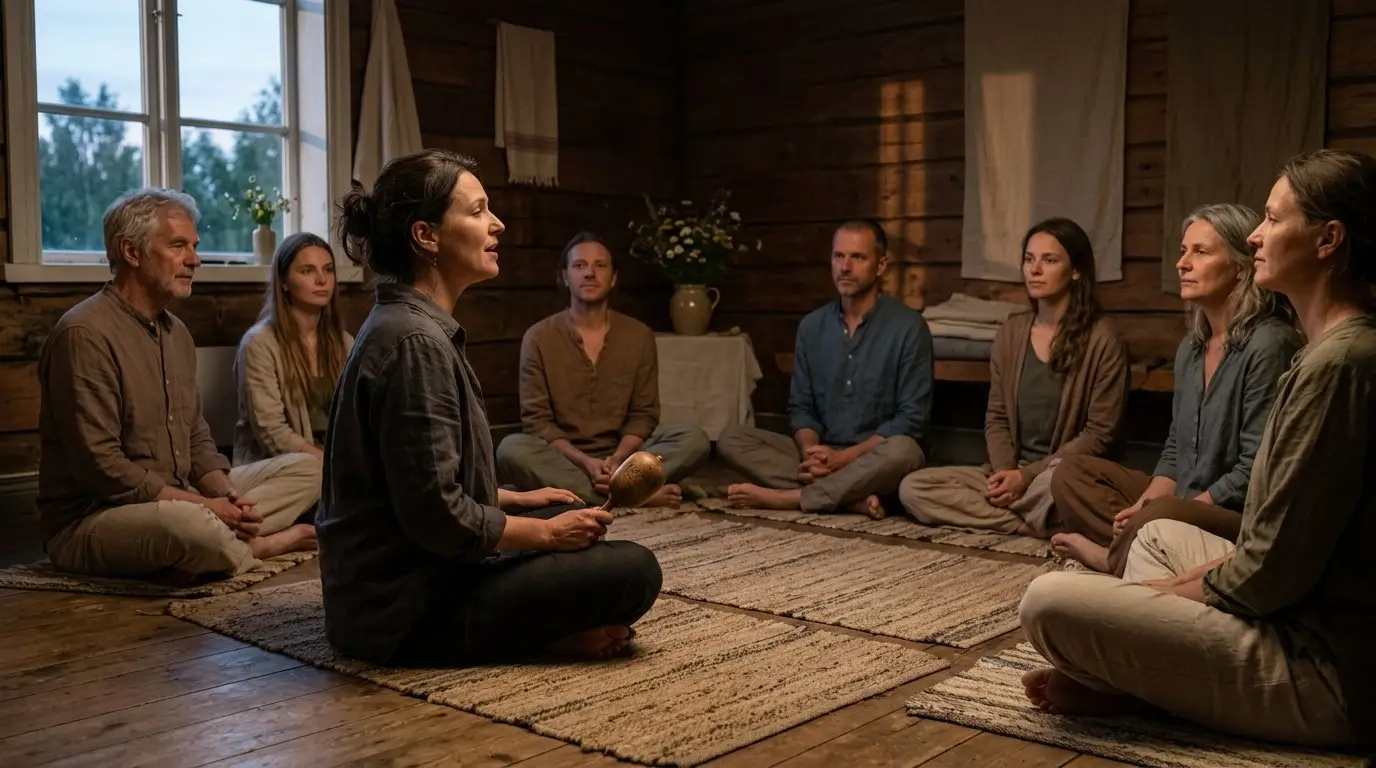
In ceremonial settings, song can shape attention in powerful ways. Voice, rhythm, breath, repetition, melody, volume, and silence all influence how people listen and respond. A repeated phrase can focus the mind. A soft melody can calm the body. A strong rhythm can mark intensity or movement. Silence after a song can feel just as meaningful as the song itself.
In many ritual worldviews, song is not only expressive; it is active. It may be understood as calling, guiding, blessing, protecting, cleansing, or communicating with unseen forces. An icaro may be sung over a person, into the ceremonial space, toward an altar, or in relation to a plant, spirit, or prayer.
From a more general human perspective, music can organize emotion, memory, and group experience. It can help people feel held, orient attention, and create a shared atmosphere. This does not require overstating claims. We do not need to say that icaros cure illness or guarantee transformation in order to recognize that sacred song can be deeply meaningful in ritual life.
The “power” of an icaro, then, is not only in sound waves or musical skill. It is in the combination of song, intention, relationship, setting, preparation, and trust. A trained singer may use subtle changes in melody, pacing, or tone to respond to what is happening in the room. In that sense, an icaro is both prayer and practice.
Common Meanings Associated With Icaros
People often describe icaros by the role they seem to play in ceremony. These descriptions should be understood carefully. The same song may carry different meanings depending on lineage, singer, intention, and setting.
| Associated role | What it can mean | Careful framing |
|---|---|---|
| Protection | A song used to create a sense of spiritual boundary, safety, or guarded ceremonial space. | This is a traditional or experiential meaning, not a guaranteed shield from harm. |
| Cleansing | A song associated with clearing heaviness, confusion, or unwanted influence. | Avoid treating this as a medical or psychological cure. |
| Guidance | A song that helps direct attention, movement, prayer, or inner reflection. | Guidance may be felt personally, but meanings vary by listener and ceremony. |
| Teaching | A song understood as carrying lessons from elders, plants, spirits, or experience. | In some traditions this is literal; in others, it may be described symbolically. |
| Blessing | A song offered for support, gratitude, care, or good intention. | Blessing is a ritual act, not a promise of a specific result. |
| Calling or connection | A song used to call upon a presence, relationship, memory, or spiritual ally. | This belongs to the worldview and discipline of the tradition. |
| Integration or closing | A song that helps settle the space, complete a phase, or bring attention back. | It may support transition, but experiences differ from person to person. |
This table simplifies a complex subject. In living traditions, songs are not always sorted into neat categories. A single icaro may protect, bless, teach, and close a ceremony at the same time.
Misconceptions About Icaros
One common misconception is that icaros are simply “exotic songs.” This view removes them from the communities, histories, and ceremonial practices that give them meaning. Icaros are not just unusual melodies from far away; they are sacred practices rooted in specific cultural and spiritual contexts.
Another misconception is that anyone can use an icaro effectively after hearing it online. Listening to a recording is not the same as receiving permission, training, or ceremonial responsibility. A song may be beautiful, but its use may still be inappropriate if it is restricted, misunderstood, or taken out of context.
A third misconception is that the words alone hold the power. In many cases, lyrics matter, but so do breath, melody, rhythm, timing, intention, relationship, and the state of the singer. Some icaros may include recognizable words; others may include vocables, sounds, or language not immediately understood by outsiders.
Finally, it is misleading to say that icaros guarantee healing. People may report meaningful experiences, but outcomes vary. A respectful approach allows for spiritual significance without turning sacred song into a promise, product, or technique detached from its roots.
Listening, Learning, and Respectful Engagement
If you are curious about icaros, begin with humility. Learn from reputable teachers, cultural context, and community-based sources when possible. Notice whether a teacher speaks with accountability to a lineage or community, and be cautious of anyone who presents sacred songs as quick spiritual tools for personal branding or profit.
Before sharing, recording, repeating, or performing a song, ask important questions:
- Is this song public, private, ceremonial, or restricted?
- Who gave permission for it to be taught or shared?
- Is it being presented with cultural context?
- Is money being made from a song without consent?
- Am I using the song respectfully, or am I copying something I do not understand?
Respectful engagement may mean listening without taking. It may mean acknowledging the source of a song. It may mean choosing not to repeat a song because it is not yours to use.
For personal spiritual practice, you do not need to copy restricted icaros to experience the power of song. You might use your own prayerful singing, humming, devotional chanting, ancestral songs from your own tradition, or simple melodies created with sincerity. The deeper lesson is not that every sacred song belongs to everyone. It is that voice, breath, intention, and reverence can be part of meaningful ritual life when practiced with care.
FAQ
Are icaros always connected to ayahuasca ceremonies?
No. Icaros are often discussed in relation to ayahuasca, but they can also appear in other healing, blessing, protection, plant, or ceremonial contexts. Their use depends on the tradition, practitioner, and setting.
Can anyone learn to sing icaros?
Some songs may be taught publicly, while others are restricted or lineage-based. Learning respectfully usually involves permission, cultural context, practice, and guidance rather than simply copying a recording.
Do icaros have fixed lyrics and meanings?
Not always. Some have recognizable words or repeated phrases, while others use sounds, vocables, or language specific to a tradition. Meaning can shift with singer, intention, and ceremony.
Is it respectful to listen to recorded icaros online?
It can be, if the recording was shared with permission and approached respectfully. Avoid reposting, sampling, selling, or performing sacred songs without clear consent and context.
What is the safest way to understand the power of song in this context?
Understand it as sacred, relational, and ceremonial rather than as a guaranteed technique. Song may carry prayer, focus, memory, and meaning, but its role depends on tradition, permission, and context.