Start with the Kind of Reflection You Want
Choose by the kind of question you want to explore, the input you find comfortable, the effort you want to put into learning, and the space and materials you have. The five options here are pendulum, runes, scrying, tarot, and tool-free/freeform reading. There is no universal best method, and you can be interested in more than one—or decide that none appeals to you.
Start with the response you would find useful. If you want to frame a narrow question, a pendulum offers a simple movement to observe. If you would rather consider a situation from several angles, tarot offers images to interpret, while runes offer symbols to learn and reflect on. Scrying invites attention to visual impressions; tool-free reading lets you work with thoughts and impressions without an object. These are different ways to structure reflection, not ways to verify a prediction or identify a “psychic gift.” Beginning with the response you want is also the approach one divination-tool seller recommends.
Then consider what the practice asks of you. Do you enjoy looking at images, learning a symbolic vocabulary, noticing subtle visual changes, or writing through an impression? Would a physical object help you focus, or would it feel like an unnecessary extra step? Those preferences may matter more to your experience than a label suggesting one method is meant for you. Accessibility and practical fit are reasonable parts of the choice.
Finally, think about setup rather than shopping first. A method that fits the time, space, and materials you already have is easier to approach comfortably; costly starting equipment is not a requirement. If none of these formats makes your questions clearer, ordinary reflection without a divination practice remains a perfectly good choice.
Pendulum: a Constrained Question and Observable Movement
A pendulum is a weight suspended from a string or chain. Its appeal is the small setup: you can hold it where it can swing freely and watch its movement, without learning a set of symbols or interpreting a picture. It suits a narrow question better than an invitation to tell a long story. A seller’s guide describes using it with a constrained question format; for a beginner, a simple yes-or-no prompt keeps the exercise easy to follow.
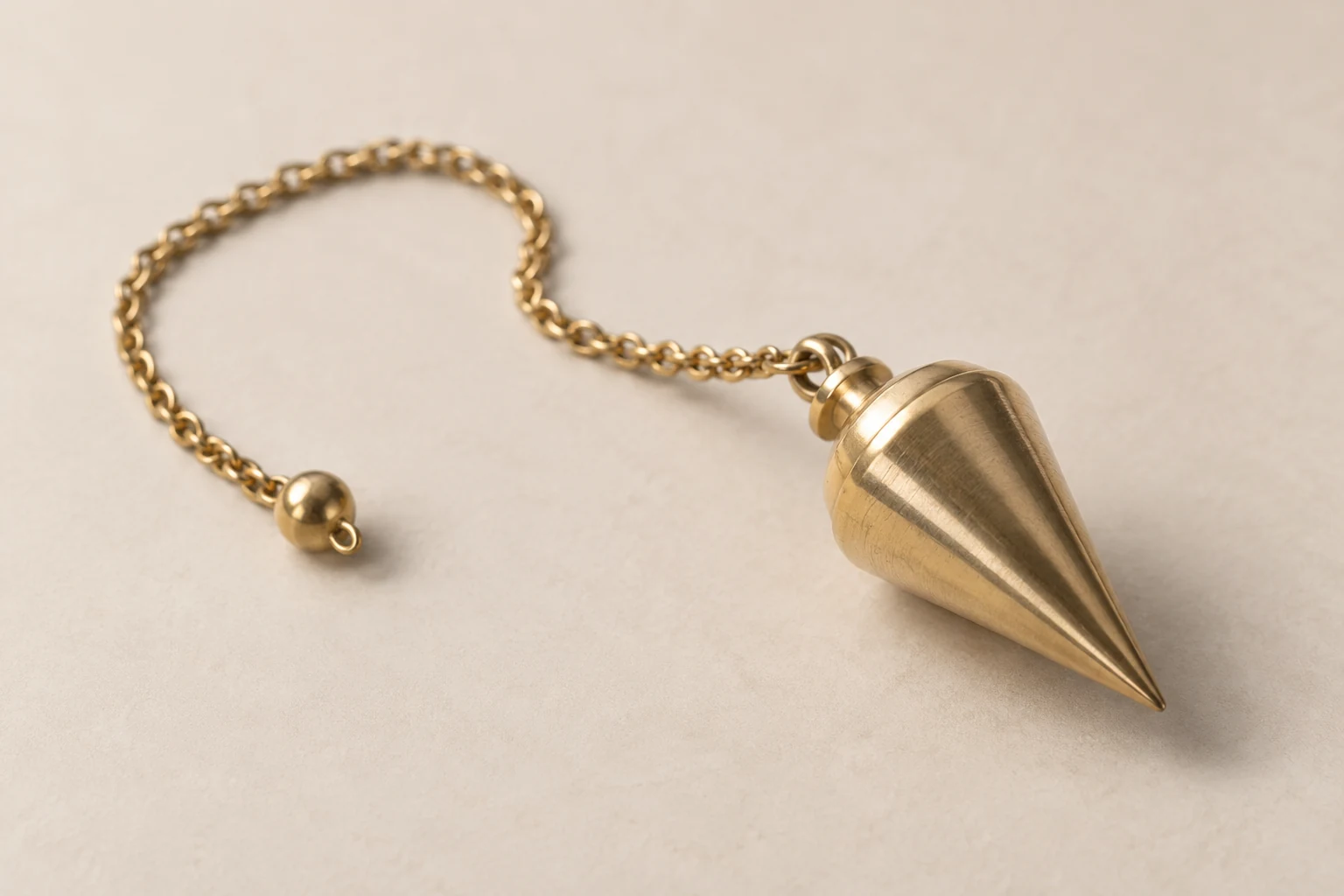
Choose a question about your own preferences rather than an unknown fact—for example, “Would I enjoy spending time on this project?” Rest your arm comfortably, let the weight hang clear of other objects, and decide beforehand which movement you will treat as “yes,” “no,” or “unclear.” The “unclear” option matters: a faint wobble need not be forced into an answer. Notice, too, whether you had a hoped-for answer before you asked. That expectation is useful material for reflection even if the pendulum barely moves.
The movement itself needs careful interpretation. Ideomotor movement—small, unintended muscle movements associated with thoughts or expectations—offers a documented account of how a held pendulum can swing without a deliberate push. A study also reports accuracy results under two conditions, but movement or an apparent match with an answer does not establish that the pendulum detected a hidden fact. Its practical value here is as a prompt to notice your response: if the swing seems to say “yes” and you feel disappointed, that reaction may tell you more about your preference than the swing does.
Tarot: Images for a Longer Interpretation
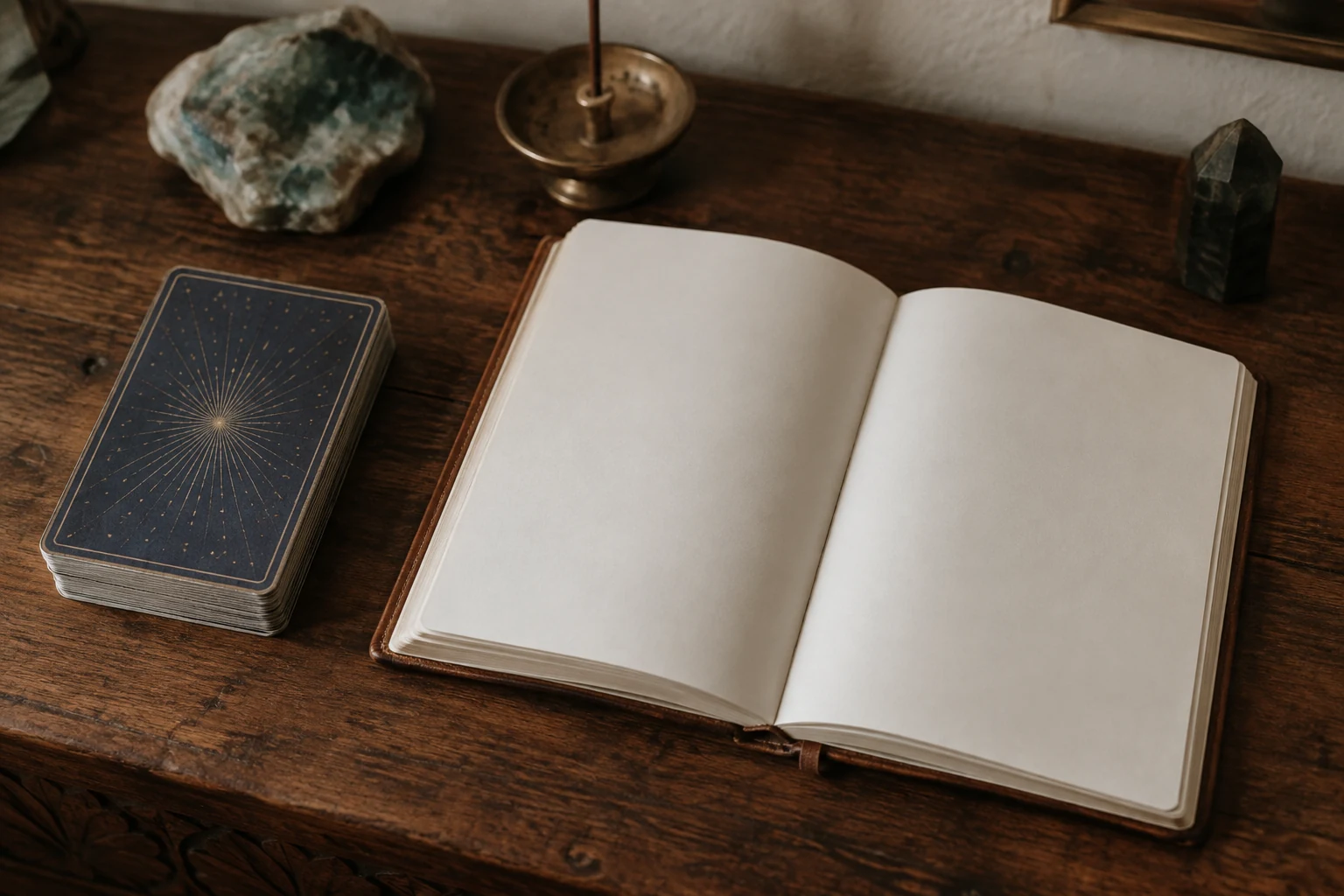
Tarot works well when your question needs more room than a yes-or-no answer. Instead of asking, “Should I take the new role?”, you might ask, “What appeals to me about it, and what concerns deserve attention?” The cards’ images can give you a way to put those thoughts into a narrative; the source article likewise presents tarot as a practice of narrative interpretation.
For a basic setup, you need a deck, a place to lay out its cards, and enough time to look closely at the images. A conventional tarot deck has an organized structure, so there is a framework to learn as well as individual pictures to notice. You could begin with one card: describe what you see, then consider which parts seem relevant to your question. That keeps the interpretation anchored in something observable without treating the image as an answer delivered from outside your own judgment.
The tradeoff is between richness and effort. Several cards can invite connections between themes—a useful format if you want to explore competing feelings or possible approaches—but they also give you more symbols to sort through. Learning the deck’s structure and customary interpretations takes more work than using a tightly constrained question format. You need not memorize everything before engaging with an image, but expect to spend time distinguishing what the card depicts from the meaning you bring to it.
Choose imagery you can comfortably examine and questions that benefit from more than a binary response. If you chiefly want a brief, bounded prompt, tarot’s interpretive space may feel like extra work rather than a benefit.
Runes or Scrying: Learned Symbols Versus Visual Impressions
Runes offer a defined set of symbols to work with; scrying starts with what you notice while looking at a reflective medium. The distinction is less about which gives a “better” answer than about how you prefer to reflect: by returning to learned meanings, or by describing impressions before deciding what they mean.
With runes, you might ask, “What part of this decision needs more attention?” and draw one symbol as a prompt. A commonly described rune set gives the practice a bounded vocabulary, but getting comfortable with it takes time: you need to learn the symbols and consider how a meaning might relate to your question . For an inexpensive start, make a reference sheet and use handwritten symbols on separate pieces of paper. Keep historical rune alphabets distinct from modern divinatory interpretations; learning one does not establish the other as an unbroken ancient practice .
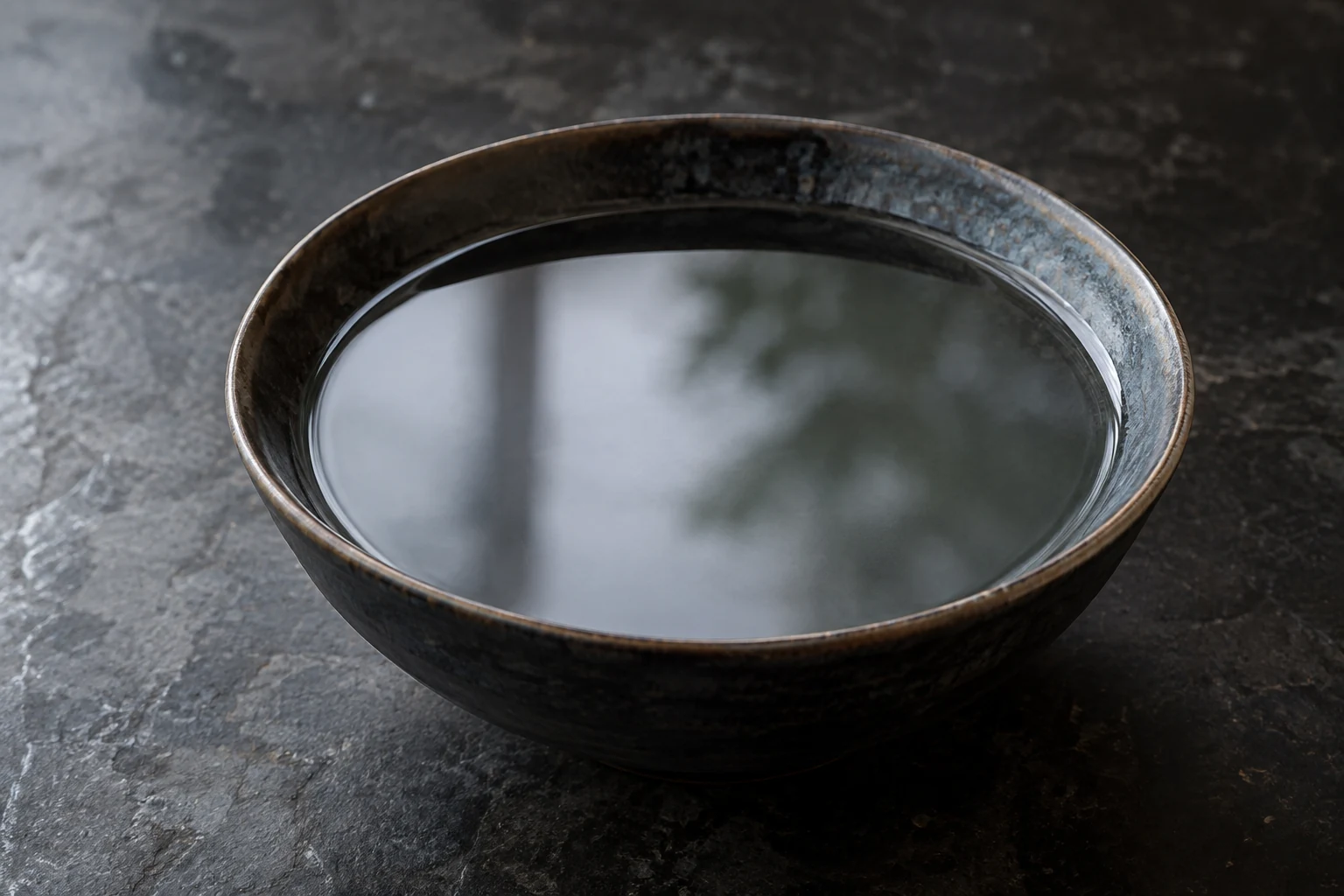
Scrying has less predefined vocabulary. The source names crystal and water as possible media and describes a reflective setup . A bowl of water is therefore a simple place to begin if you do not want to buy a crystal. You could ask, “What am I noticing about this situation?” then spend a few quiet minutes looking at the surface and putting any shapes, associations, or feelings into words. This suits someone who prefers visual observation, though an impression may be harder to describe precisely than a drawn symbol .
If you like a prompt you can revisit, runes give you one, at the cost of learning a symbolic system. If you prefer to begin with an image and see what it brings to mind, scrying needs little equipment, but asks you to supply more of the interpretive structure yourself.
Tool-free Reading: Examine Impressions Without Equipment
Tool-free reading leaves aside cards, objects, and reflective surfaces. The source article includes it as a way to work with impressions directly . Instead of asking what a drawn symbol means, you notice what thoughts, feelings, or associations arise around a question. Its flexible setup may appeal if you would rather sit quietly than learn a set of meanings or arrange a space for a tool.
For example, with the question “What is making this conversation difficult?”, you might first notice an image of a closed door, then a feeling of impatience. Treat those as prompts to examine, not as messages to obey: does the door suggest that you feel shut out, or that you have been reluctant to speak? The value of the impression is in the question it helps you ask yourself.
That freedom is also the tradeoff. With no card or symbol to provide a separate point of focus, it can be easy to mistake an expectation for a fresh insight. The source article explicitly cautions about bias . If you already hope the conversation will go well, ask how that hope might shape what you notice; if you dread it, ask the same of your worry. Consider an alternative interpretation before settling on the one that feels most compelling.
Tool-free reading may feel comfortable when you want an open-ended pause and little setup. If you prefer a visible prompt you can return to, its lack of structure may feel frustrating rather than freeing.
Try One Practice, Record What Happened, and Keep Your Judgment
Choose one of the five practices that feels comfortable to try with what you already have—or choose none. A quiet moment with a written question costs nothing; you do not need to buy equipment to find out whether a reflective exercise is useful to you.
Before interpreting anything, write down your question. Then record what you noticed, what you thought it meant, and what you already know from ordinary evidence. A written comparison record, as one guide suggests, makes it easier to separate an initial impression from an explanation added afterward . For example, if your question is whether to take on a new commitment, note both the interpretation and concrete facts such as your available time and existing obligations. Those facts should carry their usual weight.
When you revisit the entry, ask whether the practice helped you articulate a concern, see an option, or identify a question worth investigating—not whether it successfully predicted an outcome. Reflective usefulness is the more practical measure proposed by the guide . An impression can be personally meaningful without establishing a hidden fact; an interpretation that feels striking can still be mistaken.
Keep that distinction firm when the stakes rise. Use qualified advice and ordinary evidence for medical, legal, financial, or safety decisions rather than treating a reading as a substitute . If you read for someone else, ask for their consent first and leave them room to reject your interpretation. The worthwhile result is clearer thinking and agency, whether you continue with a practice, switch to another, or set divination aside.