
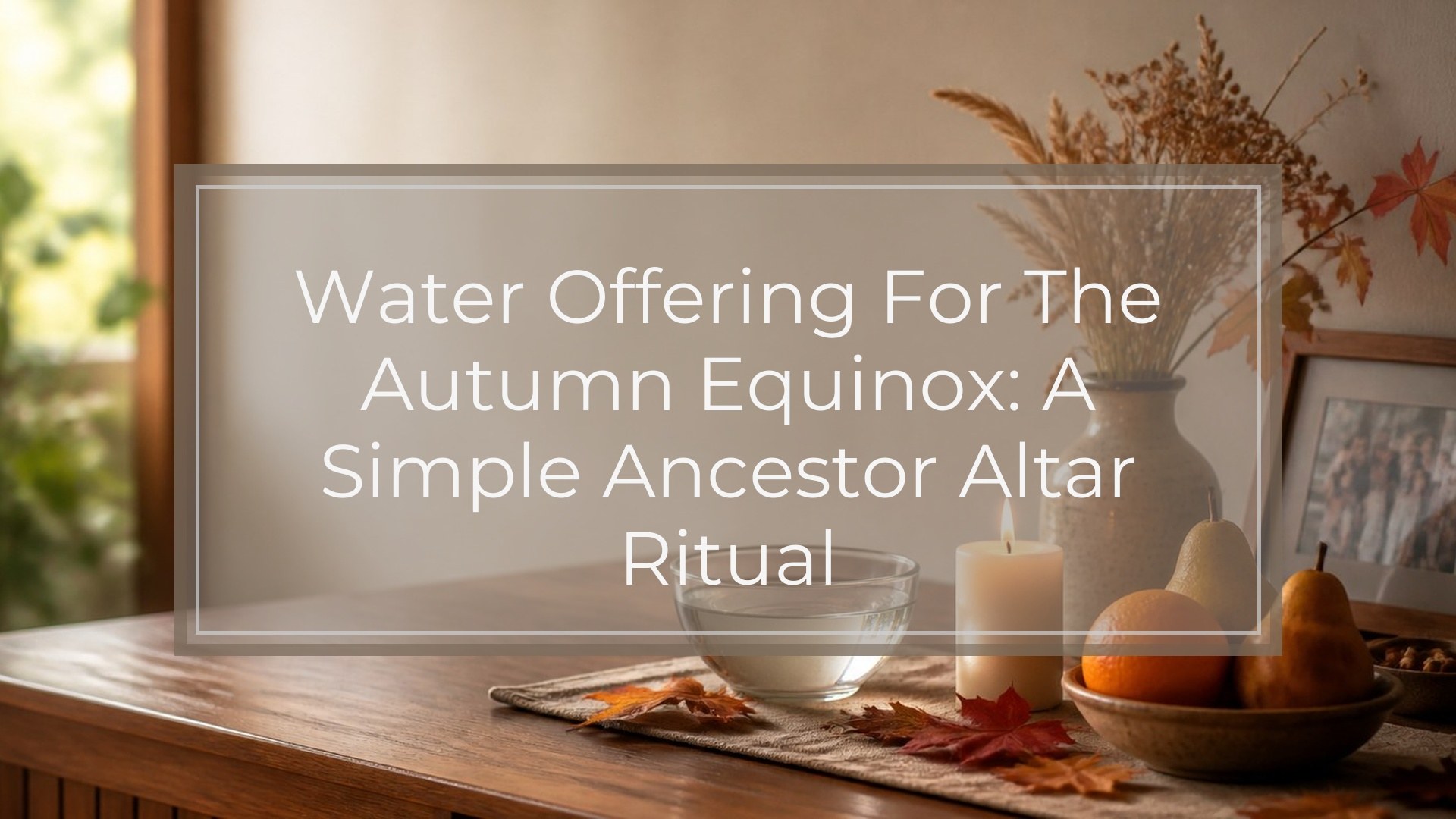
A water offering for the autumn equinox is a simple home ritual that honors balance, gratitude, seasonal change, and the ancestors who helped make your life possible. On or near the equinox, you prepare clean water, place it respectfully on an ancestor altar or quiet home altar, speak words of thanks, and later return the water to the earth or dispose of it mindfully.
This guide keeps the practice practical and adaptable. You do not need an elaborate altar, rare materials, or a specific lineage unless you are following one. The heart of the offering is clean water, clear intention, respectful attention, and a safe closing.
What You Need Before You Start
Gather everything before you begin so the ritual feels calm rather than improvised. You will need:
- A clean glass, cup, bowl, or small pitcher
- Fresh drinking water
- A stable surface such as an ancestor altar, shelf, table, or windowsill
- A clean cloth or small plate to set the vessel on
- Optional: a candle, incense, flowers, autumn leaves, fruit, written names, or family photographs
- Optional: a small journal for reflections afterward
Choose water you would feel comfortable serving to an honored guest. Tap water is fine if it is safe to drink. Filtered, spring, or rainwater may also be used if it feels appropriate and clean.
Prepare the space. Wipe the altar or surface. Remove old offerings, dust, clutter, or anything that feels neglected. If you keep ancestor photos or names on the altar, straighten them. If you do not have an altar, choose a quiet place where the vessel will not be knocked over.
Check practical safety before spiritual beauty. If you use a candle, place it in a fire-safe holder and keep it away from curtains, papers, dried leaves, or cloth. Keep offerings away from pets and children. Do not place water near electronics or on an unstable shelf.
Finally, decide your intention in one sentence. For example: “I offer this water in gratitude for my ancestors and for balance at the turning of the season.”
Step 1
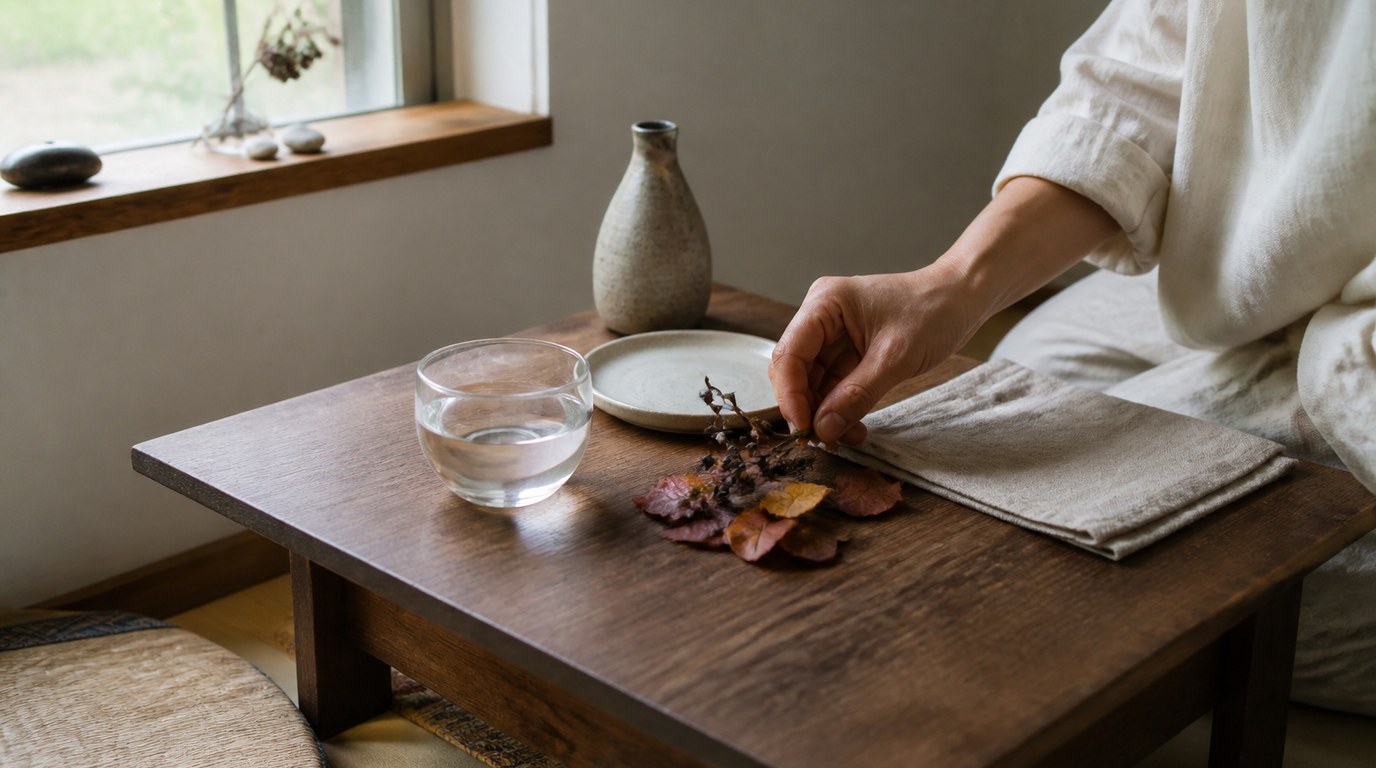
Prepare yourself, the water, and the altar before making the offering.
- Clean your hands. Wash them or wipe them with a clean cloth. This small action marks the shift from ordinary activity into ritual attention.
- Quiet the space. Turn off loud distractions. Silence your phone if you can. Take three slow breaths. You do not need to force a special mood; simply arrive with respect.
- Name the season. Stand or sit before the altar and acknowledge the autumn equinox in plain words. You might say: “This is the time of balance, when day and night meet. I pause to give thanks, release what is complete, and welcome the wisdom of the season.”
- Pour the water slowly. Fill the clean vessel with fresh water. As you pour, imagine the offering becoming clear, steady, and generous. Water is often associated with life, memory, cleansing, and connection, but you do not need to over-explain it. Let the action carry the meaning.
- Place the vessel with care. Set the water on the altar or chosen surface. Keep it centered and stable. If you use ancestor photos, place the water near them but not where it could spill on them.
- Add optional seasonal items. You may place an autumn leaf, apple, pear, grain, flower, or small candle nearby. Keep additions simple. The water should remain the main offering.
- Call in respectfully. Address your ancestors in a way that fits your beliefs. If you only want to honor loving, wise, or well-intentioned ancestors, say so clearly: “I welcome only those ancestors and guiding spirits who come in peace, love, and blessing.”
Avoid rushing through this step. The preparation is part of the offering, not a delay before the “real” ritual.
Step 2
Make the offering, speak your gratitude, and close the ritual with clear boundaries.
- Speak the offering aloud or silently. Use words that feel honest. For example: “Beloved ancestors, known and unknown, I offer this water at the autumn equinox. May it carry gratitude, remembrance, and peace. Thank you for the life that has flowed through you to me.”
- Give thanks for specific things. Name what you are grateful for: protection, survival, lessons, family stories, skills, food, shelter, healing, or the chance to live differently from past harms. Specific gratitude gives the ritual substance.
- Honor balance. Because the autumn equinox marks a balance of light and dark, you may name what you are balancing in your life. For example: work and rest, giving and receiving, grief and gratitude, harvest and release.
- Release what is complete. If appropriate, say one thing you are ready to lay down. Keep this grounded. You might release resentment, overwork, fear, or an old pattern. Do not use the ritual to bypass practical action; let it support the next right step.
- Sit quietly. Spend one to five minutes in silence. Notice your breath, the water, the altar, and your body. You are not required to receive a sign. The ritual is complete because you made the offering with care.
- Close the space. Say: “May this offering be received in peace. I give thanks, and I close this ritual with respect.” If you lit a candle, extinguish it safely rather than leaving it unattended.
Caution: do not drink the offering water after it has been sitting on the altar, especially if herbs, flowers, dust, candle smoke, or insects may have touched it. Also avoid leaving water out so long that it becomes stagnant. A water offering is sacred, but it is still water in a home environment.
How to Check the Result
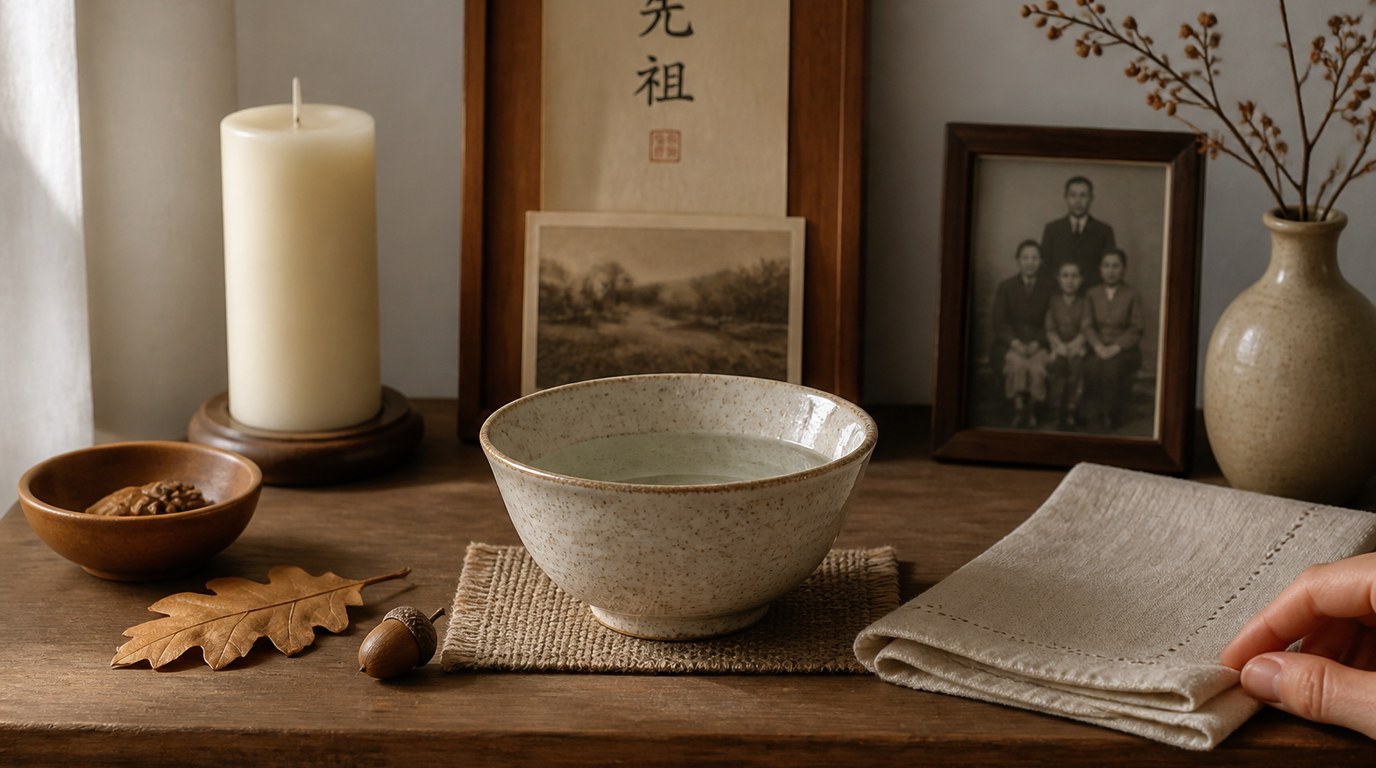
A successful water offering for the autumn equinox should feel complete, respectful, and safely closed. You do not need chills, dreams, signs, or sudden breakthroughs to prove that it “worked.” Check the result through simple, practical markers.
First, confirm the physical setup. The vessel should be clean, stable, and placed where it will not spill. Candles should be extinguished if you are leaving the room. Pets and children should not be able to drink or knock over the offering. The altar should feel tended rather than cluttered.
Second, check the ritual sequence. You prepared the space, poured fresh water, placed it intentionally, spoke gratitude, paused, and closed. If you missed a sentence or felt awkward, that is not a failure. Respectful attention matters more than perfect wording.
Third, notice your inner state. You may feel calm, emotional, grounded, thoughtful, or simply quiet. Any of these are acceptable. If you feel unsettled, repeat a closing phrase such as: “This ritual is complete. I return to the present in peace.”
Leave the water for a few hours, overnight, or up to one day. Then dispose of it respectfully. Pour it at the base of a tree, into soil, or down the drain with thanks if outdoor disposal is not possible. Wash the vessel.
Common troubleshooting: if the water spills, clean it calmly and replace it if you wish. If you forget to remove it, dispose of it promptly and refresh the altar. If the ritual felt too intense, simplify next time.
FAQ
Can I Do a Water Offering If I Do Not Have an Ancestor Altar?
Yes. Use a clean, quiet surface such as a small table, shelf, windowsill, or bedside stand. Place the water there with intention and remove it afterward. An ancestor altar can deepen the practice, but sincere respect matters more than having a formal setup.
What Kind of Water Should I Use for an Autumn Equinox Offering?
Use clean water you would serve to a respected guest. Safe tap water is acceptable. Filtered, spring, or collected rainwater can be meaningful if it is clean and appropriate for your household. Avoid unsafe or dirty water, even if it seems symbolically interesting.
How Long Should I Leave the Water on the Altar?
A few hours, overnight, or up to one day is usually enough. Do not leave it until it becomes dusty, stagnant, or unsafe. When you remove it, thank the ancestors and pour it into soil, at a tree base, or down the drain respectfully.
Can I Add Herbs, Flowers, or Fruit to the Water?
You can, but keep it simple. Many people prefer to place herbs, flowers, leaves, or fruit beside the vessel rather than inside it. This keeps the water clean and easier to dispose of. Avoid toxic plants, allergens, and anything unsafe for pets or children.
What If I Miss the Exact Autumn Equinox Date?
You can still make the offering. Do it within a few days before or after the equinox, or whenever you are able to pause with sincerity. Seasonal rituals are strengthened by attention and respect, not by anxiety over perfect timing.