
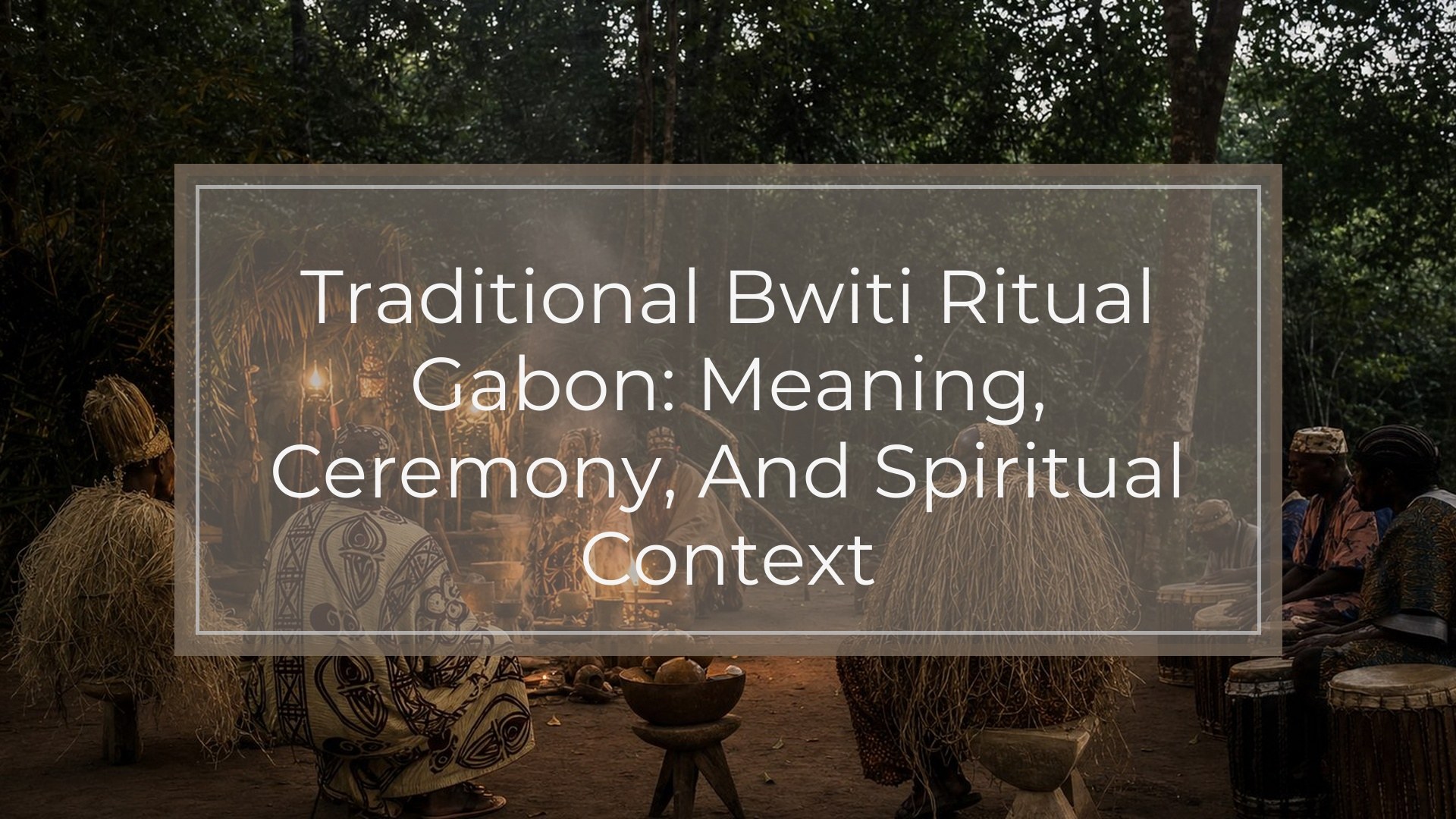
A traditional Bwiti ritual in Gabon is a sacred ceremony within a living religious and cultural tradition practiced by communities in Gabon and nearby regions. It may involve prayer, music, dance, ancestor reverence, moral teaching, healing work, initiation, and guidance from trained elders. In some contexts, the ritual includes the sacred use of iboga, but Bwiti should never be reduced to iboga alone.
For practitioners, Bwiti ritual is not a casual wellness method or an exotic spiritual experience. It is a serious path of relationship: with ancestors, spirits, community, truth, discipline, and the responsibilities of life. Understanding it respectfully means recognizing its authority belongs to those who inherit, keep, and transmit the tradition.
What Is a Traditional Bwiti Ritual in Gabon?
A traditional Bwiti ritual in Gabon is a structured spiritual ceremony rooted in Gabonese religious life, especially among communities such as the Fang, Mitsogo, and related groups, though practices vary by lineage and region. It is not one fixed event performed the same way everywhere. Bwiti includes different houses, teachings, ritual styles, and purposes.
At its center, a Bwiti ritual is a sacred encounter. It may be used for initiation, healing, divination, purification, mourning, guidance, or communal renewal. The ceremony is usually led by trained ritual authorities who understand songs, symbols, medicines, taboos, spiritual protocols, and the moral responsibilities of the rite.
Why Bwiti Rituals Matter Spiritually and Culturally
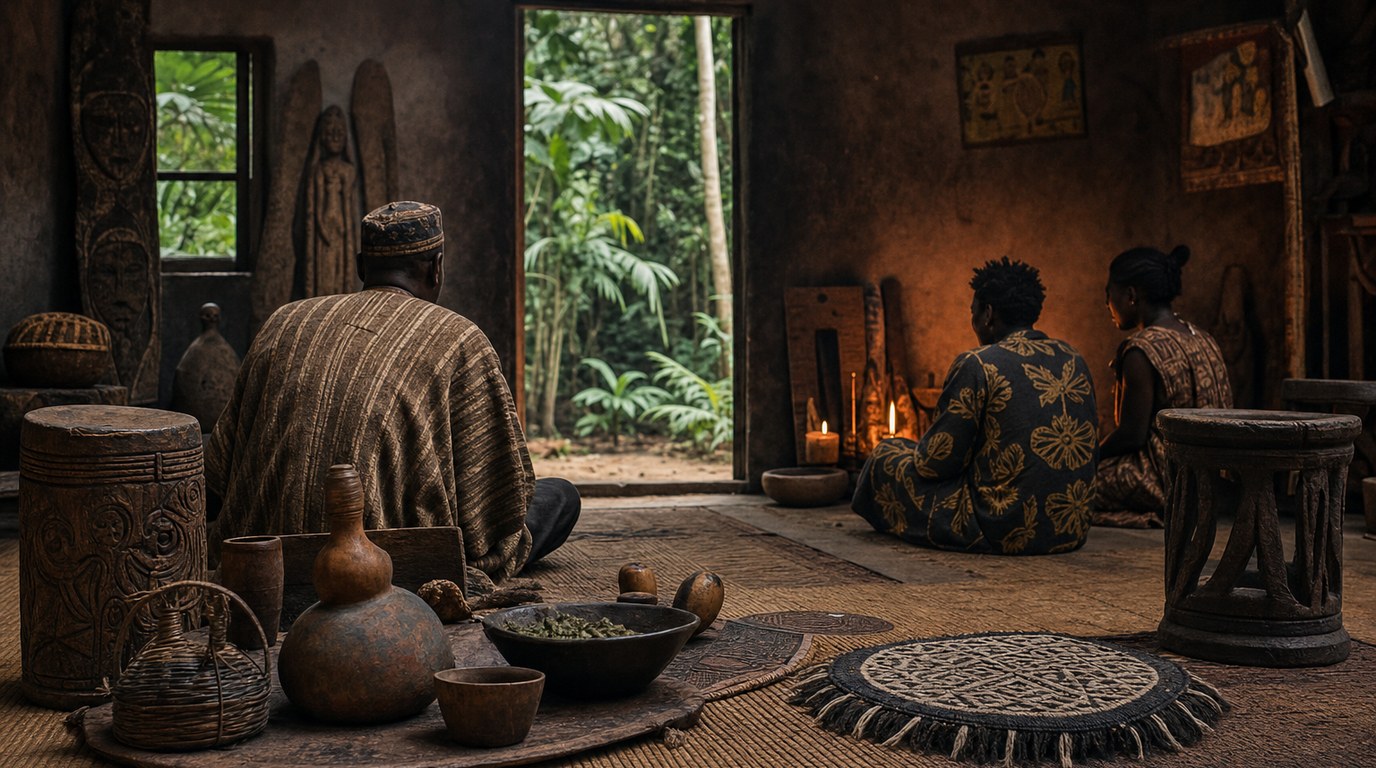
Bwiti rituals matter because they help preserve identity, memory, and sacred order. For many practitioners, Bwiti is a way of knowing where one comes from, how to live rightly, and how to remain connected to the visible and invisible worlds.
The ritual often places personal suffering inside a wider spiritual frame. Illness, grief, confusion, family conflict, or moral imbalance may be approached through prayer, counsel, confession, music, and ancestral presence. The ceremony is also cultural: it transmits language, song, rhythm, cosmology, and social values.
Bwiti is therefore not only about private healing. It is about becoming accountable to community, ancestors, elders, and one’s own conduct.
Core Traits of a Traditional Bwiti Ceremony
Although Bwiti rituals vary, several traits commonly make them recognizable. They often take place at night or over extended hours, with ritual specialists guiding participants through song, drumming, harp or mouth bow music, dance, prayer, and symbolic action. The atmosphere may be intense, beautiful, disciplined, and deeply communal.
Ceremonies may include a sacred space arranged with ritual objects, medicines, offerings, candles or fire, and symbols linked to the lineage. Participants may be instructed in specific ways to sit, listen, respond, sing, cleanse, or remain silent.
A traditional Bwiti ritual is not entertainment. Music and movement are not decorative; they help carry prayer, focus attention, open memory, and support spiritual work. The ceremony may bring visions, emotional release, moral confrontation, or renewed commitment, but these experiences are interpreted within the tradition by elders.
The Role of Ancestors, Spirits, and Moral Instruction
Ancestor reverence is an important part of understanding Bwiti ritual. Ancestors may be approached as sources of guidance, protection, correction, and continuity. Their presence reminds participants that life is inherited and accountable: one’s actions affect family, lineage, and future generations.
Spirits and ancestors are not treated as abstract symbols only. Within the tradition, they may be understood as active presences who can teach, warn, heal, or reveal imbalance. Moral instruction is therefore central. A ritual may ask a person to face truth, repair harm, respect elders, honor obligations, or change destructive behavior.
For this reason, Bwiti ceremony is spiritual practice joined to ethical life.
Iboga in Bwiti Ritual: Sacred Context, Not a Trend
Iboga is strongly associated with some Bwiti initiations and healing ceremonies, but it is not the whole of Bwiti, and it is not used casually. In traditional contexts, iboga is a sacred plant medicine handled with ritual knowledge, preparation, supervision, and spiritual discipline.
Modern interest in iboga has often separated it from the culture that gives it meaning. That can be disrespectful and unsafe. Iboga can carry serious medical risks, especially for the heart and when mixed with certain substances or medications.
Anyone learning about Bwiti should understand this clearly: iboga belongs within a sacred, guided, and culturally rooted setting. It should not be treated as a trend, shortcut, or self-administered spiritual experiment.
Practical Examples: When a Bwiti Ritual May Be Relevant
A Bwiti ritual may be relevant when a person within the tradition seeks initiation, healing, protection, or deeper spiritual alignment under the guidance of recognized elders. For example, someone may come to ceremony during a life crisis, after repeated misfortune, before taking on new responsibilities, or when called to a religious path.
A family or community may also gather for ritual to address grief, conflict, illness, or the need for collective blessing. In these cases, the ceremony is not simply about one individual’s experience. It works through relationship: elder and initiate, living and dead, community and spirit, truth and action.
For outsiders, relevance may begin with learning, witnessing respectfully if invited, or supporting cultural preservation.
Related Ritual Objects, Roles, and Entities
Several related entities may appear around traditional Bwiti ritual, depending on lineage. These can include the nganga or ritual specialist, initiation elders, musicians, singers, attendants, and senior community members who hold ceremonial authority.
Ritual objects may include sacred instruments, mirrors, candles or lamps, carved figures, baskets, medicines, cloth, feathers, and items connected to ancestors or spirits. Music is especially important, including instruments such as the harp or mouth bow in some settings.
These elements should not be separated from their context. A ritual object in Bwiti is not merely aesthetic; its meaning comes from consecration, lineage, use, and instruction.
How to Approach Bwiti Respectfully as an Outsider
If you are not from a Bwiti lineage, approach with humility. Learn from reputable sources, listen to Gabonese and initiated voices, and avoid claiming authority over practices you have not been given. Do not copy songs, symbols, medicines, or altar forms simply because they feel powerful.
Respect also includes practical discernment. Be cautious of commercialized retreats that promise instant enlightenment, guaranteed healing, or “authentic Bwiti” without transparent lineage, safety practices, or elder accountability.
For home ancestor practice, you can honor your own dead without borrowing Bwiti rites. Light a candle, speak the names of your ancestors, offer water, pray for guidance, and ask to be corrected in your own ethical life. Let Bwiti remain Bwiti.
Common Misunderstandings About Traditional Bwiti Rituals
One common misunderstanding is that Bwiti is only an iboga ceremony. Iboga may be important, but Bwiti also includes prayer, music, discipline, lineage, ancestors, and moral teaching.
Another misunderstanding is that anyone can recreate the ritual at home. Traditional Bwiti requires training, community, and permission.
A third misconception is that the ritual is only about visions. In Bwiti, visions matter only when they are grounded, interpreted, and lived through responsible action.
FAQ
What Is the Purpose of a Traditional Bwiti Ritual in Gabon?
The purpose may include initiation, healing, purification, spiritual instruction, ancestor connection, and moral realignment. A traditional Bwiti ritual helps a person or community seek truth, guidance, and restoration within a sacred framework led by trained elders and supported by song, prayer, and ritual discipline.
Is Iboga Used in Every Bwiti Ritual?
No. Iboga is important in some Bwiti ceremonies, especially certain initiations and healing rites, but it is not used in every ritual or in the same way across all lineages. Bwiti should not be reduced to iboga, and iboga should never be approached casually or without proper guidance.
Can Non-gabonese People Participate in Bwiti Rituals?
In some cases, non-Gabonese people may be allowed to participate if invited by legitimate elders and if they follow the required preparation, protocols, and safety guidance. Participation is not a right. It depends on the lineage, the purpose of the ceremony, and the judgment of ritual authorities.
How Are Ancestors Connected to Bwiti Ceremonies?
Ancestors may be honored as sources of guidance, protection, correction, and spiritual continuity. In Bwiti ceremonies, the living are often reminded that they stand within a lineage and must live responsibly. Ancestor presence can help frame healing as both personal and communal.
Can I Adapt Bwiti Ritual Elements for My Home Ancestor Altar?
It is better not to copy Bwiti ritual elements unless you have been properly initiated or instructed. For a home ancestor altar, honor your own lineage with water, candlelight, prayer, names, photos, and ethical offerings. Respect Bwiti by learning about it without taking what has not been given.