
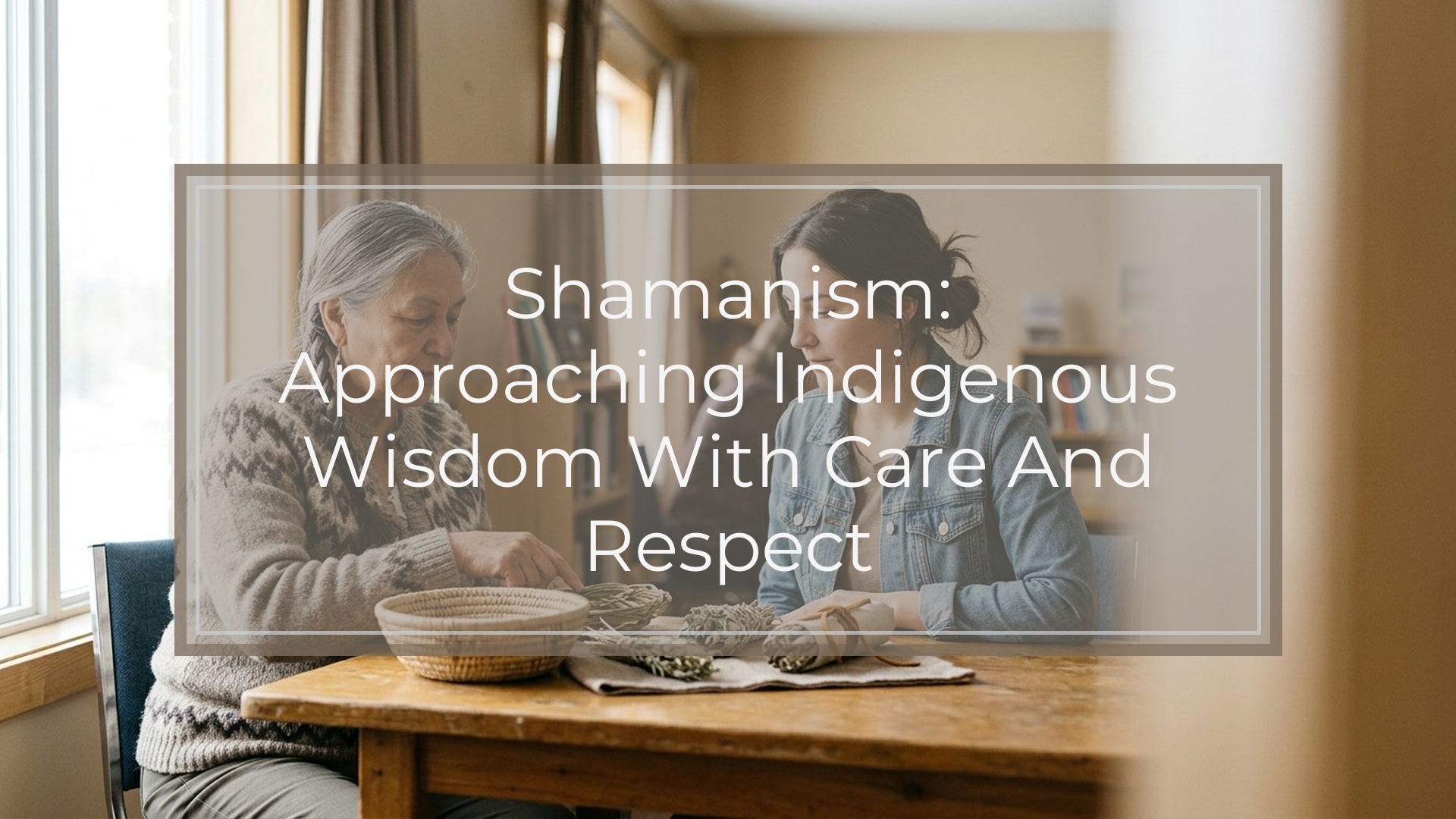
Shamanism approaching Indigenous wisdom with care and respect begins with humility. Many traditions described as “shamanic” are not universal techniques floating free of place, people, language, land, and responsibility. They belong to living communities, some of whom share certain teachings publicly and protect others as restricted, ceremonial, or family-held knowledge.
A respectful path does not demand access. It asks: Who is teaching? What is being shared? Was permission given? Who benefits? For people drawn to spiritual healing, ancestor reverence, dreams, offerings, and home ritual, the safest starting point is not imitation of closed ceremonies. It is ethical learning, grounded discernment, and sincere relationship with one’s own ancestors, land, and responsibilities.
Quick Answer

The main takeaway is simple: learn about shamanism and Indigenous wisdom with reverence, consent, and restraint. Do not copy ceremonies, songs, medicines, regalia, sacred objects, or titles from cultures you are not part of unless you have been clearly invited by legitimate community teachers and understand the responsibilities involved.
“Shamanism” is a broad term often used to describe spirit-mediated healing, trance, divination, relationship with ancestors, and work with the more-than-human world. But the word can flatten many distinct Indigenous and traditional lifeways into one marketable category. That is why ethical learning matters.
A respectful beginner can:
- Read public materials by Indigenous authors, scholars, and culture bearers.
- Support Native- and Indigenous-led organizations, artists, teachers, and publishers.
- Avoid teachers who sell “ancient tribal secrets” without naming lineage, permission, or accountability.
- Build a home practice around gratitude, prayer, ancestor remembrance, ethical offerings, and care for local land.
- Accept that some teachings are not yours to access.
Respect does not mean fear. It means spiritual maturity. If a path asks you to slow down, listen carefully, pay fairly, credit sources, and honor boundaries, it is likely leading you toward deeper integrity. If it promises power, instant initiation, exotic identity, or secret ceremonies for a fee, step back.
How to Think About This Topic

A useful mental model is relationship before method. Many people approach shamanism looking for techniques: journeying, drums, plant medicine, spirit animals, soul retrieval, or ceremony. But Indigenous spiritual wisdom is rarely only a set of techniques. It is embedded in kinship, land, language, ancestors, obligations, ecological knowledge, community memory, and protocols for what may be shared.
This matters because the modern spiritual marketplace often separates practices from their roots. A person may buy a weekend workshop, receive a certificate, and begin teaching something presented as “Indigenous shamanism” without accountability to any Indigenous community. Even when intentions are sincere, the result can be harm: sacred practices become products, living peoples are treated as symbols, and restricted knowledge is taken out of context.
Approaching Indigenous wisdom with care and respect means asking better questions than “Can I use this?” Try:
- Is this teaching public, restricted, or unclear?
- Is the teacher connected to the community they claim?
- Are Indigenous people benefiting, or only being referenced?
- Am I learning to serve, or collecting spiritual experiences?
- Is this practice appropriate for my home, ancestry, and responsibilities?
This approach also helps people who maintain ancestor altars or home rituals. You do not need to borrow from a closed tradition to honor the dead, pray, make offerings, or cultivate spiritual discipline. Many people can begin with simple, culturally honest practices: lighting a candle for known and unknown ancestors, offering clean water, keeping family stories, repairing relationships where possible, tending graves, cooking ancestral foods, or praying in the language of their own lineage if available.
Careful respect also includes recognizing diversity. There is no single Indigenous view of shamanism. Some communities may not use the word at all. Some practices are public; others are protected. Some teachers welcome outsiders under clear conditions; others do not. Some ceremonies require years of relationship, not registration through a website.
The point is not to freeze Indigenous traditions as untouchable museum pieces. Living traditions change, teach, and adapt. The point is that living communities have the right to decide what is shared, by whom, how, and under what responsibilities. Ethical seekers honor that right.
Practical Guidance
Use practical discernment before studying, buying, teaching, or adapting anything labeled shamanic or Indigenous. Respect is not only a feeling; it shows up in choices.
| Situation | More Respectful Approach | Red Flag |
|---|---|---|
| Choosing a teacher | Look for transparency, community accountability, and clear boundaries | Vague claims of being “chosen by all tribes” |
| Attending ceremony | Go only by invitation and follow stated protocols | Paid access to restricted rites with no context |
| Home practice | Honor your own ancestors, land, and ethical offerings | Copying sacred items or songs from closed traditions |
| Sharing online | Credit sources and avoid revealing protected details | Performing borrowed ceremony for content |
| Buying spiritual tools | Support Indigenous makers when appropriate | Mass-produced “tribal” items with no origin |
A beginner might start by reading books, essays, or interviews from Indigenous writers speaking publicly about their own traditions, histories, and concerns. Notice the difference between learning about a worldview and claiming authority within it. You can appreciate teachings about reciprocity, land relationship, and ancestral responsibility without declaring yourself a practitioner of someone else’s sacred path.
If you are invited to learn from an Indigenous teacher, treat the invitation as a relationship, not a transaction. Ask what is appropriate to share, what should remain private, how payment or support should be handled, and whether the teaching is for personal reflection or practice. Do not assume that attendance gives permission to teach others.
For home ritual, keep your practice honest and rooted. On an ancestor altar, you might place water, flowers, photographs, heirlooms, written names, or a candle. You might speak gratitude, ask for guidance, apologize where healing is needed, or commit to living in a way that brings honor to your line. These practices do not require adopting restricted ceremonial forms.
You can also honor the land where you live by learning its history, including the Indigenous peoples connected to that place. This should be done with care, not as a way to claim identity or spiritual authority. Support local Indigenous-led cultural centers, language revitalization projects, land back efforts, or mutual aid when possible. Let respect become material, not only emotional.
Avoid common mistakes. Do not call yourself a shaman because you had a powerful dream, completed a course, or feel drawn to spirits. In many cultures, such roles are recognized by community, training, ordeal, lineage, and service. Do not mix sacred medicines, symbols, and ceremonial fragments from multiple peoples into a personal brand. Do not assume all Indigenous people agree on what outsiders may do. Do not pressure anyone to educate you for free.
A good ethical test is this: if members of the source community heard you describe your practice, would you be able to speak honestly about where it came from, who gave permission, what you paid or gave back, and what boundaries you honored? If not, pause.
The deeper path is not less spiritual because it has limits. Boundaries can protect power. Consent can make learning cleaner. Humility can open a more truthful relationship with ancestors, land, and spirit than appropriation ever could.
FAQ
What Should a Beginner Know First About Shamanism Approaching Indigenous Wisdom with Care and Respect?
Begin with humility and context. Shamanism is not one universal system, and many Indigenous traditions include protected knowledge. Learn from public, accountable sources, avoid copying ceremonies, and focus first on ethical relationship, ancestor remembrance, gratitude, and responsibility.
What Matters Most When Evaluating Shamanism Approaching Indigenous Wisdom with Care and Respect?
The most important factors are consent, source, accountability, and benefit. Ask who is teaching, whether they have community permission, what is public or restricted, and whether Indigenous people are respected, credited, and materially supported.
What Mistakes Should Readers Avoid with Shamanism Approaching Indigenous Wisdom with Care and Respect?
Avoid claiming titles, selling borrowed rituals, using sacred medicines casually, copying songs or regalia, or treating Indigenous cultures as spiritual aesthetics. Also avoid teachers who promise secret initiations, instant power, or access to ceremonies without clear lineage and responsibility.
What Is the Next Logical Step After Learning About Shamanism Approaching Indigenous Wisdom with Care and Respect?
Choose one grounded action: read Indigenous-authored public teachings, support an Indigenous-led project, research the land where you live, or tend your ancestor altar with simple offerings. Let your next step be slower, more honest, and more accountable.