
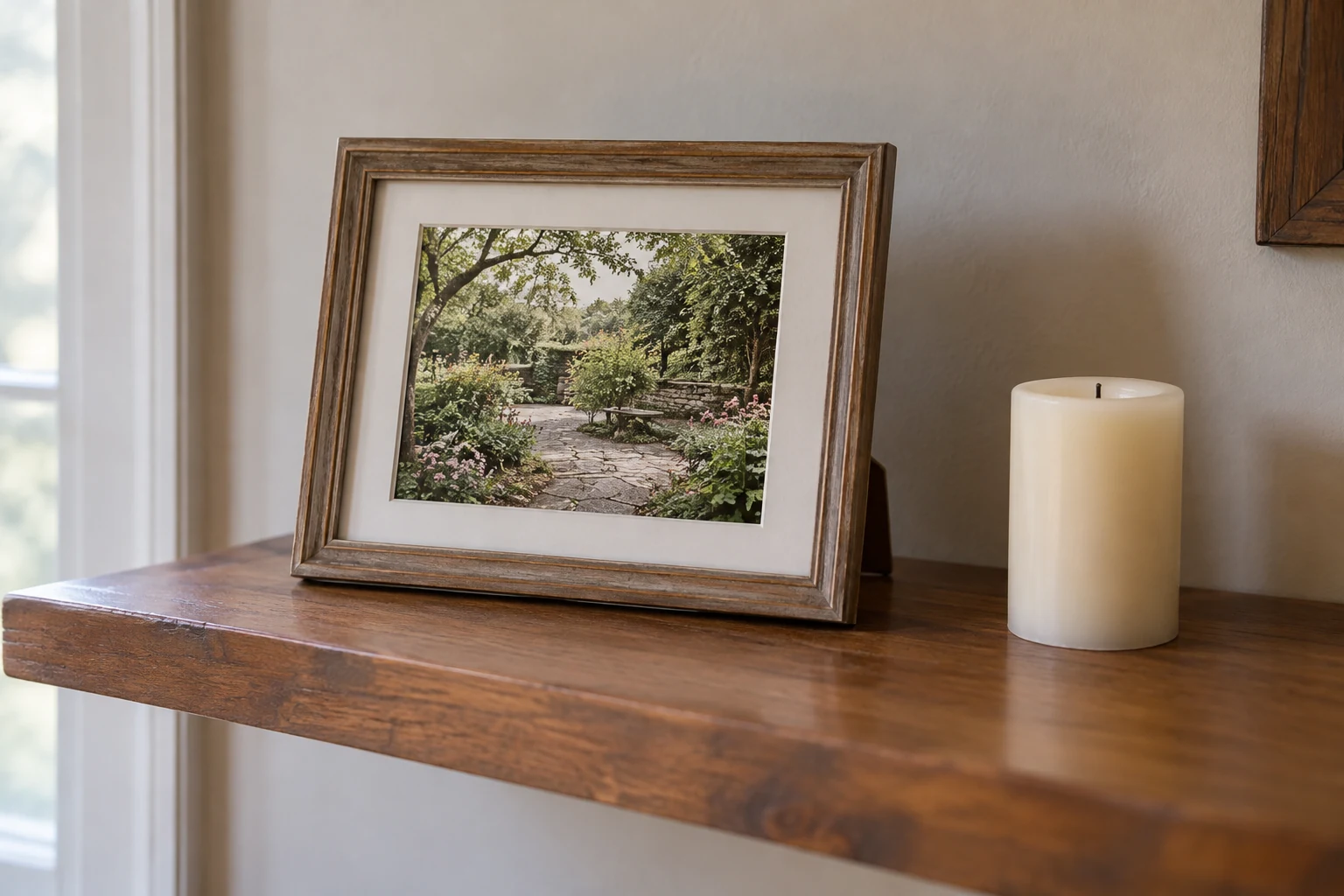
You can pause a personal ancestor remembrance practice without deciding today whether you will return to it. Start by naming what you want to stop or change: a repeated action, a display, or both. If you put objects away, keep a brief record so you can find them and remember why they matter. Leave shared belongings in place unless the other owners agree to a change. Later, you can return in a smaller form, choose a different way to remember, or continue the break. A pause is a practical choice about what you can do now, not a measure of affection.
Decide What the Break Includes
First, separate the parts of your practice. You might want to stop a repeated action, such as visiting a shelf each morning, while keeping the shelf as it is. You might want to put away a display because you need the space, yet continue to remember someone privately. Or you might keep a photograph in view but change when and how you spend time with it. Choosing one change does not commit you to the others.
Make the pause specific enough that you know what you are doing tomorrow. For example: “I’m stopping my daily visit to the shelf, but I’m leaving one photograph where it is.” That is a complete decision for now. You need not set a return date or decide whether the photograph will stay there indefinitely.
If it would help later, write a short note to yourself: what you are changing, what you are leaving alone, and what you might want to reconsider. It can be as simple as “Daily visit paused; ask myself later whether the shelf still fits this room.” Keep it private if you prefer. The note is a reminder of your choice, not a promise to resume.
This guide concerns a voluntary, self-directed routine. If an object belongs to someone else, or your practice involves responsibilities within a religious tradition, a personal decision to pause does not settle those separate questions. You can still change the actions that are yours to choose while finding out what, if anything, needs agreement or guidance.
Settle Shared Objects Before Changing the Space
Before moving a display, identify which objects you own and which other people own or use. A shared photograph, family keepsake, or object kept in a common space may matter to someone who does not take part in your routine. Ask what they want to remain visible or accessible, and agree on whether an item stays, moves, or is stored. Include where it would go and how people could retrieve it; “putting it away” may mean different things to each person.
If you cannot reach an agreement now, you can still pause. Stop your own daily action and leave the shared objects where they are. Alternatively, put away only the items you control and leave the rest untouched. This separates your need for a break from a decision about somebody else’s belongings.
For instance, if a shared photograph sits beside two objects you placed there yourself, you could leave the photograph accessible and store your two objects. If even that change would disrupt someone else’s use of the space, pause the routine without changing the display. Neither choice requires a debate about whether your feelings are sincere.
Simplifying a private routine is not a declaration of what a religious community permits. Nor does it give you authority over someone else’s sacred property. Where those responsibilities apply, address them with the people or community involved rather than treating this personal planning guide as permission to set them aside.
Record Meanings and Put Personal Items Away
If you decide to store objects you control, take a moment to make them retrievable before packing them. List each item in a notebook or digital note, add a few words about whom or what it recalls, and record where you will put it. The aim is not to document every memory. It is to spare your future self from opening several containers to find one object—or wondering why an unfamiliar item was kept.
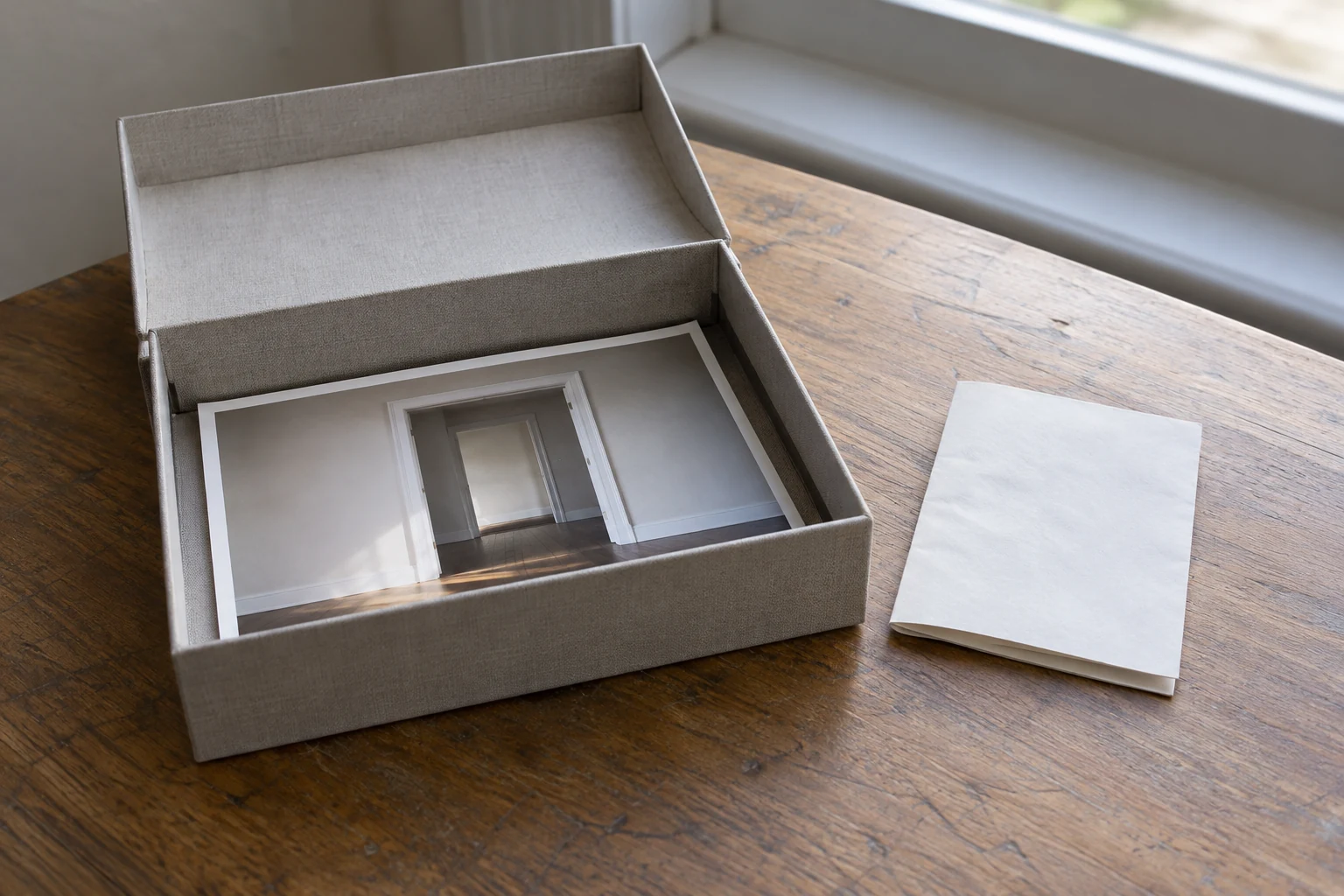
Child Bereavement UK describes an optional memory-box approach in which some people write a note for each item explaining why it matters to them. That is an idea you can adapt for your own ancestor objects, not a rule for ancestor practice. Your record can be brief, and you do not need to share it.
A usable entry might read: “Small blue cup—reminds me of meals with Grandmother; wrapped in the bedroom cupboard box.” Add where the record itself lives: “Item list in the phone notes app,” or “paper list inside the cupboard door.” If you use a container, describe it clearly enough to distinguish it from others. You can also note which items you chose not to move, so a later search does not assume everything was packed.
Before you pack photographic originals, follow the Library of Congress guidance: store photographs in photo-safe boxes, and do not put self-adhesive tape, sticky notes, glue, or other adhesives on the photographs. Keep identification notes separate from the originals rather than attaching labels to them. Then place the photographs in the photo-safe box and record its location alongside the other items.
Packing can be partial. An object that is shared, difficult to move appropriately, or needed in its present place can stay there while you stop your own routine. Your list can say “stays on the living-room shelf” just as easily as it can name a storage box. A pause does not require an emptied space.
Decide Whether Returning Fits Your Life Now
There is no requirement to return after a break, even an indefinite one. If you do consider returning, you do not owe the practice a series of missed days. Begin with your present circumstances rather than trying to reconstruct what you used to do.
Ask what space and time you actually have. Does a display fit where you live now, or would it crowd a room you use differently? Is there a time that feels available, or did the old timing become one reason you paused? Consider household arrangements as well: who shares the space, and would a visible object be welcome there? Check whether the items you would want are accessible and whether any agreement about shared objects has changed. These questions help you choose a workable form, not test your commitment.
Let the answers lead to a decision. If one personal object fits your space and you would like to see it, a smaller return may work. If your housing situation or a shared-object question is unresolved, you can defer moving anything while continuing to remember privately. If you do not want a routine or display at all, you can leave the break open-ended. You are allowed to decide again if circumstances change.
Neither a pause nor a return proves how much you care for someone. It cannot, by itself, predict how grief will change or establish a spiritual consequence. If this decision brings up needs beyond what personal planning can address, you can turn to a trusted person or professional for support. A remembrance practice may be meaningful to you, but it is not treatment or a substitute for care.
Choose a Form You Can Sustain—and Change It Again If Needed
If you want to return, choose an action that fits your life now rather than rebuilding the old routine by default. You might bring out one meaningful object from storage, put it in a place you control, and leave the rest safely packed. This gives you a visible reminder without requiring room for a whole display. Use your item list to find the object and keep the list so you know where the remaining items are.
A different time may work better than a different arrangement. If a morning visit no longer fits your schedule, you could briefly recall someone when you have a quiet moment later in the day. Nothing needs to be moved. The change is in when you make space for the memory, not in how many objects you have out.
You may also prefer no physical display. You could think privately of a person or a particular memory when you choose, with no shelf to maintain and no household space to negotiate. That can be a form of remembrance even if it looks nothing like your earlier routine. You need not announce it, turn it into a schedule, or make it visible to anyone else.
Try whichever form seems feasible, and notice whether it still suits your space, time, and preference. You can adjust it or pause again; there is no need to buy replacements, catch up on missed observances, or recreate a layout that stopped working. The same choices remain available whenever life changes: define what you are pausing, respect shared belongings, keep meanings and locations retrievable while protecting stored photographs, and return only if and how you choose.