
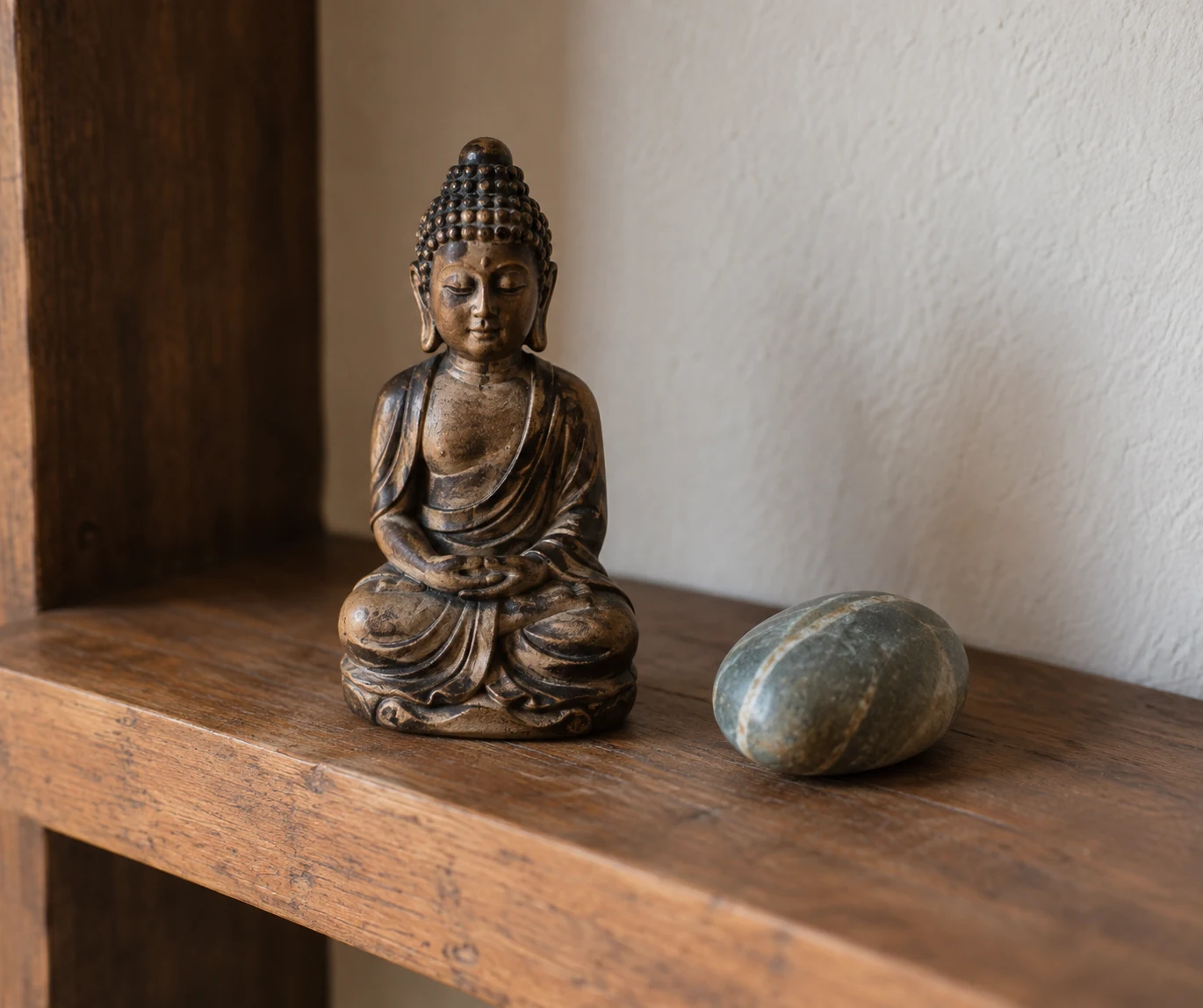
Making a deity altar at home can begin with a clear shelf, a suitable focus and room to pause beside it. The first decision is not what to buy, but which practice you are following. A personal devotional space can reflect your own meaningful choices. An altar for worship within a named tradition should follow that tradition’s guidance instead.
Choose the Kind of Altar You Are Making
If you are exploring a personal devotional practice, you can make a small, flexible space focused on one deity without adopting a prescribed set of tools. Decide what you want to do there—perhaps pause, reflect or maintain a devotional habit—and let that purpose shape the arrangement. This is the personal route used in the example at the end of this guide.
If you follow a named tradition, begin with its teachings and relevant community guidance. Its choices about representations, objects and rites cannot be replaced by a general altar plan. The Hindu American Foundation, for example, describes home altars while also noting variation in rites among Hindu communities.
A working altar serves a particular rite: its objects and use are chosen for that rite rather than for an ongoing personal space. One Wiccan coven distinguishes a rite-specific working altar from a devotional altar. That example helps clarify two possible purposes, but it is not a classification imposed on other traditions. If you are preparing for a rite, follow that rite’s instructions rather than assuming that a permanent devotional arrangement will serve the same purpose.
Choose a Focus Within Your Practice
Choose whom the space is for before choosing what goes on it. If you follow a named tradition, check its guidance on the deity, appropriate representations, ritual objects and offerings. An item’s appearance in a general altar list is not enough to establish that it belongs in your practice.
For a personal arrangement, you might research associations connected with the deity you have chosen and consider which, if any, are meaningful to you. An eclectic practitioner suggests researching ritual objects and associations; that is advice for making informed personal choices, not a requirement to collect every associated item.
If you are uncertain about an image, object or offering, you can leave it out while you check. Starting with a clearly identified focus makes it easier to decide later whether an addition has a purpose.
Find a Location and Scale That Work at Home
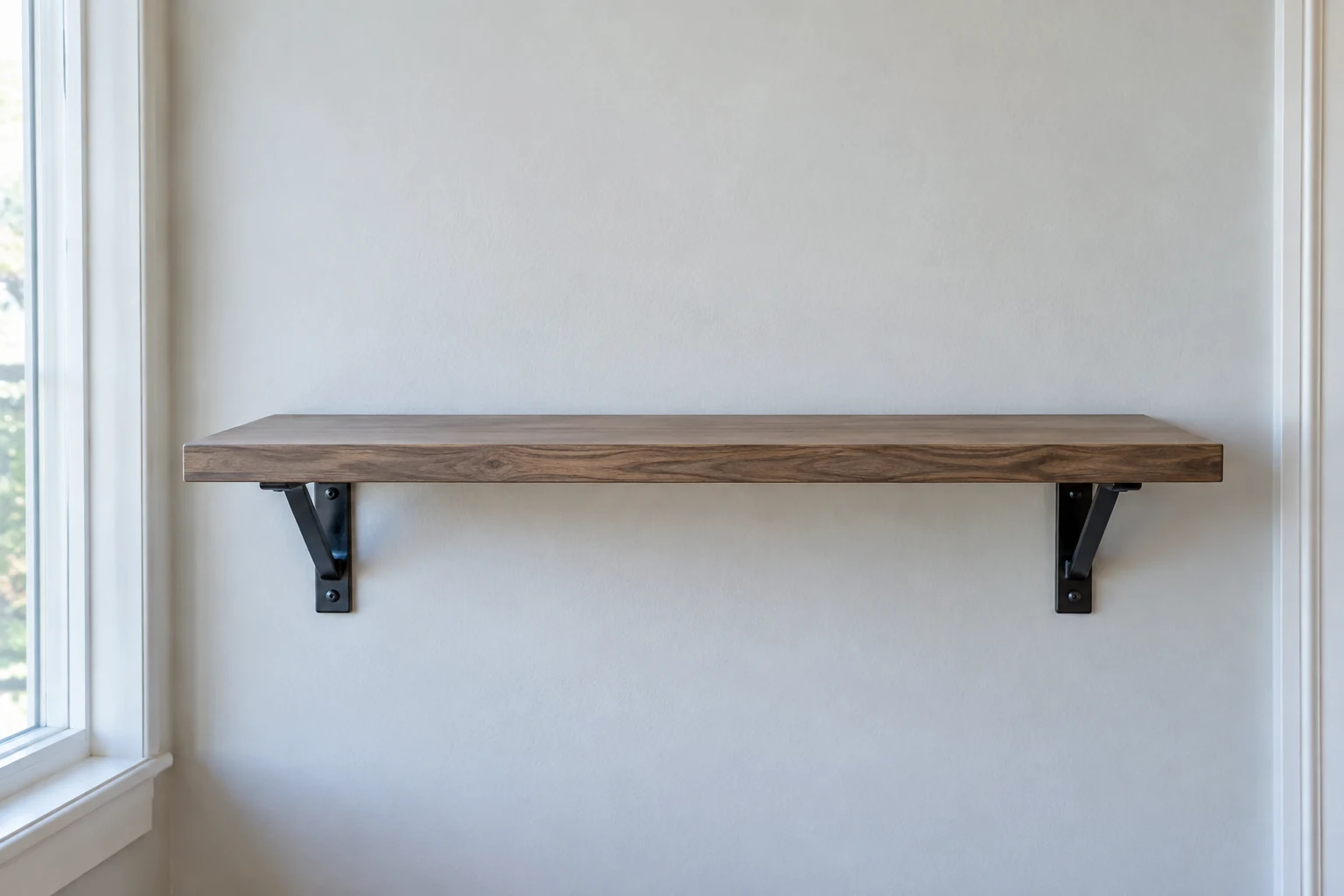
Choose a place you can reach when you want to use it. Consider how much surface area you have, whether you want the space visible or private, and whether it can remain set up or must be put away between uses. An eclectic practitioner suggests flexibility in location, scale and duration, including small-space options. Those are practical possibilities, not religious requirements.
A modest shelf may be enough, provided it is steady and leaves room for the objects you choose. Before placing anything fragile there, consider ordinary household activity: could a child handle it, or could a pet jump up and knock it over? A Wiccan coven specifically raises children’s handling of items and cats causing breakage. If either is likely, choose a more protected position or less fragile objects before setting up the space.
A temporary arrangement can work too. Choose a surface you can clear when needed and a place to keep the objects between uses. The useful scale is one you can access, set up and tend without the arrangement becoming an obstacle in your home.
Mark the Deity-focused Space
A focal point identifies whom the space is for. Where an image is appropriate within your practice, place it where you can see it and where it will remain secure. An eclectic practitioner describes an image as one possible focus.
If a statue is unsuitable, unavailable or too conspicuous, a written name or discreet symbol may be an option for a personal practice. The same practitioner suggests these alternatives. A small card, for example, can mark the focus without taking up much of a shelf.
An image, name and symbol are not interchangeable in every tradition. If your practice has guidance about representations, use it to decide what is appropriate. For a personal arrangement, choose a form you can identify and use intentionally, without treating the form itself as a guarantee of any spiritual effect.
Assemble a Simple, Usable Arrangement
Clear the chosen surface and check that it does not wobble. Set your image, name or symbol where it will stay secure, then look at how much space remains. Leave an open area so you can approach the focus and clean the surface without moving a crowded display.
For a personal space, add one meaningful object if you want one. You should be able to say why it belongs there; it need not come from a fixed list. If you add more later, check whether each still serves the space’s purpose and whether the objects remain secure. A Wiccan coven emphasizes meaning over a fixed item list, while an eclectic practitioner describes possible altar objects rather than a mandatory kit.
You do not need to reproduce someone else’s arrangement. A clear shelf, a suitable focus and one object can be a complete personal setup. If you are making a tradition-bound altar, consult that practice before deciding that this arrangement has everything it calls for.
Begin Using the Space
For a personal arrangement, the first use can be quiet and straightforward. Approach the space, take a moment and state to yourself why you have set it aside. You might sit briefly afterward or notice whether you have left enough room to use it comfortably. This is an optional way to begin—not an invocation, a required dedication or a promise of results.
An eclectic practitioner describes an informal dedication as another personal option. It is not a historical requirement for deity altars, and you do not need to borrow suggested words to make your own purpose clear.
If you are setting up an altar within a named tradition, let that tradition’s instructions govern its first use. The same applies to a working altar prepared for a particular rite: its first action depends on the rite, not on the quiet personal option above.
Decide Whether Offerings or Observances Belong Here
A personal deity-focused space does not require a food offering or a fixed schedule. You can use it for a quiet pause without leaving anything behind. If you want to make an offering, check what is appropriate within your practice before choosing one, and plan to remove anything that will become stale.
Specific observances show why guessing is unhelpful. Hellenion describes offerings to household deities at a family altar during an observance in the lunar month and names example offerings for household gods. That is one observance’s timing and practice, not a calendar or offering list for every deity altar.
The Hindu American Foundation describes Hindu home altars and multiple forms of prayer, while noting variation among communities and prescribed ceremonies in some contexts. These accounts illustrate different practices; they do not combine into a routine to follow. For a personal space, decide whether offerings or regular timing serve your purpose. For home worship within a named tradition, seek the guidance relevant to that practice.
Choose Light or Scent Without Making Combustion Necessary
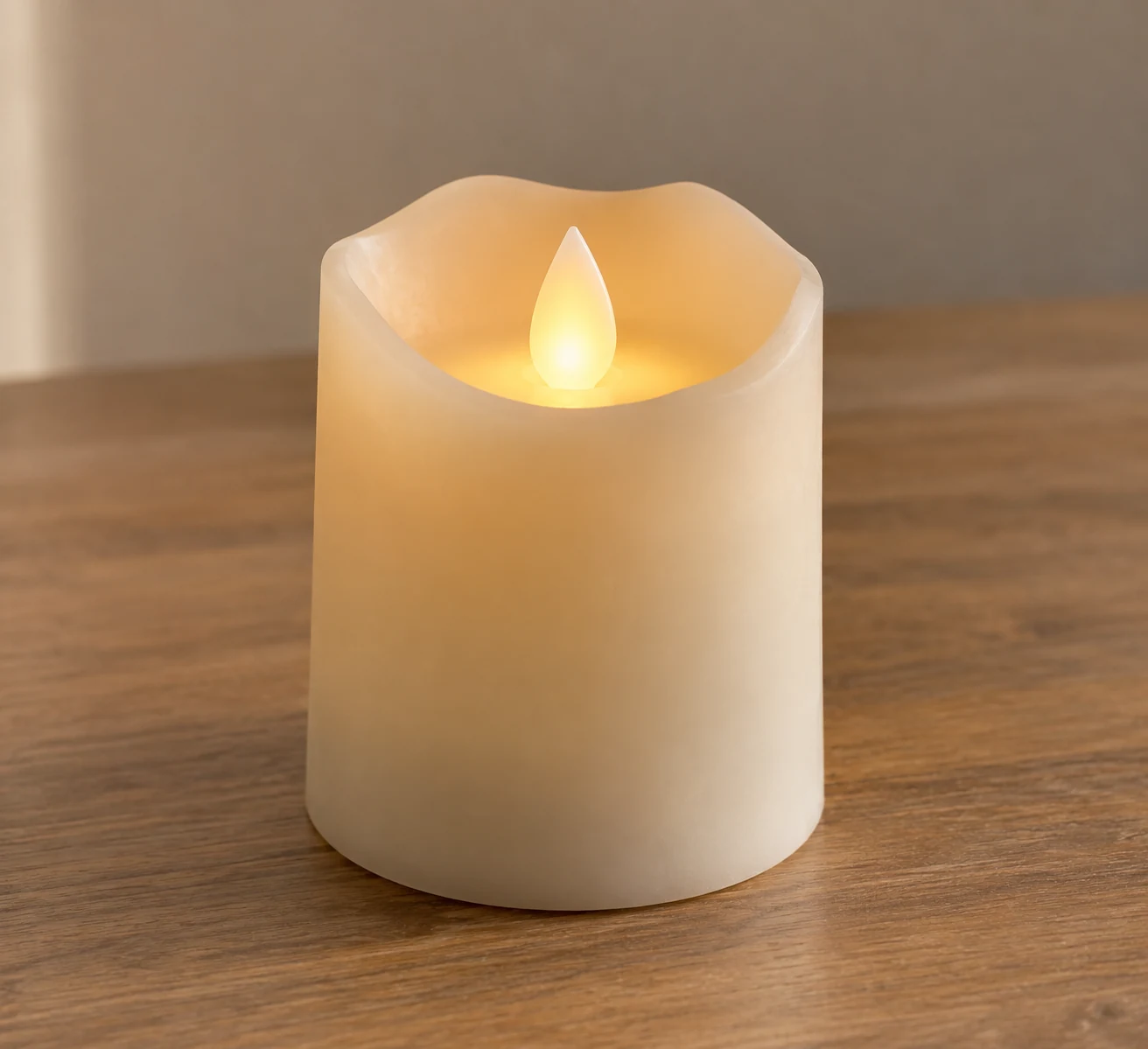
Light and scent are optional in a personal arrangement. A battery candle can provide light without a flame, and a space with no light or scent is also usable. The U.S. Fire Administration offers a battery-operated candle as an alternative.
If you want a physical candle, first put it in a stable holder and keep it at least 12 inches from anything that can burn, as the U.S. Fire Administration advises. Extinguish it before leaving the room or going to sleep. Apply those precautions before lighting it; if the shelf cannot accommodate them, use the battery alternative or no light instead.
If you want incense, first consider that combustion produces indoor particulate matter. The EPA advises ventilation when incense is burned, but ventilation does not establish that smoke exposure has been eliminated. Before lighting incense, arrange the advised ventilation and decide whether introducing smoke into the shared space is appropriate at all. Choosing no combustion is a complete option; an unscented altar needs no replacement item.
Tend and Revise the Arrangement
Keep the surface tidy enough to use. Straighten objects that have shifted, wipe the surface as needed and remove stale material rather than leaving it to accumulate. An eclectic practitioner expressly advises upkeep.
A personal devotional arrangement can change with its purpose or with your practice. If an object no longer feels relevant, the shelf becomes awkward to use, or you need more privacy, revise what you can while keeping the space workable. A Wiccan coven likewise notes that a devotional altar may evolve. If an element has a prescribed role in a named tradition, check relevant guidance before changing it.
See a Minimal Personal Setup from Start to Finish
Suppose you have limited room and want a personal devotional space for a deity you have chosen within your practice. You find a modest shelf that is steady, reachable and protected from pets or curious hands. You clear it completely, so you can see how much space is available before placing anything on it.
A statue would be too conspicuous there, so you choose a small card bearing a name or discreet symbol suitable for your personal practice. You set it toward the back and add one object whose meaning is clear to you. The front stays open, giving you room to approach and tend the shelf. If you would enjoy a little light, you could add a battery candle; the arrangement also works without one.
For its first use, you approach the shelf, take a quiet moment and acknowledge why you set it aside. There is no script, flame, incense or food to prepare. Later, you wipe the shelf, check that the card and object remain secure, and remove or replace anything that no longer fits its purpose.
The space is usable because its focus is clear and you can return to it and care for it. If you instead choose home worship within a named tradition, let that tradition’s guidance—not this personal example—determine the altar and its use.