
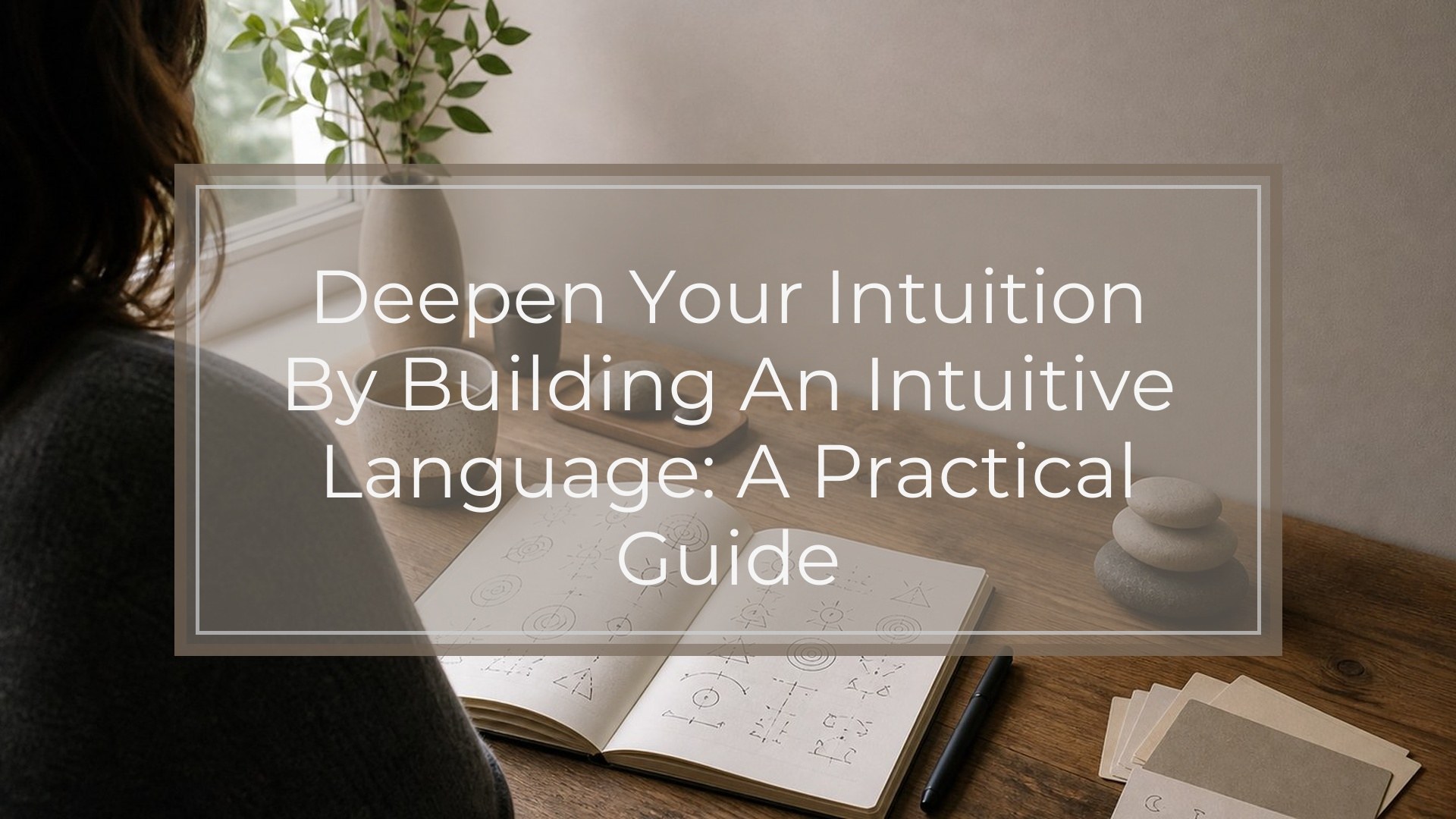
To deepen your intuition by building an intuitive language, you learn how your inner knowing already communicates, name those signals, test them gently, and record what proves consistent over time. This practice turns vague impressions into a personal system of meaning: sensations, images, phrases, dreams, symbols, emotions, or environmental signs that you can recognize and interpret with more confidence.
The goal is not to force psychic certainty or make every feeling sacred. The goal is respectful discernment. You will observe, document, ask better questions, practice with low-risk situations, and confirm patterns before using them in divination, ritual, ancestor work, or daily decisions.
What It Means to Build an Intuitive Language
An intuitive language is your personal set of inner signals and meanings. One person may feel truth as warmth in the chest; another may receive it as a sudden stillness, a repeated word, a dream symbol, or a body sensation. Building the language means learning what those signals mean for you.
This differs from memorizing universal symbol meanings. A black bird, candle flicker, ringing in the ear, or sudden memory may carry different meanings depending on your history, culture, spiritual practice, and the question being asked. Your task is to notice patterns, not invent meanings too quickly.
Before You Begin: Set the Right Foundation
Start with grounded conditions. Practice when you are rested, sober, emotionally steady, and not trying to force an answer. Keep a notebook or digital journal for dates, questions, impressions, and later outcomes.
Set boundaries before opening spiritually. You might say, “I welcome clear, truthful guidance for my highest good, through loving and well ancestors, guides, and protection only.” If you work at an ancestor altar, light a candle or place water only if that is already part of your practice.
Avoid using intuition to invade another person’s privacy, control someone’s choices, or replace medical, legal, financial, or mental health support.
Step 1: Notice How Intuition Already Speaks to You

For three days, observe your natural intuitive channels without trying to interpret everything. Ask: Do I sense things in my body? Do I get images, words, dreams, sudden emotions, repeating songs, scents, or symbolic coincidences?
Write down moments when you “just knew” something, even if small. Note the signal and what happened afterward. For example: “Tight stomach before opening email; message contained conflict,” or “Calm feeling when choosing the longer route; avoided traffic.”
Do not judge your channel as better or worse than someone else’s. Clear intuition is often subtle, practical, and ordinary.
Step 2: Create Your Intuitive Dictionary
Your intuitive dictionary is a living record of signals and possible meanings. Divide a page into four parts: signal, context, possible meaning, and confirmation. For example: “Warm hands during prayer — asking about offering — possible yes/approval — confirmed by peaceful dream.”
Start with recurring signals only. If one symbol appears once, record it but do not build a rule around it. If it appears five times in similar conditions, pay attention.
Include personal associations. If rosemary reminds you of protection because of family tradition, that matters. If blue light feels calming to you, note that. Your dictionary should grow from lived evidence, not pressure to sound mystical.
Step 3: Ask Clear, Ethical Questions
Intuition responds better to clean questions. Instead of asking, “What will happen to me?” ask, “What do I need to understand about this choice today?” Instead of “Does this person love me?” ask, “What is the healthiest next step in this relationship?”
Avoid questions that demand control over someone else’s inner life. Ask for guidance about your actions, boundaries, timing, and clarity. Good questions are specific, respectful, and open enough to receive wisdom beyond your preference.
Before asking, breathe slowly and state your question once. Repeating it anxiously can muddy the answer.
Step 4: Practice with Low-stakes Tests
Build trust through small experiments. Before checking your phone, pause and sense who may have messaged. Before choosing a parking row, notice which direction feels open. Before pulling a card, write your first impression, then compare it with the card’s message.
You can also test yes/no signals. Ask a question with a known answer: “Is my name ___?” Notice your body’s yes. Then ask a false question and notice the no. Repeat over several days.
Keep these tests light. Do not use early practice for major choices like ending relationships, spending large sums, or ignoring professional advice. You are training perception, not proving yourself under pressure.
Step 5: Confirm Patterns Over Time
Confirmation is what turns impressions into language. Review your notes weekly. Look for signals that repeatedly match outcomes. Maybe pressure at the forehead means “pause,” while a relaxed belly means “proceed.” Maybe a certain dream symbol appears before family news.
Also record misses. A wrong impression is not failure; it is data. Were you tired? Attached to one outcome? Asking the same question repeatedly? Interpreting fear as guidance?
Refine meanings slowly. Write “possible meaning” until a pattern has enough evidence. Strong intuitive language becomes more accurate because it stays honest.
Step 6: Use Your Intuitive Language in Ritual and Daily Life
Once patterns are consistent, bring them into simple decisions and spiritual practice. At an altar, you might ask, “Is this offering appropriate today?” Then notice your established signals: warmth, ease, resistance, a phrase, or a quiet no.
In daily life, use intuition as one source of guidance alongside facts, values, and practical responsibility. If your inner signal says pause, pause and gather more information. If it says proceed, still act with care.
The strongest intuitive practice is not dramatic. It helps you move with reverence, timing, humility, and clearer self-trust.
Common Mistakes That Block Intuitive Clarity

The first mistake is asking from panic. Anxiety often demands immediate certainty, while intuition usually feels quieter and more spacious. Ground first, then ask.
The second mistake is over-interpreting every sign. Not every candle pop, bird call, dream fragment, or body sensation is a message. Track repetition and context.
The third mistake is ignoring the body. Hunger, exhaustion, grief, and stress can distort perception.
The fourth mistake is fishing for the answer you want. If you keep asking until the signal changes, you are no longer listening.
The fifth mistake is skipping verification. Spiritual impressions deserve respect, but respect includes testing, patience, and accountability.
How to Know Your Intuitive Language Is Getting Stronger
Your intuitive language is strengthening when your signals become more consistent, your questions become calmer, and your journal shows repeated confirmation. You may also notice faster recognition: “This sensation usually means wait,” or “This dream symbol often points to family matters.”
Another sign is humility. Strong intuition does not make you reckless. It makes you more attentive, ethical, grounded, and willing to check the message before acting.
A Simple 7-day Practice Plan
Day 1: Write your intention and protection statement. List the intuitive channels you already notice.
Day 2: Track body sensations before three small choices.
Day 3: Record dreams, repeated words, songs, or symbols.
Day 4: Practice known yes/no questions and note your signals.
Day 5: Ask one clear guidance question, then write the first impression without editing.
Day 6: Do one low-stakes test, such as sensing a message or choosing a route.
Day 7: Review your notes. Circle repeated signals, mark confirmations, and add only the strongest patterns to your intuitive dictionary.
Repeat weekly for deeper accuracy.
FAQ
How Long Does It Take to Build an Intuitive Language?
You can notice early patterns within a week, but a reliable intuitive language usually takes months of practice. The key is consistency. Short daily notes are better than occasional intense sessions. Trust grows when you can compare impressions with real outcomes over time.
What If I Do Not See Images or Hear Inner Messages?
That is completely fine. Many people receive intuition through the body, emotions, dreams, timing, or a simple sense of knowing. Do not force clairvoyant images or inner voices. Start with your strongest natural channel, especially physical sensations and repeated feelings.
Can I Use This Practice with Ancestor Communication?
Yes, if you use clear boundaries and respectful discernment. At an ancestor altar, ask specific questions, observe your established signals, and record what you receive. Invite only loving, well, and elevated ancestors. Do not treat every sensation as ancestral contact without confirmation.
How Do I Tell Intuition from Anxiety?
Anxiety often feels urgent, repetitive, and fear-driven. Intuition is usually clearer, calmer, and more direct, even when it warns you. If you feel activated, pause before interpreting. Breathe, ground, and return later. Your journal will help show which signals prove trustworthy.
Should I Trust Every Intuitive Message I Receive?
No. Respect your impressions, but verify them. Intuition should be tested through time, context, ethics, and practical reality. If a message encourages harm, obsession, fear, or avoidance of necessary help, step back. Clear intuition supports wisdom, not recklessness.