
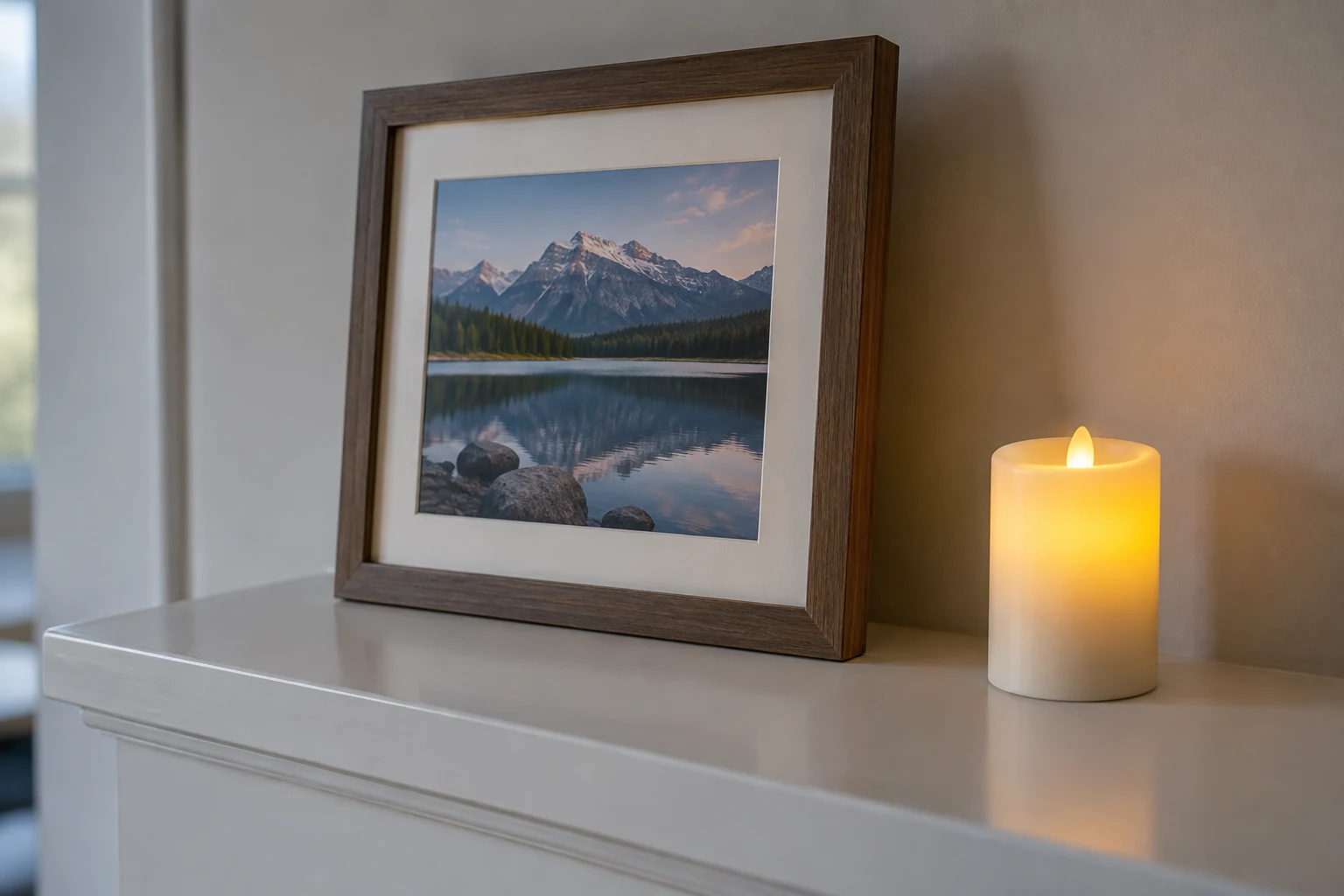
To create a winter solstice ritual at home, choose a small place to pause, a person or experience you welcome remembering, and a simple symbol of light. In about 10–15 minutes, you can set out a keepsake, sit with a memory, write one gratitude and one intention, then clear the space. An LED light or picture of the sun works; greenery and spoken words are optional. This is a personal ceremony of remembrance and renewal, not an inherited rite you must perform correctly. Start by finding the winter solstice where you live, then use the five actions below in order. You do not need an established Yule practice, an open flame, or a supernatural belief to take part.
Find the Winter Solstice Where You Live
The winter solstice belongs to your hemisphere’s winter. In the Northern Hemisphere, that is the December solstice; in the Southern Hemisphere, it is the June solstice. The U.S. Naval Observatory explains the seasonal difference this way: at a solstice, the hemisphere tilted away from the Sun has its shortest day, while the other has its longest. The seasons are reversed between hemispheres.
For the relevant year, look up the solstice using the U.S. Naval Observatory’s seasons dates-and-times service. It lists dates and times for equinoxes and solstices. Check which solstice marks winter in your hemisphere, and read the time reference given with the listing so you can relate it to your locality. Do not assume that one fixed December calendar date—or even December itself—describes everyone’s winter solstice.
You may mark the occasion at a convenient time on your local solstice date. If the listed instant falls at an inconvenient hour, there is no need to stay awake for it: this ceremony is an original, optional way to observe the season, not a rite that requires an exact hour. Its light symbol represents the return of longer days after the hemisphere’s shortest day; it does not need to reproduce a particular sunrise or astronomical moment.
Gather a Few Meaningful Objects
Set aside a keepsake, a light symbol, and something to write with. Each has a different job in this arrangement:

- A photograph or small heirloom gives your remembrance a focus. Pagan Grimoire suggests photos of loved ones and small heirlooms for ancestor remembrance. If you do not have a photo, choose an object that brings a welcome person or experience to mind, or write a name in your notebook. The object need not be old or valuable.
- An LED light or an image of the sun marks the seasonal theme of light. Pagan Grimoire offers an LED or battery-operated light as an alternative to open flame and also names sun artwork as an option. For this ceremony, a picture on paper is enough if you have no LED. You do not need both.
- Paper and a pen, or a notebook and pen, give you a place for two short lines: one gratitude and one intention. They also let you participate privately, without saying anything aloud.
- Greenery is optional. A Green Witch associates evergreens with life through winter. If you already have a suitable evergreen sprig or another locally appropriate piece of greenery, you can place it beside the light symbol. If you have none, leave it out; the ritual still has all five actions.
A corner of a table, desk, or shelf is enough. Choose a stable indoor surface where your few objects will not be knocked over. A Green Witch describes placing an altar near a window as one possibility, but a window is not necessary here. Nor do you need to establish a permanent altar—a deliberately arranged notebook and memento can serve for these minutes, then return to ordinary use.
Use what is already yours rather than feeling obliged to acquire or gather anything. In particular, greenery is a symbol you may omit, not an errand that must be completed before you begin. Pagan Grimoire notes that people arrange altars differently; this guide uses some of its suggested objects in a new, deliberately small arrangement.
Choose Whom or What to Remember
Before you set anything out, choose one welcome focus. It might be an ancestor whose memory feels comforting, a loved one, or a mentor you chose for yourself. It might also be an experience from the past year that taught you something. If an ancestor is unsafe, painful, or simply not someone you want to honor, you do not have to include one. Remembering a life lesson instead is an adaptation for this personal ceremony, not a claim about a historical custom.
Make the focus specific enough to hold briefly. You might recall the afternoon a neighbor checked on you, a teacher’s patient explanation, or a time you learned to ask for help. You are recalling a kindness, teaching, or moment—not trying to contact anyone or produce a particular feeling. Gratitude may be easy, complicated, or absent; you can still notice what happened and choose what you want to carry forward.
If you share your home or prefer privacy, keep the photograph inside a closed notebook until you begin, use a discreet object, or write a name where only you will see it. The remembrance can be entirely silent. No one else needs to know what your object represents.
For a shorter version or a very small space, keep the same five actions but make each one brief: clear room for a notebook and one memento, add a sun image, pause for a few breaths, write two lines, then put everything away. You can take a little less than 10 minutes without skipping the opening or closing. Simplicity changes the scale, not the purpose, of the ceremony.
Set the Surface and Mark the Returning Light
Allow about 10–15 minutes if that makes it easier to begin. That is a practical suggestion for this original ritual, not a traditional duration. A little more time for a memory, or less time on a busy day, is fine. Follow the actions in order so that you move from preparation to remembrance and, finally, back to everyday use of the space.
1. Clear a surface and set down your keepsake. Move aside just enough clutter for the photograph, heirloom, or other chosen object. Put your paper and pen within reach. If you are using a notebook instead of displaying a photograph, open it to a blank page and place your memento beside it—or write your chosen name at the top of the page. There is no need to decorate the space. Clearing a small area gives your attention a place to settle and makes it easy to restore the surface afterward.
2. Add a symbol of light. Place an LED light near the keepsake and switch it on, or set out your sun image. If you want to use already-owned or locally appropriate greenery, place it alongside them now. The light symbol connects this pause with the solstice’s shortest-day turning point; the greenery, if present, can stand for life through winter. Neither object needs to change your mood or bring about an outcome.
For example, your entire setup might be an open notebook, a small memento, and a simple drawing of the sun on a corner of the page. The notebook provides room for the writing that comes later; the memento holds your memory; the drawing marks the seasonal occasion. That arrangement works without an LED, greenery, window, or display space beyond the spot where you are sitting.
Pause, Remember, and Write
3. Sit and name what you are remembering. Sit comfortably beside your prepared surface. Take a few unhurried breaths, then name your chosen person or experience silently, in writing, or aloud if you wish. You might think, “I remember Mara teaching me to make time for a friend,” or “I remember the year I learned to accept help.” Then stay with one particular moment: what was said, what someone did, or what you understood afterward. There is no required emotion. A quiet, ordinary memory is enough.
If you would like words to begin, try: “Today I make room to remember ___.” You can stop there. Silence and private thought are just as complete as speaking; the purpose is to give the memory your attention for a moment.
4. Write one gratitude and one coming-season intention. On your paper, make two short lines. In the first, name something concrete you are grateful for from the past year or from the influence you recalled. In the second, name one modest action or way of paying attention that you want to practice in the coming season.
For example:
> I’m grateful that Mara called when I was having a difficult week; her call reminded me that I can reach out, too.
> In the coming season, I intend to check in with one friend each week.
The first line identifies what happened and why it matters to you. The second names something you can attempt. It does not promise that every friendship will improve or that you will never miss a week. If you remembered a life lesson rather than a person, the same form works: “I’m grateful I learned to ask for help with the move. I intend to ask one clear question when I feel stuck.”
A Green Witch suggests reflecting on lessons from the past year, expressing gratitude, and setting intentions in connection with the growing light. Pagan Grimoire also suggests writing gratitude. The two-line prompt and its place in this five-action sequence are part of this guide’s original ceremony, not prescribed wording from either source.
If speaking helps you mark the moment, you might say, “Thank you for what I can carry forward. This is one small way I want to meet the coming season.” If it does not help, simply finish writing. You need not decide whether you believe the words are heard by anyone else. Your written gratitude records what you value; your intention gives you a manageable direction to revisit.
Close the Ritual and Restore the Space
5. Mark an ending, then clear the surface. If you want to, reread your two lines once. Turn off the LED, if you used one, or close your notebook. With a sun image, closing the notebook or picking up the image can serve as the stopping point. You may say, “I’m finished for today,” but no closing words are required.
Decide what to do with the note rather than leaving that choice unresolved. Keep it visible if you would welcome a reminder of your intention. Keep it private inside a notebook or drawer if the words are personal. You can also put it away without planning to revisit it. A Green Witch offers keeping a note on an altar as one option; continued display is not necessary for this ceremony.
Remove any perishable greenery you used and put away the memento, light, image, and pen as needed. Return the table, desk, or shelf to its usual purpose. Clearing is the final action, not an undoing of what you wrote or remembered.
The ceremony is complete once you have paused with a welcome memory, written a gratitude and a modest intention, and deliberately restored your space. You do not need a supernatural experience or proof that the coming season will change in a particular way. The practice is the attention you gave to the past and the small direction you chose for what comes next.