
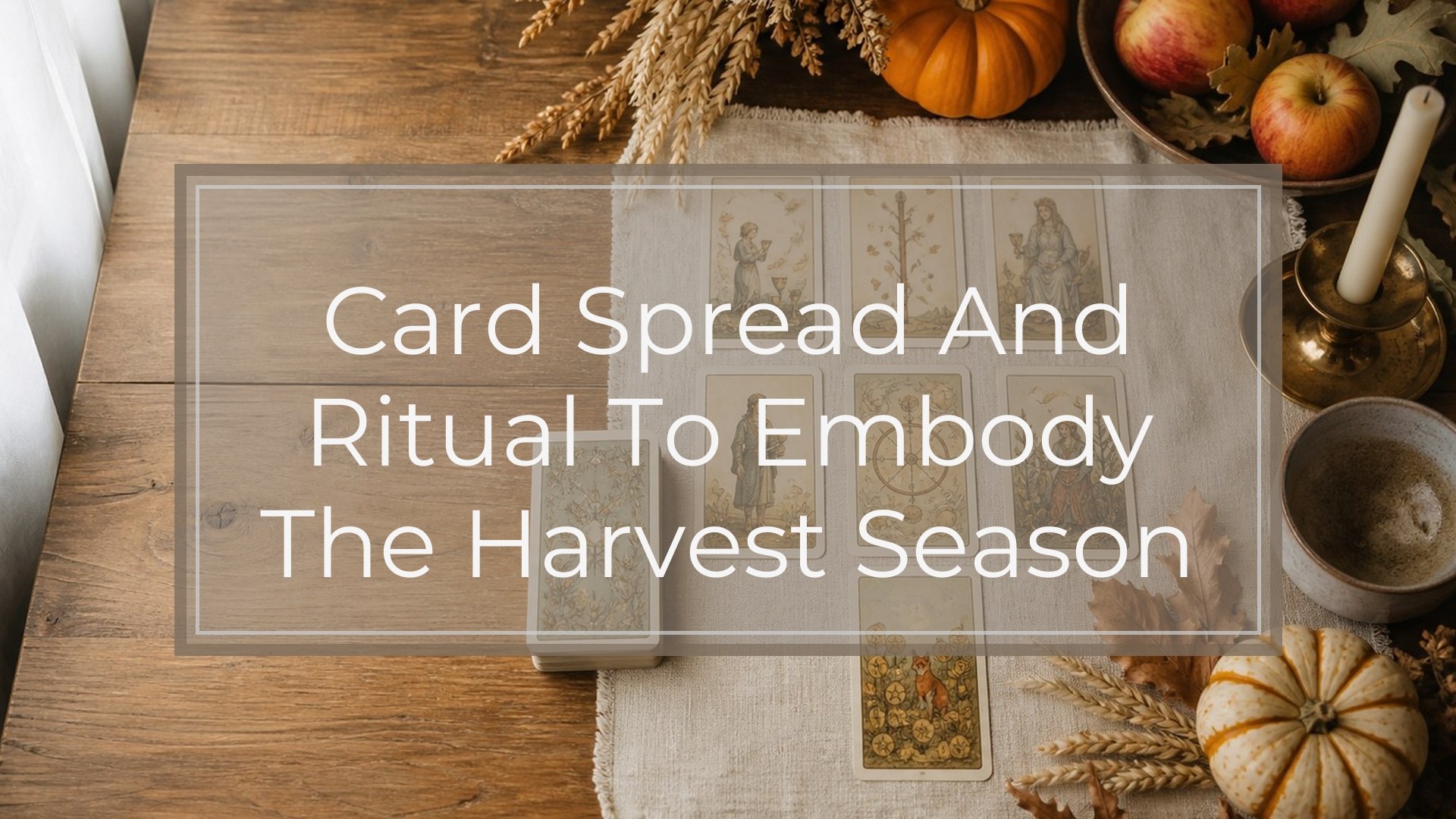
This harvest season card spread and ritual helps you pause, give thanks, recognize what has matured in your life, and release what no longer needs your energy. You can use tarot, oracle cards, playing cards, or handmade prompt cards. The ritual works well beside an ancestor altar, but a simple candle, bowl of water, seasonal fruit, or written prayer can also become your sacred focus.
You will prepare a quiet space, make a small offering, pull five cards, journal your answers, and close with one grounded action. The goal is not prediction. The goal is embodiment: noticing what you have grown, honoring support seen and unseen, and choosing how to carry the harvest forward.
What You Need Before You Start
Choose a time when you can be undisturbed for 30 to 45 minutes. This ritual fits the autumn equinox, the first cool days after summer, the end of a garden season, a family meal, or any moment when you feel ready to reflect on what your effort has produced.
Gather these materials:
- A tarot deck, oracle deck, playing card deck, or handmade card prompts
- A journal and pen
- One candle, lamp, or small source of light
- A small bowl of water
- A seasonal offering, such as an apple, pear, grain, squash, corn, nuts, bread, tea, flowers, or herbs
- Optional: a photo, heirloom, family recipe, prayer card, or object connected to your ancestors
- Optional: incense, bell, sound bowl, or cleansing herb, used safely and respectfully
If you keep an ancestor altar, clear dust, refresh water, and remove old offerings before beginning. If you do not have an altar, create a temporary sacred space on a clean cloth, tray, shelf, or table. Place the candle or light at the center, the water nearby, and the offering in front.
Before you start, decide your boundary. You might say, “I welcome only loving, wise, and well ancestors, guides, and guardians who support my highest good.” If ancestral work is emotionally complex, you do not need to call every ancestor by name. You may address “the well and loving ones of my line,” “the ancestors of my spirit,” or “those who carried wisdom forward.”
Practical caution: never leave a candle unattended, and do not burn herbs or incense around pets, children, respiratory sensitivities, or restricted housing. A battery candle is fully acceptable.
Step 1
Prepare the space and open the ritual with intention.
Start by cleaning the surface where you will work. Wipe the table, arrange the objects with care, and let your body know that ordinary time is shifting into ritual time. Place your deck where your hands can reach it easily. Put your journal open to a blank page.
Light the candle or turn on your ritual light. Touch the bowl of water and say, aloud or silently:
“May this space be clear, steady, and protected. May I meet this harvest season with gratitude, honesty, and courage. May the well and loving ancestors, guides, and guardians witness this work.”
Place the seasonal offering near the light. Name what it represents. For example: “This apple represents sweetness earned through patience,” or “This bread represents nourishment, labor, and shared life.” If you are working with an ancestor altar, offer the food or drink to your well ancestors first. If you are not working with ancestors directly, offer it to the season, the land, your household, or the sacred source you honor.
Now shuffle your cards slowly. As you shuffle, breathe into your belly and ask one clear question:
“What am I ready to gather, honor, release, and embody this harvest season?”
Lay out five cards in this order:
- The Seed I Planted — What intention, effort, or choice began this cycle?
- The Crop That Has Grown — What has developed, whether expected or unexpected?
- The Harvest I Can Receive — What blessing, lesson, support, or result is ready to be gathered?
- The Husk I Can Release — What habit, fear, obligation, or old story no longer feeds me?
- The Offering I Carry Forward — What action, devotion, or value should I embody next?
Keep the cards face down until all five are placed. This helps you stay with the full shape of the spread instead of reacting to one card too quickly.
Turn over the first card. Write the card name and your first impression before looking up any meaning. Continue card by card, recording images, colors, emotions, memories, and physical sensations. In harvest work, the body often understands before the mind explains.
Step 2
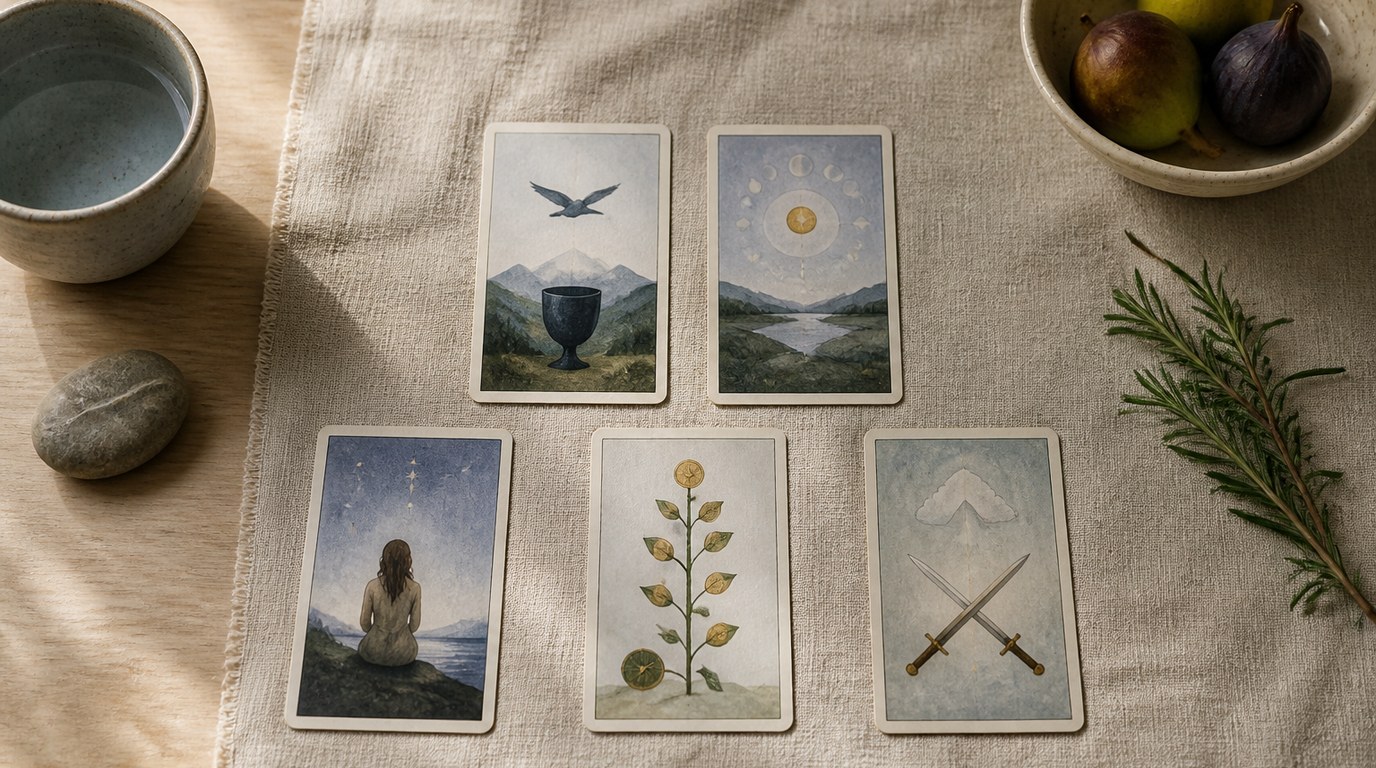
Read the spread, speak your gratitude, and complete the embodiment ritual.
Look at all five cards together before interpreting details. Notice patterns. Many earth images may point to practical matters, money, food, health, or home. Cups or water images may point to grief, love, intuition, or emotional harvest. Swords or sharp images may ask for truth, boundaries, or mental clarity. Wands, fire, or movement may show energy, creativity, or desire.
Write three short reflections:
- “This season, I have grown…”
- “This season, I am grateful for…”
- “This season, I am ready to release…”
Return to card five, The Offering I Carry Forward. This is your embodiment card. Do not leave it as an abstract message. Turn it into one concrete action you can do within seven days.
Examples:
- If the card suggests rest, schedule one protected evening without extra labor.
- If it suggests generosity, cook for someone, donate food, or share encouragement.
- If it suggests boundaries, decline one request that drains you.
- If it suggests study, set aside time to learn a skill connected to your next season.
- If it suggests ancestral repair, light a candle, tell a true family story, or tend the altar with fresh water.
Now speak your gratitude. You may use these words or adapt them:
“For the seeds that took root, thank you. For the labor that shaped me, thank you. For the hands, known and unknown, that carried me here, thank you. For the harvest I can receive, I open my heart. For what must return to the earth, I release with respect.”
Pick up the fourth card, The Husk I Can Release. Place your hand over it and name what you are releasing in plain language. Keep it honest but not dramatic. Say, “I release the need to prove my worth through exhaustion,” or “I release carrying grief alone,” or “I release chasing what is not mine to harvest.”
Caution: if a card brings up intense grief, trauma, fear, or family pain, do not force a spiritual interpretation. Pause the ritual. Put your feet on the floor, drink water, and return to ordinary grounding. Cards can reveal tender material, but they are not a substitute for medical, legal, financial, or mental health support.
To close, touch the offering and name one promise: “I will embody this harvest by…” Complete the sentence with the action from card five. Blow out the candle or turn off the light. If the offering is safe and appropriate to eat, you may eat it after the ritual as a way of taking in the blessing. If it was given to ancestors or spirits, follow your tradition for disposal. Many people compost it, return it to the earth, or discard it respectfully after a suitable time.
How to Check the Result
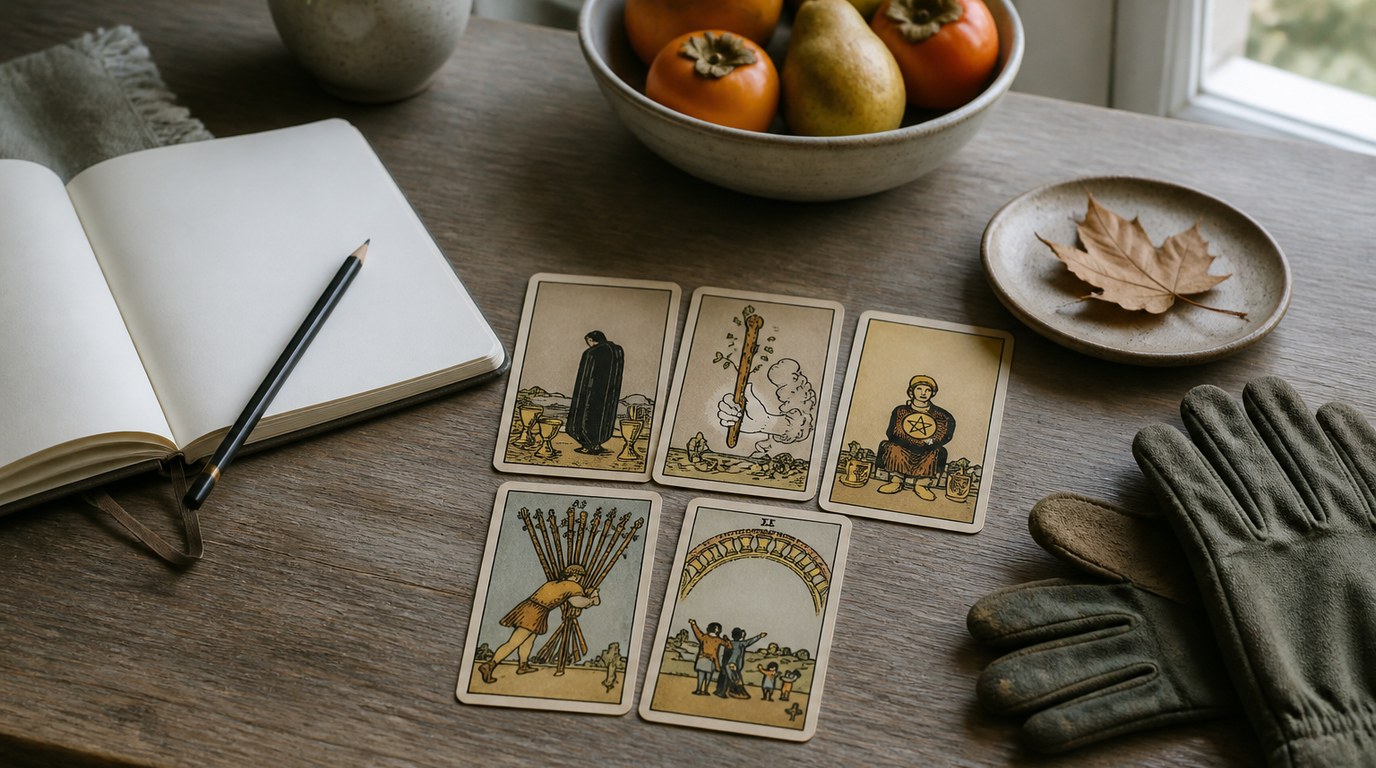
A successful harvest card spread does not always feel peaceful. Sometimes it feels clarifying, emotional, sobering, or energizing. The result is not measured by whether you pulled “good” cards. It is measured by whether you can name your harvest, your release, and your next embodied action.
Use this check before you fully put the ritual away:
- Can you name what you have grown? Write one sentence beginning, “This season has grown in me…”
- Can you name what you are grateful for? Include visible support, such as people and resources, and unseen support, such as timing, intuition, ancestral strength, or protection.
- Can you name what you are releasing? Make it specific enough to recognize in daily life.
- Can you name one action for the next seven days? If your action is vague, make it smaller. “Honor my body” becomes “go to bed before 10 p.m. twice this week.”
- Do you feel closed and grounded? You should feel oriented to the room, your body, and the present moment.
If you feel scattered after the ritual, simplify. Eat something nourishing, wash your hands, step outside, or place both palms on a wall and breathe slowly. If the reading feels confusing, do not keep pulling card after card. Instead, write: “I do not need to understand everything today.” Return to the spread the next morning and highlight only one useful sentence.
You can also verify the ritual through follow-through. Within seven days, complete the action connected to card five. That action is the harvest embodied. Without it, the spread remains insight only. With it, the ritual becomes a lived seasonal turning.
FAQ
Can I Do a Harvest Card Spread If I Do Not Have an Ancestor Altar?
Yes. Use a clean surface, candle or lamp, bowl of water, and seasonal offering as a temporary ritual space. You can address the season, the land, your guides, or your own inner wisdom. An ancestor altar deepens the practice but is not required.
What Kind of Deck Should I Use for a Harvest Season Ritual?
Use a deck you can read with honesty and care. Tarot, oracle, playing cards, or handmade prompt cards all work. Choose imagery that feels grounding rather than frightening. If you are new, use a guidebook, but write your first impressions before checking meanings.
When Is the Best Time to Perform This Ritual?
The autumn equinox is a strong time, but any harvest moment works: the end of a project, a seasonal meal, a garden harvest, a birthday, or a quiet evening when you are reviewing your efforts. Choose a time when you will not be rushed.
What Should I Do If I Pull a Difficult Card?
Pause before assuming the worst. Ask, “What is this card trying to clarify, protect, or release?” Difficult cards often show strain, truth, endings, or needed boundaries. If the card feels overwhelming, ground yourself and seek practical support instead of forcing a meaning.
How Often Can I Repeat the Harvest Card Spread?
Once during the harvest season is enough for most people. You can repeat it monthly if you are moving through major change, but avoid using it compulsively. Complete the action from the final card before asking again.