
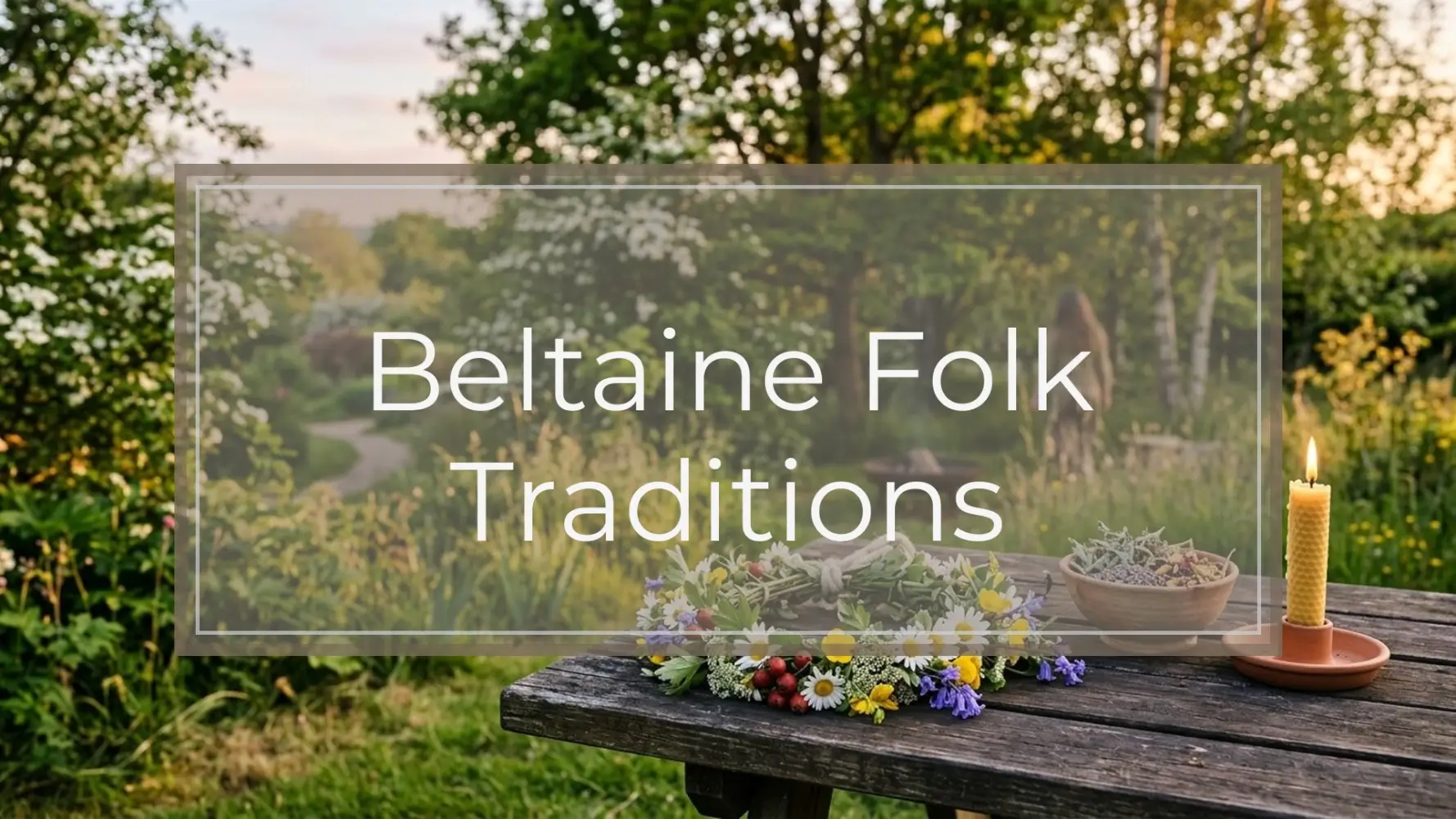
Beltaine folk traditions are seasonal customs associated with May Day and the beginning of summer, especially in Celtic and European folk practice. Common traditions include lighting bonfires, decorating with flowers and greenery, dancing around a maypole, washing with morning dew, blessing homes and livestock, sharing food, and honoring fertility, vitality, protection, and abundance.
Modern celebrations can adapt these customs respectfully through simple rituals such as lighting a candle, making a flower crown, creating a seasonal altar, leaving offerings, or gathering outdoors with intention. You do not need a large fire, rural land, or a public festival to mark the season. Beltaine can be celebrated through small, meaningful acts that welcome warmth, growth, beauty, and connection.
What Beltaine Folk Traditions Include
Beltaine, also spelled Beltane or Bealtaine, is commonly understood as a seasonal fire festival marking the threshold between spring and summer. In many modern pagan calendars, it is celebrated around May 1 in the Northern Hemisphere, though local timing and traditional customs have varied by region and community.
At its heart, Beltaine honors life returning in fullness. The days are longer, plants are blooming, animals are active, and communities historically turned attention toward protection, fertility, abundance, and the well-being of homes, fields, and herds.
The most recognized Beltaine folk traditions include:
- Lighting bonfires or symbolic flames
- Decorating with flowers, branches, and fresh greenery
- Dancing around a maypole or using ribbons in celebration
- Washing with May morning dew
- Blessing homes, thresholds, fields, and livestock
- Sharing food, music, games, and community gatherings
- Leaving offerings for ancestors, spirits, land, or household guardians
- Celebrating courtship, vitality, and seasonal joy
Not every custom belonged to every place. It is more accurate to think of Beltaine as a family of related May season traditions rather than one identical holiday practiced the same way everywhere.
Fire Customs: Bonfires, Blessings, and Protection
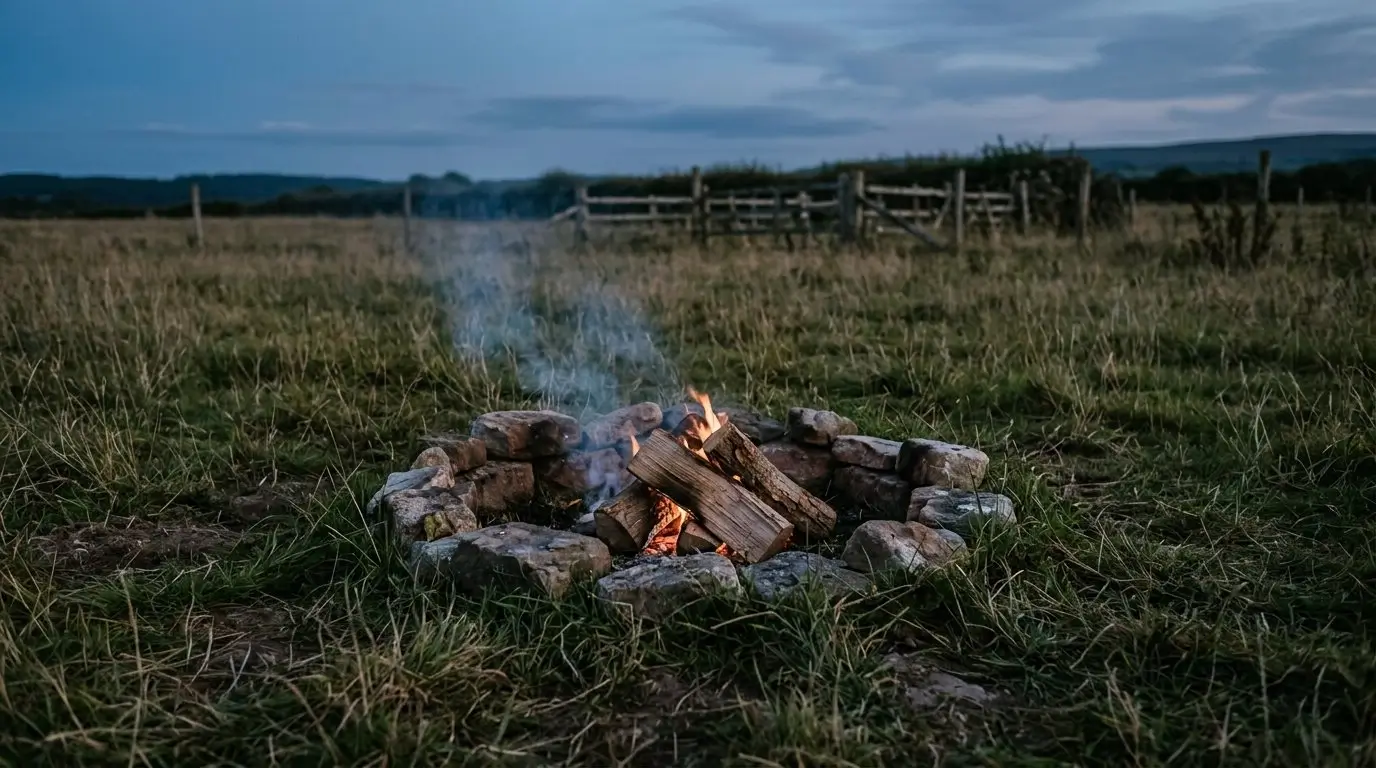
Fire is one of the strongest symbols in Beltaine folk practice. Bonfires are often associated with purification, protection, communal renewal, and the growing strength of the sun as the year moves toward summer.
In some historical and folkloric accounts, people and livestock were symbolically blessed through proximity to Beltaine fires or smoke. You may see references to cattle being driven between two fires, or households rekindling hearth flames from a communal blaze. These customs are best understood as regionally associated practices rather than universal rules.
For modern celebration, fire can be simple and safe. You might:
- Light a candle at sunrise or sunset
- Tend a small outdoor fire where it is legal and safe
- Write an intention for growth, courage, or protection and place it near a candle
- Bless your doorway with the symbolism of light and warmth
- Use an LED candle if open flame is not appropriate
A simple fire blessing might sound like: “May this home be warmed by kindness, guarded by care, and open to what grows well.”
Always follow local fire laws. Never leave flames unattended, avoid outdoor fire during dry or windy conditions, and keep candles away from fabric, pets, children, and greenery. If you live in an apartment, dorm, or fire-restricted area, a lantern, lamp, or LED candle can still carry the symbolic meaning of Beltaine fire.
Flowers, Greenery, and the May Bush
Flowers and greenery are among the easiest Beltaine traditions to adapt. Fresh plants represent beauty, vitality, growth, and the living abundance of the season.
Traditional associations often include hawthorn, rowan, birch, primrose, wildflowers, and flowering branches, depending on region. If those plants are not local, available, or appropriate to harvest, use what is seasonal and ethical where you live. A small bunch of garden herbs, fallen blossoms, dandelions, violets, or market flowers can be just as meaningful in a modern ritual.
Folk customs connected to greenery include decorating:
- Doors and windows
- Hearths and household altars
- Wells, springs, or water sources
- Community spaces
- Animals, tools, or farm buildings
- May bushes or decorated branches
The May Bush is a decorated branch, shrub, or small tree adorned with flowers, ribbons, shells, eggshells, or bright ornaments in some folk traditions. It can represent celebration, protection, and the visible arrival of the May season.
At home, you might make a flower crown, tie ribbons to a branch in a vase, hang a doorway garland, or place a small bouquet on an ancestor altar. If leaving offerings outdoors, choose biodegradable materials and avoid anything that could harm wildlife.
Harvest with care. Ask permission before cutting plants, avoid protected species, take only a small amount, and do not scatter invasive seeds or nonnative plant material in wild places.
Maypole Dancing, Music, and Community Celebration
Maypole dancing is one of the most recognizable May Day customs. It usually involves a tall pole, colorful ribbons, music, and dancers weaving patterns as they move around it. In modern celebrations, it is often treated as a joyful community activity rather than a rigid ritual requirement.
The maypole is frequently interpreted as a symbol of life force, fertility, growth, and seasonal abundance. Fertility here can be understood broadly: not only reproduction, but also creativity, thriving gardens, healthy relationships, good work, and the flourishing of community.
Beltaine is not only about solemn ritual. It is also a festival of laughter, food, music, movement, and social connection. Folk celebrations may include singing, dancing, games, visiting neighbors, outdoor gatherings, and shared meals.
If you do not have access to a public maypole, try a smaller adaptation:
- Tie ribbons to a branch or pole in your garden
- Let children braid ribbons as a seasonal craft
- Create a Beltaine playlist and dance outdoors
- Take a neighborhood walk and notice what is blooming
- Host a simple meal with bread, fruit, honey, greens, or seasonal drinks
- Invite friends to share one intention for the coming season
The point is not to perfectly recreate an old custom. The point is to participate in the spirit of the season: movement, connection, renewal, and shared joy.
Dew, Water, Thresholds, and Home Blessings
Some Beltaine folk traditions are quiet and personal. May morning dew, for example, appears in folk belief as a source of luck, beauty, blessing, or renewal. People may wash their face with dew, walk barefoot through wet grass, or collect a small amount for symbolic use.
This should be understood as devotional and symbolic, not as a promise of physical beauty, healing, or guaranteed good fortune. The act can be a way of greeting the morning, receiving the season, and honoring the living world.
Water customs may also involve wells, springs, or streams. If visiting a natural water source, respect local rules and ecology. Do not leave coins, plastic, glitter, food, or non-biodegradable offerings in water. A spoken prayer, a song, or a moment of gratitude is often the safest offering.
Beltaine is also a strong time for threshold and household blessings. The threshold is the boundary between home and world, winter’s inwardness and summer’s expansion. You might sweep your doorway, wash the front step, hang flowers, refresh your hearth, or light a candle near the entrance.
For ancestor-focused practice, Beltaine can be marked with seasonal offerings such as:
- Fresh flowers
- Bread or oatcakes
- Milk, cream, or honey
- A small candle or lamp
- A cup of clean water
- A note of gratitude for inherited strength and protection
Keep offerings clean and practical. Remove food before it spoils, and adapt any ritual to the needs of your household.
Quick Reference: Beltaine Traditions and Modern Ways to Practice
Use this table as a simple guide. Choose the traditions that feel appropriate, accessible, and respectful for your space.
| Tradition | Folk Meaning | Simple Modern Practice |
|---|---|---|
| Bonfire or candle | Purification, protection, warmth, strengthening sun | Light a candle, lantern, or LED flame and speak an intention |
| Maypole or ribbons | Community, joy, life force, growth, abundance | Braid ribbons, decorate a branch, or dance with music |
| Flowers and greenery | Beauty, vitality, seasonal blessing, protection | Make a flower crown, doorway garland, or altar bouquet |
| May morning dew | Luck, renewal, symbolic beauty, blessing | Walk barefoot in dew or touch a little to your hands or face |
| Home blessing | Protection, welcome, household renewal | Sweep the threshold, decorate the door, and bless the home |
| Feast or shared food | Community, gratitude, abundance | Share bread, fruit, honey, greens, tea, or a seasonal meal |
| Offerings or ancestor altar | Gratitude, remembrance, relationship with land and lineage | Place flowers, water, bread, milk, honey, or a candle on an altar |
You do not need to do everything. One to three meaningful practices are enough. A candle, a few flowers, and a shared meal can be a complete Beltaine celebration.
It also helps to make your celebration place-based. Notice what is actually happening in your climate. Are trees blooming? Are storms common? Is it already hot, or is spring still unfolding? Use local seasonal plants when possible, and be mindful of cultural context when borrowing from traditions not your own.
A simple Beltaine ritual sequence could look like this:
- Clean a small space, doorway, or altar.
- Add flowers, greenery, or a seasonal object.
- Light a candle or safe symbolic flame.
- Speak gratitude for warmth, life, ancestors, land, or community.
- Name one intention for growth.
- Share food or place a small offering.
- Extinguish flames safely and close with thanks.
The most meaningful Beltaine folk traditions are often the ones you can repeat with care: lighting a small flame, stepping outside, honoring the season, and remembering that vitality can be welcomed in ordinary ways.
FAQ
What are the most common Beltaine folk traditions?
Common Beltaine traditions include bonfires, maypole dancing, flowers and greenery, May morning dew customs, home and livestock blessings, feasting, music, offerings, and seasonal courtship customs. Many focus on vitality, protection, abundance, and the arrival of summer.
Is Beltaine the same as May Day?
Beltaine and May Day overlap, especially because both are associated with May 1 and seasonal celebration. Beltaine is often framed as a Celtic or pagan fire festival, while May Day can include broader European folk, civic, and springtime customs.
How can I celebrate Beltaine if I cannot have a bonfire?
Use a candle, lantern, lamp, or LED candle as a symbolic flame. You can also write an intention, decorate your doorway, make a flower arrangement, share seasonal food, or spend time outdoors welcoming warmth and growth.
What should I put on a Beltaine altar?
A Beltaine altar might include flowers, greenery, ribbons, a candle, honey, bread, milk, seasonal fruit, water, or symbols of the sun. For an ancestor altar, add offerings respectfully and remove perishable items before they spoil.
Are Beltaine traditions only about fertility?
No. Fertility is one theme, but it can mean creativity, growth, gardens, community, vitality, and abundance. Beltaine traditions also emphasize protection, cleansing, joy, beauty, household blessing, and connection with land, ancestors, and seasonal change.