
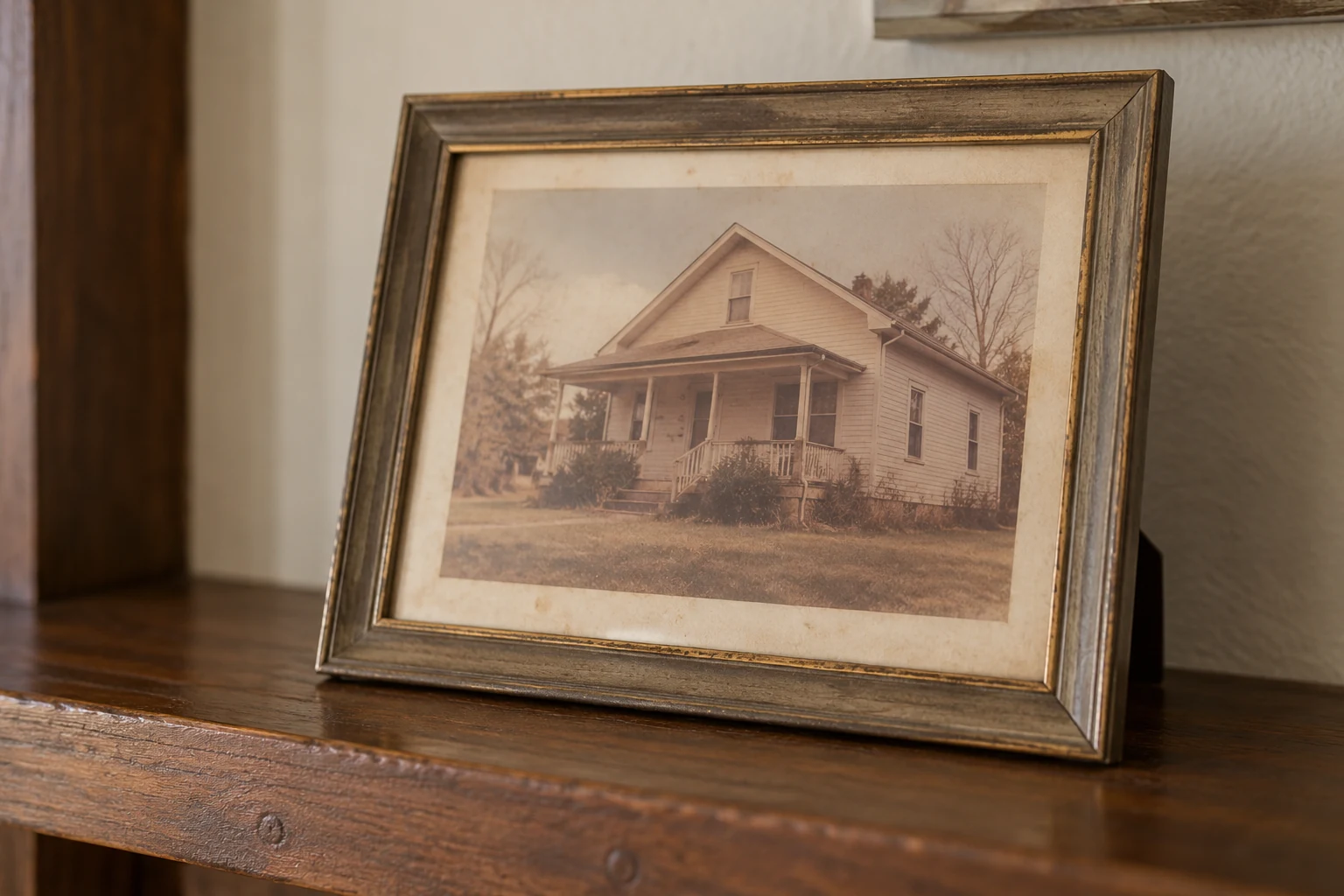
A worn photograph can leave everyday display without losing its place in your family’s story. You can record who it shows and why it matters, protect the original if it is yours to keep, and decide whether a copy or something else belongs on the display. Retiring the photograph means ending its routine display and handling—not automatically throwing it away. You do not have to settle every question about its future on the day you take it down.
Decide What Retiring This Photograph Means
Start by looking at the photograph where it is, without touching a torn edge, loose image area or other damaged part. Is the displayed item the original photograph, or is it a print made from another image? If you are unsure, record that uncertainty. A faded or torn copy may be replaceable without moving an original at all. If the displayed photograph is the original, its fragility is reason to reconsider daily display, not reason to decide immediately that it must be discarded.
Notice what you can see without testing the damage: fading, a tear, a curling edge, or an area that appears too fragile to handle routinely. You need not lift a corner or try to straighten the photograph to justify taking it out of regular use. This first check is about what the display asks of the object—whether it is repeatedly moved, exposed, or handled—not a diagnosis or a repair plan.
Before deciding where the photograph will go, ask who has authority to decide. An image on your personal display might belong to another relative, or its future might matter to several people. If you do not own it, or if family members have differing wishes, pause any permanent choice and talk with the people concerned. If your own tradition has requirements for how such an item is treated, take those actual requirements into account rather than assuming that every remembrance practice has the same rules.
There is room for a temporary decision. You can agree that the photograph will no longer be handled as an everyday display item while leaving questions about its long-term home open. Retirement does not, by itself, call for throwing it away, burning it, burying it or otherwise destroying it. Nor does uncertainty about its eventual fate mean it must stay in use until everyone agrees.
If you are entitled to keep the original and it can be moved safely, protective storage is a reasonable next step. If even moving it seems likely to disturb a fragile area, leave it supported for now and seek appropriate help. The immediate goal is modest: stop asking a vulnerable photograph to serve as a routinely handled display object. Its final destination can be decided separately.
Record Whose Photograph It Is and Why It Matters
Before the image leaves view, make a short record that someone else could understand. Write down the person’s name if known; the date or occasion if known; and who supplied each identification. Mark a guess as a guess. “Aunt Mara identified this as her father, Daniel, in 1988; the occasion is unknown” preserves more useful information than silently turning a family attribution into certainty.
Give the record a simple identifier, such as “Daniel photograph—living-room display,” and use that identifier wherever you note the original’s eventual storage location. If you later display a copy, put the same identifier with its label or in a record kept nearby. That link helps distinguish this particular image from other portraits of the same person. If the displayed item is itself a copy and you do not know where its source image is, say so rather than inventing an original’s location.
You may also add one sentence about why this photograph was chosen: perhaps it shows a familiar expression or recalls a particular visit. Child Bereavement UK notes that some people write an item-specific note about why something in a memory box is important to them. That is an option for preserving personal meaning, not a prescribed remembrance rite.
For example: “We know this is Daniel because Mara identified him. We think the photograph was taken at the old house, but no one has confirmed that. I displayed it because his smile reminds me of our Sunday visits.” The first sentence records an attribution; the second preserves uncertainty; the third belongs to the person remembering him. Your note can be shorter, and it need not speak for the whole family.
Protect the Original Instead of Repairing It for Display
Before moving the photograph, check whether you can hold it by its edges or by its existing housing without stressing a damaged area. The Library of Congress advises handling a photograph by its edges or housing materials whenever possible. If that is not possible without pressing on a tear or disturbing fragile image material, pause rather than forcing the move.
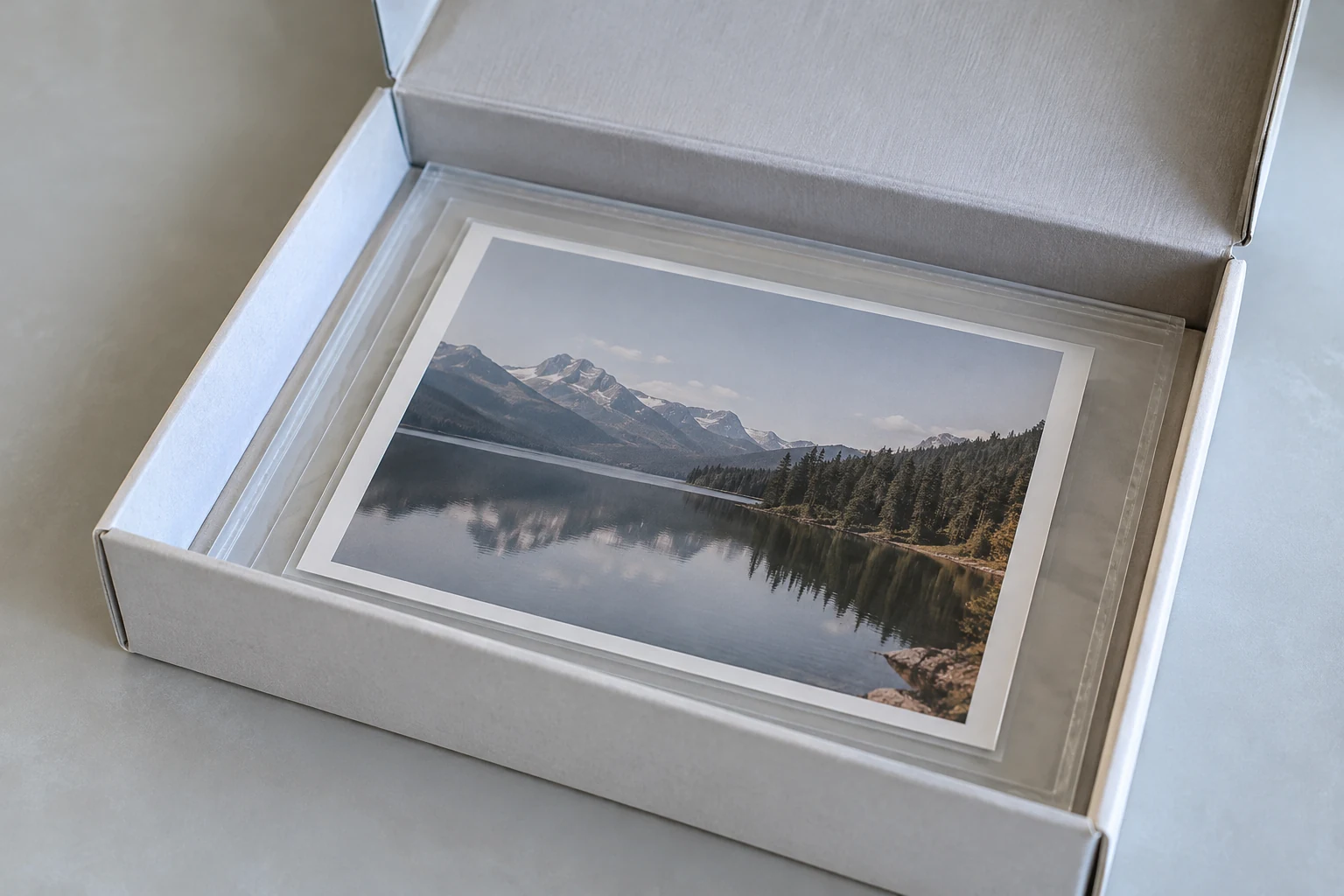
When ordinary handling is safe, place the original in an appropriate photo-safe enclosure and a photo-safe box. The Library of Congress specifically recommends photo-safe boxes for photographs, including those already matted or enclosed. Keep the box in a stable place away from avoidable light, heat and moisture, and update your identity record with a location you will recognize later. The aim is to make the original findable without putting it back into daily use.
Resist the urge to make the photograph look display-ready first. The Library of Congress warns against self-adhesive tape, sticky notes, glue and other adhesives on photographs. Do not tape a tear, attach a label directly to the image or glue a loose part in place. Likewise, do not peel stuck image material, laminate the original or flatten it by force as part of retiring it. Record identifying information separately instead of trying to make the object carry a new note.
A faded photograph that you can handle safely does not automatically need treatment. But if damage makes ordinary movement or storage uncertain, a photograph conservator may be needed; the Library of Congress identifies conservation treatment as a possible route. You can defer moving, capturing or repairing the original while you work out whom to ask. Choosing not to intervene immediately is still a decision to protect it.
Make a Display Copy Only If the Original Can Be Handled Safely
If positioning or capturing the original would stress it, do not force it flat to make a replacement image. Seek appropriate help with the photograph, or choose a nonphoto display for now. A new picture is not worth worsening the object you hoped to preserve.
If the original can be positioned gently without disturbing damaged areas, you can make a copy for display. Keep the identity record with the original, and label the displayed result as a copy. Its label or nearby record can name the person according to what is actually known and point to where the original is stored. If the identification is uncertain, carry that uncertainty forward too; copying an image does not confirm who it shows.
If a usable copy already exists, you may not need to handle the fragile original at all. Replacing one displayed copy with another is a different task from moving or capturing an original. Check that the copy is linked to the correct identity record, then let the original remain protected.
Choose What, If Anything, Stays on the Display
Once the worn photograph is no longer in daily use, choose what you want the space to do. If seeing the person’s face remains important and a suitable image is available, display a clearly identified copy. That keeps this particular likeness present while allowing the original to stay out of routine handling. A small label can say “copy” and give the person’s known name; a separate record can hold the fuller account, including uncertainties and the original’s location.
If a photograph no longer feels right—or making a safe copy is not possible—a name card or meaningful object can hold the place instead. You might choose a card bearing the person’s name, or an object whose connection you can explain in a sentence. Keep that explanation with your record: for instance, “This object reminds me of Daniel’s Sunday visits; the photograph once displayed here is stored in the family photo box.” Such an object expresses a connection; it does not establish the identity of an uncertain photograph. Preserve that identification, and its limits, in the image record.
You may also leave the space empty. An empty place does not erase the record you made or require you to replace the image immediately. It may suit a display that changes over time, or simply give you room to decide later. These are choices about your own space, not stages that everyone must complete.
If marking the change would help, you can say a few ordinary words as you put the display away: “I’m keeping this photograph safe, and I remember why it was here.” You could instead take a quiet moment, or do neither. Follow any relevant practice of your own tradition, but do not assume that a photograph, a particular gesture or a feeling of closure is required. Retiring an image from daily handling can be a practical act of care: its identity remains recorded, the original is protected where appropriate, and the form of remembrance remains yours to choose.