
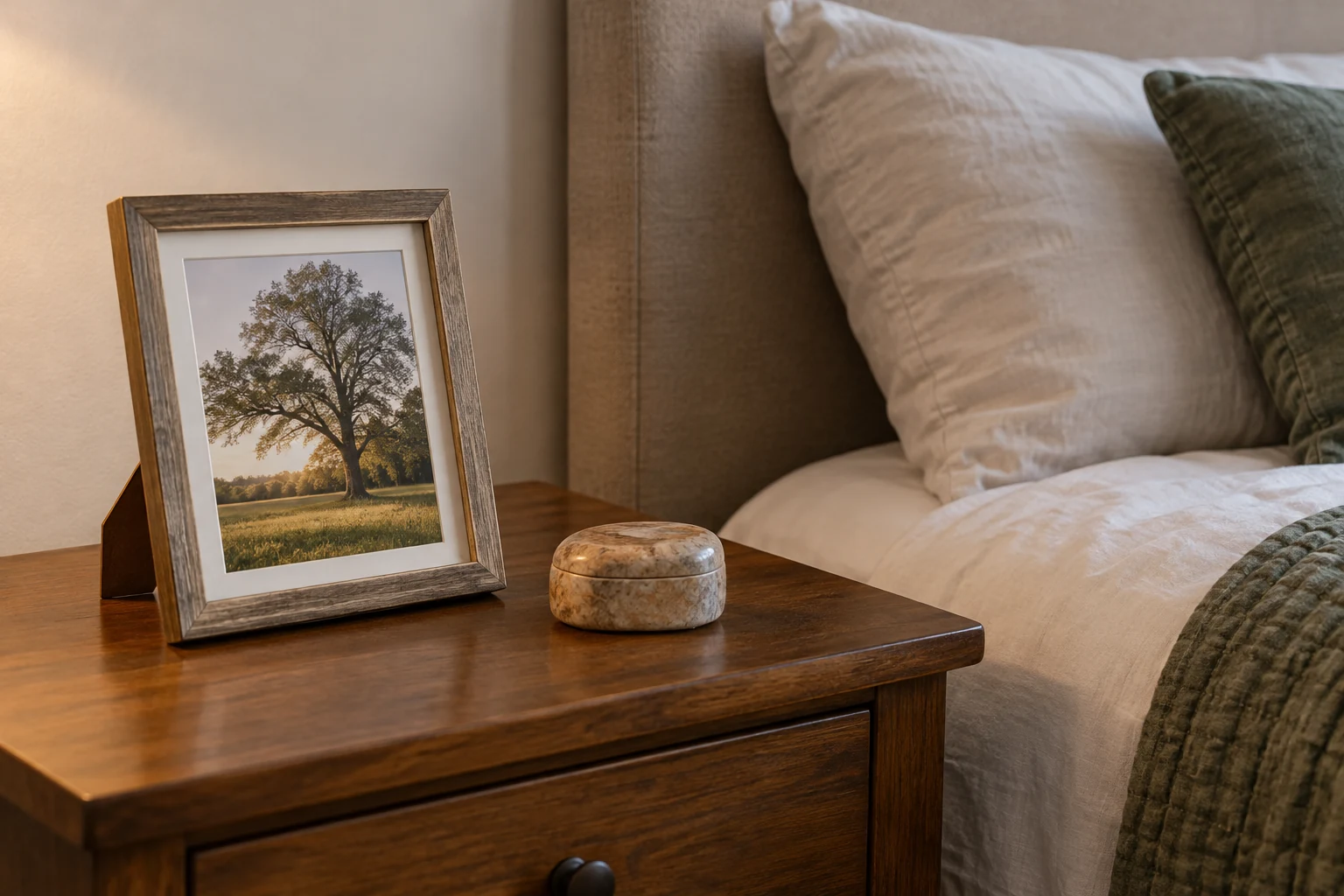
A private remembrance corner in a shared bedroom starts with an agreement, not a purchase or a display. Choose a small place that both occupants can live with, decide how visible it may be, and use a supported surface or a format you can close and put away. You can keep the stories behind your objects to yourself even while discussing their physical place in the room. The goal is a meaningful way to remember someone that does not block the bed, storage or daily routines—or require the other person to take part.
Agree on the Space and the Kind of Privacy You Need
Before choosing objects, work out what you mean by private. There are three separate questions:
- What should be out of sight? You might be comfortable with one photograph showing but prefer to close away letters or writing. Or you might want everything stored when you are not using it.
- What do you want to keep to yourself? The meaning of a keepsake does not have to be explained to anyone else. This is different from whether the object itself can be seen.
- How will both people use the bedroom? A place for remembrance still needs to leave ordinary access to the bed, drawers, doors and belongings.
A cover or screen may make objects less visible, but it cannot soundproof a conversation or guarantee secrecy from someone who shares the room. If you need to read or speak privately, consider when and where you can do that comfortably; do not rely on a covered shelf to provide that privacy.
Bring a specific, modest proposal to the other occupant rather than asking whether they are comfortable with a vague “corner.” You might say: “Could I use the back part of my bedside surface for a small photograph and keepsake? They would stay on that surface, and you would not need to move them to reach anything.” Explain whether the items would remain visible, be covered or be put away. Ask whether the spot interferes with anything the other person normally does, and listen to the answer before placing objects there.
That conversation is about sharing a room, not claiming a right to rearrange someone else’s area. A workable boundary might be: your objects stay on your own bedside surface; the other person’s belongings and storage remain untouched; and neither person has to step around the arrangement or shift it to get into bed. If the surface is regularly used for a lamp, glass of water or other essentials, the space left for remembrance may be smaller than it first appears. Agree on the usable part of the surface, not just its dimensions.
You can negotiate that boundary without telling the other person every story attached to a photograph or object. Child Bereavement UK observes that some people prefer to keep memories private. You can choose what to share, but that does not mean a shared bedroom must accommodate a visible display. It is enough to explain what will be placed there and how it will affect the room.
If the proposed spot or level of visibility does not work for the other occupant, revise the proposal. One photograph may fit where a group of objects would not. A box in your own storage may work where an open shelf would feel intrusive. If there is no agreed place for a display, move to a closed or nonvisible option rather than treating the entire room as private territory.
Choose a Format That Fits the Agreed Space
Let the agreement determine the format. There is no required size, direction or ritual for a remembrance corner; the useful choice is the one that fits both your purpose and the room.
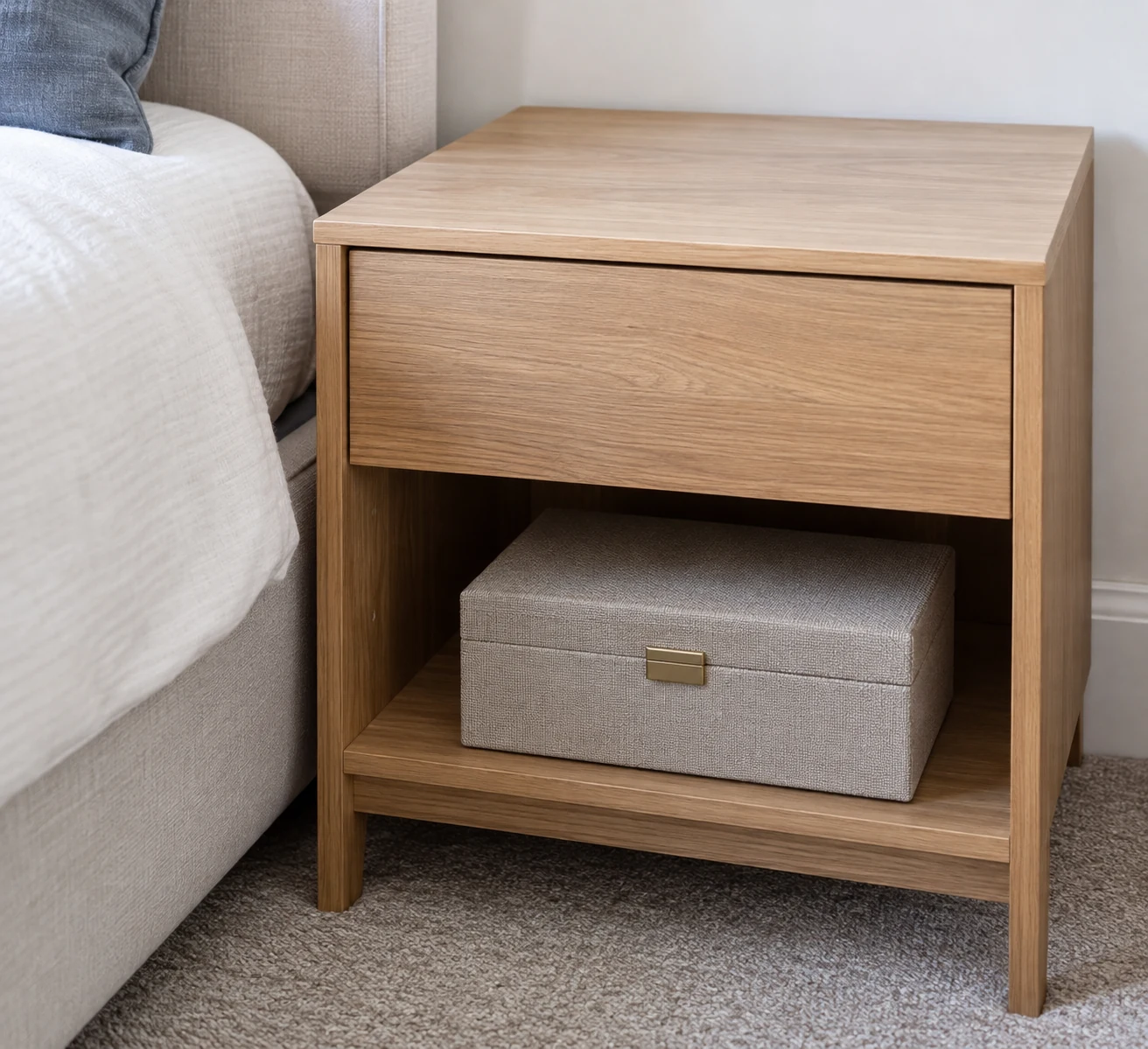
| Format | When it may fit | What to check |
|---|---|---|
| Small visible display on an existing shelf or bedside surface | Both occupants are comfortable with some items remaining in view. | Keep it within the agreed area, on furniture that supports it securely, without crowding things used every day. |
| Closed box or book | You want objects, photographs or writing out of sight between private moments. | Choose a place to store it that you can reach without moving the other person’s belongings. |
| Fold-away card or photograph | You need a surface for other activities, or only want an item out briefly. | Decide where it goes afterward so putting it away is easy rather than another negotiation. |
These formats can serve different needs without ranking one as a better form of remembrance. A visible photograph can be enough on its own; a closed notebook can hold more than you want to display; a fold-away card can make use of a surface for a short time while leaving it free for the rest of the day. You can also combine formats—for example, keeping one agreed object visible and private writing closed.
Try the arrangement on the actual furniture before treating it as settled. Set the proposed items in place, then use the room as you ordinarily would. Can both people open the door and drawers fully, reach storage, get into bed and walk their usual route without avoiding the objects? Is the surface sturdy enough for what is on it, and do the items sit securely rather than perching at an edge? A shelf that looks spacious from across the room may leave little usable space once a door or drawer is opened.
If anything is unstable or gets in the way, change the arrangement rather than asking the room’s users to work around it. Remove an item, choose a smaller or more secure place on the same surface, or put the contents in a box. Do not add a shelf or move shared furniture on the assumption that it will be welcome; discuss any change to the room first.
Photographs deserve a little thought because they may be handled or moved as part of everyday bedroom use. Put a displayed photograph in housing that supports and protects it, such as a suitable frame, rather than leaving a loose print where it can slide or be caught under other things. If an original is too precious to leave in a regularly used spot, display a copy and store the original elsewhere. Those are practical ways to reduce routine handling, not promises that a photograph cannot be damaged.
Decide about light while choosing objects, not after setting them out. The U.S. Fire Administration says not to use lit candles in bedrooms or sleeping areas. If light is meaningful to you, choose a suitable flameless device instead. Consider how it will sit on the agreed surface and keep its cables, batteries and any small pieces appropriately controlled for the people who use the room. A light is optional; the corner does not need one to serve its purpose.
For a concrete trial, suppose you have agreed to use one part of your bedside surface. You might place a framed copy of a photograph and one small keepsake there, leaving room for what you normally keep beside the bed. A closed notebook can hold writing you do not want on view. If the surface turns out to be needed at night, the photograph and keepsake could instead live in a box in your own storage. The remembrance stays yours in either arrangement; only its footprint and visibility change.
Keep the Arrangement Workable Day to Day
Once you know what fits, make the agreement easy to follow on an ordinary day. Decide whether the display stays out or is set out only at certain times. If it is temporary, give it a definite place to go when put away. Agree who handles your objects, particularly if they must be moved to use a shared surface. Keep the other occupant’s belongings separate rather than letting the arrangement gradually spread into their space.
A brief private moment can be as simple as opening a notebook, looking at a photograph and putting it away afterward. You can tell the other person that you would like some time to yourself without asking them to participate or hear the stories behind the objects. Privacy can mean choosing what you share; it does not have to mean hiding the existence of a box or book from someone who lives in the room. Child Bereavement UK’s recognition of private memories is a useful reminder that a memory does not become less personal because you choose not to explain it.
Pay attention to small signs that the first arrangement needs changing. If a drawer becomes awkward to open, an item is repeatedly moved aside, or either person needs the surface for something else, revisit the location while the problem is still small. Ask what has changed: the available space, the time the display is out, or the need for things to be less visible? That answer can guide a specific adjustment. A display might become a fold-away photograph; a group of objects might become one item; or everything might move into a closed box.
Needs can change even when the original agreement was thoughtful. You may want less visibility later, and the other occupant may need a surface that was previously free. Neither change makes the remembrance less important. The arrangement is workable only while it leaves room for both people’s ordinary use of the bedroom.
If no shared-room placement is agreeable, a private notebook or a box kept with your own things is still a valid choice. You may also choose no visible display at all. What matters is having a way to remember that feels meaningful to you without requiring the other person to give up access, space or privacy in the room you share.