

You can include an adoptive relative by naming them as you knew them and choosing one small way to remember them: a name card, a photograph you may use, an object with a story, or simply a written recollection. The display can be private. It does not need to explain the adoption, represent every family connection, or establish a rule for anyone else’s practice.
Begin with the person rather than with a prescribed arrangement. What did you call them? What part of your life with them do you want to remember? Those answers can guide both the words you use and what, if anything, you place beside their name.
Choose the Relationship and Name You Want to Honor
Choose one person to remember first. This might be an adoptive parent, grandparent or another relative whose relationship with you mattered. Then consider the name and relationship wording that feel accurate and welcome. “My father,” “Grandma June” and “my adoptive grandmother” are all possible descriptions; none is required. You might have called the person by a name that does not explain the relationship at all. You can use that name.
For a card, a few words are enough:
- “Grandma June”
- “For my father, Daniel”
- “Remembering Ana, who taught me to garden”
- “In memory of Ruth”
The last option names only the person. That may be the clearest choice if a relationship label feels too public, does not fit how you spoke to each other, or would invite questions you do not wish to answer. You do not owe viewers an account of how the adoption happened. If you want to describe the relationship more fully in a private notebook, you can do so there without putting those details on display.
A personal remembrance can honor a lived family relationship without making a claim about legal parentage or genealogical classification. It also need not rank an adoptive connection against a birth-family connection, or include both to justify remembering either one. This guide is for an arrangement you choose for yourself, not a rule about who belongs in every ancestor practice. If you are following a particular religious or cultural tradition, use guidance from that tradition for its specific requirements rather than assuming a private display answers those questions.
It may help to distinguish what you know from what you are being asked to settle. “I called her Grandma June, and we spent afternoons together” describes your own experience. An inscription does not have to resolve how every relative describes her or what a formal record says. Nor does choosing the word “adoptive” make the bond less real; use it if it is the wording you want, not because the display needs a qualification.
If a label is disputed or feels too revealing, choose the person’s familiar name and a memory you can truthfully claim: “June — our afternoons in the garden,” for instance. You can also leave the relationship off the card, put the card somewhere only you see it, or wait before writing anything permanent. Privacy is a workable choice, not a failure to honor the person.
Build the Remembrance Around One Specific Memory
Pick a place where a small remembrance can sit without demanding a complicated setup. A shelf, a corner of a desk or a page in a notebook can work. Then choose one starting element. It could be a newly written name card, a copy of a photograph you are comfortable using, an ordinary object you own, or a short account of something you did together. You do not need an inherited possession or even a photograph. You also do not need to add an object representing another family connection for this remembrance to count as your own.
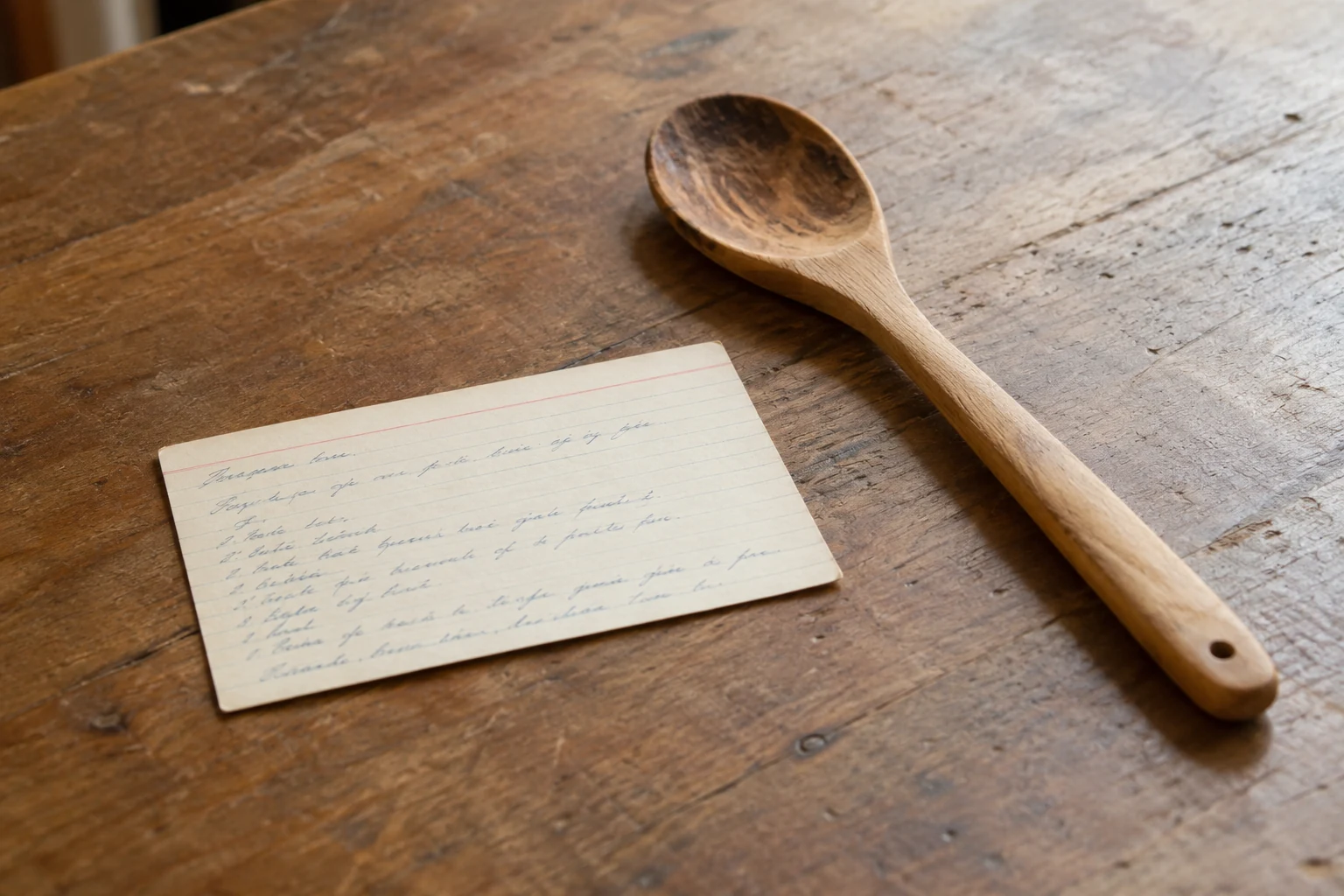
If you choose an object, ask what story makes that object meaningful. Child Bereavement UK, in its guidance on memory boxes for bereaved children and young people, advises attaching a story or memory to each object. That is a useful idea to adapt here: instead of selecting things because they look appropriate for an ancestor display, select something you can connect to a particular recollection. The charity’s memory-box guidance is not an adoption-specific rule for altars or remembrances.
For example, imagine someone places a handwritten recipe card beside their adoptive grandparent’s name. Their note might say, “We made Sunday breakfast together, and she let me read the recipe aloud.” This is an invented illustration, not a suggestion that your relative cooked, kept recipes or shared that kind of memory with you. Its point is the link between a modest item and a story the person remembering can tell truthfully.
Your own link may be different: a copy of a photograph might recall a particular outing, or a note might describe a phrase the person often used with you. An object need not be valuable or old. If it belongs to you and calls up an experience you want to hold onto, you can use it. If the object’s meaning is not clear from looking at it, add a sentence on the back of a card or in a private notebook. The explanation can be for you alone.
There is also a complete option when you have no suitable object or shared memory. Write the person’s name on a new card. If it feels right, add a short, truthful sentence such as “I want to remember the care she gave me” or “I am making room to remember him.” Use only words you can stand behind; you need not produce a warm anecdote on demand. A card with just the person’s name is enough to begin.
Once you have chosen the element, place it where you want the remembrance to be. You might set the card next to the object or keep the written story underneath it. If you wish, read your recollection aloud, speak to the person in your own words, or sit with the display quietly. These are optional personal acts, not steps that guarantee comfort or indicate what the person who died would think. You can leave the arrangement simple, change it later, or put it away after a while.
Decide What to Share, and Change the Display If Needed
Before a remembrance becomes visible to others, check whose material it contains. If an object belongs to someone else, ask before borrowing or displaying it. If a story was told to you privately, ask its contributor whether you may repeat it and to whom. Treat adoption details with the same care: another person may be affected by their disclosure even when you are telling a story about your own family. A useful question is, “Would you be comfortable with me using this photo or story, and who may see it?”
Permission can be limited. Someone might be happy for you to keep a copy of a photograph but not display the original, or willing for you to mention a shared afternoon without repeating a private conversation. In that case, use the permitted version, make the description more general, or omit the detail. If you cannot ask, you can build the remembrance from your own words and an element you own rather than treating silence as permission.
Sharing the finished remembrance is optional, too. You may keep the display entirely private, invite one person to see it, or decide later whether to show anyone. This is a choice for your personal remembrance, not a rule for adoption or for every family’s practice.
Different relatives do not have to make matching choices. One person might put “Dad” beside a photo they have permission to use. Another might remember the same person separately, choose different wording, or prefer not to participate. Neither arrangement has to settle the other person’s account. If you want a shared display and cannot agree on an inscription or object, a practical answer is to use a name everyone is comfortable displaying and keep more personal wording in separate cards—or make separate remembrances altogether.
Revisit the display if something proves inaccurate, too public or painful for a contributor. You can rewrite a card, replace an object with a copy, move a story into a private notebook or remove it. Where memories differ, leave room for that difference instead of writing a single agreed story that no one actually shares. You need not claim the deceased person’s approval, resolve legal status or bring relatives into reconciliation to make a personal remembrance.
A truthful name is enough to start. If you want to add one story-linked element, it can make the remembrance more specific to the relationship you knew. What you keep private, share or change remains your choice—and others can make different choices for theirs.