
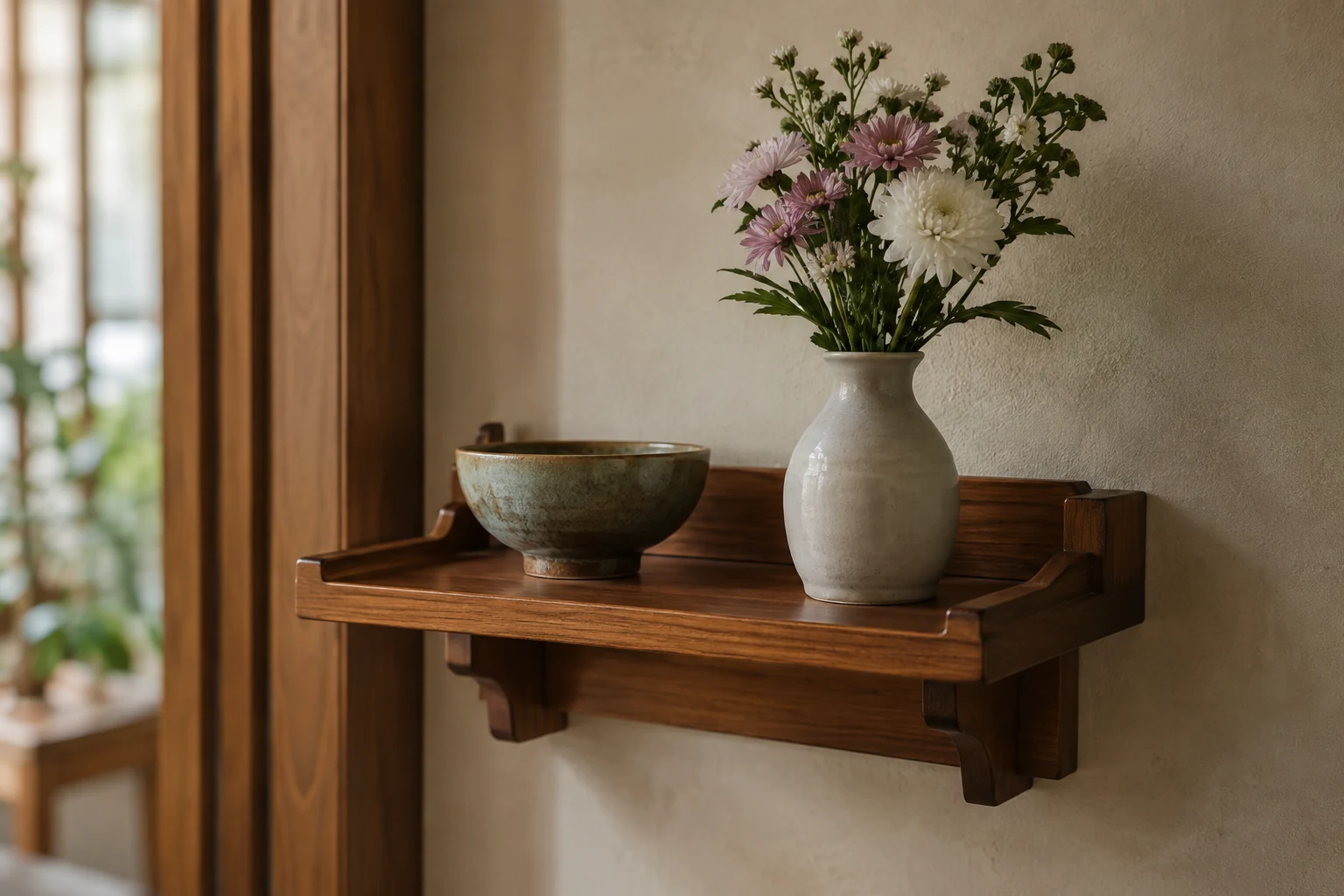
Temple tending can mean regular care of a personal sacred space or service at an established temple. The practical difference is who has authority over the space. At home, you may be able to choose when to dust, straighten and reset an area. At a community temple, the people responsible for the site decide what work volunteers may do.
This guide offers an adaptable upkeep cycle for a space you control and a separate route into assigned temple service. Neither is a universal rite. If you follow an inherited or chosen tradition, let its instructions shape your practice.
Start with Who Is Responsible for the Space
Begin by asking: Who is responsible for this space and its objects? In a personal area you control, you can usually schedule ordinary upkeep yourself. You still need to respect any instructions that govern particular objects, offerings or acts of devotion, as well as the wishes of anyone who shares responsibility for the space.
A community temple works differently. The Hindu American Foundation describes home altar worship as private, while temple worship may be individual or communal. It describes installed, consecrated temple images receiving strict daily priestly care and distinguishes special rituals led by priests. Cleaning your own shelf is therefore not preparation to care for an installed temple image.
For home care, the suggested sequence below concerns the ordinary tasks you are free to do; it does not prescribe a religious schedule or ceremony. Where your tradition gives directions, follow them rather than borrowing a method from another example. At an established temple, seek an assigned role before beginning work.
Prepare for a Manageable Home-care Cycle

Check your tradition’s guidance before clearing the space. Find out which objects may be moved, which should stay in place, and how to handle anything remaining after devotion. If someone else maintains the area with you, agree on what each of you may do. Leave an item alone when its handling is unclear until you can ask.
Choose an interval you can maintain for ordinary upkeep—a regular opportunity to check for dust, clutter or items needing attention. This is a flexible housekeeping choice, not a ritual calendar. A frequently used space may need attention sooner than one used occasionally; adjust the interval based on what you find.
Identify the surfaces you can reach without disturbing protected objects. Gather ordinary supplies suited to those surfaces, such as a clean cloth for a shelf or a broom for the surrounding floor. Check that any cleaning product is appropriate before using it. You are ready to begin when you know both what you can care for and what you will leave alone.
Understand the Hindu Home-puja Example on Its Own Terms
The Hindu American Foundation’s home-puja guide offers one documented example of preparing a worship space. It directs readers to wipe or sweep, allows optional decoration, and says to arrange puja items neatly. These are directions within its home-puja context, not instructions for every home shrine.
The guide also addresses items remaining after puja, including edible offerings that may be consumed or shared. That handling belongs to this documented practice and remains subject to ordinary food safety: an offering is not safe to eat simply because it was offered.
For used offerings, the guide describes respectfully returning material to nature subject to local ordinances. This is not a direction to put offerings in running water or a disposal rule for other traditions. Local requirements, food safety and ecological effects matter when deciding what to do with anything left over. If the appropriate handling is unclear, seek guidance rather than improvising.
Recognize the Distinct Hellenic Household Rhythms
Hellenion describes replacing the ingredients of a Kadiskos, a household vessel, at Noumenia, a new-month observance. The timing belongs to the practice Hellenion describes. Someone following it would look to that practice’s guidance for the ingredients and their handling, rather than treating “replace the contents” as a general cleaning instruction.
Hellenion separately suggests spring cleaning as an occasion for seasonal care. A household observance and a broader opportunity to clean can both shape attention to a space, but they are not interchangeable tasks.
Neither example sets the interval, offerings or cleanup method for Hindu home puja or for your own space. Hellenion’s new-month refresh does not supply a calendar for another practice, just as the Hindu American Foundation’s guidance on used offerings does not tell someone how to handle a Kadiskos. Use a flexible upkeep interval only for the ordinary care you are free to schedule.
Set Flame and Indoor-air Conditions Before Lighting Anything
Before choosing a candle, check that it can sit in a stable holder at least 12 inches from anything that can burn. The U.S. Fire Administration advises extinguishing it before leaving the room or going to sleep. If you cannot meet those conditions, do not light it. A battery-operated flameless light is an option when you want to avoid flame.
Before using either candles or incense indoors, consider the air as well. Burning produces particulate matter, and the U.S. Environmental Protection Agency advises ventilation when candles or incense are used. If ventilation is not workable or you want to avoid smoke, leave burning items out of your personal session.
These are conditions for something you might choose to use, not a suggestion that your tradition requires light or incense. Let your own guidance determine what belongs in your practice. At a community temple, follow site rules and staff direction rather than bringing or lighting anything on your own initiative.
Carry Out One Optional Home-care Session
Suppose you have a personal shelf used for devotion and have chosen a regular time to check it. You have already consulted any handling instructions that apply. This example covers ordinary upkeep; it supplies no offerings, words or liturgy.
Before: Look over the shelf and nearby floor. Make a workable area and identify the surfaces you can safely wipe or sweep. Decide which items, if any, you are permitted to move briefly. Notice anything remaining from an earlier use without deciding how to dispose of it by appearance alone. Leave objects with unclear handling in place, and put suitable cleaning supplies within reach without crowding the shelf.
During: Wipe the accessible shelf surface and sweep the surrounding floor if needed. Move only permitted items, then arrange them as your guidance allows. The task may be as modest as straightening an ordinary cloth or returning an item to its usual position. If you encounter an object you are unsure how to clean or move, work around it rather than guessing at a product or method.
If devotion is part of this session, follow the form and offering instructions of your own practice. You might finish the ordinary cleaning, put the supplies aside and then undertake the devotion you have learned. There is no need to combine another household’s calendar, words or offerings with yours.
After: Address stale or remaining items according to your practice, local rules and relevant food-safety considerations. Finish any devotion you chose to undertake. Put away the cleaning supplies and check that the area is ready for its next use. If an item must remain while you seek advice about its handling, leave it undisturbed and note what you need to ask.
At the next upkeep check, notice what needed attention. If the shelf stayed clean, a longer interval may be manageable; if ordinary dust or clutter accumulated, check sooner. Adjusting that practical interval does not change any observances your tradition requires. The repeatable part of this example is caring for accessible surfaces and leaving the space usable—not performing a prescribed rite.
Know Where an Assigned Temple Task Stops
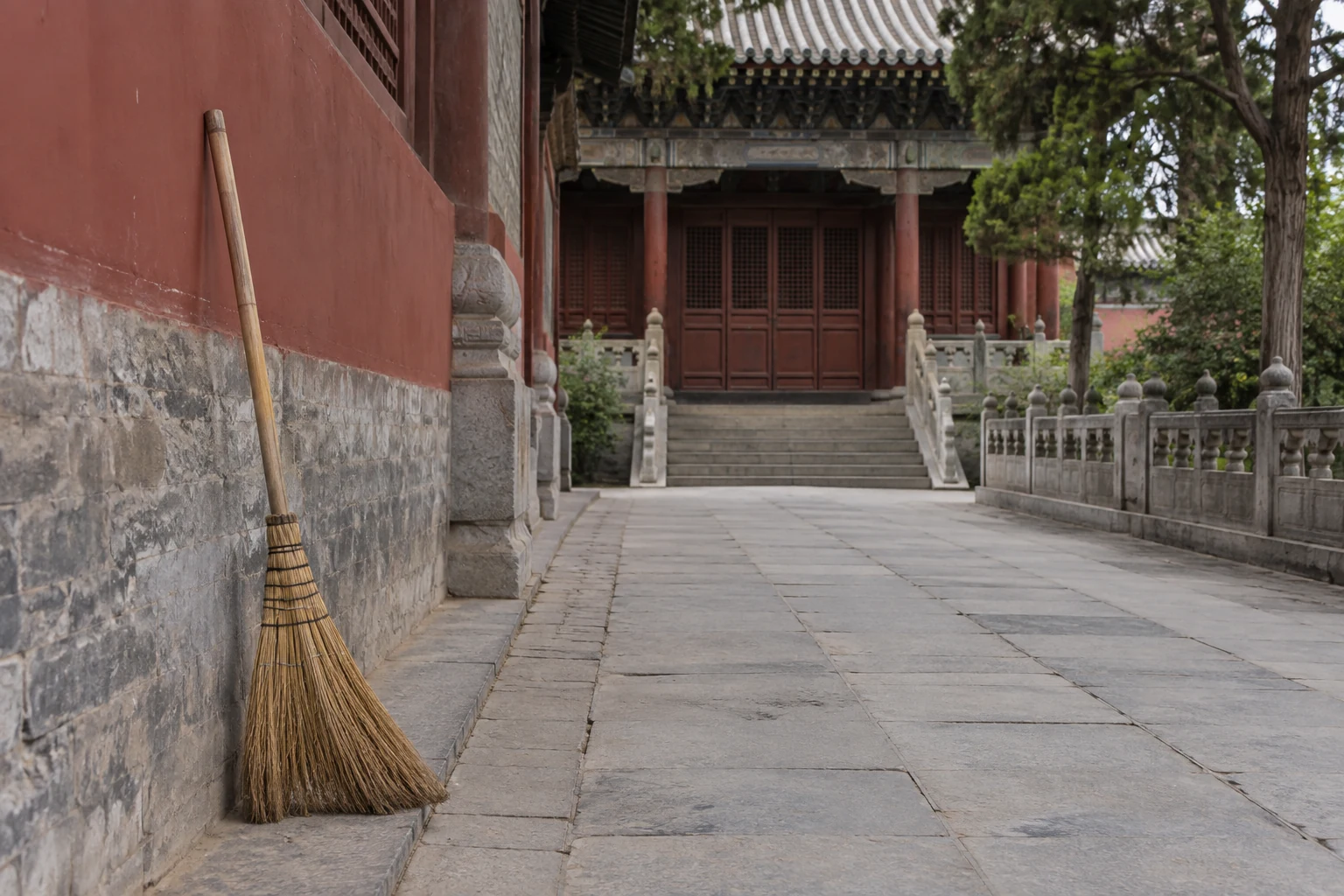
Temple service may include cleaning, flower work or grounds upkeep; ISKCON lists these among volunteer possibilities. It also lists worship assistance. A listed possibility is not permission for every newcomer to perform it: ask what a particular role involves and who may do it.
An assignment to clean does not itself authorize handling consecrated images, conducting liturgy or entering a restricted area. The Hindu American Foundation’s account of priestly care for installed images shows why a task that looks familiar from home can have a different authority boundary at a temple. It also notes that temple-specific rules are posted. Follow those rules and the direction of the staff responsible for that site.
If a task appears to cross the boundary, pause and ask. For example, if you were assigned to clean an open area but notice something near an installed image that seems to need attention, do not move it to finish the job. Ask whether it is within your assignment and what, if anything, staff want you to do. Take the same approach if a proposed shortcut would involve liturgy or a restricted area.
Make First Contact and Complete an Assigned Service
ISKCON’s volunteer guidance offers a bounded example of a first approach: contact a local temple and share your service preference, available time and relevant skills. It describes orientation and staff guidance as part of the process. Offering that information helps staff identify a suitable role without your assuming access to one.
A first message could be:
> Hello, I’d like to ask whether your temple needs volunteer help. I’m available on Saturday mornings for about two hours and could help with ordinary cleaning or grounds work. I have experience caring for outdoor plants. Is there a suitable role, and what orientation or rules should I know before coming?
The answer might point you toward different work—or say that no help is needed then. If invited, ask where to report and who will orient you. Accept the assigned task rather than arriving prepared to start the one you proposed.
On the day, listen to the orientation, read posted rules and confirm the limits of your assignment. If staff ask you to tend a particular section of the grounds, work in that section according to their directions. If the job changes or you encounter something outside it, check before extending the task. When finished, tell the responsible person what you completed and ask whether anything else is needed.
At home, you can adjust ordinary upkeep for a space you control. At a temple, the repeatable habit is to offer your time and skills, accept direction, complete the assigned service and check back with staff.