
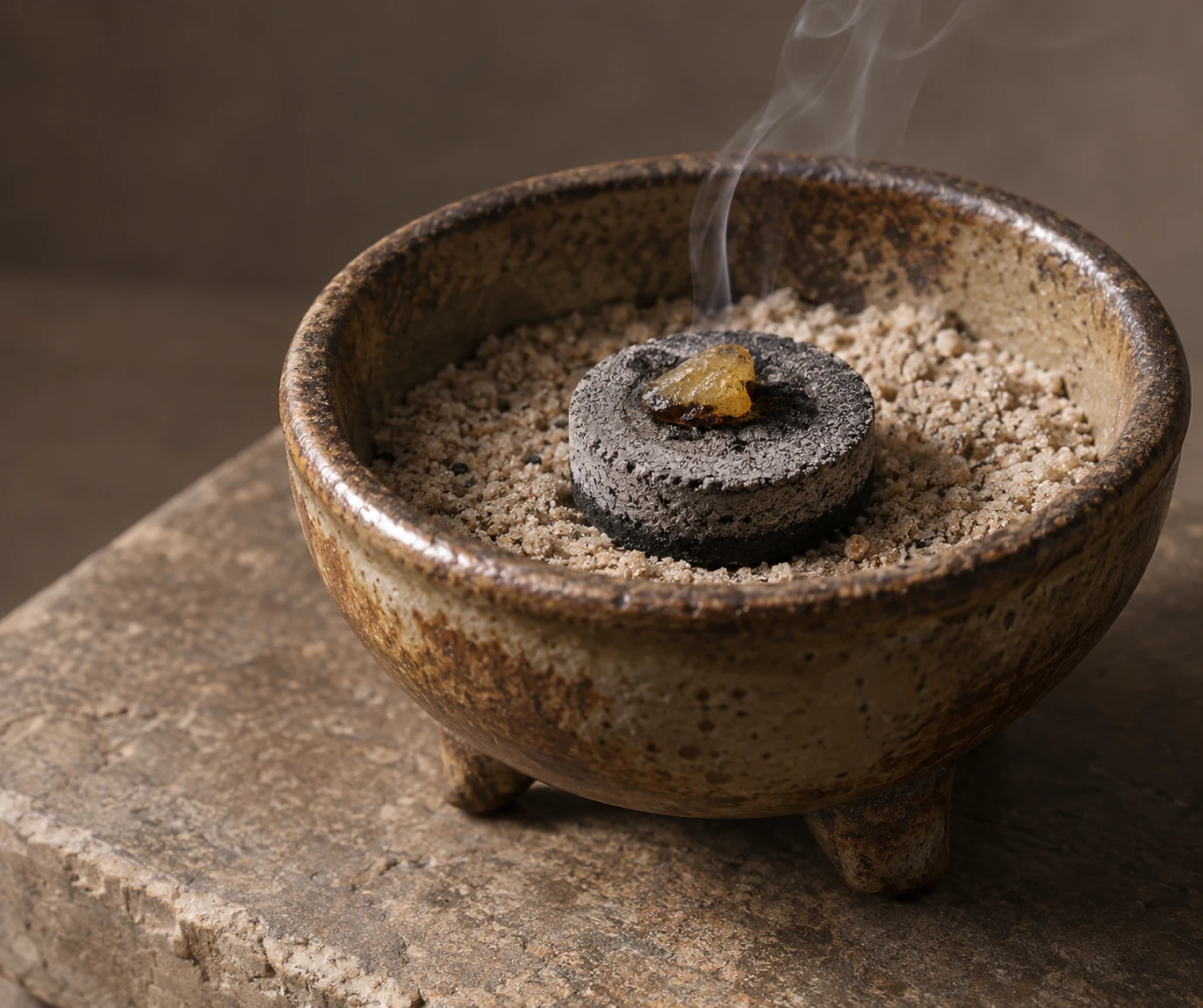
How Charcoal Tablets Work for Loose Incense
A purpose-made incense charcoal tablet heats loose resin so it releases fragrance. The order is straightforward: prepare the space and burner, light the tablet, check that it is ready, add a little resin, attend the burn, and let everything cool before disposal.
Use a purpose-made incense charcoal tablet. Never bring a charcoal or hibachi grill indoors for this method. Keep your tablet’s product directions available: lighting instructions vary, so its directions and visible cues are more useful than a fixed number of minutes.
Gather the Supplies
Set out everything you need before lighting the tablet:
- A purpose-made incense charcoal tablet and loose resin
- A compatible charcoal incense burner and support material appropriate for it, such as sand or ash
- Charcoal tongs, a lighter, and a small metal spoon for adding resin
- A separate heat-resistant coaster or tile to place beneath the burner
The materials inside and beneath the burner do different jobs. The sand or ash forms a bed that supports the tablet and can absorb some heat. The coaster or tile protects the surface beneath the vessel, whose bottom can still become hot. Check the burner’s directions when choosing its support material.
Choose a Safe Place for the Burner
Choose a stable spot where the burner cannot easily be bumped. Clear nearby combustible objects and keep the setup out of reach of children and pets. Pick a place where you can remain with the burner throughout the session, rather than somewhere you will need to leave it burning alone.
Put the separate heat-resistant coaster or tile in position, then set the burner on it. Do not use a bare wooden tabletop as the burner’s base. Heat can reach the bottom of the vessel even when it contains a support bed, threatening the furniture underneath.
A photograph cannot establish that a depicted vessel, tile, or other surface is rated for this use. Choose a burner intended for charcoal incense and a suitable heat-resistant base; do not rely on how sturdy a decorative bowl or surface looks.
Decide Whether to Burn Indoors
Make this decision before ignition. Burning incense produces smoke, and combustion produces particulate matter. Indoor incense burning needs ventilation; its smoke may irritate someone present, including a person with asthma.
If adequate ventilation is unavailable, or smoke is likely to irritate someone in the space, do not begin an indoor session. Starting with a small amount of resin may help you judge smoke once a suitable session is underway, but it does not make poor ventilation or an affected person’s discomfort an acceptable starting condition.
Prepare the Burner’s Support Bed
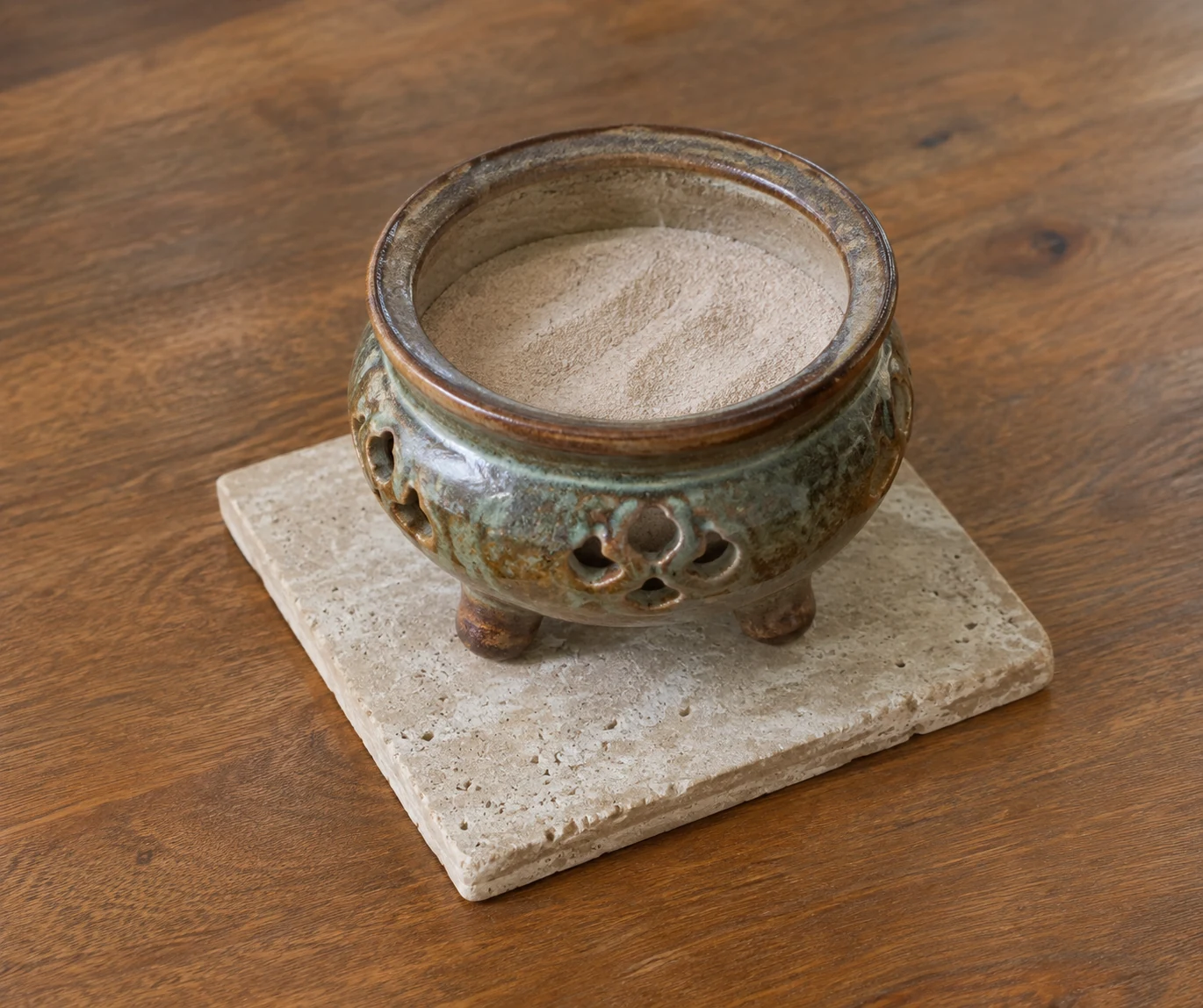
With the burner already on its separate base, put the support material appropriate to that burner—such as sand or ash—inside the vessel. Do this before lighting, so the hot tablet has a prepared place to rest.
The bed holds the tablet and can absorb some heat; it does not keep the outside of the burner cool. Check that the vessel remains stable and the surrounding space is clear before you pick up the charcoal.
Light the Charcoal Tablet
Immediately before lighting, grip the tablet with charcoal tongs over a heatproof dish or space. Never hold it with your fingers. Keep the prepared burner close enough that you can place the tablet on its bed without carrying it around the room.
Follow the directions for your particular tablet. Lighting an edge is one documented method, not a requirement for every product. Apply the flame as directed and watch for the lit area to take; early sparks may be part of ignition without showing that it will continue. Once the tablet has caught, use the tongs to place it on the prepared bed. Do not add resin simply because the tablet is now in the burner.
Check That It Is Ready for Incense
Initial sparks alone do not establish sustained ignition. Follow the tablet’s directions and look for heat spreading inward from the lit area. An edge glow may be a cue where the product directions describe one. A grey, ashen surface is the visible cue for adding incense. Do not substitute a universal minute count for those signs.
If ignition does not continue, leave the resin off. Where the tablet’s directions call for further lighting at the edge, hold it with tongs over a heatproof space and continue as directed, then check again for spreading heat. A brief spark followed by no continuing ignition is a reason to reassess, not to cover the tablet with resin. If you cannot get it to catch by following its directions, stop the attempt and let the setup cool completely before handling it further.
Add Loose Resin Sparingly
Once the tablet is ready, use the small metal spoon to place a very small amount of loose resin on it. Too much resin can smother the tablet and produce substantial smoke.
Let the first addition burn before deciding whether to add another small amount. That pause lets you judge the smoke in your space instead of piling on resin at once. If smoke is already excessive or irritating, stop adding more; a tablet that remains hot does not need to be continually fed.
Attend the Burner While It Burns
Remain with the burning charcoal. Maintain the clearance you established from combustible objects, children, and pets. Do not touch the lit tablet or move the hot burner.
Keep checking whether the space remains adequately ventilated and the smoke remains tolerable. Conditions can change after resin is added, so the decision to begin indoors is not a guarantee that you should continue adding incense.
Respond When Smoke Becomes Too Much
If smoke becomes excessive or irritates someone, stop adding resin and continue attending the hot setup as the session ends. Do not move the hot burner to deal with the smoke.
This guide does not prescribe a universal emergency-extinguishing method; directions differ. For a routine finish, leave the setup in place to cool. If the available ventilation or the people present cannot tolerate the smoke, do not repeat the session indoors under those conditions.
Let the Tablet Cool and Discard the Remains
Leave the tablet and burner in place until both are completely cool. Ash can conceal a hot spot, so grey or quiet-looking remains are not proof that they are safe to handle. Continue attending the setup while it may still be hot.
Do not pour water into a hot burner. For a routine finish, allow it to cool completely in place, then discard the remains according to the charcoal product’s directions. If you are unsure whether it has cooled, leave it longer rather than judging by its appearance alone.
Keep the Sequence Simple
Prepare the space and burner first. Light the tablet by its product directions, wait for sustained ignition and an ashen surface, then add a little resin. Attend the burn, and let the tablet and vessel cool completely before disposal.