
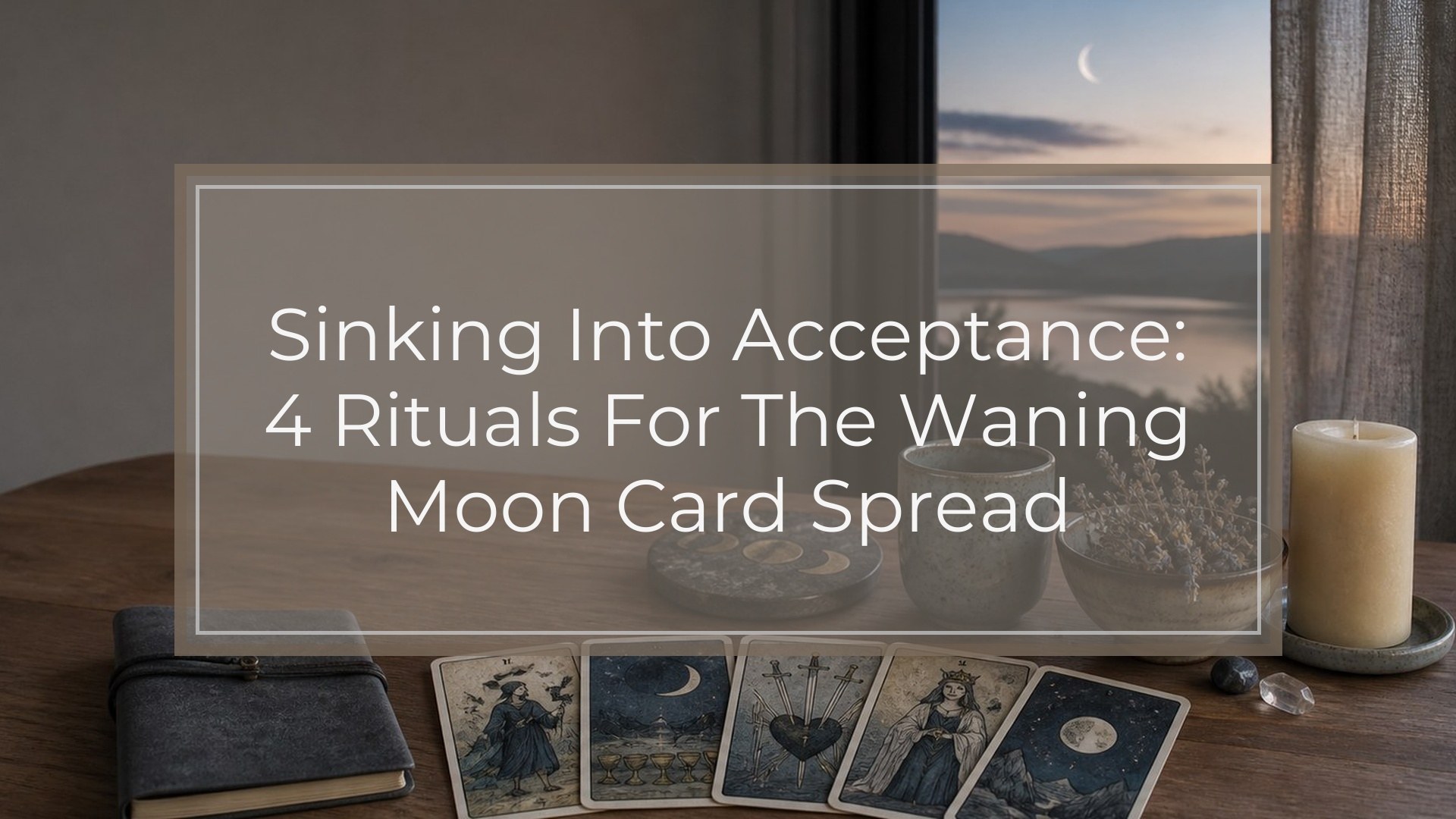
This waning moon card spread is a gentle way to sink into acceptance without pretending you are “over it” before you are ready. It combines four cards with four simple rituals: grounding, naming, releasing, and integrating. You can use tarot, oracle cards, ancestor message cards, or any deck you trust.
The goal is not to predict the future or force emotional closure. The goal is to sit with what is true, ask what is ready to loosen, and give your body and spirit a small ceremony for letting go. Move slowly, especially if the situation is painful. Acceptance is not approval; it is the moment you stop arguing with reality long enough to reclaim your energy.
Before You Begin: What This Waning Moon Ritual Is for

The waning moon is traditionally used for release, clearing, reduction, and surrender. This ritual is for moments when you know something has ended, changed, or cannot be controlled, but your heart has not fully caught up.
Use it for grief, disappointment, emotional attachment, old expectations, resentment, fear, or a pattern you are ready to soften. Do not use it to bypass needed action, avoid a hard conversation, or excuse harm. If you are overwhelmed, unsafe, or in crisis, pause the ritual and seek grounded support from a trusted person or professional.
What You’ll Need
Gather your items before you begin so the ritual can flow without interruption:
- A tarot or oracle deck
- A candle, preferably white, black, silver, or blue
- A small bowl of water
- A small dish of salt, earth, or ash
- Paper and pen
- A fire-safe bowl, shredder, compost, or trash container
- Optional: ancestor altar items, flowers, incense, prayer beads, or a photo of a beloved dead
You do not need expensive tools. Choose objects that feel steady, clean, and respectful. If flame is unsafe where you are, use an LED candle or simply place your hand over your heart as the ritual light.
Set the Space for the Waning Moon
Choose a quiet place where you can be undisturbed for 20 to 40 minutes. Clear a small surface. Place the candle at the center, the water to the left, and the salt, earth, or ash to the right. Put your cards in front of you.
Take three slow breaths. Say aloud:
“Under the waning moon, I make space for truth, release, and acceptance. May what is ready to leave do so with peace. May what remains teach me.”
If you work with ancestors, invite only the well, wise, and loving dead. Set a firm boundary: “Only guidance rooted in protection, clarity, and care is welcome here.”
The 4-card Waning Moon Acceptance Spread
Shuffle your deck while thinking of the situation you are learning to accept. Avoid asking, “How do I make this change?” Instead ask, “What helps me meet this truth and release what is no longer mine to carry?”
Lay four cards in a row from left to right:
- What my body needs now
- What truth I am resisting
- What is ready to be released
- What acceptance can make room for
Do not rush into interpretation. Look first at colors, figures, symbols, and sensations. Notice which card attracts you and which one you avoid. That reaction is part of the reading.
Step 1: Ritual of Grounding — Return to the Body
Begin with Card 1. Place one hand on your belly and one hand on your chest. Look at the card and ask, “What does my body need in order to feel safe enough to accept what is true?”
Name one physical need: rest, food, water, warmth, movement, stillness, tears, or breath. Then give yourself one minute of that support if possible. Sip water. Loosen your jaw. Stretch your shoulders. Wrap yourself in a blanket.
Say: “I do not have to solve everything to be here. I return to my body first.”
This step matters because release without grounding can become panic, numbness, or spiritual performance.
Step 2: Ritual of Naming — Speak the Truth Without Forcing It
Turn to Card 2. This card shows the truth you may be resisting. Write one sentence beginning with: “The truth I am practicing accepting is…”
Keep it plain. For example: “This relationship has changed.” “I cannot control their choices.” “I am tired.” “I wanted a different outcome.”
Speak the sentence once. If it feels too sharp, soften it with: “A part of me is beginning to accept that…”
You are not required to like the truth. You are only making honest contact with it. If tears, anger, or silence comes, let that be enough. Do not argue with the card or pull extra cards to escape the message.
Step 3: Ritual of Release — Let the Burden Move Outward
Now look at Card 3. Ask, “What part of this burden is no longer mine to carry?” Write down a word, phrase, belief, or emotional weight that needs release. Examples include blame, waiting, fantasy, shame, over-explaining, resentment, or the need for certainty.
Hold the paper near your heart. Say:
“I release what is not mine to hold. I release what keeps me bound to what has already spoken. I release this with as much gentleness as I can access tonight.”
Then dispose of the paper safely. Burn it only if you can do so with proper ventilation and a fire-safe container. Otherwise, tear it, bury it, compost it, or place it in the trash outside your room.
Step 4: Ritual of Integration — Receive the Lesson
Card 4 shows what acceptance can make room for. This is not always happiness. Sometimes it is rest, dignity, clearer boundaries, spiritual maturity, or a quieter nervous system.
Write one sentence beginning with: “As I accept what is true, I make room for…”
Choose one practical action that supports this message within the next 24 hours. Make it small: send one necessary message, remove a reminder, drink water, clean your altar, take a walk, or sleep.
Touch the water bowl and say: “May this lesson settle gently. May I live it one small choice at a time.”
Let the candle burn a little longer, then close the ritual.
How to Know the Ritual Worked
A successful ritual does not always feel dramatic. Look for simple signs: your breathing is easier, your body feels heavier or calmer, you stop rehearsing the same argument, or you know the next small step.
You may still feel sad. That does not mean the ritual failed. Acceptance often arrives as a little more space around the pain, not the disappearance of pain. If you feel activated afterward, eat, rest, wash your hands, and return to ordinary tasks.
Common Mistakes and Troubleshooting
Mistake: Pulling too many cards.
If you keep pulling for reassurance, stop at four. Write down what you already received.
Mistake: Trying to release everything at once.
Choose one burden. The waning moon works well with gradual surrender.
Mistake: Treating acceptance as approval.
Acceptance means recognizing reality. It does not mean staying in harm, excusing someone, or abandoning your boundaries.
Mistake: Ignoring the body.
If your chest tightens or you feel dizzy, pause. Ground before continuing.
Mistake: Expecting instant closure.
Repeat the ritual over several waning moons if needed, but change the question slightly each time.
Simple Variations for Ancestor Altars and Home Practice
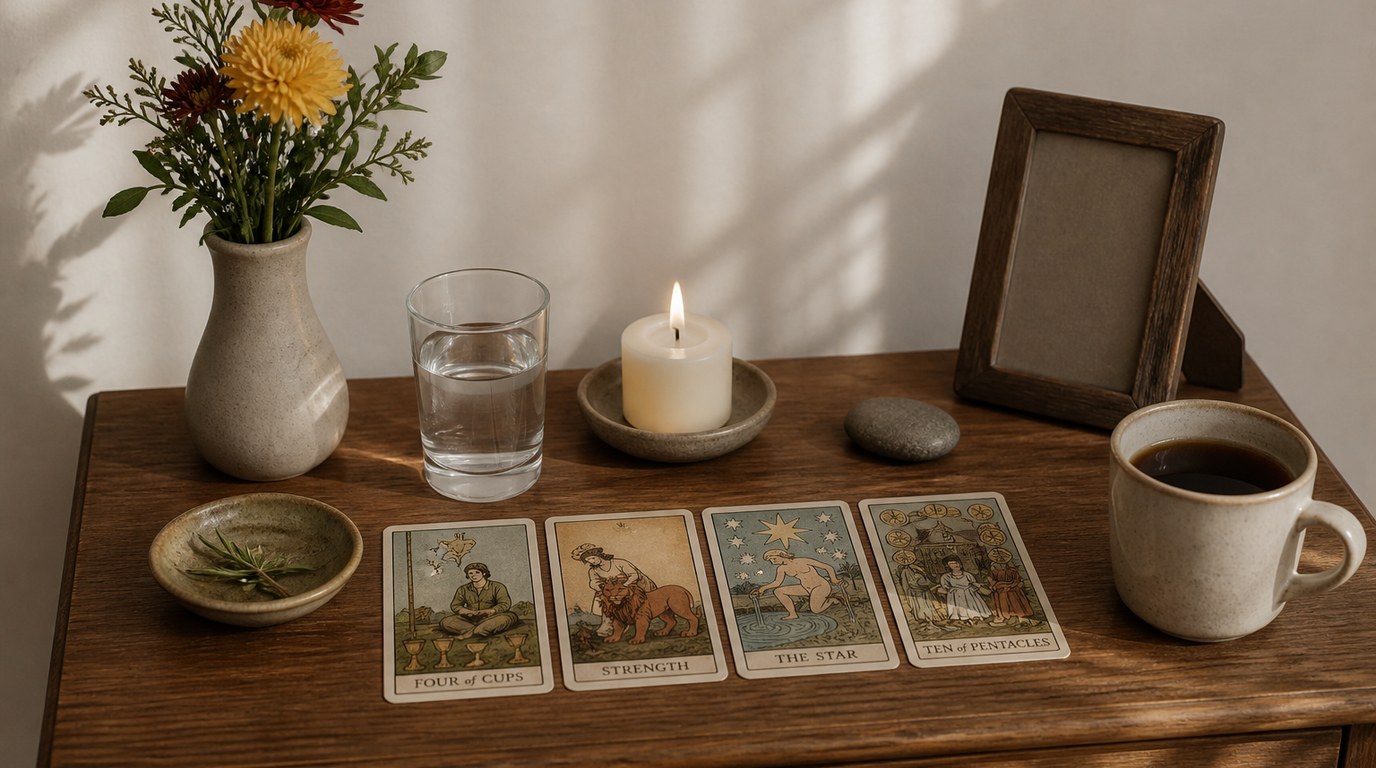
For ancestor altar practice, place the four cards near a glass of water and ask your well ancestors to help you release with wisdom, not bitterness. You may offer flowers, a candle, prayer, song, or a simple cup of coffee or tea.
For a minimal home version, use one candle, one card deck, and one sentence of release. For a family-safe version, skip burning and tear the paper instead. For a morning ritual, replace candlelight with sunlight and focus on integration.
FAQ
Can I do this waning moon card spread if I do not know tarot well?
Yes. Read the cards through images, feelings, colors, and plain keywords from the guidebook. You do not need advanced tarot knowledge. The spread is designed for reflection, not technical prediction. Trust simple impressions, especially when they connect clearly to your situation.
What if I pull a difficult card?
Pause before assuming it is bad. Difficult cards often name what needs honesty: grief, exhaustion, control, fear, or change. Ask, “What support does this card recommend?” If the card feels too intense, place it down, breathe, and return later.
Do I have to perform this exactly during the waning moon?
No. The waning moon supports release, but you can perform this ritual whenever you need acceptance and emotional clearing. If timing matters to you, choose the days after the full moon and before the new moon. If not, your sincere need is enough.
Can I use this ritual with an ancestor altar?
Yes, if that fits your tradition and you approach it respectfully. Invite only loving, wise, and elevated ancestors or the dead who walk in wellness. Keep the altar clean, offer water or light, and close by thanking them for guidance and protection.
What should I do with the release paper afterward?
Choose a safe method that matches your setting. Burn it only with caution. You can also tear it, bury it, compost it, or throw it away outside your room. The meaning comes from your intention and follow-through, not from using fire.