
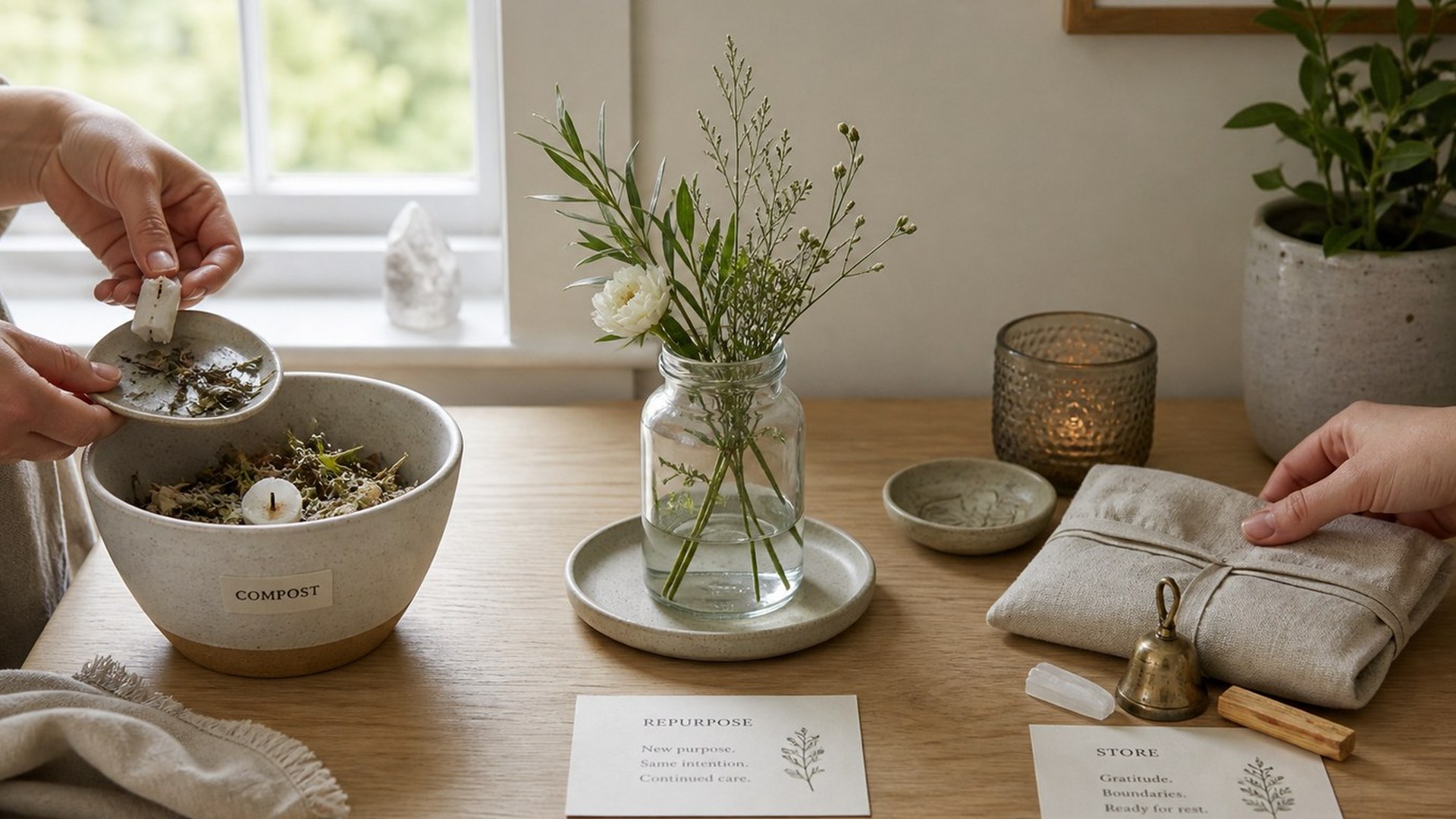
When a spell, ancestor offering, altar working, or home ritual is complete, your next task is to close the work with care. Most ritual remains can be handled in one of three ways: release them, repurpose them, or retire them. Release items that carried away a burden or completed a petition. Repurpose durable objects that can be cleansed and respectfully used again. Retire items that feel spent, damaged, or spiritually “done.”
The goal is not fear-based perfection. It is practical respect: protect your home, avoid waste, honor the spirits or ancestors involved, and make sure the energetic container of the work is closed.
What You Need Before You Start
Before touching ritual remains, pause and identify what kind of working you completed. A sweetening jar, ancestor offering, protection candle, uncrossing bath, prosperity spell, and grief ritual do not all leave behind the same kind of material. The purpose of the spell helps determine whether the items should be kept, cleaned, composted, buried, discarded, or returned to ordinary use.
Gather a few simple supplies:
- A heat-safe surface or tray for candles and wax
- Paper towels, cloth, or a small brush for cleanup
- Gloves if you handled oils, herbs, peppers, salts, rust, bodily fluids, or broken glass
- A trash bag for non-compostable remains
- Compost or yard-waste access, if appropriate
- A bowl of clean water or salt water for rinsing durable objects
- Smoke, sound, prayer, or breath for spiritual cleansing
- Labels or a notebook if you keep jars, charm bags, or altar items
- A clean container for items you plan to reuse
Also check the physical safety of the materials. Do not bury glass where people, animals, or gardeners may be hurt. Do not pour oils, salt-heavy water, wax, or glitter into soil, rivers, sinks, or storm drains. Do not leave food offerings outside where they may poison pets or wildlife. Chocolate, alcohol, onions, grapes, and heavily salted foods are common examples to handle carefully.
Spiritually, ask one question before you begin: Is this item still holding the work, or has the work ended? If it still feels active, keep it in place until the agreed time is complete. If it feels finished, proceed with closure.
A simple closing phrase is enough: “This work is complete. What must return, returns. What must remain, remains. What must be cleared, is cleared.”
Step 1
Begin by sorting every ritual item into one of three categories: release, repurpose, or retire. This is the main decision that prevents confusion and energetic clutter.
First, release items that were meant to carry something away or deliver a completed message. This often includes petition papers, used herbs, ashes, water from cleansing work, food offerings, spent candle stubs, and spell remains from banishing, road-opening, uncrossing, grief release, or protection work. These items have served as carriers. Once the work is complete, do not keep handling them casually.
Choose the release method based on the material. Paper can be burned safely in a fire-safe dish if fire is appropriate to your practice and legal where you live. Ashes can be placed in the trash, scattered in your own garden only if the ingredients are safe, or wrapped and discarded. Water from spiritual baths may be poured at a crossroads, at the base of a strong tree, or down the drain with prayer, depending on your tradition and the contents. If the water contains salt, oils, synthetic fragrance, or toxic herbs, the drain or trash is usually safer than the earth.
Second, repurpose items that are durable, neutral, and cleanable. This may include candle holders, plates, cups, bowls, altar cloths, crystals, statues, bells, jars, keys, coins, and tools. Wash the physical object first. Then cleanse it spiritually with smoke, sound, sunlight, moonlight, prayer, breath, or a light salt-water wipe if the material can tolerate it. Not every item needs dramatic cleansing; sometimes a firm rinse and spoken release is enough.
Third, retire items that feel exhausted, broken, or too tied to the work to reuse. A cracked jar, burned-through cloth, sour-feeling charm bag, or tool used in heavy cleansing may be ready to leave your practice. Wrap it respectfully, thank it, and dispose of it safely.
As you sort, speak plainly: “You are released,” “You are cleansed for future use,” or “You are retired with thanks.” Clear words help close the container.
Step 2
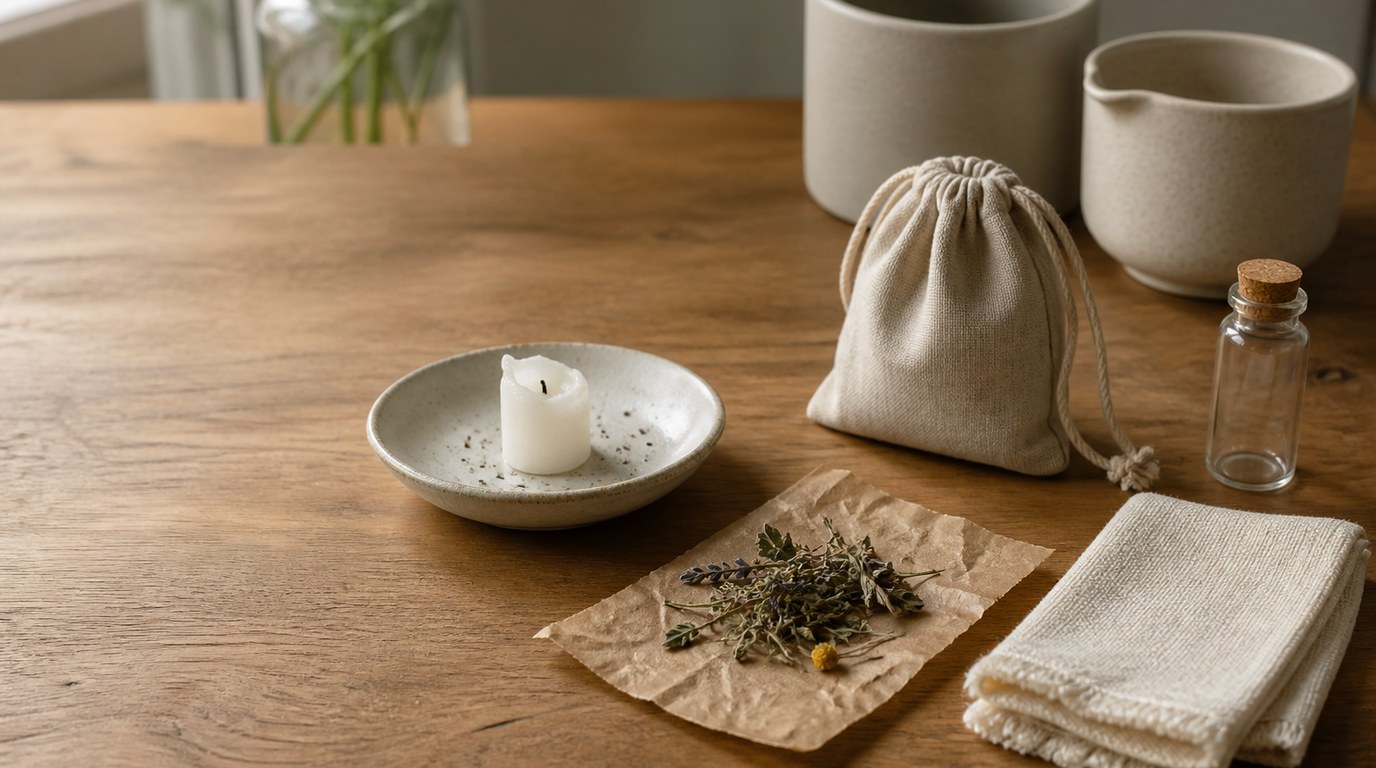
Now carry out the chosen method with care. Work slowly, one category at a time, rather than dumping everything together.
For items you are releasing, match the disposal to both the spell purpose and the real-world material. If the ritual was for removal, such as cutting ties, cleansing, or banishing, take the remains out of your living space promptly. Wrap them in paper or a bag and place them in an outside trash bin if they are not safe for nature. If your tradition uses crossroads, running water, burial, or fire, adapt the method responsibly. Spiritual symbolism should not override environmental safety.
For items you are repurposing, clean them in two stages. First, remove physical residue: wax, oil, ash, herbs, food, dust, or fingerprints. Then reset the item spiritually. You might ring a bell over it, pass it through incense, place your hands over it, or say: “You are cleared of this work and returned to clean service.” Let it dry fully before storing. Keep altar dishes, offering cups, and candle tools separate from ordinary kitchen use if that boundary matters in your practice.
For items you are retiring, do not treat them as trash in spirit, even if the final destination is the trash. Thank them for their service. Wrap sharp or broken objects so no one gets hurt. Remove personal information from petition papers if privacy is a concern. If a jar contains liquid, herbs, pins, glass, or biological material, empty it carefully and dispose of each part safely.
One important caution: do not bury or scatter anything that can harm soil, water, animals, or people. Candle wax, glitter, salt, essential oils, alcohol, metal charms, plastic, ribbon, and glass are often better cleaned, reused, or discarded than offered to the land. “Natural” does not always mean harmless; some herbs and foods are toxic to pets or invasive outdoors.
Common mistakes include keeping every spell jar forever, reusing items without cleansing them, burying glass jars whole, leaving offerings to rot on an altar, and assuming the trash is always spiritually disrespectful. In many cases, the trash is the safest and most responsible release—especially when paired with thanks, prayer, and closure.
Finish by washing your hands, wiping the ritual surface, and refreshing the altar if needed. A small glass of water, a candle, or a few quiet breaths can restore balance after cleanup.
How to Check the Result

You will know the ritual cleanup is complete when the space feels physically safe, spiritually settled, and practically manageable. Check all three levels.
First, inspect the physical space. There should be no open flames, spilled oils, sharp glass, rotting food, loose herbs that pets or children can reach, or mystery jars with no purpose. Candle holders should be cool. Surfaces should be wiped. Reusable items should be clean and dry before storage.
Second, check the energetic feeling. The altar or ritual area may feel quiet, lighter, neutral, or complete. It does not have to feel dramatic. A successful closure often feels simple: the work is no longer asking for attention. If you feel tugged, anxious, or unsure, repeat a short closing statement and cleanse the area again with sound, prayer, smoke, or fresh air.
Third, check your memory of the spell. Can you clearly say what was released, what was reused, and what was retired? If not, make a brief note. For example: “Protection candle completed; wax discarded; holder washed and cleansed; petition burned.” This is especially useful for ancestor work, long-term spell jars, charm bags, and repeated altar practices.
If the result still feels unresolved, troubleshoot by asking: Was the spell actually finished? Did I promise an offering that has not been given? Did I keep an item out of guilt or fear? Did I dispose of something in a way that conflicts with my values? Correct only what needs correcting. You do not need to restart the whole ritual.
A clean result feels respectful, not obsessive. The work has been acknowledged, the remains have been handled, and your home can return to peace.
FAQ
Can I Throw Spell Remains in the Trash?
Yes, especially when the remains include wax, glitter, salt, glass, synthetic fabric, oils, or unsafe herbs. The trash can be spiritually respectful if you wrap the items, thank them, and state that the work is complete. Safety matters.
Is It Bad Luck to Reuse Ritual Items?
No. Reusing bowls, jars, candle holders, crystals, bells, and altar tools is common when they are physically cleaned and spiritually cleared. Avoid reuse only when an item feels damaged, tied to heavy work, or specifically dedicated to one spirit or purpose.
What Should I Do with Offerings After a Ritual?
Remove offerings before they spoil. Compost safe plant foods when appropriate, pour plain water at a plant or down the drain, and discard unsafe foods responsibly. For ancestor offerings, thank the ancestors first, then remove the item with respect rather than leaving it to rot.
Can I Bury Candle Wax or a Spell Jar?
Usually, avoid burying wax, glass, metal, plastic, glitter, salt, or oils. They can harm soil, animals, or people. If burial is part of your tradition, bury only safe biodegradable materials on land where you have permission.
How Long Should I Keep a Spell Jar or Charm Bag?
Keep it until the work is fulfilled, the agreed time has passed, or it no longer feels active. Some jars are maintained for months; others are dismantled after a single result. Label long-term work so you remember its purpose, date, and care instructions.