
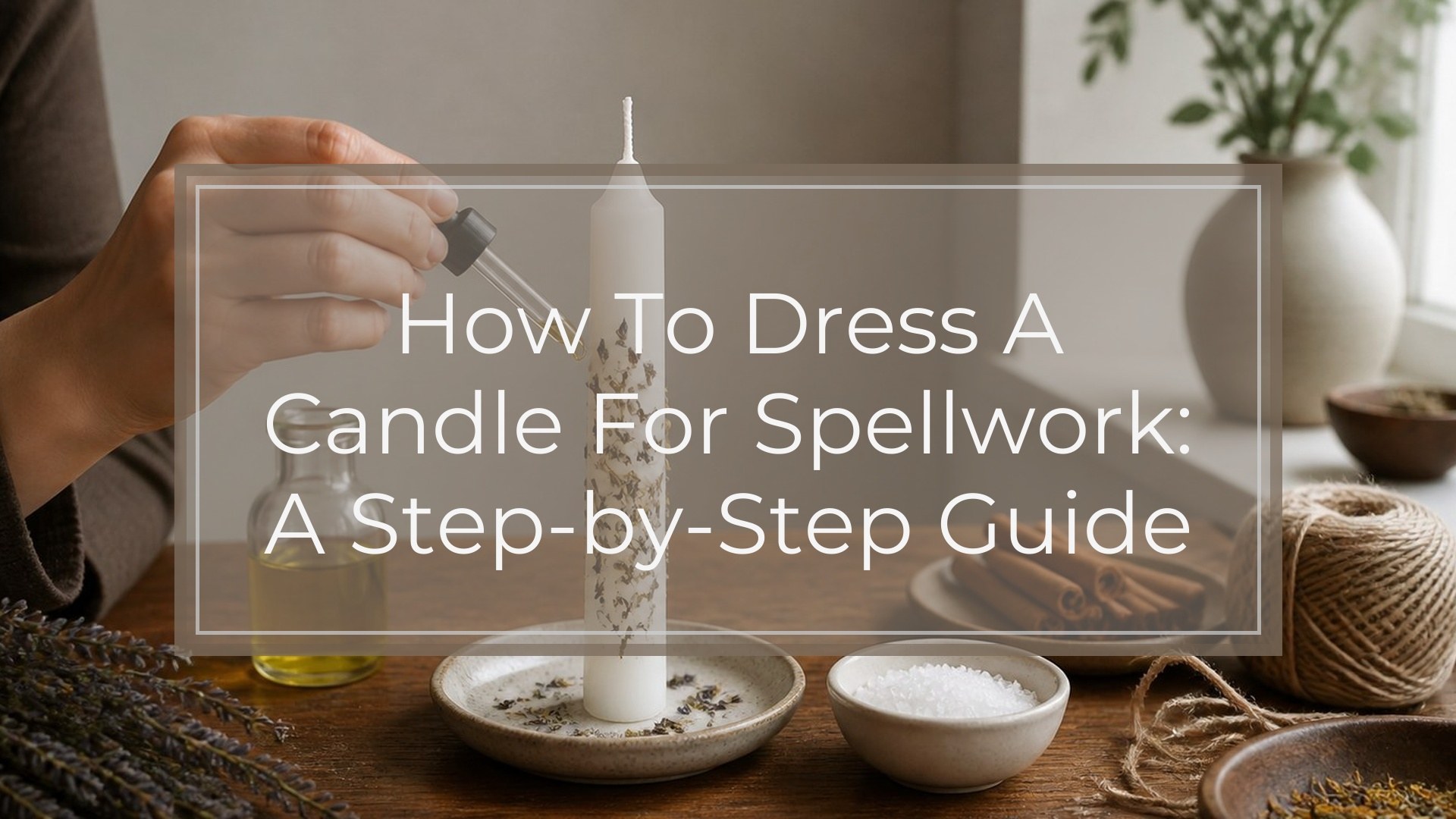
To dress a candle for spellwork, cleanse the candle, name your intention, carve any words or symbols, anoint it with a small amount of ritual oil, and add only a light dusting of herbs or powders if needed. Then place it safely on your altar or working surface, light it with prayer or focused attention, and let it burn according to your practice.
Candle dressing is not about making the candle look impressive. It is a way to prepare the candle as a spiritual tool. The oil, markings, herbs, and spoken intention all help align the work with a clear purpose, whether for protection, blessing, remembrance, healing, clarity, or ancestor veneration.
Before You Begin: What Candle Dressing Is for
Candle dressing prepares a candle to carry a specific intention in ritual. In many spiritual practices, the candle becomes a point of focus: the flame represents prayer, presence, transformation, or communication with spirit.
Think of dressing as a way to “set” the candle before it is lit. You are cleansing away random handling, naming the work, and applying ingredients that support the purpose. Keep it simple. A well-prepared candle with clear intention is better than an overloaded candle covered in too much oil and herbs.
What You Need to Dress a Candle
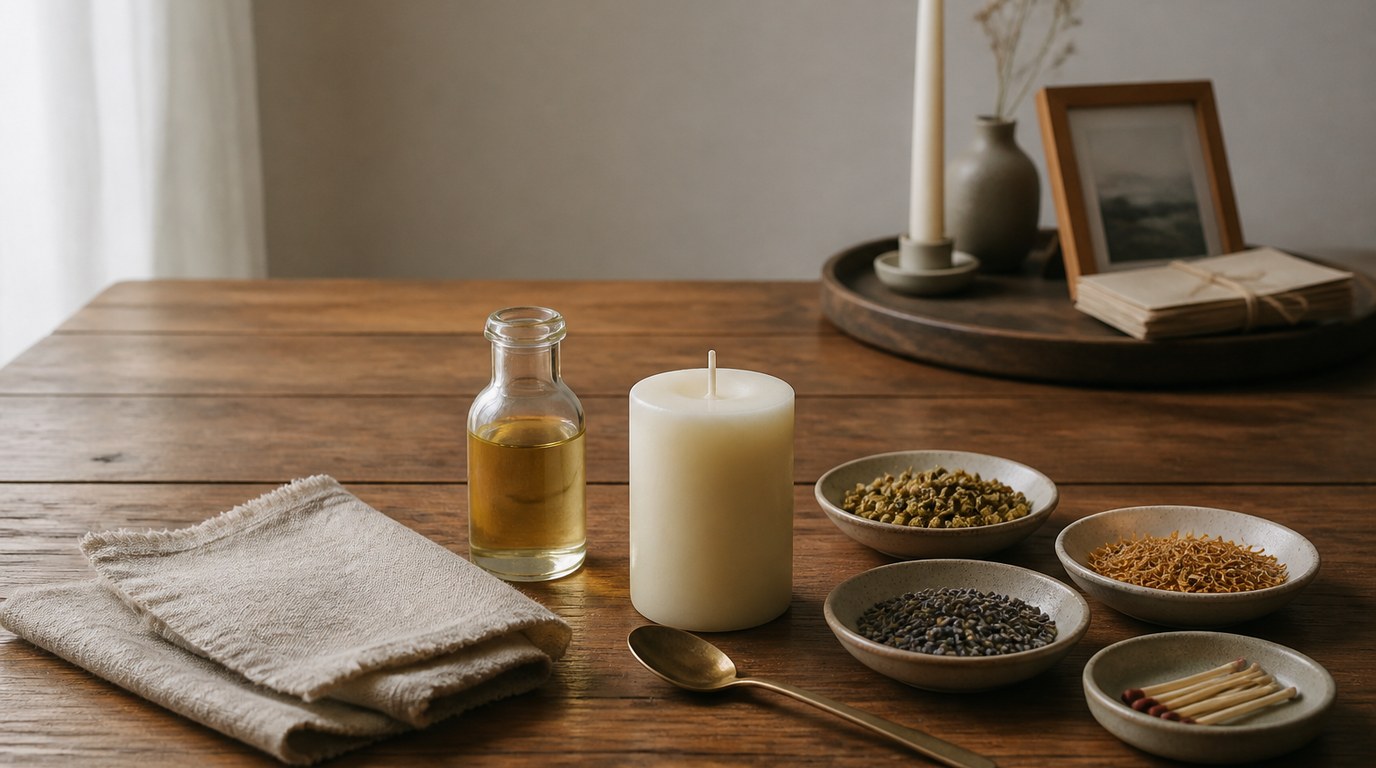
Gather your supplies before you begin so the ritual is calm and uninterrupted. You may need:
- A candle suited to your purpose
- A candle holder, fire-safe plate, or heat-safe tray
- Ritual oil, olive oil, or another skin-safe oil
- A clean cloth or paper towel
- A carving tool, pin, or toothpick
- Optional herbs, powders, or incense ash
- Matches or a lighter
- A bowl of water, sand, or a snuffer for safety
Use only a tiny amount of oil and dry ingredients. If you are working at an ancestor altar, make sure offerings, photos, cloths, and papers are kept away from the flame.
Choose the Right Candle for the Work
Choose a candle that fits both your spiritual purpose and your practical setting. A small chime candle is good for short, focused work. A taper can be used for a longer ritual. A tealight is simple and contained. A glass jar candle is useful when you want a steady, protected burn.
Color can support the intention, but it is not the only factor. White is widely used when you are unsure, because it can stand for blessing, clarity, prayer, and general spiritual light. Most importantly, choose a candle you can burn safely.
Step 1: Cleanse the Candle and Your Space
Start by physically wiping the candle with a clean cloth to remove dust or residue. Then cleanse it spiritually in a way that fits your practice. You might pass it near incense smoke, pray over it, ring a bell, sprinkle a small amount of blessed water nearby, or simply hold it and breathe steadily.
Clean the working surface as well. Remove clutter, flammable items, and anything unrelated to the work. If using an ancestor altar, greet your ancestors respectfully before beginning.
Step 2: State the Intention Clearly
Before you carve or anoint, decide exactly what the candle is for. A clear intention gives the spellwork direction. Avoid vague wording such as “make everything better.” Instead, use a simple statement: “This candle is dressed for protection over this home,” or “This light is offered in honor of my well and loving ancestors.”
Speak the intention aloud if possible. If privacy is needed, whisper it or repeat it silently. Keep the wording respectful, focused, and realistic. The candle supports the work; it does not replace wise action.
Step 3: Carve Names, Symbols, or Words Into the Candle
Carving is optional, but it can help anchor the intention. Use a pin, toothpick, or small ritual tool. Do not use a large knife unless you can handle it safely.
You may carve a name, initials, a short phrase, a cross, a protective symbol, a heart, a spiral, a prayer word, or a date. For ancestor work, you might carve “blessing,” “peace,” or the name of a beloved ancestor if that is appropriate in your tradition.
Carve lightly. Deep cuts can crack thin candles or make them burn unevenly.
Step 4: Anoint the Candle with Oil
Place a small drop of oil on your fingers. You need far less than most beginners expect. The candle should be lightly coated, not dripping.
For drawing something toward you, such as blessing, love, clarity, or prosperity, many practitioners rub oil from the top of the candle toward the center, then from the bottom toward the center. For releasing, uncrossing, or banishing, some rub from the center outward toward both ends. Other traditions use different directions, so follow your lineage if you have one.
As you anoint, repeat the intention. Move slowly and deliberately. If the candle becomes slippery, wipe away excess oil before continuing. Too much oil can create smoke, uneven burning, or flare-ups.
Step 5: Add Herbs, Powders, or Other Ingredients Sparingly
If you use herbs or powders, apply them lightly. Roll the oiled candle through a very small pinch, or sprinkle a thin line onto the candle and press gently. Avoid coating the wick or piling herbs near the flame.
Choose ingredients that match the work, but do not overcomplicate it. Rosemary, bay, cinnamon, lavender, frankincense powder, or ancestor altar ash may be used in some practices, but only when safe and appropriate.
Large dried leaves, loose piles of herbs, glitter, and synthetic decorations are fire hazards. Less is safer and often more spiritually focused.
Step 6: Place the Candle on the Altar or Working Surface
Set the dressed candle in a stable holder on a heat-safe surface. Make sure it stands straight and cannot tip. If using a plate or tray, choose ceramic, glass, stone, or metal rather than plastic or wood.
Spiritually, place the candle where it belongs in the work. On an ancestor altar, it may sit near water, flowers, or photos, but never so close that heat can damage them. For protection work, it might be placed near the entrance side of the altar or beside a written petition.
Step 7: Light the Candle and Begin the Spellwork
When everything is ready, light the candle with attention. Do not rush this moment. You may say a prayer, call on your ancestors, speak your petition, chant, sit in silence, or meditate on the flame.
Keep your focus on the purpose of the candle. If thoughts wander, gently return to the intention. Some people let the candle burn all the way down in one sitting; others burn it in sessions. If you extinguish it, use a snuffer if possible rather than blowing, unless your tradition says otherwise.
How to Know the Candle Is Properly Dressed
A properly dressed candle feels intentional, clean, and safe to burn. It should have a light coating of oil, clear markings if you carved it, and only a small amount of herbs or powders. It should sit securely in its holder without wobbling.
Before lighting, check three things: the wick is clear, the candle is not dripping oil, and no loose ingredients are gathered near the flame. Spiritually, you should be able to state exactly what the candle is for in one sentence. If you cannot, pause and clarify the intention.
Common Mistakes and Troubleshooting
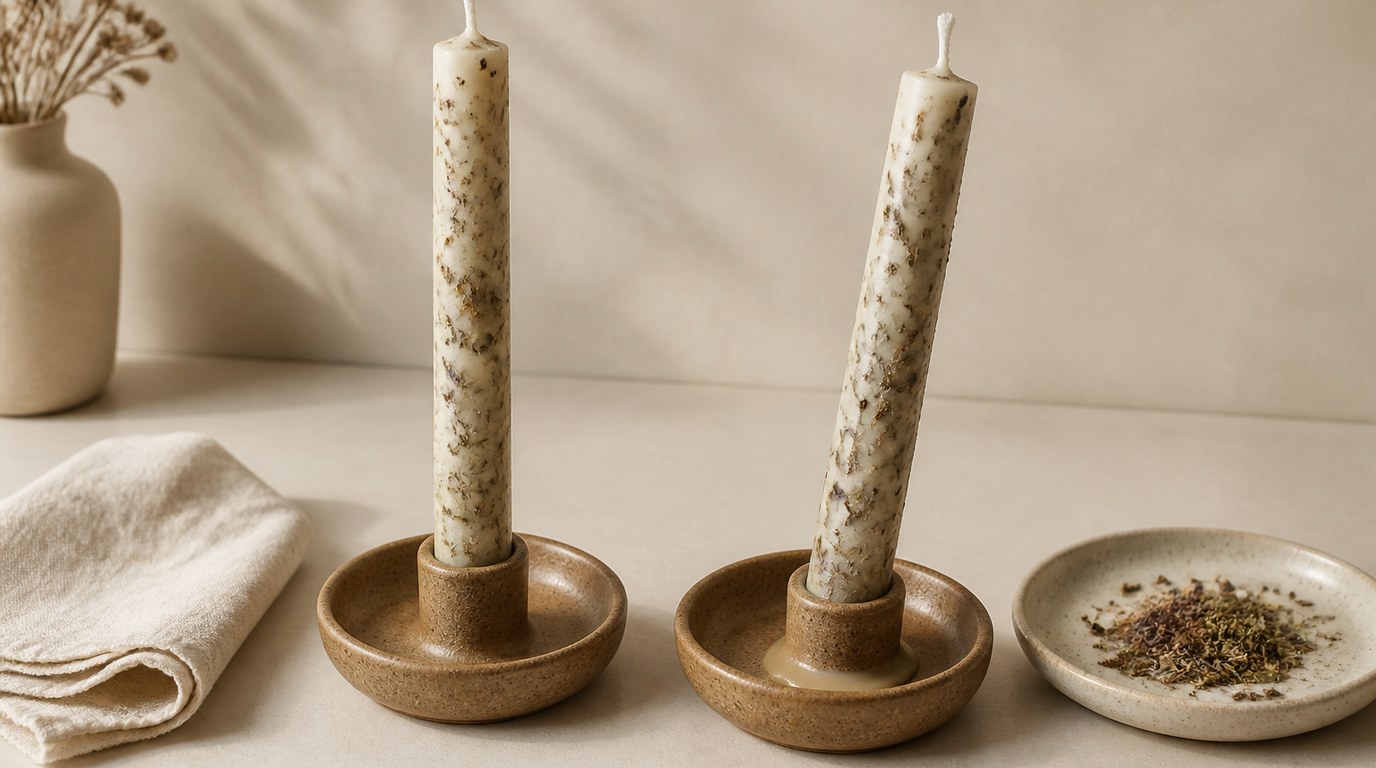
The most common mistake is using too much oil. If the candle feels wet, wipe it down. Another mistake is adding too many herbs, which can cause sparks or smoke. Scrape off excess before lighting.
If the candle will not stand straight, do not force the work. Replace the holder or melt a little wax into the base to secure it. If the wick is buried under oil or herbs, clean it before lighting.
If your intention feels confused, stop and rewrite it. Candle dressing works best when the purpose is simple, direct, and spiritually grounded.
Safety Notes for Candle Spellwork
Never leave a burning candle unattended. Keep candles away from curtains, papers, altar cloths, dried flowers, loose herbs, alcohol, aerosols, and anything that can catch fire. Keep children and pets away from the working area.
Use fire-safe holders and place them on a stable surface. Do not burn heavily dressed candles inside enclosed jars unless the candle was made for that container. If the flame grows too high, smokes heavily, cracks glass, or looks unsafe, extinguish it immediately.
FAQ
Can I Dress a Candle Without Oil?
Yes. You can dress a candle with prayer, breath, carving, written intention, or smoke cleansing without using oil. Oil is traditional in many practices, but it is not required. If you avoid oil, keep the candle clean, focused, and clearly dedicated to the work.
What Direction Do I Rub Oil on a Candle?
Many practitioners rub oil toward the center when drawing something in and away from the center when releasing or banishing. Some traditions use top-to-bottom or bottom-to-top methods. If you follow a specific lineage, use its method. Otherwise, choose one direction and apply it consistently.
Can I Dress a Glass Jar Candle?
Yes, but dress it carefully. You can anoint the top wax lightly, avoiding the wick, or rub oil on the outside glass while praying your intention. Do not add large herbs to the top of a jar candle, because they can catch fire or overheat the glass.
Do I Have to Use Herbs When Dressing a Candle?
No. Herbs are optional. A candle dressed only with intention and a small amount of oil can be complete. If you do use herbs, use a tiny pinch and keep them away from the wick. Safety matters more than making the candle look heavily decorated.
Can I Dress a Candle for Ancestor Work?
Yes. For ancestor work, keep the dressing respectful and simple. You might use white oil, olive oil, prayer, a carved name, or words such as “peace,” “blessing,” or “guidance.” Place the candle safely on the ancestor altar and keep offerings, photos, and cloth away from the flame.