
Imbolc is a seasonal threshold in witchcraft: the point where winter is still present, but the first signs of returning light, warmth, and growth begin to stir. Many witches observe it through candles, cleansing, hearth rituals, seed blessings, devotional work, and simple home offerings.
In practical terms, Imbolc is a time to clear what has become stagnant, tend the inner flame, and prepare for what will grow later in the year. You do not need elaborate tools to honor it. A candle, clean water, a small altar, a quiet blessing, or an offering to ancestors and household spirits can be enough.
What Imbolc Means in Witchcraft
In witchcraft, Imbolc is often understood as a festival of first light, purification, and preparation. It falls around February 1 in the Northern Hemisphere, between the winter solstice and spring equinox. The season is not yet spring, but it carries the promise of spring.
The mental model is simple: Imbolc is the spark before the flame. It is not usually about dramatic action or full harvest. It is about noticing what is beginning beneath the surface. In ritual work, that may mean cleansing your home, renewing your altar, blessing seeds or plans, and choosing what deserves your care as the year slowly wakes.
Core Imbolc Themes in Witchcraft
The strongest Imbolc themes are light, cleansing, fertility, inspiration, hearth, healing, and renewal. These themes can be spiritual, practical, or both.
Light is honored through candles, sunrise observance, or prayers for clarity. Cleansing may involve sweeping, smoke cleansing, salt water, sound, or simply removing clutter from a sacred space. Fertility does not have to mean literal childbirth; it can mean creative ideas, garden plans, study, business, healing, or emotional growth.
The hearth is another central theme. Even if you do not have a fireplace, your kitchen, dining table, stove, or main living space can function as the energetic hearth of your home. Imbolc asks: What flame are you protecting? What needs warmth? What is ready to begin, even quietly?
Imbolc Correspondences for Ritual Work
Correspondences help translate seasonal meaning into ritual action. Use them as supports, not strict rules. Choose what fits your home, culture, safety needs, and spiritual practice.
| Imbolc Meaning | Practical Witchcraft Action |
|---|---|
| Returning light | Light a white, gold, or beeswax candle |
| Cleansing | Wash altar tools, sweep floors, refresh linens |
| New beginnings | Bless seeds, journals, plans, or creative tools |
| Hearth and home | Make bread, tea, soup, or a simple household blessing |
| Inspiration | Meditate with a candle flame or write intentions |
| Healing | Offer water, milk, honey, or gentle prayers |
Common Imbolc colors include white, cream, pale yellow, green, and soft red. Useful herbs may include rosemary, lavender, bay, chamomile, and angelica. Always check safety before burning herbs, especially around pets, children, pregnancy, or respiratory sensitivities.
How to Set up an Imbolc Altar
An Imbolc altar can be small, temporary, and practical. Start by cleaning the surface. This act is part of the ritual: you are making room for fresh energy. A shelf, tray, windowsill, bedside table, or corner of an ancestor altar can work.
Add one central symbol of light, such as a candle, lantern, or LED candle. Then add signs of renewal: seeds, a small bowl of water, fresh milk, white flowers, evergreen sprigs, or a handwritten intention. If you work with ancestors, include a photo, name card, or inherited object, then place the Imbolc items around it with respect.
Keep the altar balanced. Too many objects can make the energy feel crowded. A simple arrangement might be: one candle, one bowl of water, one offering, and one written prayer. Refresh offerings regularly and remove food before it spoils.
Simple Imbolc Ritual for Cleansing and Renewal
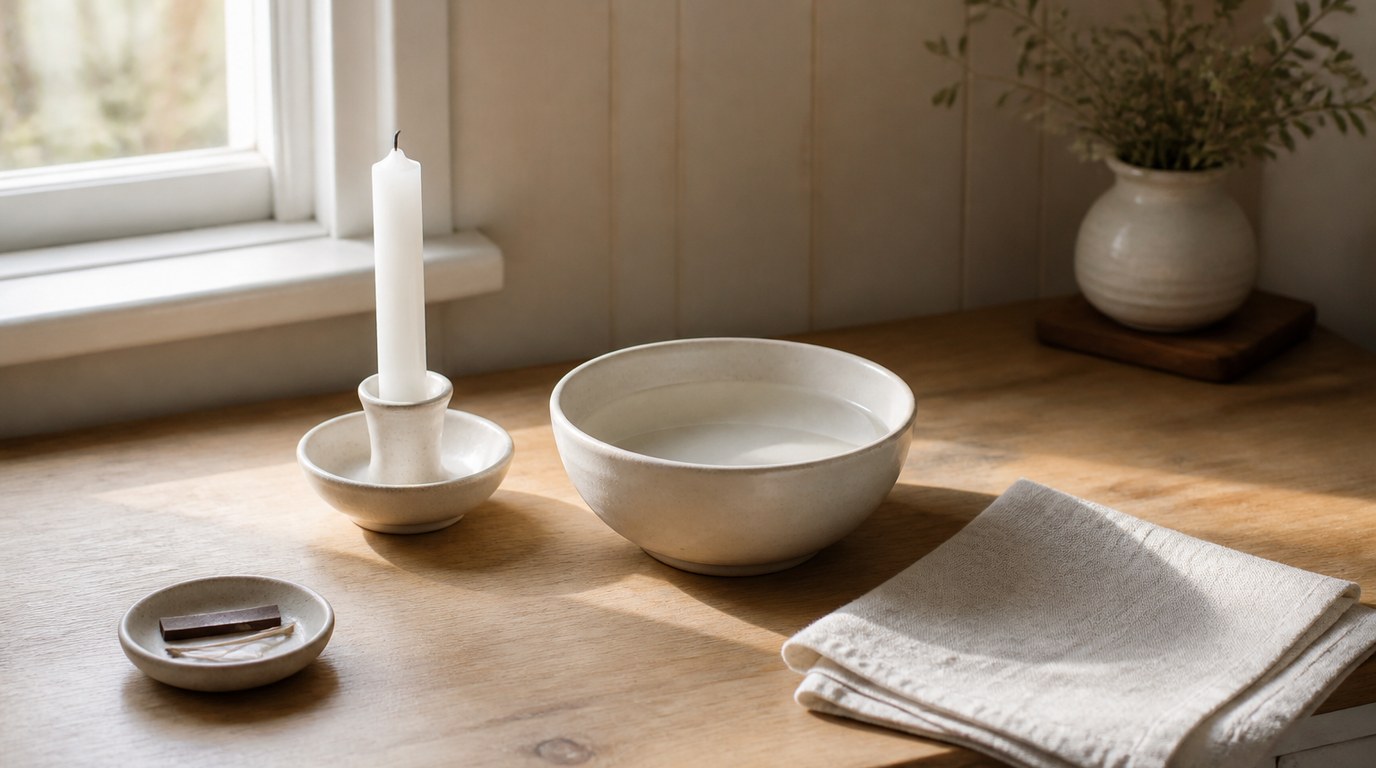
This ritual can be done with a candle, a bowl of water, and a few quiet minutes.
First, clean the area where you will sit or stand. Wash your hands and place the bowl of water near the candle. If you use flame, put the candle on a stable, heat-safe surface and never leave it unattended. An LED candle is perfectly acceptable.
Light the candle and say: “At this threshold of returning light, I welcome clarity, cleansing, and renewal.”
Dip your fingers into the water and touch your forehead, heart, and hands. Say: “May my thoughts be clear. May my heart be steady. May my actions support what is growing.”
Now name one thing you are releasing and one thing you are tending. Keep it realistic. For example: “I release the habit of ignoring my rest. I tend my health with small daily care.”
Sit quietly with the candle for a few breaths. When finished, thank any spirits, deities, ancestors, or guardians you invited. Pour the water at the base of a plant, into the earth, or down the drain with gratitude.
Imbolc Candle Magic and Hearth Practices
Candle magic is one of the simplest ways to work with Imbolc. Choose one candle for one purpose: clarity, healing, courage, creativity, or household peace. Dress it with a tiny amount of oil if you safely use oils, or simply hold it between your hands and speak your intention into it.
A hearth practice can be equally simple. Clean your stove, bless your kitchen, make tea, bake bread, or stir soup clockwise while praying for warmth and protection. If your “hearth” is a desk, studio, or shared room, bless that space as the place where your daily life is sustained.
Always treat fire as sacred and physical. Keep candles away from fabric, pets, dried herbs, and drafts.
Working with Brigid at Imbolc
Brigid is strongly associated with Imbolc in many modern pagan and witchcraft practices, especially through themes of flame, poetry, healing, smithcraft, fertility, and sacred wells. Some honor her as a goddess, some as a saint, and some through cultural or family tradition.
If you choose to work with Brigid, do so respectfully. Learn from reliable sources, avoid claiming one universal way to honor her, and be mindful that living traditions may hold specific meanings.
A simple devotional act might include lighting a candle, offering fresh water or milk, writing a poem, praying for healing, or asking for help tending your creative and household flame.
Ancestor and Household Offerings for Imbolc
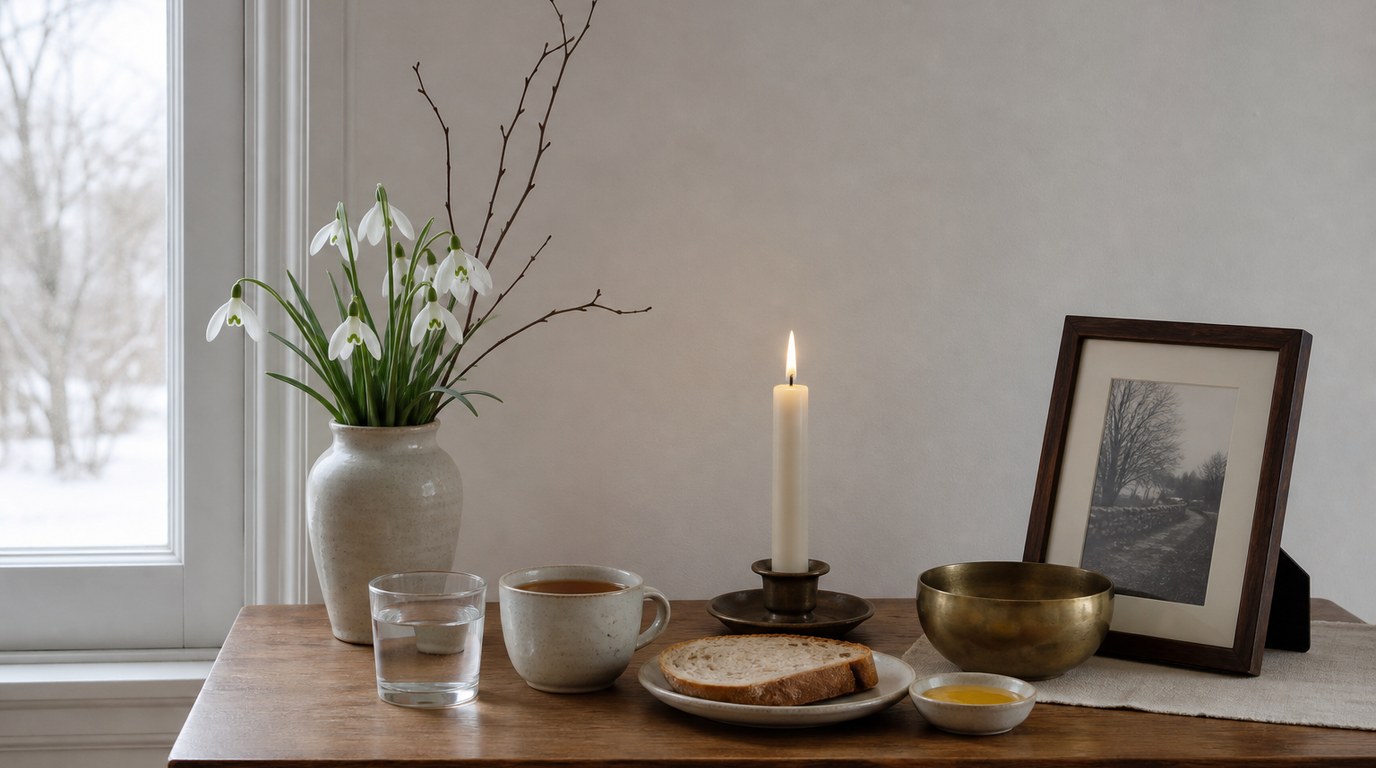
Imbolc is a meaningful time to refresh ancestor and household altars. Clean the altar space, replace old water, dust frames or objects, and speak the names of beloved dead if that is part of your practice.
Offerings can be simple: clean water, milk, bread, butter, honey, tea, or a candle lit in gratitude. You might say, “May this home be warmed, protected, and guided as the light returns.”
For household spirits or the spirit of the home, offer care through action: repair something small, sweep the entrance, wash the threshold, or prepare a nourishing meal.
Modern Ways to Celebrate Imbolc If You Have Limited Time
If you have limited time, choose one clear act instead of trying to perform a full ritual. Light a candle at breakfast. Open a window for one minute. Clean your altar cloth. Put fresh water on your ancestor altar. Write one intention for spring. Make tea and bless your home.
Imbolc works well through small, repeated gestures. A five-minute ritual done with attention can be more powerful than an elaborate ceremony done with stress.
FAQ
What Should a Beginner Know First About Imbolc and Witchcraft?
Begin with the core meaning: Imbolc marks returning light, cleansing, and quiet renewal. You do not need complex tools or advanced knowledge. A candle, clean space, simple prayer, and honest intention are enough to participate in the season respectfully.
What Matters Most When Evaluating Imbolc and Witchcraft?
Look for practices that match the season’s energy and your actual life. Good Imbolc work should feel cleansing, warming, and preparatory. It should help you tend what is beginning, not pressure you into dramatic change before you are ready.
What Mistakes Should Readers Avoid with Imbolc and Witchcraft?
Avoid overcomplicating the ritual, leaving candles unattended, copying cultural practices without care, or using offerings you cannot maintain safely. Also avoid treating Imbolc as full spring. It is a threshold: a time for preparation, not forced blooming.
What Is the Next Logical Step After Learning About Imbolc and Witchcraft?
Choose one practice and do it simply. Set up a small Imbolc altar, perform a cleansing ritual, light a candle for renewal, or refresh your ancestor offerings. Afterward, notice what feels lighter, clearer, or ready for gentle care.