
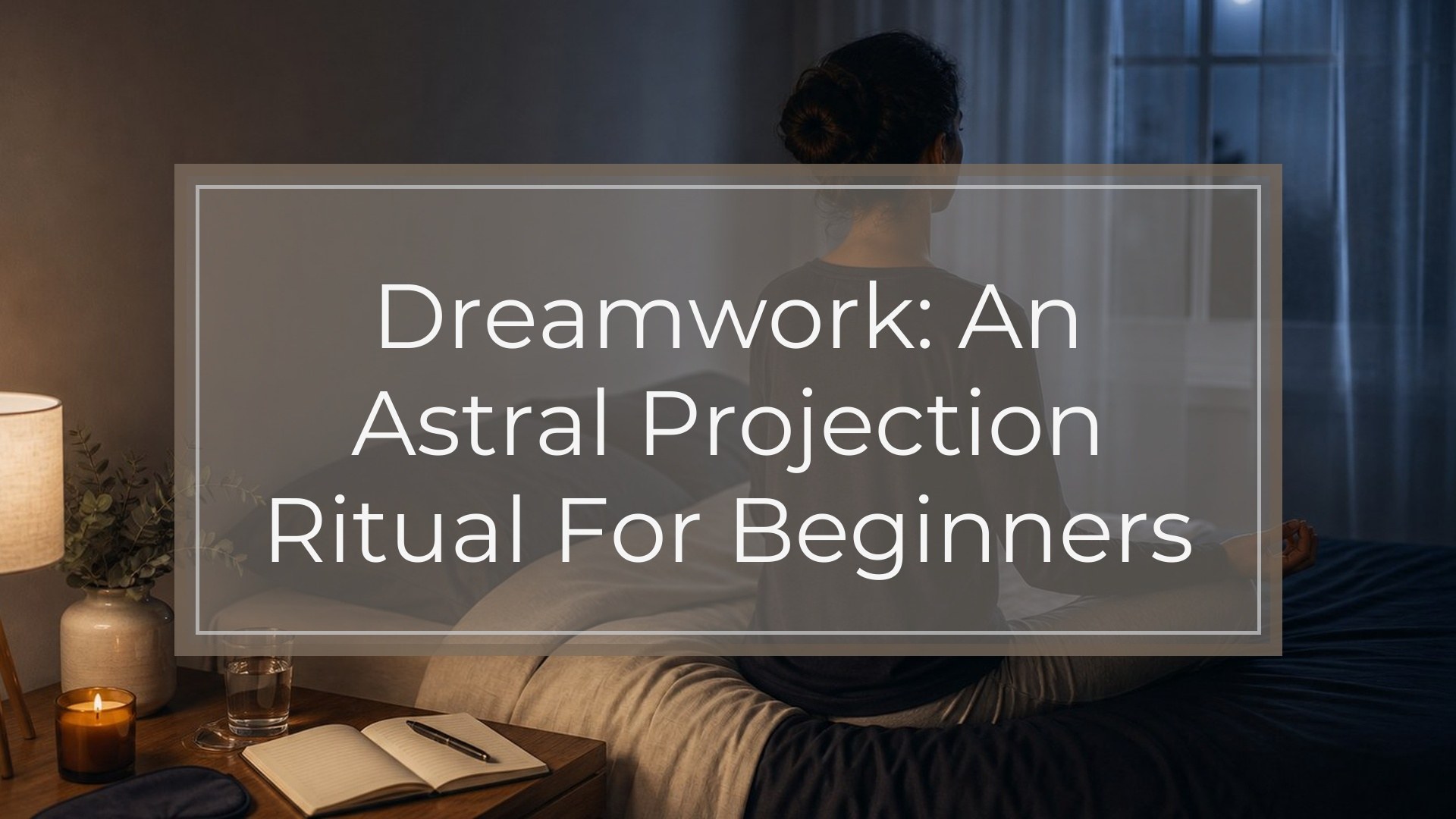
Astral projection dreamwork is a gentle ritual practice that uses sleep, trance, visualization, and spiritual intention to explore the subtle body and the dream realm. For beginners, the goal is not to force an out-of-body experience on the first night. The goal is to prepare a calm space, protect your energy, enter a relaxed dreamlike state, practice a simple separation visualization, and record what happens.
Approach this as reflective spiritual work. Some nights may bring vivid dreams, body vibrations, floating sensations, ancestral messages, or symbolic imagery. Other nights may bring only deep rest. Both can be useful. Consistency, safety, and honest journaling matter more than dramatic results.
What You Need Before You Start
Choose a night when you are not rushed, emotionally overwhelmed, intoxicated, or sleep-deprived. Astral projection dreamwork works best when your body feels safe enough to relax and your mind is clear enough to remember the experience.
Prepare these items before you begin:
- A clean bed, mat, or reclining chair
- A journal and pen within reach
- A glass of water
- A small candle or soft lamp, if safe to use
- Optional incense, oil, or cleansing smoke
- A protective object, such as a crystal, prayer card, charm, or ancestor-related item
- A simple intention written in one sentence
If you keep an ancestor altar, you may place a small glass of water, a white candle, or a respectful offering there before the ritual. Keep this simple. This practice should feel grounded, not performative.
Your intention should be clear and safe. For example:
“I enter dreamwork with protection, clarity, and guidance for my highest good.”
Avoid intentions like “I must leave my body tonight” or “Show me everything.” Pressure can create anxiety, and anxiety can disturb both sleep and spiritual perception.
Set boundaries before beginning. You might say aloud:
“I welcome only benevolent guidance, loving ancestors, and helpful spiritual insight. All else must leave.”
Practical caution: do not use this ritual while driving, bathing, cooking, or doing anything that requires alertness. Do not practice if you are in a mental health crisis or feel unable to distinguish dreams, symbols, and waking reality. In that case, choose grounding, prayer, rest, or professional support instead.
Step 1
Prepare the room, your body, and your spiritual boundary.
First, tidy the immediate space around your bed or practice area. You do not need a perfect room, but remove clutter from the floor, silence notifications, dim harsh lights, and create a feeling of privacy. If you use cleansing smoke, sound, or prayer, move through the room slowly and say:
“This space is calm, protected, and prepared for clear dreamwork.”
Next, prepare your body. Drink a little water, use the bathroom, loosen tight clothing, and lie down comfortably. Keep your journal close enough that you can write without standing up. If you use a candle, place it safely away from fabric and extinguish it before sleeping unless it is in a secure devotional setting you already know how to maintain safely.
Now anchor your attention. Place one hand on your chest and one on your lower belly. Breathe in through the nose for a count of four, hold gently for two, and exhale for six. Repeat this seven times. With each exhale, release the day: conversations, tasks, worries, and expectations.
When your breathing slows, speak your intention. Keep it brief:
“I ask for protected dreamwork and gentle astral awareness. May I remember what is useful and return fully to my body.”
If you work with ancestors, you may add:
“Beloved well ancestors, guide me only in ways that are loving, clear, and aligned with my wellbeing.”
Do not demand signs. Invite guidance.
Begin a body relaxation scan. Start at your feet and silently say, “My feet are relaxed.” Move to the calves, knees, thighs, hips, belly, chest, shoulders, arms, hands, neck, jaw, eyes, and crown. Let each area become heavy.
If thoughts interrupt, do not fight them. Label them “thinking” and return to breath. This is part of the ritual, not a failure. The first stage of astral projection dreamwork is learning to remain aware while the body becomes deeply still.
Step 2

Enter the dreamlike state and practice gentle separation.
Once your body feels heavy and your mind feels soft, imagine a subtle version of yourself resting inside your physical body. Do not strain to see it. Sense it as light, warmth, mist, or awareness. Continue breathing slowly.
Now choose one beginner visualization:
- The rope method: Imagine a soft cord or rope above you. Without moving your physical arms, picture your subtle hands reaching up and gently pulling your awareness upward.
- The floating method: Imagine your subtle body becoming lighter, like it is rising a few inches above your physical body.
- The doorway method: Imagine a peaceful doorway at the edge of sleep. See yourself standing, opening it, and stepping into a safe dream landscape.
Use only one method per session. Switching methods too often can scatter your focus.
As you visualize, you may notice sensations: tingling, buzzing, swaying, rocking, warmth, pressure, or the feeling that the room has changed size. Stay calm. These sensations can happen during deep relaxation and the transition into sleep. Let them pass through you without chasing them.
Caution: if you feel panic, heaviness, disturbing imagery, or a sense of being unsafe, stop the projection attempt immediately. Wiggle your fingers and toes, touch your chest, say your name, and open your eyes. Drink water and turn on a light. A safe ritual is one you can end at any time.
If the practice continues peacefully, repeat your intention silently:
“Protected, clear, gentle.”
Allow yourself to drift. You may remain aware, slip into a lucid dream, dream normally, or fall asleep. Any of these outcomes can become dreamwork if you record them.
Before sleep fully takes over, give yourself a memory command:
“When I wake, I remember what matters.”
If you sense yourself separating, floating, moving, or entering a dream scene, do not force movement. Look for one stable detail: a color, a sound, a guide, a doorway, a landscape, or your own hands. Let the experience unfold slowly. If you meet a presence, ask one simple question: “Are you here for my highest good?” If the answer feels unclear or unsettling, return by focusing on your breath and body.
How to Check the Result

Check the result immediately after waking. Do not reach for your phone first. Stay still for a few breaths and ask, “What do I remember?” Then write whatever comes: images, words, emotions, body sensations, colors, people, places, animals, symbols, or fragments.
A successful beginner session may include:
- Deeper relaxation than usual
- Vivid or symbolic dreams
- A floating, buzzing, or rocking sensation
- Awareness while falling asleep
- A dream where you knew you were dreaming
- A meeting with a guide, ancestor, or symbolic figure
- A strong message, phrase, or emotional release
- Peaceful sleep and better dream recall
Do not measure success only by a full out-of-body experience. In dreamwork, increased recall and clearer symbols are real progress.
Review your notes later in the day. Circle repeated symbols, names, colors, locations, or feelings. Ask practical questions: Did the dream bring comfort? Did it reveal fear? Did it offer guidance? Did it feel loving, confusing, or draining?
Troubleshoot gently. If you remember nothing, shorten the ritual next time and focus on dream recall. If you fall asleep too fast, practice earlier in the evening or sit slightly upright. If you feel anxious, spend more time grounding and less time on separation visualization. If dreams become disturbing, pause astral work and return to protection, ancestor prayer, cleansing, and ordinary rest.
After each session, close the practice. Say:
“I return fully to my body and waking life. Thank you for any guidance received. This ritual is complete.”
Then drink water, touch the floor, and continue your day.
FAQ
Is Astral Projection the Same as Lucid Dreaming?
Not exactly. Lucid dreaming means you become aware that you are dreaming. Astral projection is usually described as awareness moving beyond the physical body. In practice, beginners may experience overlap: dream scenes, floating sensations, spiritual symbols, and conscious awareness during sleep.
Can Beginners Do an Astral Projection Ritual Safely?
Yes, if the ritual is gentle, grounded, and voluntary. Begin with protection, clear intention, relaxation, and journaling. Avoid force, fear-based methods, or practicing during emotional crisis. You should always feel free to stop, open your eyes, drink water, and ground yourself.
What If I Fall Asleep During the Ritual?
That is normal. Falling asleep does not ruin the ritual. The dream state is part of the practice. When you wake, write down any fragments you remember. Over time, this trains your mind to notice the doorway between waking, dreaming, and subtle awareness.
Should I Call on Ancestors During Astral Projection Dreamwork?
You may, if ancestor veneration is already part of your practice and feels respectful. Call only on well, loving, elevated ancestors, and set clear boundaries. A simple prayer for protection and guidance is enough. Do not demand contact or treat ancestors as tools.
How Long Does It Take to Experience Results?
Some people notice vivid dreams or body sensations within a few sessions. Others need weeks of steady practice before recall improves. Treat results as gradual. Practice two or three times a week, journal honestly, and value small signs of clarity, calm, and symbolic insight.