
To cleanse your home as a sacred space, begin by preparing the environment, then move through each room with clear intention, and finish by sealing the home with blessing and protection. The process does not need to be complicated: open windows, remove clutter, use smoke, sound, water, prayer, or another cleansing method, and speak aloud what you are releasing and inviting in. Work from the back of the home toward the front door so stagnant energy has a clear exit. Afterward, bless the thresholds, give thanks, and notice whether the home feels calmer, lighter, or more settled. A good cleansing is both spiritual and practical: it clears atmosphere, restores order, and helps you relate to your home with reverence.
Before You Begin: What Home Cleansing Is Meant to Do
A spiritual home cleansing is not just about “removing bad energy.” It is a ritual reset. You are clearing what feels stagnant, heavy, tense, or unwanted, while making room for peace, protection, clarity, and right relationship.
This practice works best when paired with ordinary care: tidying, airing out rooms, washing surfaces, and removing trash. Physical disorder can hold emotional weight, so do not skip the practical part.
Approach the ritual respectfully. You are not fighting your home; you are tending it. If you keep an ancestor altar, devotional space, or prayer corner, cleansing also helps maintain the home as a place where offerings, remembrance, and spiritual connection can rest cleanly.
Prerequisites: Gather Your Tools and Prepare Safely
Choose simple tools you can use with confidence. You do not need everything listed below; one or two are enough.
Useful cleansing tools include:
- A candle or small lamp
- Incense, herbs, resin, or another smoke source
- A bell, singing bowl, clapping, or spoken prayer
- A bowl of clean water, blessed water, or salt water
- A broom, cloth, or floor wash
- A small offering, such as flowers, cool water, or fresh fruit
- Matches, a fire-safe dish, and a way to extinguish smoke safely
Before you begin, check practical safety. Keep smoke away from children, pets, asthma, and sensitive lungs. Never leave candles or burning herbs unattended. If smoke is not safe in your home, use sound, water, prayer, or sweeping instead.
Prepare yourself too. Wash your hands, take three slow breaths, and state your purpose clearly: “I am cleansing this home for peace, protection, health, and blessing.”
Step 1: Open and Prepare the Space
Start by making the home ready to release what no longer belongs. Open at least one window or door, especially near the front of the home. This gives stale air and symbolic heaviness somewhere to go.
Next, do a quick physical reset. Throw away obvious trash, clear dishes, straighten the floor, and remove anything blocking doorways. You do not need a perfect house; you need a passable path and a sincere intention.
If you have an ancestor altar, shrine, or sacred corner, greet it before cleansing the rest of the home. Light a candle if safe, refresh water if needed, and say a brief prayer asking for guidance, protection, and blessing.
Then stand near the center of the home or the back room and speak your intention aloud: “Only peace, love, protection, and rightful blessings may remain here.”
Step 2: Cleanse Each Room from Back to Front
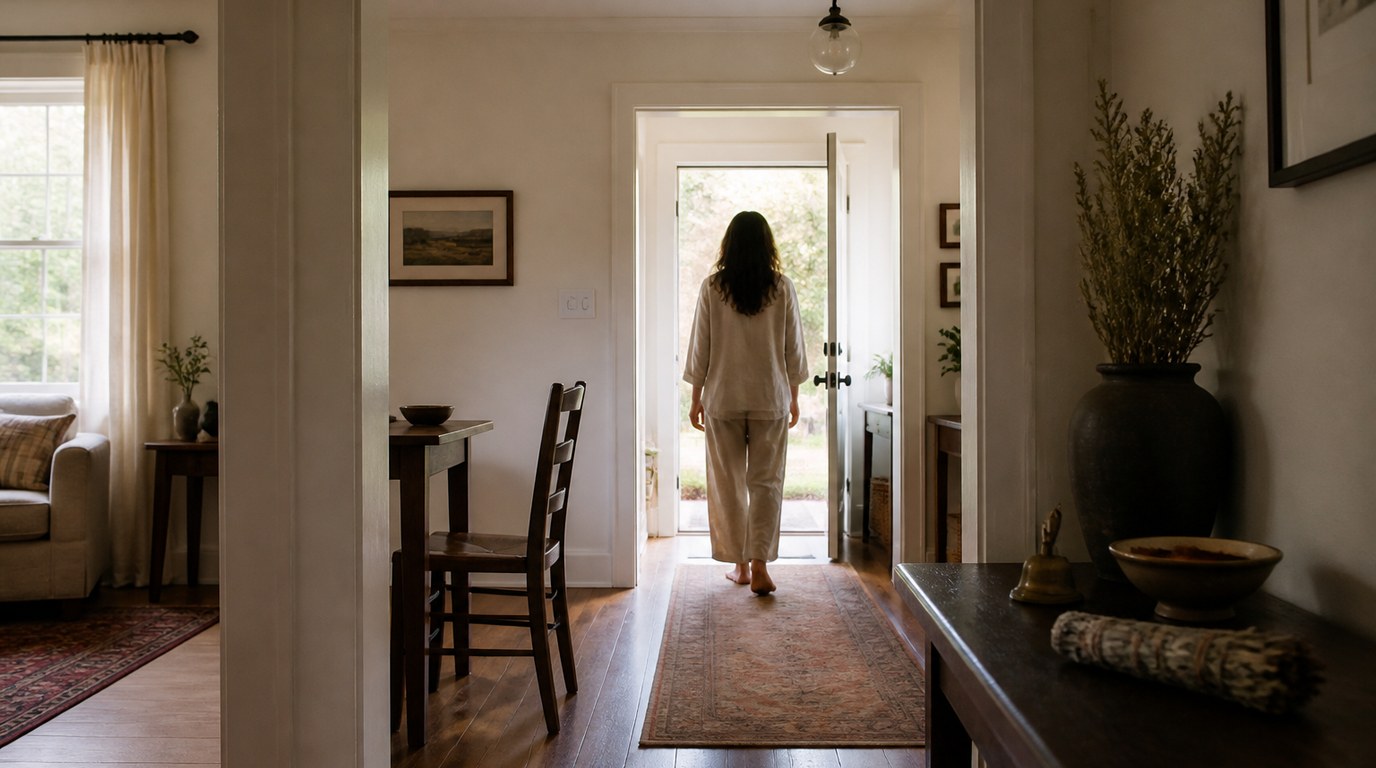
Begin in the farthest room from the main entrance. Move slowly and intentionally toward the front door. This back-to-front direction gives the ritual a clear flow: you are gathering heaviness and guiding it out.
In each room, follow this simple sequence:
- Enter with respect. Pause at the doorway and notice the feeling of the room.
- Cleanse the corners. Smoke, ring a bell, clap, sprinkle water, or pray into each corner, where stagnant energy often seems to collect.
- Move around the room. Walk clockwise if that feels natural for blessing, or counterclockwise if your tradition uses it for clearing. Consistency matters more than perfection.
- Speak what is leaving. Say: “All heaviness, fear, confusion, resentment, and harmful influence must leave this space now.”
- Invite what belongs. Say: “Peace, protection, health, clarity, and love are welcome here.”
- Finish at the doorway. Gesture outward, as though guiding unwanted energy out of the room.
Repeat this process in bedrooms, bathrooms, closets, hallways, kitchen, living spaces, and entryways. Do not rush through rooms that feel emotionally charged. Pause, breathe, and repeat the prayer if needed.
In the kitchen, bless nourishment and household stability. In bedrooms, bless rest, intimacy, and safety. In the bathroom, bless release, cleansing, and renewal. At the front door, direct everything unwanted out of the home.
Step 3: Seal the Home with Blessing and Protection
After clearing, do not leave the home feeling empty. Sealing the space helps establish what is allowed to remain and what is not welcome to return.
Stand at the front door. If you used smoke, let the final smoke drift outward. If you used sound, ring the bell or clap three times near the threshold. If you used water, touch a small amount to the doorframe, floor, or doormat.
Say aloud: “This home is sealed in peace, protected by blessing, and filled with what supports life, love, health, and right relationship.”
You can also mark major thresholds: front door, back door, bedroom doors, and the area near your altar. Use a small cross, circle, or simple touch of water according to your practice. Avoid damaging paint or surfaces.
Finally, give thanks. Thank your ancestors, guides, God, spirits, or the sacred presence you honor. Extinguish candles safely, dispose of ash respectfully, and wash your hands to close the work.
How to Know the Cleansing Worked
A successful cleansing usually feels noticeable but not always dramatic. Look for practical signs: the air feels fresher, rooms feel easier to enter, arguments quiet down, sleep improves, or you feel more willing to clean, rest, or pray.
You may also feel emotional release: tears, yawning, deep breaths, or sudden tiredness. That can be normal after focused ritual work.
Check the home again after a few hours or the next morning. If the space feels calmer, more open, and easier to inhabit, the cleansing has done its work. If one area still feels heavy, repeat the process there gently.
Common Mistakes and Troubleshooting
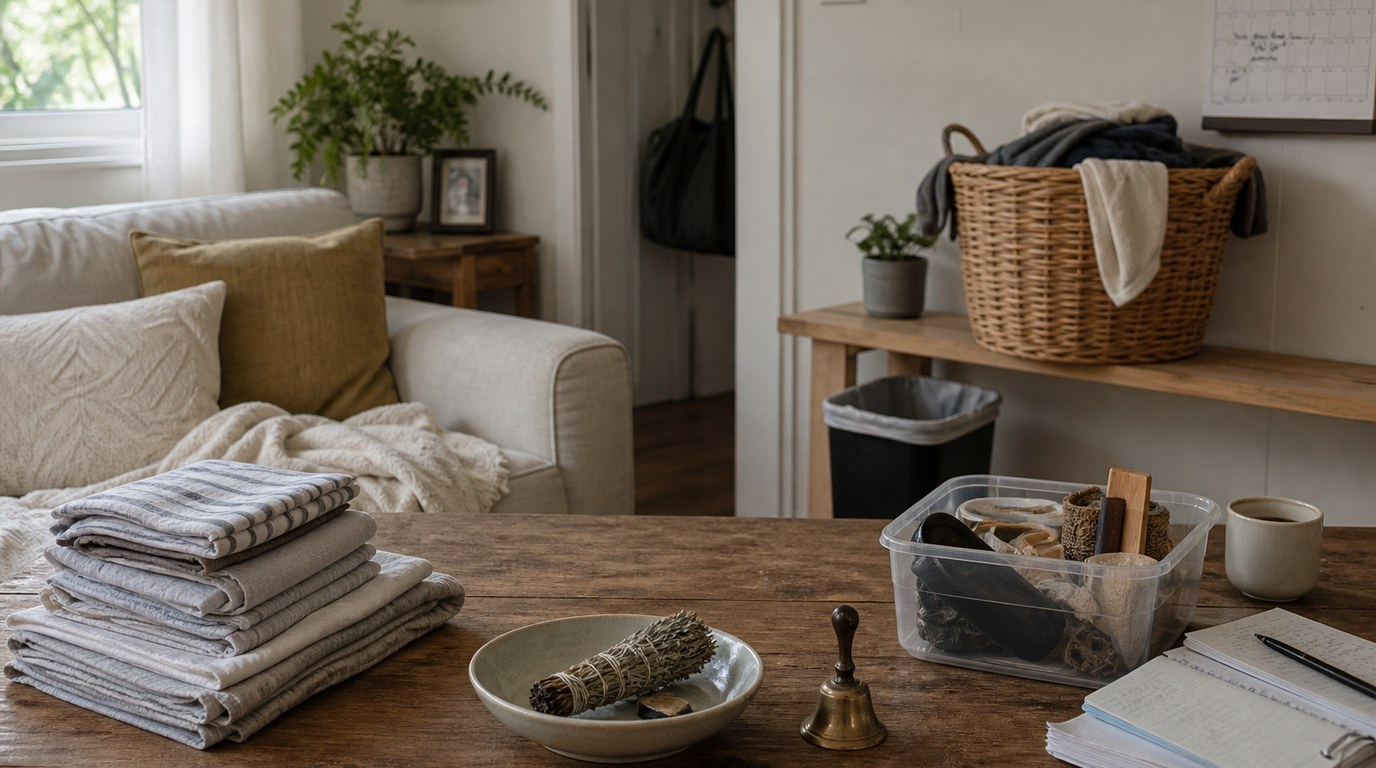
The most common mistake is using tools without intention. Smoke, bells, or water are not magic buttons; they work best when guided by clear prayer, attention, and follow-through.
Another mistake is cleansing around clutter without addressing it. If a room still feels heavy, remove trash, wash linens, open windows, and clear surfaces before repeating the ritual.
Do not ignore safety. Too much smoke can harm lungs, pets, and children. Use ventilation, small amounts, or smoke-free methods. Never carry loose embers through the house.
If the home feels unsettled after cleansing, you may have cleared but not blessed. Repeat Step 3 and invite peace, protection, and warmth. If the heaviness is tied to conflict, grief, or stress, support the ritual with practical action: conversation, rest, repair, or outside help.
A Simple Home Cleansing Script You Can Use
“May this home be cleansed of all heaviness, fear, confusion, and harm. May anything that does not belong here leave in peace and not return. I welcome protection, love, health, clarity, and blessing into every room. May this be a place of rest, respect, nourishment, and right relationship. With gratitude, this home is cleansed, blessed, and sealed.”
FAQ
How Often Should I Spiritually Cleanse My Home?
Cleanse your home whenever it feels heavy, tense, or stagnant. Many people cleanse monthly, at the new moon, after guests leave, after illness, after conflict, or before major life changes. Light maintenance can be simple: open windows, refresh altar water, pray, and tidy.
Can I Cleanse My Home Without Sage or Smoke?
Yes. Smoke is only one method. You can cleanse with bells, clapping, singing, prayer, sweeping, floor washing, salt water, fresh air, or light. Smoke-free cleansing is often better for apartments, children, pets, asthma, or shared households where scent may bother others.
Should I Cleanse Before or After Setting up an Ancestor Altar?
Cleanse before setting up an ancestor altar if possible. This prepares the home and gives the altar a clear, respectful foundation. After the altar is arranged, offer water, light, or prayer and ask your benevolent ancestors to bless and protect the space.
What Should I Say While Cleansing My Home?
Speak plainly and sincerely. Name what must leave, then name what is welcome. For example: “All heaviness and harm must leave. Peace, protection, health, and love are welcome here.” Your words do not need to be elaborate; they need to be focused.
What If My Home Still Feels Heavy After Cleansing?
First, check practical causes: clutter, stale air, dirty laundry, unresolved conflict, or exhaustion. Then repeat the cleansing in the heaviest area and seal it with blessing. If the feeling persists, seek support from a trusted spiritual elder, counselor, or community guide.