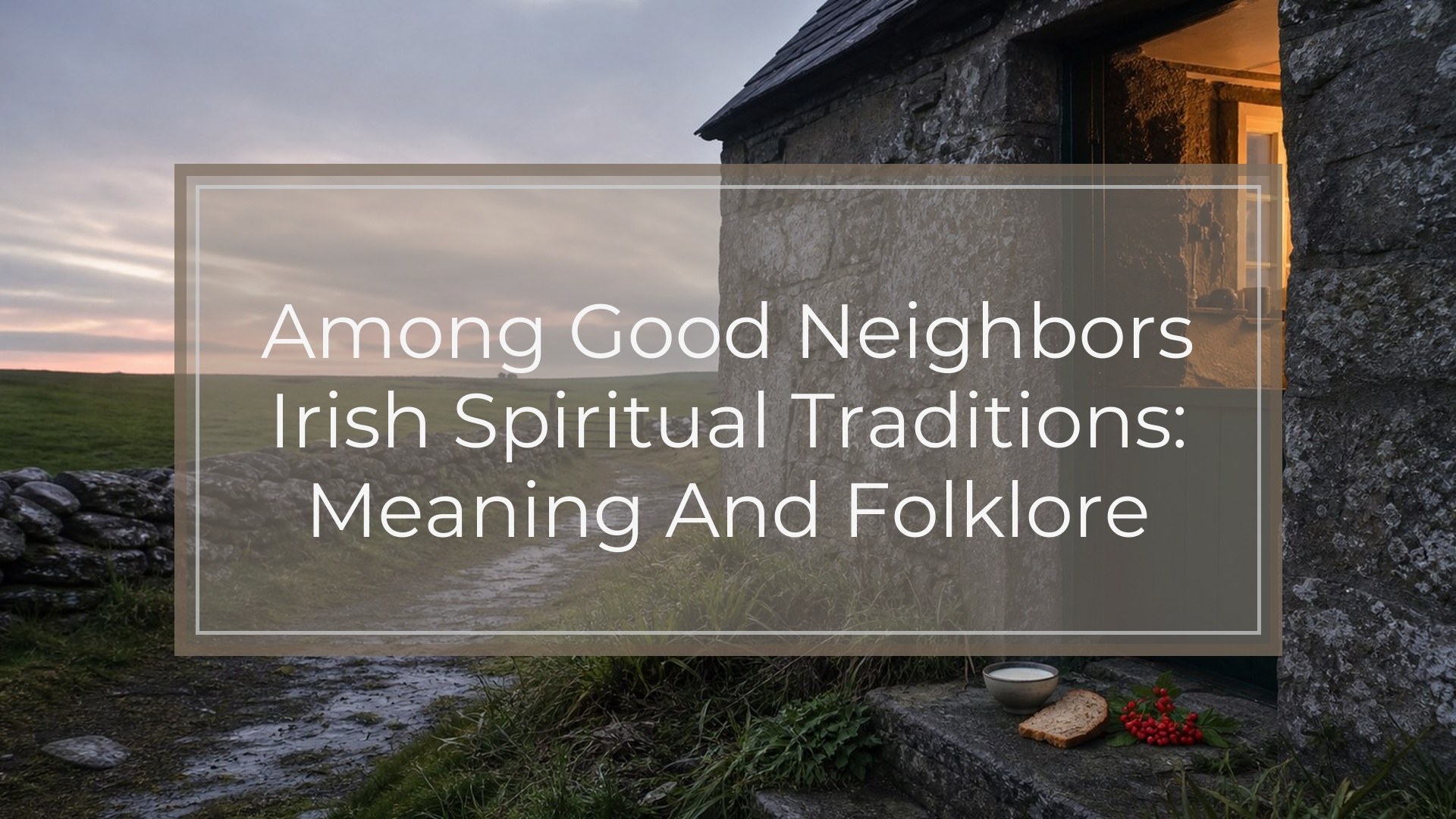
In Irish spiritual and folkloric traditions, “the Good Neighbors” is a respectful euphemism for the beings often called fairies in English, though that word can be too small or too casual for the older tradition. The phrase suggests caution, courtesy, and right relationship with unseen powers connected to land, place, and the Otherworld.
When people search for “among good neighbors Irish spiritual traditions,” they are usually asking about this respectful language and the worldview behind it. Some material comes from recorded folklore, some from regional custom, and some from modern spiritual interpretation. It is best approached with care: not as a single fixed doctrine, but as a living cluster of stories, warnings, practices, and meanings.
What Does “Among Good Neighbors” Mean in Irish Spiritual Traditions?
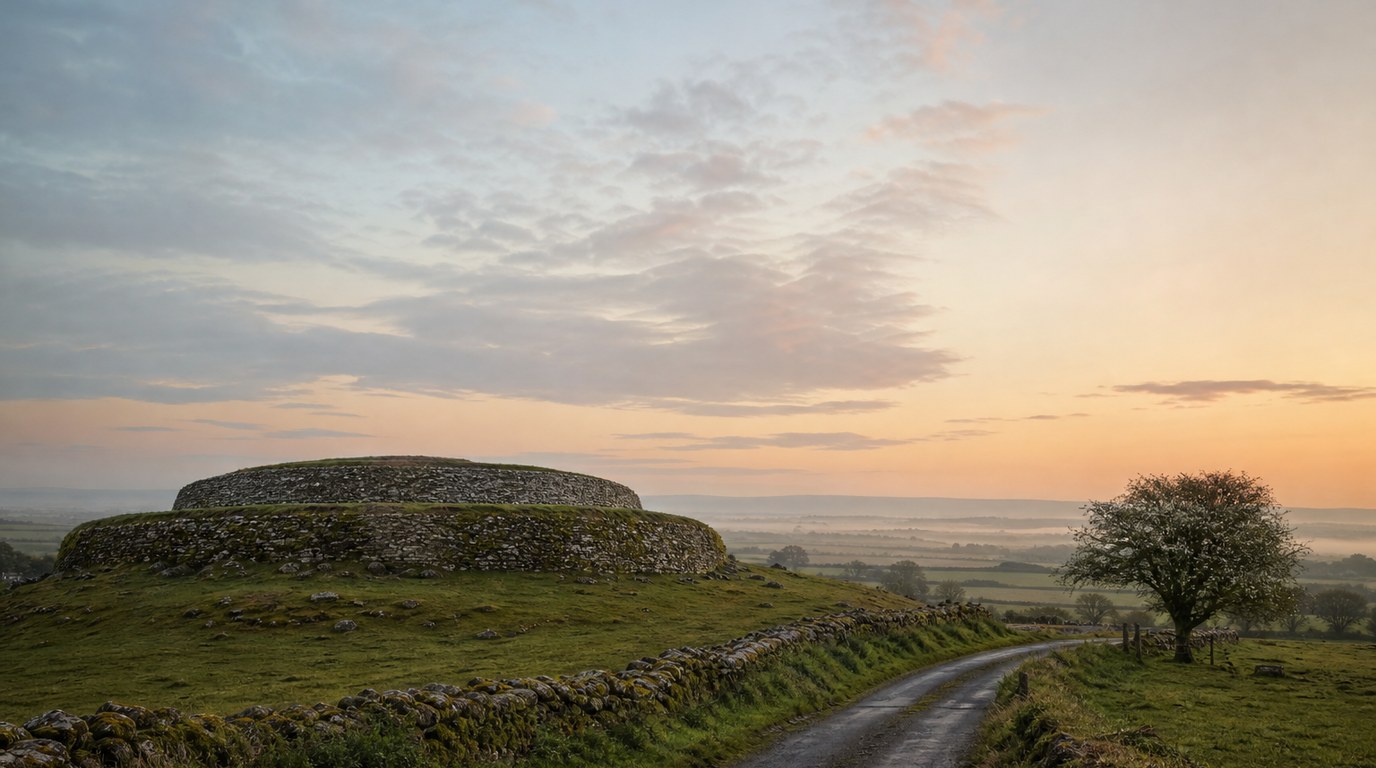
To be “among Good Neighbors” means to speak of, live near, or ritually acknowledge the presence of the unseen folk in a respectful way. In Irish folklore, these beings are associated with fairy forts, hills, old roads, certain trees, liminal times, music, illness, luck, and sudden reversals of fortune.
The phrase does not mean they are always “good” in the modern moral sense. It is closer to polite speech: a way of avoiding insult, attracting goodwill, and recognizing that some powers should not be treated carelessly. In spiritual interpretation, it can also mean living with humility toward the land and its hidden presences.
Who Are the Good Neighbors?
The Good Neighbors are most often understood as the fairy people of Irish tradition, also called by names such as the Aos Sí, “the people of the mounds,” or the Sidhe. In stories, they may appear as beautiful, dangerous, generous, offended, helpful, or unknowable.
Folklore does not present one tidy theology. In different accounts, they are described as ancient inhabitants, Otherworld beings, fallen angels, the dead, nature spirits, or a race parallel to humanity. These explanations reflect layers of Christian, pre-Christian, local, and literary imagination. A careful reader should not force them into one category. Their meaning shifts by region, storyteller, and context.
Why Respectful Names Matter
Irish folklore often uses indirect names for powerful beings. “The Good People,” “the Fair Folk,” “the Gentry,” and “the Good Neighbors” are examples of euphemistic speech. The purpose is not simply politeness; it is spiritual caution.
Naming can imply attention, and attention can imply relationship. In many traditions, words are not neutral. Speaking respectfully helps maintain boundaries and reduce offense. Whether one believes literally or symbolically, the language teaches an important lesson: approach mystery with manners. Do not mock what generations treated with care.
The Good Neighbors, the Land, and the Otherworld
The Good Neighbors are closely tied to place. Fairy forts, raths, ancient mounds, hawthorn trees, springs, crossroads, and certain fields appear often in Irish lore. These places are sometimes understood as thresholds, where the ordinary world and the Otherworld touch.
The Otherworld in Irish tradition is not simply “heaven” or “hell.” It may be imagined as beneath the hills, across the sea, within mounds, or beside our own world but hidden. These descriptions should be read as symbolic and narrative, not as a map. Still, they show a deep spiritual relationship between land, memory, story, and unseen presence.
Common Signs, Stories, and Themes in the Folklore
Stories of the Good Neighbors often include repeated motifs. A person hears unearthly music and follows it. A path or building disturbs a fairy place, bringing misfortune. A household leaves food out and receives blessing. A person insults the Good People and suffers illness, confusion, or bad luck. A midwife is taken to assist in an Otherworld birth. A child is said to be a changeling.
These are folklore themes, not guaranteed events. Their value is partly symbolic: they warn against arrogance, greed, trespass, and disrespect. They also preserve older ideas about hospitality, boundary-keeping, and the danger of ignoring forces beyond ordinary human control.
Offerings and Household Respect: What Can Be Said Carefully
Some modern practitioners leave offerings for the Good Neighbors, often milk, cream, butter, bread, oats, honey, or a small portion of a household meal. Folklore contains examples of food being set aside, though customs varied by place and family.
If you choose to do this, keep it simple and respectful. Place offerings outdoors in a clean, safe location, avoid littering, and do not leave anything harmful to animals. Do not bargain dramatically, demand favors, or make vows you cannot keep. A quiet word of respect is more fitting than theatrical command. In this tradition, restraint often matters more than display.
How This Relates to Ancestor Altars and Home Ritual
Ancestor altars and Good Neighbor practices are related through household reverence, but they are not the same thing. Ancestor veneration honors known and unknown dead of bloodline, lineage, community, or spiritual kinship. The Good Neighbors belong to a different category in most Irish folklore, even when some stories blur them with the dead.
For home ritual, it is wise to keep boundaries clear. An ancestor altar may hold photos, candles, water, prayers, and family offerings. Any respect paid to the Good Neighbors can be separate, simple, and land-facing rather than placed directly into ancestor devotion.
Common Misconceptions About the Good Neighbors
One misconception is that the Good Neighbors are cute, harmless fairies. Irish folklore is far more serious. They can bless, but they can also punish, confuse, or withdraw favor.
Another misconception is that all Irish people historically believed the same thing. Beliefs varied by county, family, era, and storyteller.
A third misconception is that modern practitioners can reconstruct an exact ancient system. Much of what we have comes through folklore collection, local memory, Christian-era interpretation, and later revival.
Finally, respectful language should not be mistaken for fear alone. It also reflects courtesy, humility, and an ethic of careful relationship.
A Respectful Way to Approach the Tradition Today
A respectful modern approach begins with learning before practicing. Read folklore collections, listen to Irish voices where possible, and notice regional differences. Treat the Good Neighbors neither as fantasy decorations nor as beings to control.
If you practice spiritually, keep gestures modest: a clean home, gratitude for the land, careful speech, and separate boundaries between ancestors, deities, spirits, and the Good Neighbors. You do not have to believe every story literally to honor the wisdom inside it. The heart of the tradition is respect for what is older, hidden, and not fully ours to command.
FAQ
Are the Good Neighbors the Same as Fairies?
In many English-language discussions, yes, the Good Neighbors are the beings commonly called fairies. However, “fairy” can sound childish or simplified. “Good Neighbors,” “Good People,” and Aos Sí better preserve the caution and respect found in Irish folklore.
Why Are They Called the Good Neighbors?
They are called the Good Neighbors as a respectful euphemism. The phrase avoids direct or insulting speech and frames them as nearby powers with whom humans should maintain courteous relations. “Good” does not always mean safe; it can mean respectfully addressed.
Can I Leave Offerings for the Good Neighbors?
You can, if you do so modestly and responsibly. Traditional-style offerings may include milk, cream, bread, oats, or honey. Leave them safely, avoid harm to wildlife, and do not make demands. A simple gesture of respect is more appropriate than a bargain.
Are the Good Neighbors Connected to Ancestor Worship?
They can overlap in some stories, but they are not identical to ancestors. Ancestor worship focuses on the honored dead of family, lineage, or community. The Good Neighbors are usually treated as a distinct class of Otherworld or land-associated beings.
Is Belief in the Good Neighbors Still Practiced Today?
Yes, in varied ways. Some people treat the Good Neighbors as living spiritual realities, some as cultural inheritance, and others as powerful symbols within Irish folklore. Modern practice differs widely, so it is best to avoid claiming one universal Irish belief.