
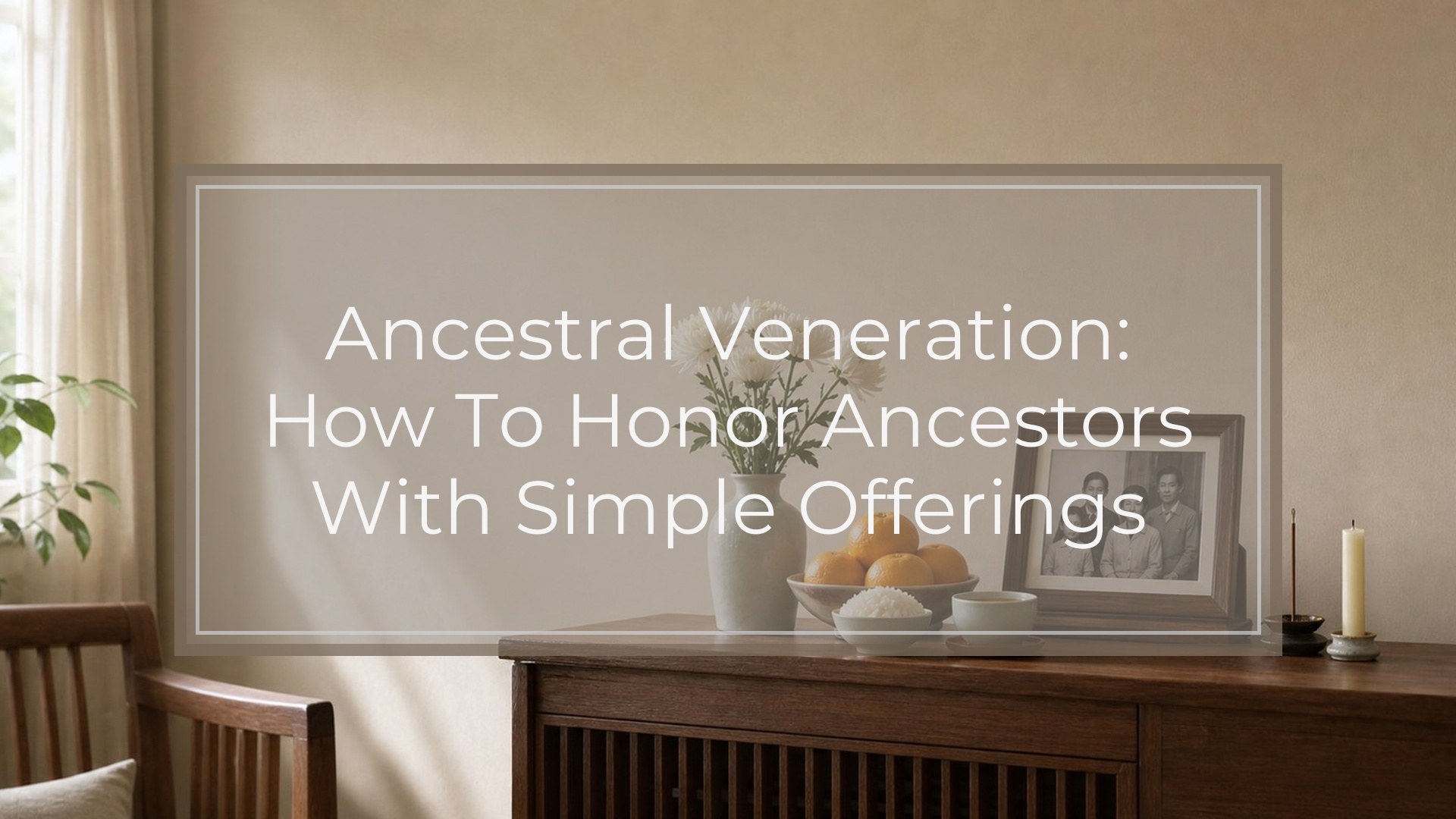
Ancestral veneration is the practice of honoring the people who came before you through remembrance, offerings, prayer, and consistent care. To begin, choose a clean and respectful place in your home, place a photo or name of your ancestors there, offer fresh water, light a candle safely, and speak to them with gratitude. You can add flowers, food, music, family objects, or prayers over time. Keep the practice simple, honest, and consistent. You do not need to perform elaborate rituals or claim certainty about spiritual messages. The goal is to build a respectful relationship with your lineage, remember their lives, ask for guidance, and live in a way that honors the gifts and lessons they left behind.
What Ancestral Veneration Means in Practice
Ancestral veneration means respectfully remembering, honoring, and relating to your ancestors. It is not automatically the same as worship, and it does not need to be fear-based. In many traditions, ancestors are approached as beloved dead, family guardians, elders, or spiritual relatives. In practice, this may look like keeping an altar, saying prayers, offering water, remembering family stories, tending graves, or making choices that heal and strengthen your lineage.
Before You Begin: Prerequisites for Honoring Ancestors
Before setting up an ancestor altar, decide your intention. Are you seeking remembrance, healing, guidance, gratitude, or reconnection? Begin with respect, not performance.
Choose a practice that fits your spiritual background, home, and emotional capacity. If your family history includes abuse, abandonment, or trauma, you do not have to honor harmful individuals directly. You may begin with distant well ancestors, unnamed ancestors, cultural ancestors, adoptive ancestors, or “those who wish me well.”
You will need a clean space, a small cup or bowl for water, a candle or safe light, and a regular time for tending. If you use fire, smoke, alcohol, or food, consider children, pets, allergies, ventilation, and local safety rules.
Simple Ancestor Offering Guide
Offerings do not have to be expensive. They should be clean, intentional, and appropriate to your home. Start with water, then add other offerings only when you can maintain them respectfully.
| Offering | Best for | Practical caution |
|---|---|---|
| Fresh water | Beginners, daily practice | Change regularly; do not let it stagnate |
| White candle or LED candle | Prayer, focus, remembrance | Never leave flame unattended |
| Flowers | Beauty, gratitude, celebration | Remove before decay |
| Cooked food | Family connection, feast days | Dispose of respectfully before spoiling |
| Coffee, tea, or alcohol | Personal ancestral favorites | Use only if appropriate and safe |
| Music, stories, or prayers | Emotional connection | Keep the tone respectful |
Step 1: Choose and Clean the Ancestor Altar Space
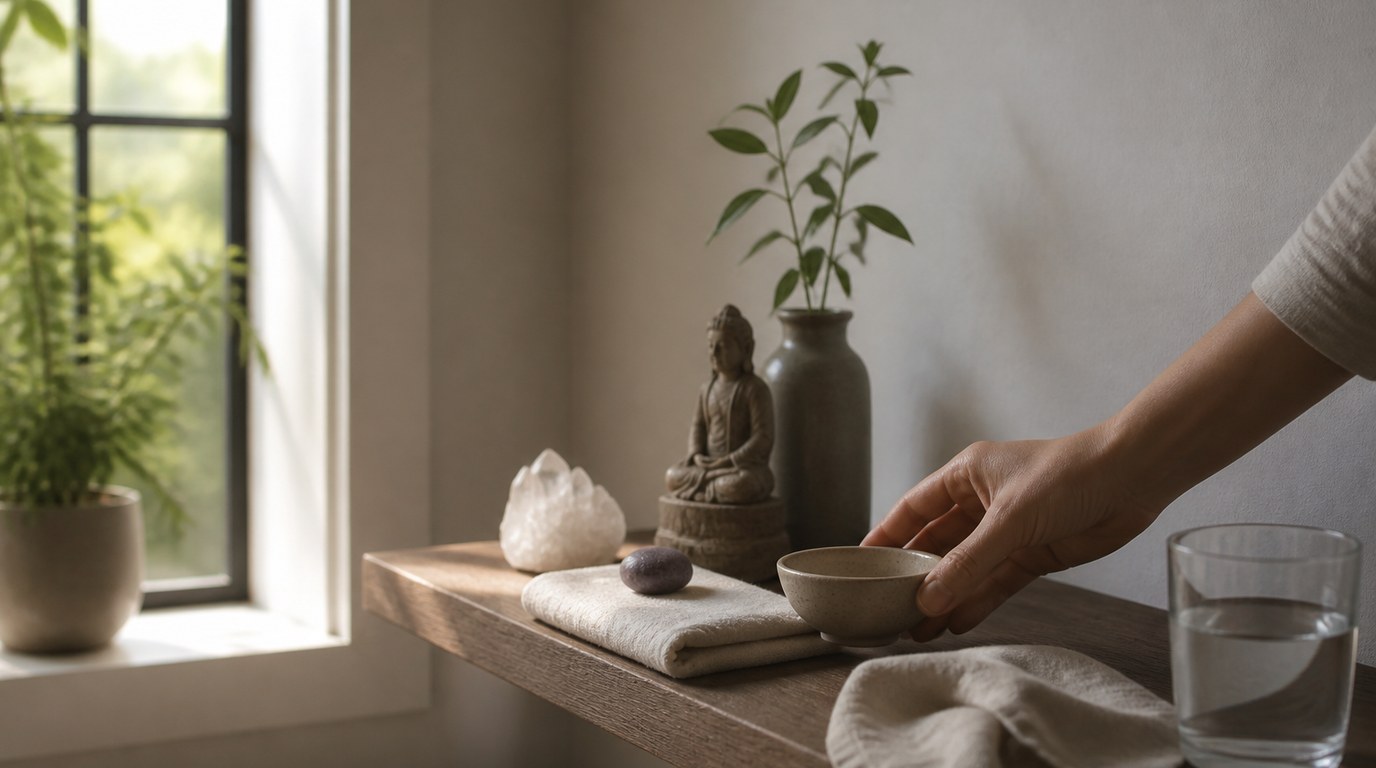
Choose a quiet, stable place where the altar will not be disturbed. A shelf, small table, dresser top, or dedicated corner can work. Clean the surface physically first: dust it, wipe it, and remove clutter.
Then set a spiritual tone. You might open a window, say a short prayer, ring a bell, or simply breathe deeply and state, “May this space be clean, peaceful, and dedicated to my well ancestors.” Keep the altar away from trash, bathrooms, or chaotic areas when possible.
Step 2: Add Photos, Names, or Symbols of Your Ancestors
Place one or a few photos, written names, or meaningful symbols on the altar. Beginners often do better with simplicity than with a crowded altar. You might include grandparents, great-grandparents, or unnamed ancestors of blood, land, culture, or spirit.
If you do not have photos, write names on clean paper. If you do not know names, write: “To my loving and well ancestors, known and unknown.” Avoid placing images of living people on an ancestor altar unless your tradition specifically allows it.
Step 3: Offer Fresh Water First
Water is one of the simplest and most widely used ancestor offerings. Fill a clean glass, cup, or bowl with fresh water and place it on the altar with both hands if possible. Say what it is for: “I offer this water to my well ancestors with respect and gratitude.”
Change the water regularly, ideally daily or at least several times a week. If the water becomes cloudy, dusty, or neglected, replace it. Pour old water into soil, a plant, or the sink with thanks.
Step 4: Light a Candle or Create a Safe Light
Light represents presence, prayer, guidance, and remembrance. You may use a white candle, beeswax candle, oil lamp, or LED candle. Before lighting, make sure the candle is on a heat-safe surface, away from curtains, papers, pets, and children.
As you light it, say: “May this light honor my ancestors and bring peace to this space.” If you cannot safely burn a candle, use an electric candle or small lamp. Safety is part of respect. Never leave an open flame unattended.
Step 5: Speak to Your Ancestors with Respect
Speak naturally, as you would to wise elders. You can pray aloud, whisper, or speak inwardly. A simple structure is greeting, gratitude, request, and closing.
For example: “Ancestors of my family and lineage, known and unknown, I greet you with respect. Thank you for the life that came through you. Please guide me toward wisdom, protection, healing, and right action. May I honor what was good and heal what was harmful. I remember you with love and respect.”
Use your own words when you feel ready.
Step 6: Give Food, Flowers, or Personal Offerings
After you have a steady water practice, add offerings that feel meaningful. Food from your family culture, coffee, tea, fruit, bread, flowers, incense, music, or a small heirloom can all be appropriate.
Offer only what you can tend. Do not leave food until it rots or attracts insects. A common rhythm is to leave food for a few hours or overnight, then dispose of it respectfully. If offering alcohol, tobacco, or smoke, consider health, sobriety, lease rules, and household safety.
Step 7: Sit, Listen, Journal, and Close the Ritual
After speaking, sit quietly for a few minutes. Do not force visions or messages. Notice feelings, memories, body sensations, dreams, or thoughts that arise gently. If something feels grounded, loving, or wise, write it down.
Journaling helps you track patterns without exaggerating them. Close the ritual clearly so it does not feel unfinished. You might say: “Thank you, ancestors. May there be peace between us. This ritual is complete.” Then blow out the candle or turn off the light.
Step 8: Maintain the Ancestor Altar Consistently
Consistency matters more than complexity. Tend the altar weekly, on family birthdays, death anniversaries, new moons, Sundays, or any rhythm you can keep. Refresh water, remove old offerings, dust the surface, and speak briefly.
If life becomes busy, simplify rather than abandon the practice. A clean glass of water and one sincere prayer are enough. Over time, you may add seasonal rituals, genealogy work, cemetery visits, family recipes, or offerings connected to your heritage.
How to Know Your Ancestor Veneration Practice Is Working
A healthy ancestor practice should bring more groundedness, gratitude, clarity, and connection over time. You may feel more interested in family stories, more aware of patterns to heal, or more supported in making wise choices.
Do not measure success only by dreams, signs, or supernatural experiences. Some people receive vivid impressions; others simply feel calmer and more rooted. Good signs include consistency, emotional steadiness, respectful boundaries, and practical improvements in how you relate to family, history, and yourself.
Common Mistakes and Troubleshooting
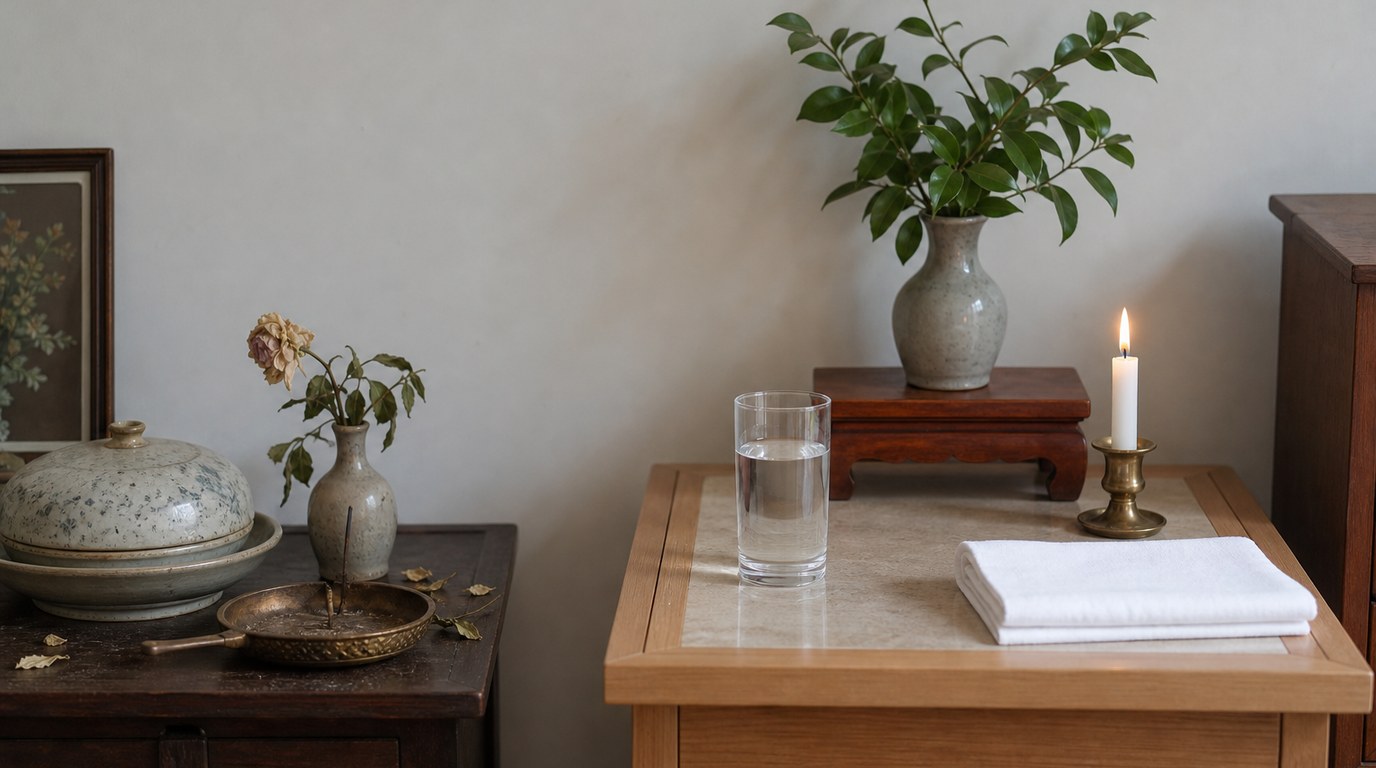
One common mistake is doing too much too soon. If the altar becomes stressful, reduce it to water, light, and a short prayer.
Another mistake is neglecting offerings. Spoiled food, dirty glasses, and dusty spaces can make the practice feel heavy. Set a reminder if needed.
Do not use ancestor veneration to avoid therapy, medical care, or real-life decisions. Spiritual practice should support responsible action, not replace it.
If honoring close relatives feels painful, work with “well ancestors” only. If the space feels unsettling, clean the altar, remove questionable items, pray for peace, and pause until you feel steady again.
A Simple 10-minute Ancestor Honoring Ritual
- Clean the altar surface and take three slow breaths.
- Place fresh water on the altar.
- Light a candle or turn on a safe light.
- Say: “I honor my well ancestors, known and unknown.”
- Thank them for life, strength, lessons, and guidance.
- Ask for wisdom in one specific area.
- Sit silently for two minutes.
- Write down any grounded thoughts or feelings.
- Say: “Thank you. May there be peace.”
- Extinguish the candle safely.
FAQ
Do I Need an Altar to Honor My Ancestors?
No. An altar helps create focus and consistency, but it is not required. You can honor ancestors through prayer, visiting graves, cooking family recipes, telling stories, lighting a candle, researching genealogy, or living according to the values you want to carry forward.
Who Should I Put on My Ancestor Altar?
Begin with ancestors who feel safe, loving, or spiritually well. This may include grandparents, distant ancestors, unnamed ancestors, adoptive family, cultural elders, or lineage guides. You do not have to include anyone who caused harm or feels emotionally unsafe to approach.
Can I Honor Ancestors If My Family History Is Painful?
Yes, but move gently. Focus on well ancestors, healed ancestors, or those beyond the known trauma. You can pray for healing without inviting harmful behavior into your space. If the practice stirs intense distress, pause and seek support from a trusted counselor, elder, or spiritual guide.
How Often Should I Give Offerings to Ancestors?
Start with a rhythm you can maintain. Weekly offerings are enough for many beginners. Some people offer water daily; others honor ancestors on Sundays, new moons, birthdays, death anniversaries, or cultural holy days. Consistency and cleanliness matter more than frequency.
What Should I Say When Honoring My Ancestors?
Speak simply and respectfully. You might say: “Ancestors known and unknown, I honor you with gratitude. Thank you for the life that came through you. Please guide me toward wisdom, healing, protection, and right action. May there be peace between us.”