
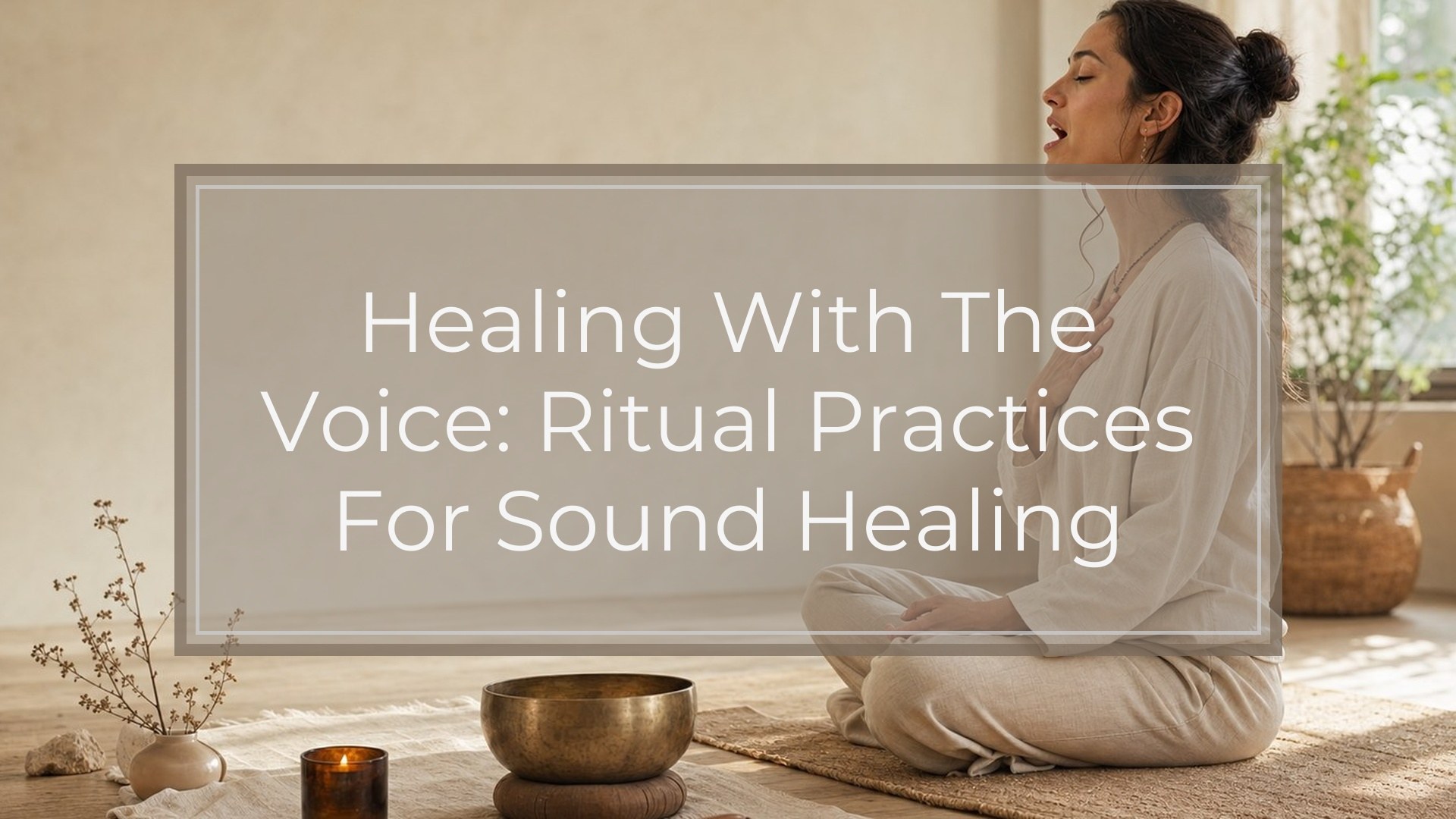
Healing with the voice is the intentional use of breath, sound, words, song, chant, prayer, or humming to support spiritual balance and emotional release. In ritual practice, the voice is not treated as entertainment. It is a living offering: breath shaped into vibration, vibration shaped by intention, and intention carried into the space.
You can practice quietly at home, before an ancestor altar, during meditation, or as part of prayer. The practice may be as simple as humming with one hand on the heart, speaking a blessing over water, chanting a sacred phrase, or singing to the ancestors. It does not require a beautiful voice. It requires sincerity, presence, and respect.
What Healing with the Voice Means
Healing with the voice begins with a simple understanding: your voice is your breath made audible. When you speak, chant, hum, cry, sing, or pray, something internal becomes external. This can help you name what is heavy, call in what is needed, and make your presence known in a sacred way.
In spiritual practice, the voice often carries four things at once: breath, vibration, intention, and relationship. Breath steadies the body. Vibration gives feeling a form. Intention directs the sound. Relationship connects the sound to Spirit, ancestors, the land, the heart, or the divine as you understand it.
The goal is not performance. The goal is alignment.
Why the Voice Is Used in Ritual and Prayer
Across many traditions, the voice is used because sound marks a shift from ordinary time into sacred time. A prayer spoken aloud can feel different from a prayer only thought. A chant repeated gently can gather scattered attention. A song offered at an altar can become a gesture of love, remembrance, or request.
Voice also helps ritual become embodied. Instead of keeping spirituality only in the mind, vocal sound involves the lungs, throat, mouth, chest, and belly. This can make prayer feel more grounded and present.
It is wise not to overstate what voice work can do. It is not a replacement for medical care, therapy, or community support. It is a spiritual practice that may support reflection, release, connection, and devotion.
Preparing Yourself and Your Space
Before beginning, choose a place where you can sound without feeling rushed or judged. This might be your ancestor altar, a quiet room, your bedside, or a clean corner with a candle and a bowl of water.
Take a few moments to settle. Turn off distractions. Sip water. Loosen your jaw, shoulders, and belly. If you are at an ancestor altar, refresh the space if needed: straighten photos, replace old offerings, light a candle safely, or place a fresh glass of water.
Set one clear intention. For example: “May this sound bring peace to my heart,” or “May my voice honor the well and loving ancestors.” Keep the practice gentle. If your throat hurts, stop. If strong emotions arise, slow down and breathe.
Ways to Practice Healing with the Voice
There are many ways to practice healing with the voice. Choose the method that feels honest and appropriate for the moment.
| Practice | How to use it | Good for |
|---|---|---|
| Humming | Hum softly on one steady tone | Grounding, calming, beginning |
| Chanting | Repeat a word, name, or phrase | Focus, prayer, devotion |
| Toning | Sing one open sound like “ah” or “om” | Releasing emotion, sensing vibration |
| Spoken prayer | Speak directly to Spirit or ancestors | Requests, gratitude, blessing |
| Singing | Offer a song, hymn, lullaby, or ancestral song | Love, remembrance, grief |
| Call and response | Speak a line and answer it yourself or with others | Community, affirmation, rhythm |
A short practice might begin with three deep breaths, then one minute of humming, followed by a spoken prayer. A deeper practice might include chanting a phrase for seven repetitions, pausing in silence, then journaling what you felt.
If you are unsure where to start, hum. Humming is simple, private, and easy to soften. Let the sound vibrate in the lips, chest, or face without forcing volume.
A Simple Voice Healing Ritual for an Ancestor Altar
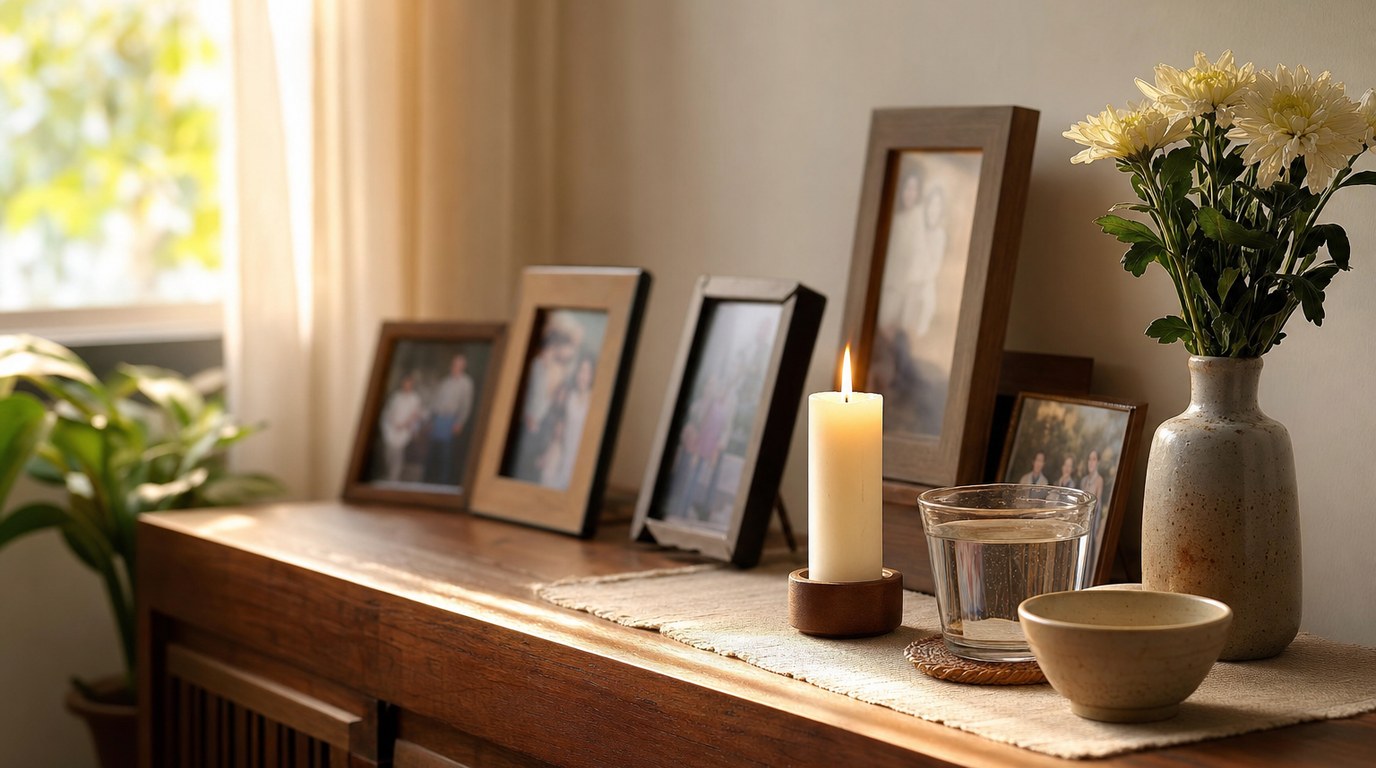
This ritual is designed for a home ancestor altar and can be adapted to your tradition, family customs, or spiritual path.
- Prepare the altar. Place fresh water on the altar. Light a candle if it is safe. You may add flowers, food, incense, or another respectful offering.
- Greet the ancestors. Stand or sit before the altar. Say: “I greet my well and loving ancestors. I come with respect, humility, and an open heart.”
- Breathe and listen. Take three slow breaths. Notice the room, your body, and the feeling around the altar. Do not rush into sound.
- Begin with humming. Hum softly for one to three minutes. Let the sound be low and steady. Imagine the vibration clearing the path between your heart and your words.
- Speak your intention. Say one clear sentence, such as: “May this voice carry healing through my family line,” or “May peace be strengthened among the living and the dead.”
- Offer a chant or song. Repeat a short phrase seven times, such as “May we be whole,” “I remember you,” or a sacred phrase from your own tradition. You may also sing a family song, hymn, or lullaby.
- Pause in silence. After the sound, sit quietly. Notice any emotion, memory, warmth, resistance, or calm.
- Close with gratitude. Say: “Thank you for hearing me. May this offering be received in love. May I walk forward with wisdom.”
When finished, let the candle burn only while attended. Leave the water for a set time according to your practice, then dispose of it respectfully.
Choosing Words, Chants, and Sounds

Choose words that are simple enough to repeat without strain. A good phrase is clear, respectful, and aligned with your intention. Examples include: “Peace in my heart,” “Bless this home,” “Guide my steps,” “I honor my people,” or “May love move through this line.”
You can also use names of well and loving ancestors, sacred names from your tradition, or sounds without words. Open vowels like “ah,” “oh,” and “mmm” work well because they are easy to sustain.
Avoid using chants from closed traditions you have not been invited or trained to practice. Respect matters more than novelty.
What to Notice During and After Voice Work
During the practice, notice where the sound vibrates. Is it in your throat, chest, lips, belly, or head? Notice whether the sound feels easy, tight, emotional, warm, or distant.
Afterward, pay attention to subtle changes. You may feel calmer, tearful, tired, clearer, or unchanged. All of these are valid. Write down any memories, dreams, phrases, or sensations that stand out. Integration is part of the ritual. Drink water, rest your voice, and return gently to daily life.
Common Mistakes to Avoid
Do not force your voice to be loud, beautiful, or dramatic. Strain interrupts the practice and can hurt your throat. Do not treat voice work as a guaranteed cure or a substitute for needed care.
Avoid copying sacred songs without understanding their origin or permission. Avoid rushing the silence after sound; that pause is often where insight settles. Also avoid judging yourself. A shaky voice, a whisper, or a single honest word can be a powerful offering.
FAQ
Do I Need to Be a Good Singer to Practice Healing with the Voice?
No. Healing with the voice is not about musical skill. Humming, whispering, speaking, chanting one note, or repeating a simple prayer can all be meaningful. The most important qualities are sincerity, presence, breath, and respectful intention.
Can I Use Voice Healing at My Ancestor Altar?
Yes. The ancestor altar is a natural place for voice work because it centers remembrance, offering, and relationship. You can hum, pray aloud, sing a family song, speak names, or chant a blessing. Keep the tone respectful and invite only well and loving ancestors.
What Should I Say During a Voice Healing Ritual?
Use simple words that match your purpose. You might say, “May peace fill this home,” “I honor those who came before me,” or “Guide me with wisdom.” If words feel difficult, begin with humming or an open sound until a phrase comes naturally.
How Long Should a Voice Healing Practice Last?
A useful practice can be as short as three minutes. Begin with breath, hum or chant for a short time, then sit in silence. Longer rituals may last 15 to 30 minutes, but consistency and sincerity matter more than duration.
Is Healing with the Voice the Same as Sound Healing?
It is one form of sound healing. Sound healing can include bowls, bells, drums, rattles, tuning forks, or recorded tones. Healing with the voice specifically uses your own breath and vocal sound, making it especially personal, embodied, and accessible for home ritual practice.