
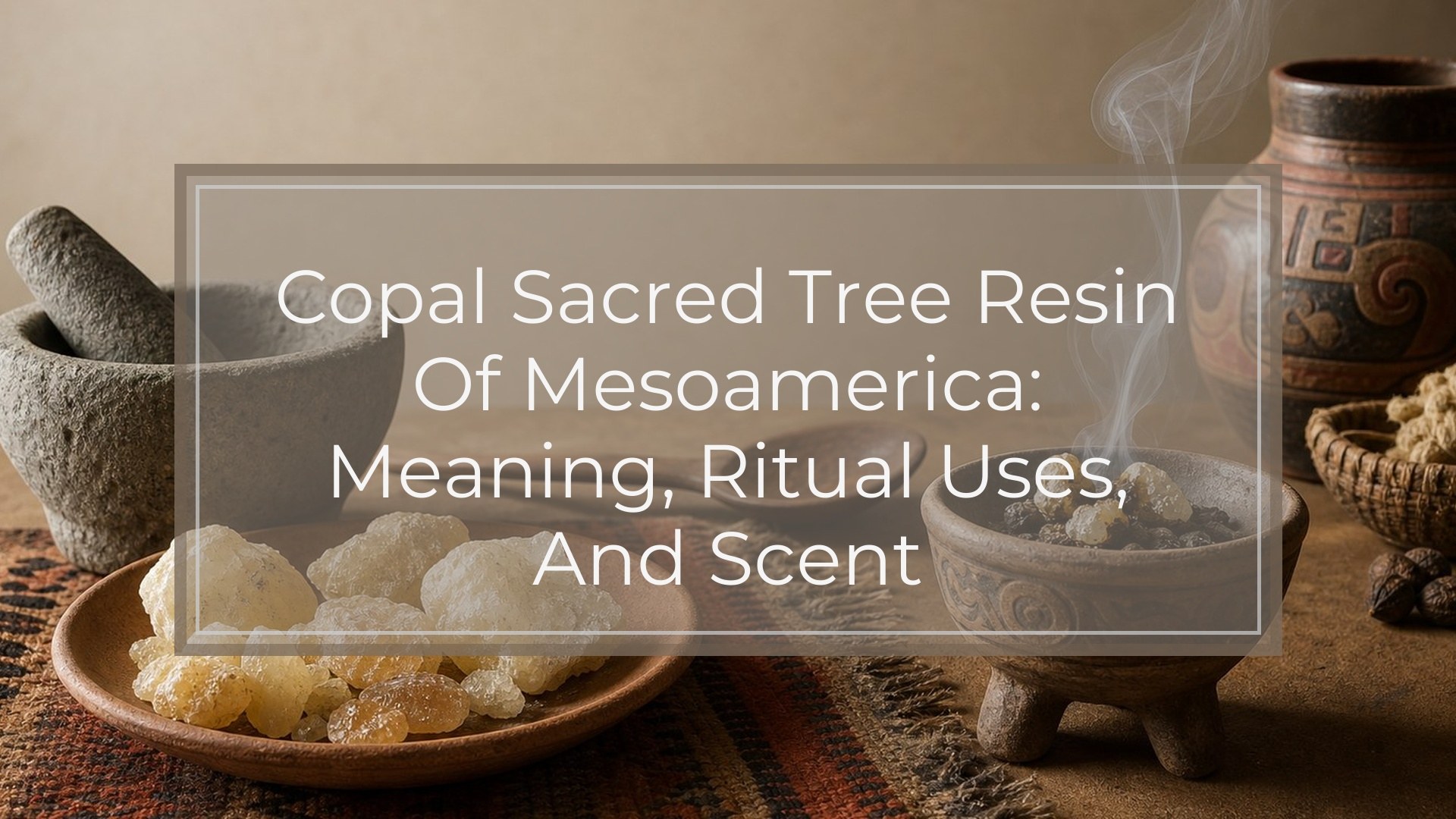
Copal is a sacred tree resin used as incense in Mesoamerican spiritual life, home prayer, cleansing, and offerings. When warmed or burned, it releases fragrant smoke that many practitioners treat as a carrier for prayer, gratitude, memory, and purification. The phrase “copal sacred tree resin of Mesoamerica” points to both a material and a living lineage of use: resin gathered from trees, offered through smoke, and respected as more than a pleasant scent. For ancestor altar work, copal can mark sacred time, cleanse the space, and create a devotional atmosphere when used with care, humility, and attention to safety.
What Is Copal Resin?
Copal is an aromatic resin produced by certain trees, especially species in the Bursera family in Mexico and Central America. It may appear as pale yellow, white, amber, or darker hardened pieces, depending on the tree, age, region, and preparation. Unlike a loose herb, copal is a tree exudate: a hardened sap-like substance that softens and smokes when heated.
In ritual use, copal is usually burned on charcoal, placed in a heat-safe burner, or used in blended incense. Its value is not only botanical. Copal is honored as a material that carries offering, scent, and smoke into sacred relationship.
Why Copal Matters Spiritually
Copal matters because it transforms. A small piece of resin becomes smoke, fragrance, and atmosphere. In many spiritual settings, that transformation is understood as a bridge between the visible and invisible: the home and the altar, the living and the dead, the spoken prayer and the unseen world.
For ancestor veneration, copal can help create a clean and intentional ritual field. Lighting it may signal that ordinary time has shifted into devotional time. Its smoke can accompany prayers of remembrance, offerings of water or food, seasonal observances, or moments of asking for guidance.
Copal is not a magic shortcut. Its power comes through relationship, reverence, and consistent practice.
Copal in Mesoamerican Ritual Context
Copal has deep roots in Mesoamerican ceremonial life, including among Nahua, Maya, Zapotec, Mixtec, and other Indigenous peoples, though practices are not identical across communities. Historically and today, copal may be offered in temples, homes, graveside observances, healing contexts, feast days, and ceremonies connected with ancestors, saints, land, and divine beings.
It is important not to flatten these traditions into one simple “Mesoamerican ritual.” Copal’s meanings vary by people, place, language, and lineage. For many, it remains a living sacred substance, not an aesthetic accessory.
A respectful home user can appreciate copal without imitating closed ceremonies or claiming authority over traditions they have not inherited or been taught.
Key Traits: Scent, Smoke, and Forms of Copal
Copal’s scent is often bright, resinous, lemony, pine-like, slightly sweet, or earthy. White copal is commonly associated with a cleaner, lighter fragrance, while darker copal may smell deeper, warmer, or more balsamic. Exact scent varies widely.
Common forms include raw resin tears or chunks, powdered copal, incense sticks, cones, and blends. Raw resin gives the most direct experience but usually requires charcoal or another safe heat source. Sticks and cones are easier for beginners, though they may contain binders, perfumes, or other ingredients.
Good copal should smell alive and resinous, not chemically sharp. For altar work, choose a form you can burn safely and consistently.
How Copal Is Used on an Ancestor Altar
On an ancestor altar, copal can serve as an offering, a purifier, and a signal of presence. Before prayer, a small amount of smoke may be used to cleanse the altar surface, photos, candles, flowers, or offering bowls. During prayer, copal can accompany spoken names, songs, silence, or gratitude.
A simple practice might include lighting a candle, offering fresh water, placing food or flowers, and burning a small piece of copal while greeting the ancestors. The smoke is not meant to “force” contact. It is a gesture of welcome, respect, and remembrance.
If you maintain a daily altar, copal does not need to be burned every time. It may be reserved for special prayers, family anniversaries, feast days, cleansing after conflict, or moments when you want to mark deeper devotion.
Practical Examples of Copal Ritual Use
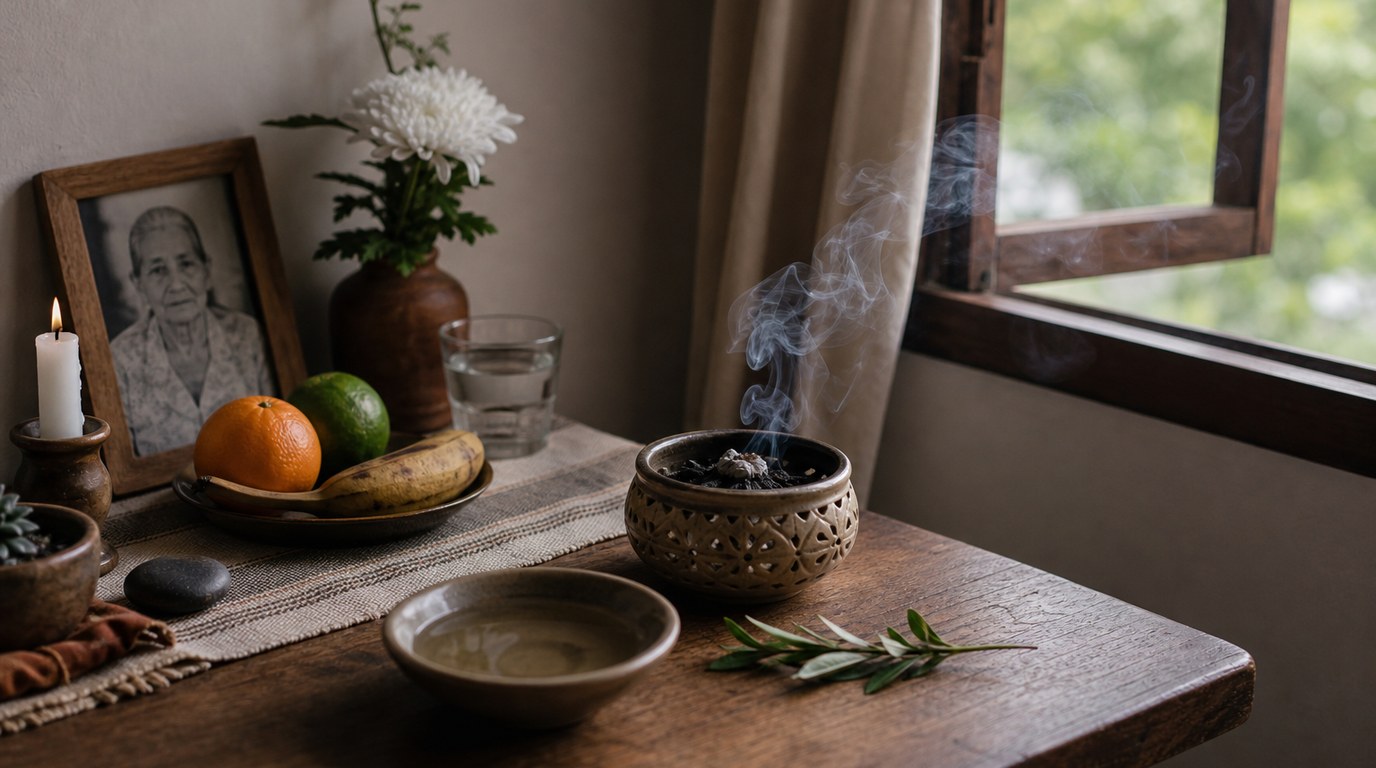
For a weekly ancestor offering, place fresh water on the altar, speak the names of remembered dead, and burn a small amount of copal while offering thanks.
For cleansing a new altar space, open a window, light copal safely, and let the smoke move gently around the altar area while you pray for clarity, protection, and right relationship.
For grief work, sit before the altar with a photo or meaningful object. Let the scent of copal support steady breathing as you speak honestly to the dead.
For seasonal remembrance, use copal with marigolds, candles, bread, fruit, or other culturally appropriate offerings connected to your family and tradition.
Safety, Sourcing, and Respectful Use
Burn copal only in a heat-safe vessel, away from curtains, papers, pets, children, and unstable surfaces. Charcoal can become extremely hot, so place it on sand, ash, or a proper incense burner. Ventilate the room, and avoid smoke if you have asthma, respiratory sensitivity, migraines, or smoke-sensitive household members.
Use a small amount. Sacred smoke does not need to fill the whole home.
Source copal from sellers who are transparent about origin, harvesting, and community relationships when possible. Avoid treating Indigenous sacred materials as trends. Learn from reputable sources, support Indigenous and local makers where appropriate, and do not copy ceremonies that are closed or require initiation.
Copal Compared with Related Ritual Incense Materials
Copal is often compared with frankincense, myrrh, benzoin, dragon’s blood, cedar, sage, and palo santo. Like frankincense and myrrh, it is a resin burned for sacred fragrance. Unlike many woods and leaves, copal melts and smokes as hardened tree resin.
For Mesoamerican-rooted altar work, copal carries specific cultural resonance. For other traditions, frankincense, myrrh, cedar, or local herbs may be more appropriate. The best choice depends on lineage, purpose, safety, and relationship—not popularity.
How to Choose Copal for Home Ritual
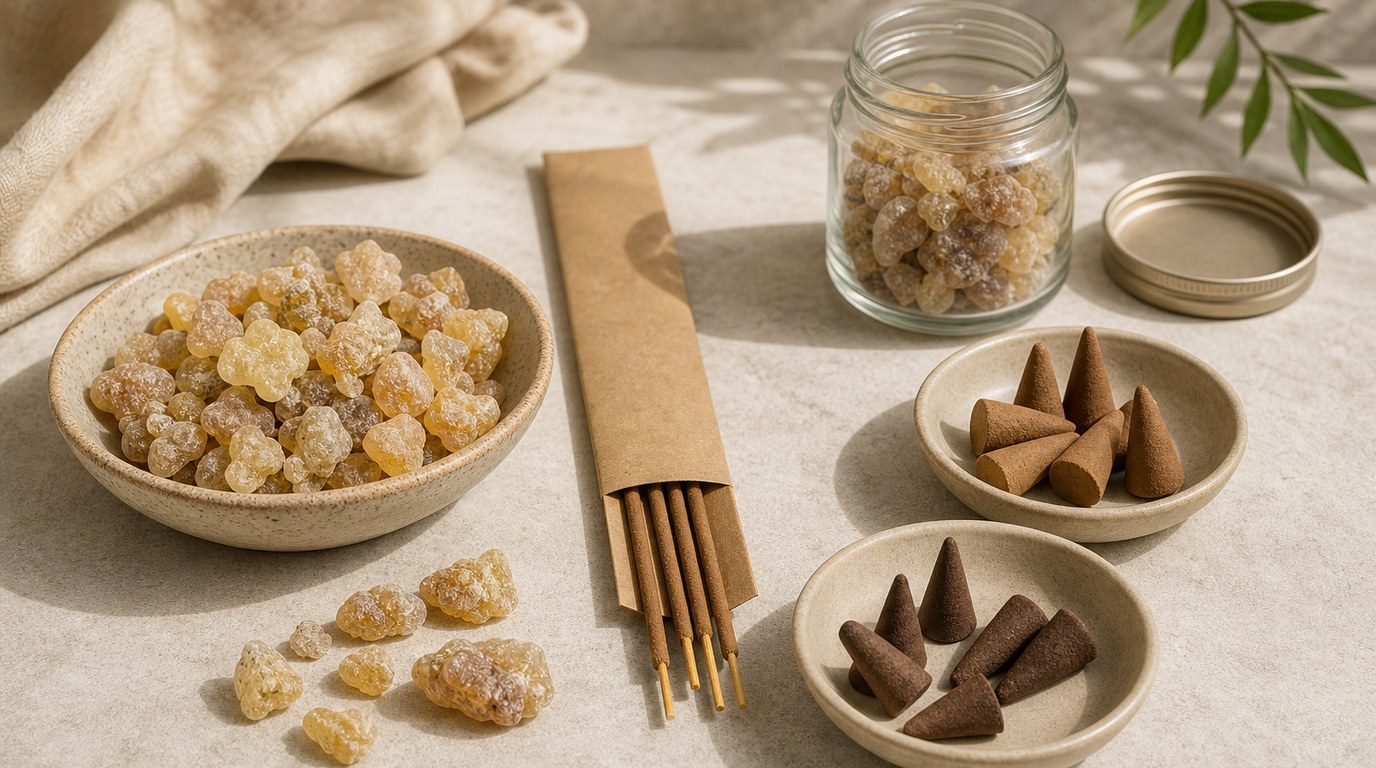
Choose copal based on purity, scent, form, and ethical comfort. Raw resin is ideal if you already use charcoal safely. Sticks or cones are practical if you need a simpler option. Look for products labeled with origin and ingredients, not vague “mystic incense” branding.
Buy small amounts first. Notice whether the scent supports prayer or overwhelms the room. If possible, choose copal from responsible harvesters or vendors who respect the communities and lands connected to the resin.
When Copal Is Most Relevant
Copal is most relevant when you want to make prayer visible through smoke, mark an altar as sacred, cleanse a ritual space, or offer fragrance to ancestors and spirits. It is especially fitting for remembrance, gratitude, transition, and devotional focus.
It may be less relevant when smoke is unsafe, when another incense belongs more naturally to your lineage, or when the desire is only decorative. Copal asks for intention, not casual consumption.
FAQ
Is Copal the Same as Frankincense?
No. Copal and frankincense are both aromatic tree resins used as incense, but they come from different trees, regions, and ritual histories. Frankincense is strongly associated with Africa, Arabia, and Christian liturgical traditions. Copal is especially connected with Mesoamerican sacred use.
What Does Copal Smell Like?
Copal often smells bright, resinous, citrusy, pine-like, slightly sweet, or earthy. White copal may feel lighter and cleaner, while darker pieces can smell richer and warmer. The scent depends on the tree species, region, age of resin, and whether it is pure or blended.
Can I Use Copal for Ancestor Offerings?
Yes, copal can be used respectfully for ancestor offerings, especially as fragrant smoke accompanying water, candles, flowers, food, prayer, or remembrance. Use it as an offering of attention and reverence. Avoid claiming ceremonies that are not yours, and adapt your practice to your own lineage.
Do I Need Charcoal to Burn Copal?
Raw copal resin usually needs charcoal or another safe heat source because it does not burn like a stick of incense by itself. However, copal also comes in sticks, cones, and blends that are easier to light. Always use a heat-safe burner and proper ventilation.
Is Burning Copal Safe Indoors?
It can be safe indoors when used sparingly with ventilation and a heat-safe setup. Keep it away from flammable items, children, and pets. Avoid burning copal if smoke triggers asthma, allergies, headaches, or respiratory issues. Never leave charcoal or burning incense unattended.
Is It Cultural Appropriation to Use Copal?
It depends on how it is used. Respectful use means learning its context, sourcing thoughtfully, avoiding closed ceremonies, and not presenting yourself as an authority in traditions you do not belong to. Copal should be approached as a sacred material with living cultural roots, not a trend.