
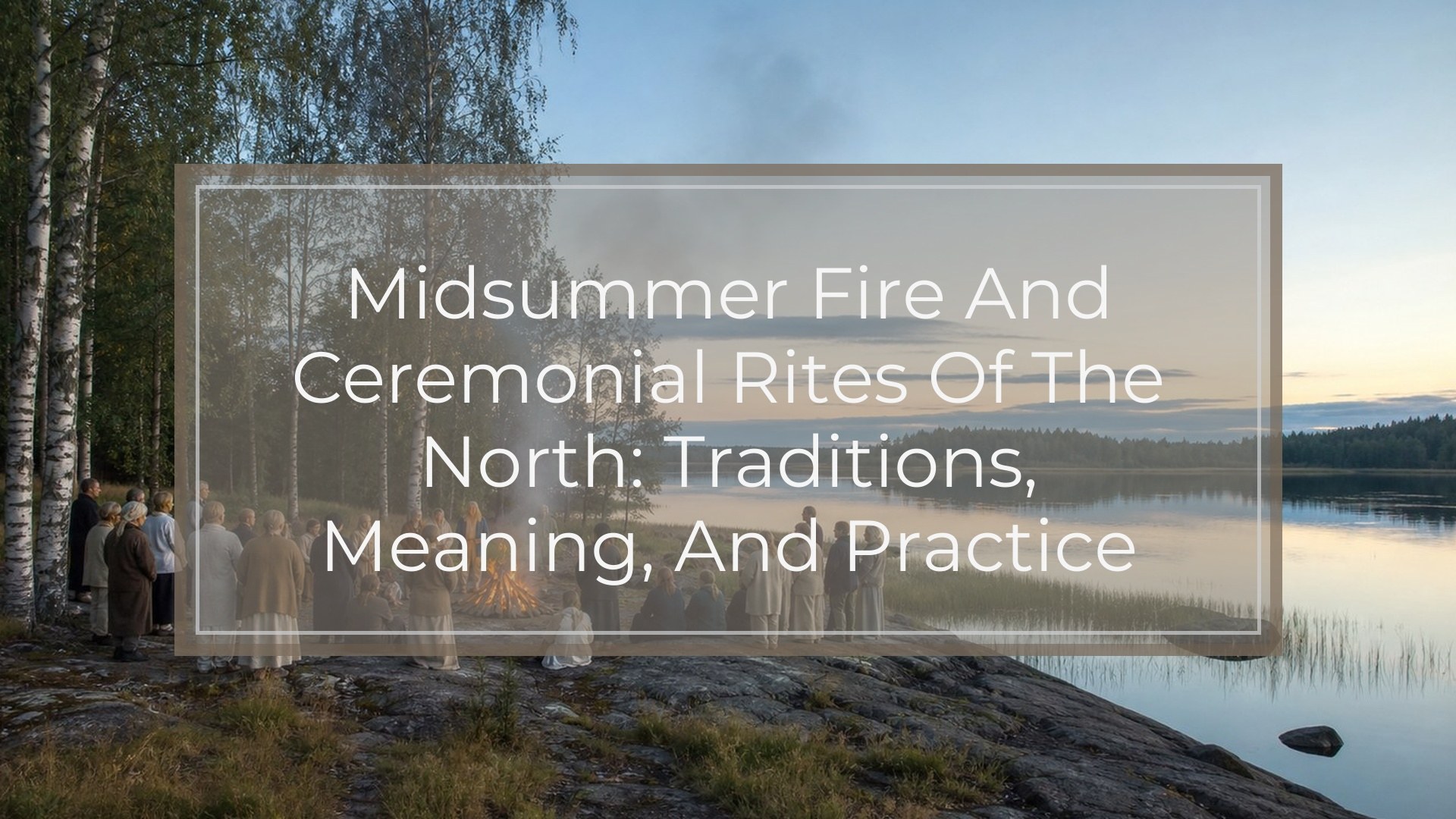
Midsummer fire and ceremonial rites of the north are seasonal practices centered on the year’s brightest threshold: the summer solstice and the days surrounding it. Across northern Europe and neighboring regions, communities have marked this time with bonfires, singing, gathering herbs, visiting water, making offerings, and honoring kin.
Spiritually, midsummer fire is not only celebration. It is a way of meeting abundance, protection, fertility, memory, and renewal at the height of light. For modern practitioners, these rites can be approached respectfully through safe flame, simple offerings, ancestor altar work, and attention to the land and traditions being referenced.
What Midsummer Fire Rites Are
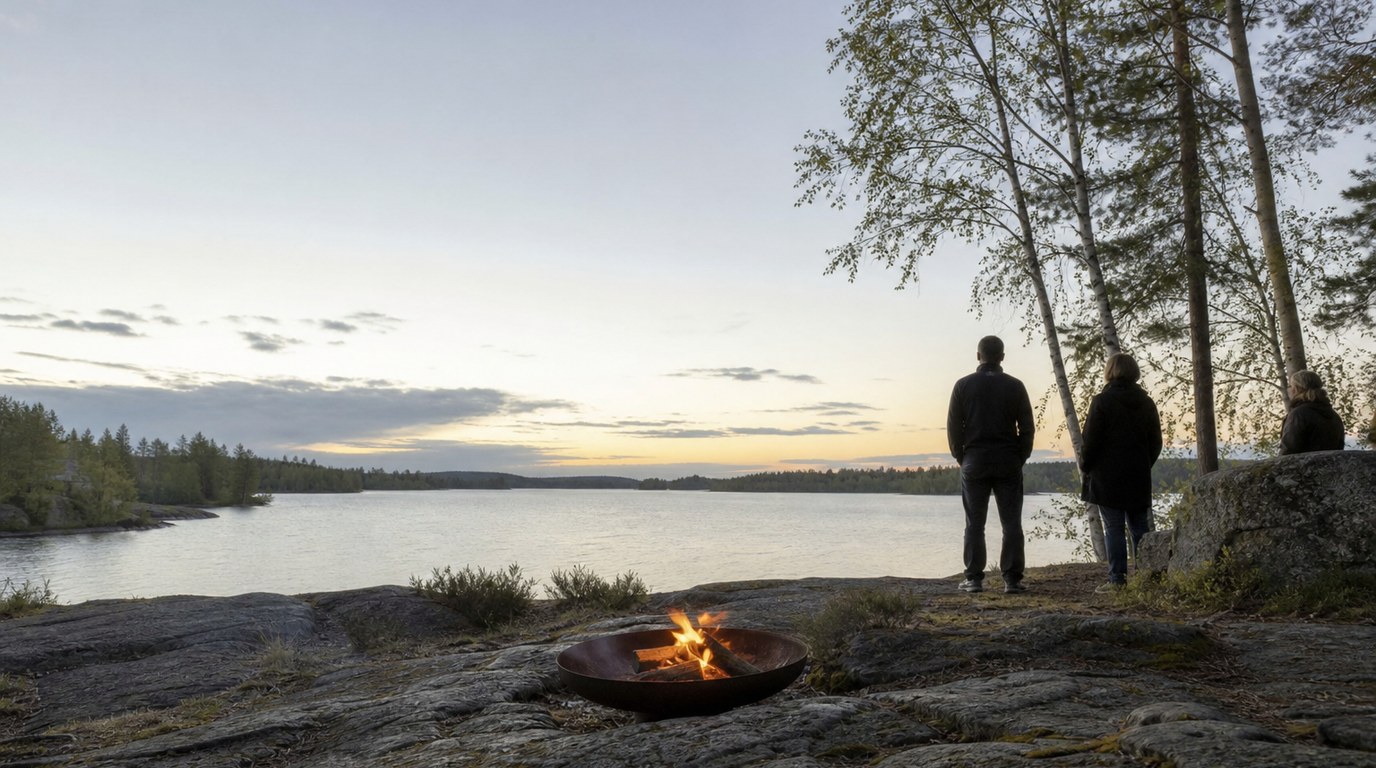
Midsummer fire rites are ceremonies that align human life with the peak of solar strength. In northern regions, where winter darkness is long and dramatic, the return and fullness of light carries practical and spiritual weight. Midsummer marks a turning point: the sun is strongest, the land is alive, and the year quietly begins its movement back toward darkness.
The fire is often the visible heart of the rite. Around it, people gather, speak blessings, sing, feast, court, remember the dead, and ask for protection over homes, animals, crops, and families. These practices vary by place, language, and religion, but they share a common pattern: the community meets the season through embodied ceremony rather than private thought alone.
Why Fire Became Central to Northern Midsummer Ceremony
Fire belongs naturally to midsummer because it mirrors the sun. At the year’s brightest point, a flame on the ground becomes a human-scale image of celestial power: warmth, illumination, ripening, and life-force. A bonfire also creates a boundary. It gathers people into a circle, marks sacred time, and separates the ceremonial moment from ordinary work.
There are practical layers too. Outdoor fires support communal gathering after long cold seasons. Smoke has been associated in many folk settings with purification and protection, especially for homes, livestock, and fields. Burning old materials can symbolize release, while kindling new flame can mark renewal. Still, fire should not be reduced to one meaning. In northern midsummer rites, it may be solar, protective, communal, romantic, agricultural, ancestral, or all of these at once.
Regional Northern Traditions and Their Shared Themes
Northern midsummer practices are not one single tradition. They include distinct local customs shaped by language, landscape, church history, farming cycles, and older folk practice. In Sweden, Midsommar is widely associated with greenery, song, dancing, feasting, and the maypole, while fire is more prominent in some other Nordic settings. In Finland, Juhannus often includes lakeside bonfires, sauna, birch branches, and time near water. In Norway and Denmark, Sankthans or Sankt Hans may involve bonfires and community gatherings near the shore.
In Baltic regions, midsummer festivals such as Jāņi in Latvia and Joninės or Rasos in Lithuania include wreaths, songs, herbs, fire, dew, and all-night observance. In parts of northern Britain, Ireland, and Scotland, bonfires and hilltop fires have been tied to seasonal blessing, protection, and communal festivity, though local forms differ greatly.
The shared themes are easier to name than a single origin: fire, green growth, water, love, protection, divination, music, kinship, and the presence of the unseen. Midsummer is a threshold, and thresholds invite ritual care.
Common Ritual Elements: Fire, Herbs, Water, Offerings, and Song
Midsummer rites often combine several elements because the season itself feels overflowing. Fire brings focus and transformation. Herbs and flowers carry the vitality of the land at its peak. Water, especially lakes, springs, wells, rivers, sea edges, and morning dew, appears as cleansing, blessing, and life-giving presence. Offerings acknowledge reciprocity: humans receive from land, ancestors, animals, and community, and so they give something back.
Song is equally important. Repeated words, melodies, and dances bind people together and help memory travel across generations. Even when a modern rite is quiet and home-based, spoken blessing or humming can create ceremonial shape.
| Element | Traditional theme | Modern home expression |
|---|---|---|
| Fire | Sun, protection, renewal | Candle, lantern, fire bowl, hearth |
| Herbs | Vitality, blessing, healing | Local flowers, birch, rosemary, mugwort, garden herbs |
| Water | Cleansing, fertility, life | Bowl of spring water, rainwater, or clean tap water |
| Offerings | Reciprocity and gratitude | Bread, milk, honey, berries, flowers, song |
| Song | Memory and community | Chant, prayer, family song, spoken blessing |
Ancestor Veneration at Midsummer
Midsummer ancestor veneration honors the people whose lives made your life possible at the season of fullness. This is not necessarily a somber practice. It can be warm, bright, and grateful: a feast plate, a candle, flowers, fresh berries, and a cup of water placed on an ancestor altar.
Because midsummer emphasizes continuity, it is a fitting time to bless family lines, remember beloved dead, and ask for protection over the living household. You might name ancestors aloud, thank those who tended land or family before you, and ask that harmful patterns be burned away while wisdom remains. Keep the altar simple and sincere. Clean the space, refresh offerings, and remove food respectfully afterward.
A Simple Midsummer Fire Rite for Home Practice
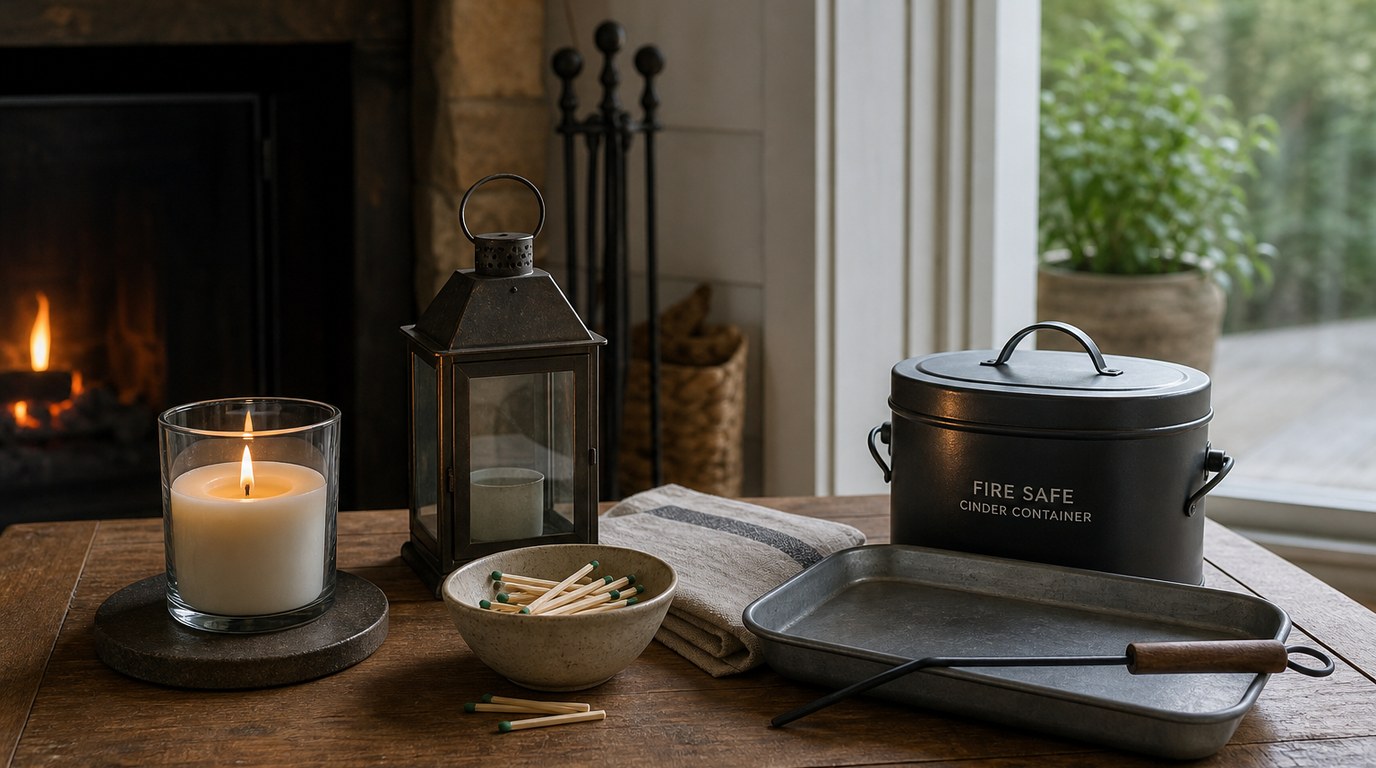
This rite can be done with a candle, lantern, fireplace, or outdoor fire bowl where permitted. Choose safety over drama.
- Prepare the space. Clean a small table or outdoor place. Set a candle or safe flame, a bowl of water, seasonal herbs or flowers, and a small offering such as bread, berries, honey, or milk.
- Name the season. Say: “At the height of light, I honor the sun, the land, my ancestors, and the life that sustains me.”
- Light the flame. Sit quietly. Imagine the fire carrying warmth through your home, body, and family line.
- Offer gratitude. Place the offering near the flame, not in it unless safe and appropriate. Speak thanks for food, shelter, kin, teachers, land, and protection.
- Bless with water or herbs. Touch the water lightly to your hands or doorway. Lift the herbs and ask for health, clarity, courage, and right relationship.
- Honor the ancestors. Name known dead or say “remembered and unremembered ancestors of my line.” Offer light and peace.
- Close carefully. Extinguish the flame when finished. Return natural offerings to compost or the earth where suitable.
Respectful Practice, Cultural Boundaries, and Fire Safety
Respectful practice begins with specificity. Do not claim that all northern peoples practiced the same rite, and avoid borrowing sacred Indigenous, Sámi, or closed ceremonial forms without permission. If a custom belongs to your family, region, or studied path, name it accurately. If not, keep your practice general: honor the season, the land where you live, and your own ancestors.
Fire safety is spiritual responsibility. Follow local laws, avoid flames during drought or wind, keep water nearby, never leave fire unattended, and use candles in stable holders. A small, well-tended flame is more powerful than an unsafe bonfire.
FAQ
What Is the Spiritual Meaning of Midsummer Fire?
Midsummer fire symbolizes the sun at its height, but also protection, renewal, fertility, courage, and communal blessing. Spiritually, it marks a threshold: the fullness of light before the year turns toward darkness. The flame helps people give thanks, release what is stale, and invite vitality.
Are Midsummer Fire Rites the Same in Every Northern Tradition?
No. Northern midsummer rites vary by region, language, religion, and local history. Some emphasize bonfires, others greenery, water, singing, feasting, or divination. It is more accurate to speak of related seasonal patterns than one unified northern midsummer tradition.
Can I Do a Midsummer Fire Ritual Without a Bonfire?
Yes. A candle, lantern, hearth, or even an electric candle can serve as a symbolic fire. The purpose is not the size of the flame but the attention you bring to it. Safety, sincerity, and clear intention matter more than spectacle.
What Should I Put on a Midsummer Ancestor Altar?
Use bright, seasonal items: a candle, fresh flowers, herbs, berries, bread, honey, clean water, and photos or names of ancestors. You may add a small sun symbol or family object. Keep offerings fresh, and dispose of food respectfully after the rite.
Is It Okay to Adapt Northern Midsummer Traditions If They Are Not My Heritage?
It can be, if done with humility and care. Avoid claiming identities, titles, or closed practices that are not yours. Study specific sources, credit the tradition, and focus on universal elements such as gratitude for light, safe flame, seasonal offerings, and honoring your own ancestors.