
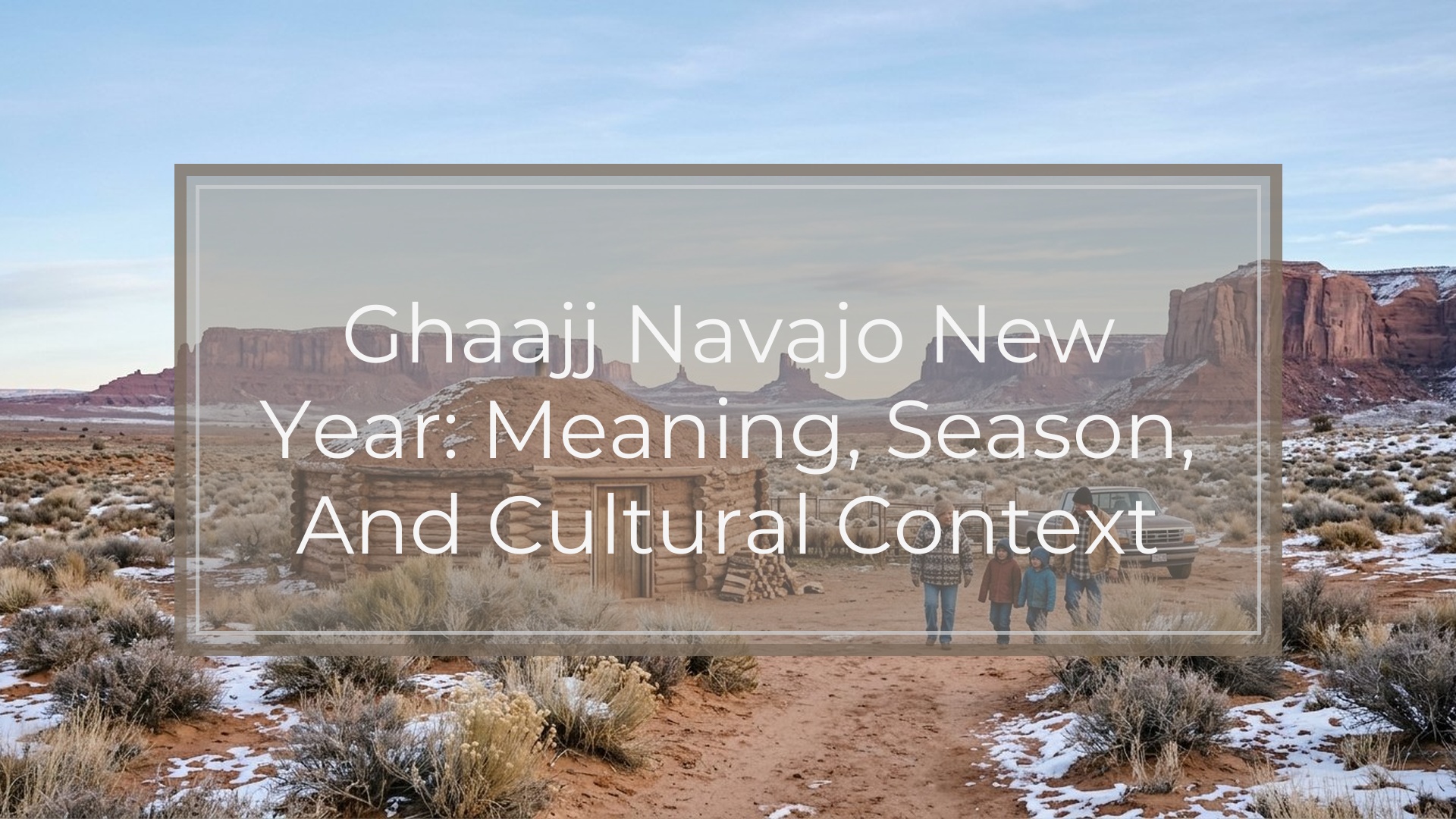
Ghaajj is commonly described as a Navajo autumn season associated with the turning of the year, harvest time, preparation, and renewed balance. In some explanations of Navajo seasonal timekeeping, it is connected with what English speakers may call the “Navajo New Year,” though that phrase can oversimplify a living, community-based tradition.
A respectful answer is: Ghaajj is not simply a holiday date on a calendar. It is better understood as a seasonal concept within Diné, or Navajo, ways of relating to time, land, weather, family, and spiritual order. Meanings may vary by speaker, family, region, and teaching lineage. If you are not Navajo, approach the word with care, humility, and a willingness to learn from Navajo sources rather than turning it into a generic ritual theme.
What Does “Ghaajj” Mean?
“Ghaajj” is often translated or explained as an autumnal period in the Navajo seasonal cycle. It is linked with the time when the heat of summer has passed, crops have been gathered, and people begin turning attention toward winter readiness. In some educational and cultural contexts, Ghaajj is named as the season that marks a kind of new year.
Spelling and pronunciation deserve caution. Navajo, or Diné Bizaad, uses sounds and marks that do not always fit easily into English spelling. You may see variations in spelling depending on the source, keyboard, or teaching context. A written form without the full language context can be incomplete.
Because of that, it is best not to treat “Ghaajj” as a decorative word or slogan. It carries meaning inside a language, land-based worldview, and cultural history. When possible, listen to Navajo speakers, tribal education resources, or language teachers for more precise usage.
How Ghaajj Connects to Navajo New Year
The connection between Ghaajj and “Navajo New Year” comes from Navajo seasonal thinking, where the year is not only a sequence of numbered months but a cycle of weather, planting, harvesting, ceremonies, responsibilities, and relationships. Autumn can be understood as a turning point: what was grown is gathered, what is unfinished is considered, and winter preparation begins.
Some sources describe the Navajo New Year as beginning in the fall rather than on January 1. This does not mean every Navajo person observes a single universal celebration called “Ghaajj” in the same way. Like many Indigenous traditions, practice may differ by family, community, region, and level of language knowledge.
So, the phrase “Ghaajj Navajo New Year” is useful as a starting point, but not as a complete definition. It points toward a seasonal shift, not a commercial holiday template.
Ghaajj at a Glance
| Aspect | Careful Understanding |
|---|---|
| Basic meaning | A Navajo autumn season or seasonal turning |
| Common association | Harvest, readiness, and New Year themes |
| Not the same as | A fixed universal holiday like January 1 |
| Best approach | Learn from Navajo voices and avoid imitation |
| Spiritual tone | Balance, gratitude, preparation, relationship |
Seasonal Meaning: Autumn, Harvest, and Readiness
Autumn carries both practical and spiritual weight in many land-based traditions, including Navajo seasonal understanding. It is a time to notice what the earth has given, what the household has stored, and what responsibilities remain before colder weather arrives.
In this sense, Ghaajj may be associated with harvest, but not only as abundance. Harvest also asks for discipline: food must be dried, stored, shared, or protected. Tools, homes, animals, and family needs must be considered. The season teaches attention.
Spiritually, this can be interpreted as a time of rebalancing. The outer world changes, and people are invited to adjust inwardly as well. Gratitude, preparation, and respect for cycles are central themes, though specific religious meanings should not be assumed without Navajo teaching.
What Ghaajj Is Not: Common Misconceptions
Ghaajj is not simply “Navajo Halloween,” “Native Thanksgiving,” or an Indigenous version of the Gregorian New Year. Those comparisons flatten the tradition and may impose outside categories on Navajo timekeeping.
It is also not a ritual product, altar kit, or aesthetic theme to copy. Using the word to sell generic ceremonies, décor, or “tribal” spiritual experiences would be disrespectful.
Another misconception is that all Navajo people explain or practice Ghaajj identically. Living cultures are not museum displays. Language fluency, family tradition, ceremonial knowledge, religious background, and personal preference all shape how people relate to seasonal teachings.
Finally, Ghaajj should not be treated as secret knowledge to be extracted. Some teachings may be public; others may be family-based, ceremonial, or not meant for outsiders.
Examples of Respectful Ways to Understand the Season
If you are learning about Ghaajj from outside Navajo culture, begin with education rather than performance. Read Navajo-authored or Navajo-approved resources. Support language preservation projects. Pay attention to how Navajo educators describe the seasons in their own words.
You can also reflect on universal seasonal themes without claiming to practice Ghaajj. For example, you might ask: What have I harvested this year? What must be repaired before winter? Which ancestors helped my family survive seasonal hardship? What responsibilities do I carry into the next cycle?
These reflections do not make your practice Navajo. They are simply respectful ways to let learning about seasonal wisdom deepen your own relationship with time, gratitude, and preparation without borrowing ceremonies that are not yours.
Can Ghaajj Inspire Home Ritual or Ancestor Practice?
Ghaajj can inspire careful reflection, but it should not be copied as a Navajo ritual unless you are part of the community and have been taught appropriately. For ancestor practice, the safest approach is to work within your own lineage, household customs, or spiritual commitments.
You might create an autumn ancestor practice focused on gratitude, food storage, family stories, and preparation for winter. Offer a seasonal meal from your own heritage. Clean your altar. Thank those who endured before you. Review what your household needs for the colder months.
The key is honesty: “I am honoring autumn and my ancestors” is different from “I am performing Ghaajj.”
Fact, Interpretation, and What We Should Be Careful About
A careful fact is that Ghaajj is associated with Navajo autumn and is often connected to seasonal New Year ideas. A careful interpretation is that its themes can remind outsiders of harvest, renewal, and readiness.
What we should avoid is claiming one exact date, one universal ceremony, or one authorized meaning unless a Navajo source specifically provides it. We should also avoid blending Ghaajj into unrelated spiritual systems as if all traditions are interchangeable. Respect begins with limits.
Why the Word Matters
Words carry worlds. “Ghaajj” is not only a label for a season; it belongs to Diné language, memory, land, and relationship. Saying the word carefully means recognizing that Navajo timekeeping is not just an alternate calendar but a way of living with place and responsibility.
For spiritual readers, the lesson is humility. Let the word point you toward respect, not possession.
FAQ
Is Ghaajj the Navajo New Year?
Ghaajj is often associated with the Navajo New Year because it marks an autumnal turning in Navajo seasonal understanding. Still, it is more accurate to call it a season or seasonal concept than to reduce it to a single holiday equivalent to January 1.
How Do You Pronounce Ghaajj?
Pronunciation is best learned from a fluent Navajo speaker or reliable Navajo language resource. English spelling can only approximate Diné sounds, and online renderings may vary. If you are unsure, avoid performing the word publicly and focus on learning respectfully.
Do All Navajo People Celebrate Ghaajj the Same Way?
No. Navajo people are not a monolith. Seasonal knowledge, ceremonies, family customs, and language use can vary. Some may speak of Ghaajj as part of cultural education, while others may relate to the season through family, land, or ceremony in different ways.
Can Non-navajo People Observe Ghaajj?
Non-Navajo people should not claim to observe Ghaajj as a Navajo ceremony unless they have a legitimate community relationship and teaching. They can respectfully learn about it, support Navajo language and cultural resources, and reflect on autumn themes within their own traditions.
What Themes Are Associated with Navajo New Year Traditions?
Commonly mentioned themes include autumn, harvest, preparation, renewal, balance, and readiness for winter. These should be framed cautiously, because meanings can depend on Navajo teaching contexts. The safest approach is to learn from Navajo voices and avoid turning themes into copied rituals.