
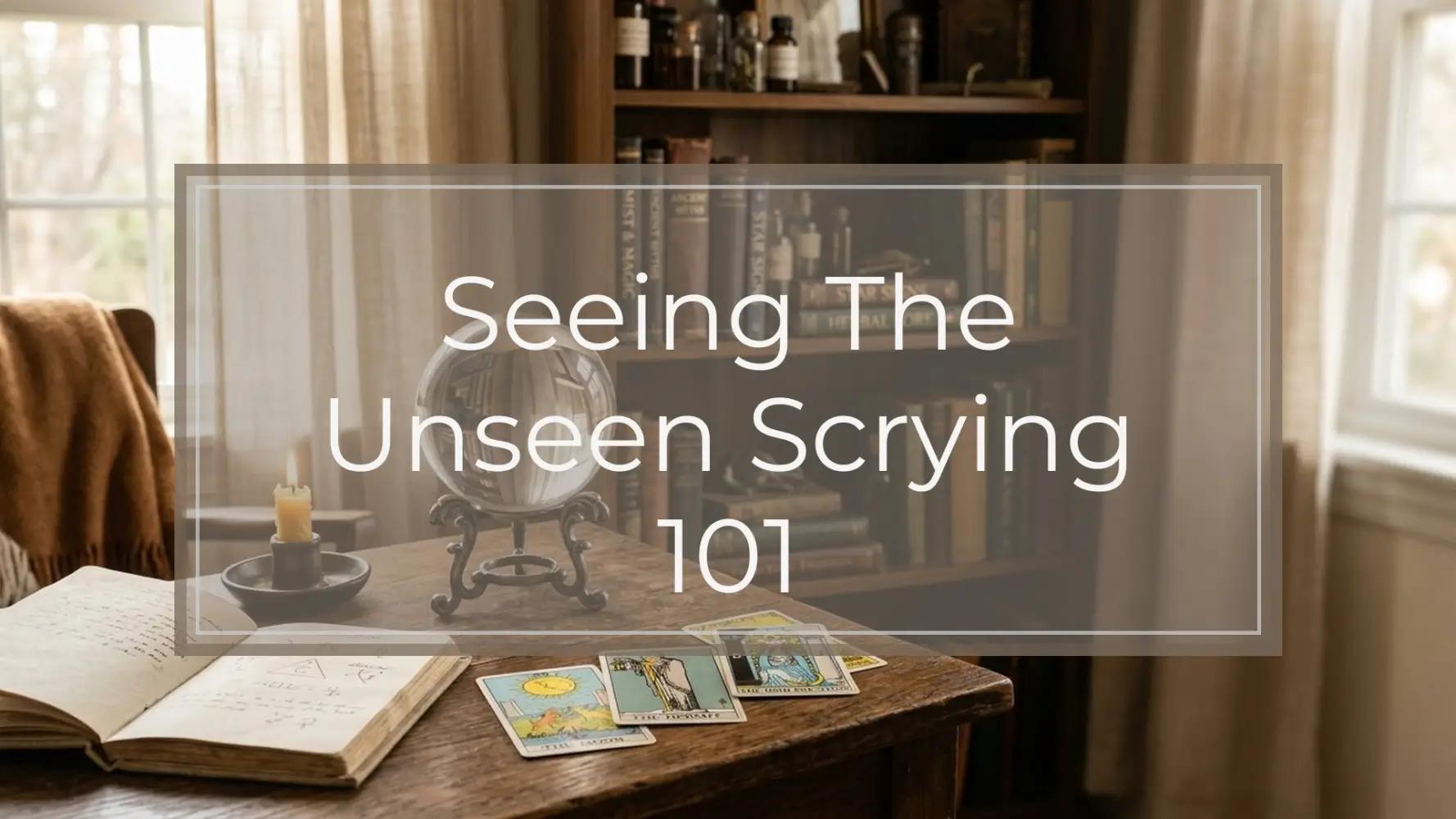
Scrying is a divination practice that uses a reflective or visually absorbing surface, such as water, a mirror, flame, smoke, or crystal, to quiet the mind and notice intuitive impressions. For beginners, the goal is not to force visions but to create a calm setting, gaze softly, record what arises, and interpret patterns with patience and discernment.
In this seeing the unseen scrying 101 guide, you’ll learn how scrying works, which tools are easiest to start with, how to prepare your space, and how to make sense of symbols without overreaching. Scrying does not require special powers, expensive supplies, or dramatic movie-like visions. Often, the first signs are subtle: a feeling, a color, a memory, a word, or a shape that seems to stand out.
What Scrying Is and How to Begin
Scrying is a method of receiving symbolic, intuitive, or subconscious impressions through focused gazing. The tool you look into is not “doing” the divination for you. It gives your eyes and mind a gentle point of focus so ordinary mental chatter can soften.
People practice scrying with many surfaces: a dark mirror, a bowl of water, a candle flame, smoke, a crystal ball, or even a dark window at night. What matters most is not the object itself, but your state of attention.
A beginner-friendly scrying process looks like this:
- Choose one simple tool.
- Create a quiet, low-distraction space.
- Set a clear intention or question.
- Gaze softly without straining.
- Notice impressions as they arise.
- Journal immediately after the session.
The impressions may come as inner images, words, emotions, memories, body sensations, or subtle shifts in the surface. You may not “see” anything at all at first. That does not mean you failed. Scrying is a practice of noticing, not forcing.
A useful first intention is: “Show me what I need to notice right now.” This keeps the session open, grounded, and less pressured than trying to demand a specific prediction.
Common Scrying Tools and What They’re Best For
Many beginners assume they need a crystal ball or antique black mirror to begin. You do not. Simple household items can work well, especially when you are learning how your intuition communicates.
| Scrying Tool | Best For | Beginner Difficulty | Safety or Setup Tips |
|---|---|---|---|
| Black mirror | Deep focus, shadow work, symbolic images | Medium | Use in dim light; avoid staring too intensely |
| Bowl of water | Gentle impressions, emotional insight, lunar or ancestor work | Easy | Use a dark bowl or place it on dark cloth for contrast |
| Candle flame | Focus, meditation, quick symbolic impressions | Easy-Medium | Use a fireproof holder and never leave flame unattended |
| Smoke | Movement-based symbols, release rituals | Medium | Ventilate well; avoid if smoke irritates you |
| Crystal ball | Traditional gazing, light patterns, soft visual focus | Medium | Keep lighting soft; avoid direct sunlight through crystal |
| Dark screen or window reflection | Accessible practice without special tools | Easy | Turn off notifications; practice in a calm setting |
Water scrying and candle scrying are often the easiest starting points. A bowl of water is quiet, inexpensive, and visually soft. A candle flame can help the mind settle quickly, though it requires basic fire safety.
No tool is objectively more powerful for everyone. One person may receive strong impressions from water, while another finds a dark mirror easier. Try one method for several sessions before switching, so you can learn the “language” of that tool.
If you already keep an altar, you can place your scrying tool nearby, but it is not required. A clean table, a dim room, and a notebook are enough.
Preparing Your Space, Mind, and Question
A calm setting helps scrying feel less mysterious and more focused. Choose a place where interruptions are unlikely. Dim lighting is useful because it reduces visual distractions, but the room should not be so dark that you feel uneasy or strained.
Before you begin, set up your tool and take a moment to settle your body. Some people like to cleanse the surface with water, smoke, sound, or a cloth. Others simply wash the bowl, polish the mirror, or light a candle. If your practice includes ancestors, spirit guides, deities, or protective prayers, you may invite support in a way that fits your beliefs. If not, a simple grounding breath is enough.
Avoid scrying when you are highly distressed, exhausted, panicked, or trying to make an urgent life decision. Divination is best used for reflection and pattern recognition, not as a replacement for grounded action or professional support.
Good beginner questions include:
- “What do I need to notice right now?”
- “What symbol can guide me this week?”
- “What energy am I carrying into this situation?”
- “What should I reflect on before taking my next step?”
Try to avoid fear-based or obsessive questions, such as repeatedly asking whether something bad will happen. Yes/no questions can also feel limiting for beginners because scrying tends to speak through symbols, not simple answers.
A Simple Step-by-Step Scrying Practice
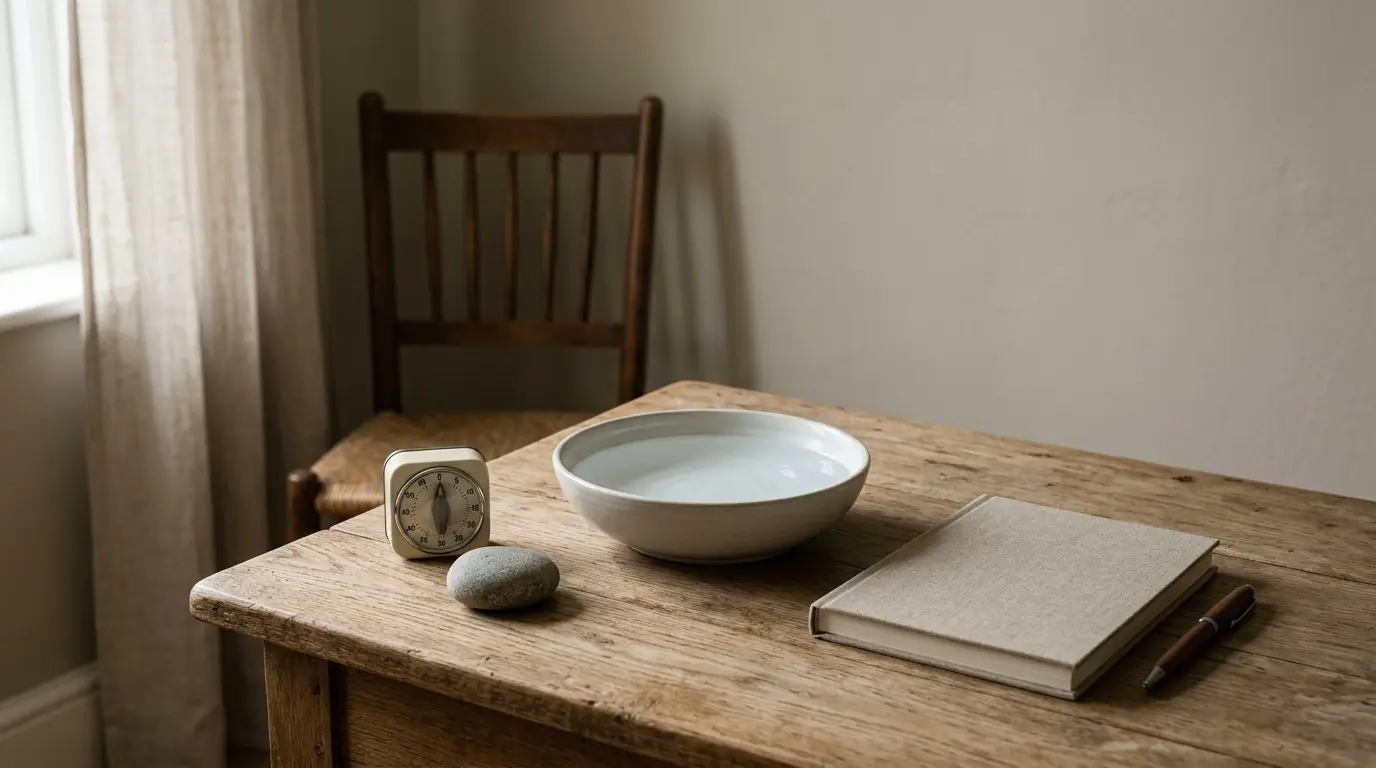
Use this practice for your first few sessions. Keep it short and repeatable.
1. Gather your supplies
Choose one scrying tool, such as a bowl of water, candle, mirror, or crystal. Place a journal and pen nearby. You may also want a timer, a comfortable chair, and optional items such as incense, a grounding stone, or an altar cloth.
Set a timer for 5 to 15 minutes. Beginners often do better with a short session than a long one.
2. Settle your body and state your intention
Take three to five slow breaths. Relax your jaw, shoulders, hands, and belly. Feel your feet or seat supported.
Then say your intention aloud or silently. For example:
“May I receive a clear symbol for what I need to understand today.”
Or:
“I am open to noticing what is useful, grounded, and appropriate for me now.”
3. Gaze softly
Look at your scrying surface with a relaxed gaze. Do not stare aggressively or try to burn a hole through the object with your eyes. Blink naturally.
If you are using water, gaze at the surface or just below it. If using a candle, look near the flame rather than forcing your eyes into the brightest point. If using a mirror or dark screen, let your eyes soften as if you are looking through the surface.
4. Notice without chasing
As you gaze, impressions may arise. You might notice:
- Colors or shadows
- Shapes or faces
- Animals, plants, or objects
- A word or phrase in your mind
- A memory
- A sudden feeling
- A body sensation
- A change in mood or temperature
- Nothing obvious, but a sense of stillness
Try not to chase the first thing that appears. If you see a bird shape, for example, simply note “bird” internally and keep observing. If a memory comes up, notice it without deciding immediately what it means.
5. Close the session
When the timer ends, look away gently. Take a few grounding breaths. You might touch the table, sip water, stretch, or say, “This session is complete.”
If you work with ancestors, guides, or sacred presences, you can offer thanks. If your practice is secular, simply thank yourself for showing up.
6. Journal before interpreting
Write down everything right away, even if it seems random. Do not edit too much. Record the tool, date, question, mood, and impressions.
A beginner’s notes might look like this:
“Water bowl, Tuesday evening. Question: What do I need to notice this week? Saw a dark shape like a doorway, then felt pressure in chest. Word ‘pause’ came up. Remembered a conversation I have been avoiding.”
Later, you might interpret this as a message to slow down before entering a new situation, or to pause before responding emotionally. The key is to record first and analyze second.
Interpreting Symbols Without Overreaching
Scrying symbols are not one-size-fits-all. A snake may mean fear to one person, transformation to another, ancestral wisdom to someone else, and nothing significant in a particular session. Meaning depends on your personal associations, cultural background, emotional response, and the question you asked.
When interpreting, ask:
- What does this image mean to me personally?
- What feeling came with it?
- How does it relate to my question?
- Have I seen this symbol before in dreams, rituals, or daily life?
- Does the message feel grounded or fear-driven?
Common categories of impressions include animals, colors, ancestors, places, weather, objects, numbers, and bodily feelings. If you see a river, for example, you might explore flow, grief, cleansing, movement, or family lineage depending on the session context.
Look for repeated patterns over time. One unclear image in one session is not enough to make a major conclusion. But if you repeatedly see locked doors, hear the word “wait,” and feel tension around a specific decision, that pattern may be worth reflecting on.
Scrying should not be used as a substitute for medical, legal, financial, or mental health advice. It can support self-reflection, but it should not replace qualified guidance or practical decision-making.
Beginner Tips, Safety, and Common Mistakes
Scrying becomes clearer with patience. You are training your attention as much as your intuition.
Helpful beginner tips:
- Keep sessions short at first.
- Use the same tool for several attempts.
- Journal every session, even “nothing happened” sessions.
- Track your mood, question, tool, and later reflections.
- Stay curious rather than trying to prove something.
- Combine openness with healthy skepticism.
Take breaks if scrying causes anxiety, dizziness, headaches, sleep disruption, or obsessive checking. A grounded practice should leave you feeling steady, reflective, or calm—not trapped in fear.
For candles and smoke, use basic safety. Keep flames in fireproof holders, place them away from curtains or loose fabric, and never leave them unattended. Ventilate the room if using incense or smoke, and avoid smoke-based methods if you have sensitivities.
Common beginner mistakes include:
- Staring too hard and straining the eyes
- Expecting cinematic visions
- Asking too many questions in one session
- Interpreting symbols too quickly
- Switching tools every time
- Comparing your experience to someone else’s
- Treating every random thought as a final answer
Scrying is most useful when it is approached as a relationship with symbols. Some sessions may feel vivid. Others may feel quiet. Both can be part of the learning process.
FAQ
What is the easiest scrying method for beginners?
Water scrying is often the easiest method because it only requires a bowl of water, dim lighting, and a quiet space. Candle scrying is also accessible, but it requires careful fire safety.
Do you have to see clear images for scrying to work?
No. Scrying impressions may come as feelings, words, memories, colors, body sensations, or subtle inner images. Clear visual scenes are not required, especially for beginners.
How long should a beginner scrying session last?
Start with 5 to 15 minutes. Short sessions help prevent eye strain, frustration, and overthinking. You can gradually extend your practice if it feels steady and useful.
Can scrying be used with ancestor altar work?
Yes, if it fits your beliefs and practice. A bowl of water, mirror, or candle can be placed near an ancestor altar as a reflective tool. Keep the intention respectful, grounded, and non-demanding.
Is scrying dangerous?
Scrying is generally not dangerous when practiced calmly and safely. Avoid using it obsessively, while distressed, or as a replacement for professional advice. Use fire safety with candles and ventilation with smoke.