

Discussions of Paganism, Wicca, and witchcraft become confusing when the terms are treated as interchangeable. A clearer mental model begins with scope: contemporary Paganism is a diverse movement containing multiple paths and traditions, while Wicca has a more specific place within that landscape as a form of religious witchcraft.
This relationship does not make “Pagan,” “Wiccan,” and “witch” equivalent. Nor should one documented belief, ritual, or community structure be projected onto everyone associated with these terms. The available sources emphasize diversity among Pagan paths and variation in ritual between traditions.
A useful starting map is:
- Paganism: a diverse movement containing many paths and traditions.
- Wicca: one form of religious witchcraft, not another name for all Paganism.
- Witchcraft: a term whose possible religious and nonreligious uses are not fully defined by the supplied evidence. The evidence supports describing Wicca as religious witchcraft, but not treating all witchcraft as Wicca.
With these distinctions in place, the following questions address belief, ritual, authority, community, and entry paths without assuming that one model applies universally.
1. How Are Paganism, Wicca, and Witchcraft Related?
Contemporary Paganism is best understood here as a diverse movement, not a single, internally uniform religion. Harvard’s Pluralism Project describes it as containing many paths and traditions. “Paganism” can therefore function as a broad category, but that category alone does not reveal a particular person’s beliefs, rituals, or community relationships.
Wicca has a more specific place within this landscape. The Pluralism Project identifies it as a form of religious witchcraft, rather than as the whole of Paganism. Calling someone Pagan does not establish that the person is Wiccan. Likewise, a description of Wicca does not necessarily apply to other Pagan paths.
The relationship between Wicca and “witchcraft” also requires careful wording. The evidence supports saying that Wicca is one form of religious witchcraft. It does not support reversing that statement and declaring that everyone associated with witchcraft is Wiccan—or that every use of “witchcraft” describes a religious identity.
One way to keep the distinctions clear is to ask what level each term describes. “Paganism” may refer to the wider, diverse movement. “Wicca” identifies a more particular religious path. “Witchcraft” should not be assigned one fixed identity or meaning beyond what the evidence establishes in a given context.
These distinctions matter because labels do not settle every question about belief or practice. If a source says “Pagan,” readers should not silently substitute “Wiccan.” If the subject is Wicca, readers should not assume that the statement covers the entire Pagan movement. The terms overlap in limited ways, but they are not synonyms.
2. Does Wicca Have a Single Scripture or Central Authority?
Washington’s religious handbook states that Wicca has no specific scriptural text. This is important, but it should be interpreted narrowly.
The absence of a specific scripture means readers should not assume that one text supplies a uniform written standard for every Wiccan tradition. Descriptions of Wicca should instead identify the tradition or community under discussion, rather than presuming that all practitioners refer to a single scriptural source.
This fact alone does not explain how every Wiccan tradition understands authority. The supplied evidence does not establish the leadership structures, decision-making practices, teaching methods, or other sources of guidance used by every community. It would therefore be an unsupported leap to move from “no specific scriptural text” to the claim that Wicca has no authority, organization, or standards of any kind.
The narrower conclusion is the accurate one: Wicca does not have a specific scriptural text, so readers should not look for one scripture that automatically resolves questions across all Wiccan traditions. Further claims about leadership or authority require evidence about the particular tradition or community involved.
3. Do All Pagans or Wiccans Share the Same Beliefs and Rituals?
The evidence does not identify one set of beliefs or practices shared by all Pagans or all Wiccans. Instead, the Pluralism Project describes the Pagan movement as diverse and containing many paths and traditions. It also notes that Pagan ritual varies by tradition.
Specificity is therefore essential. A statement may accurately describe one tradition without describing the wider Pagan movement. Even when a practice is documented in Wiccan life, that does not make it universal among Wiccans, much less among all Pagans.
Belief and ritual should also be treated as separate subjects. A religious label may identify a movement or tradition, but it does not automatically reveal everything an individual believes. Likewise, one ritual example cannot establish a complete belief system. The available evidence supports diversity and ritual variation, not a universal checklist.
When evaluating a claim, ask:
- Is the statement about Paganism broadly or one particular path?
- Is it about Wicca specifically?
- Does it document a ritual, or claim that everyone performs it?
- Does it concern an organization, a community, or an individual?
These questions keep limited examples from becoming broad generalizations. “This tradition does…” is more precise than “Pagans do…” when the evidence concerns only one tradition. Because Pagan ritual varies by tradition, identifying that tradition is necessary context.
4. Is a Full-moon Circle a Standard Wiccan Ritual?
The Pluralism Project gives a full-moon circle as a typical example of Wiccan ritual. This makes Wiccan practice more concrete for newcomers, but the example should not be converted into a universal requirement.
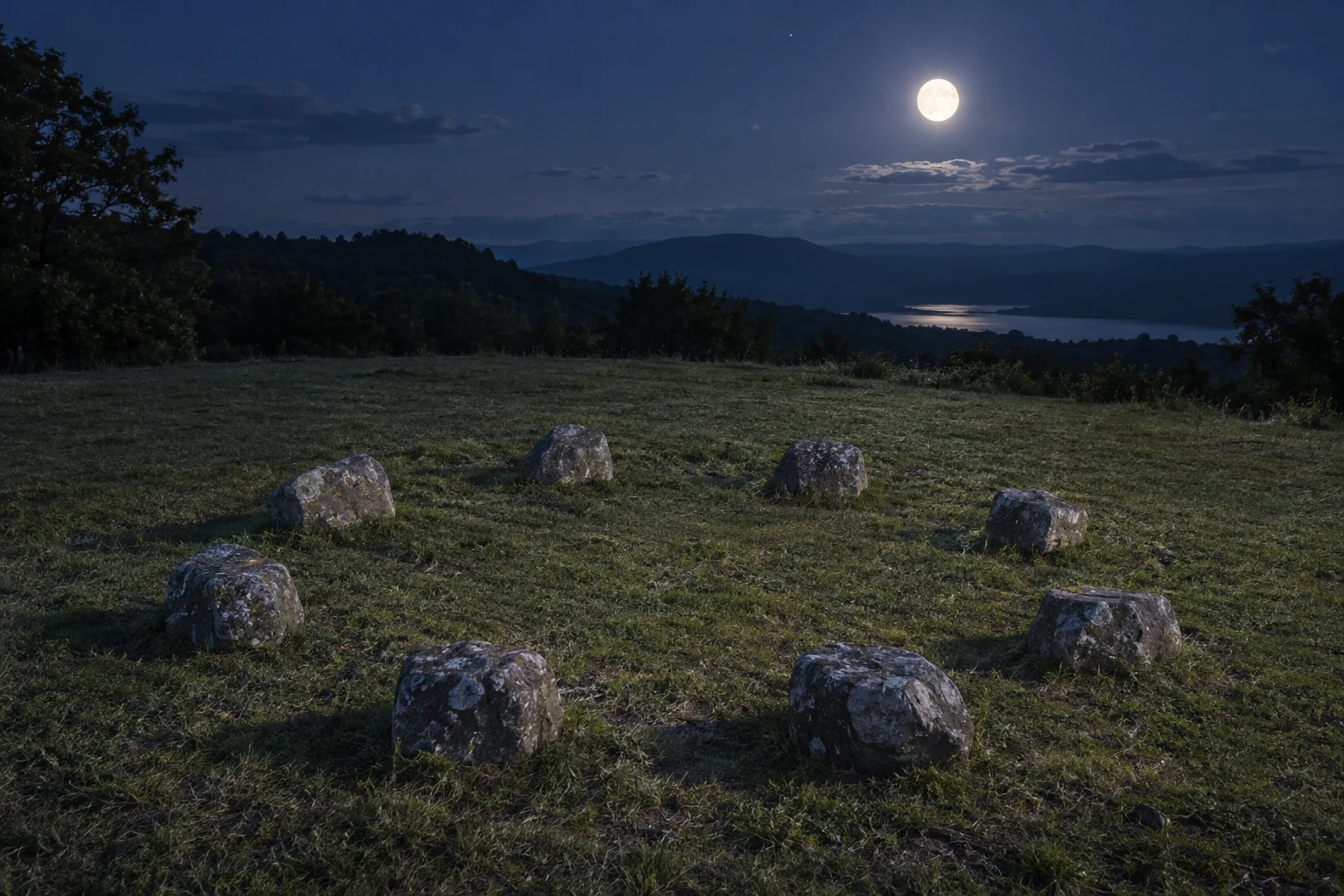
In this context, “typical” identifies a recognizable example. It does not establish that every Wiccan participates in a full-moon circle, that every tradition understands such a circle in the same way, or that the ritual occurs with the same frequency everywhere. The broader evidence that Pagan ritual varies by tradition reinforces the need for this qualification.
The example also does not provide grounds for instructions on performing the ritual. The supplied research documents the full-moon circle but does not explain its elements, state who may conduct it, or specify how different communities approach it.
The most accurate phrasing is therefore: A full-moon circle is a documented example of a typical Wiccan ritual, but the evidence does not establish it as a universal requirement. It illustrates one possible expression of Wiccan practice while leaving room for documented variation among traditions.
5. Are Covens the Only Form of Pagan Community?
Covens are one community context readers may encounter in discussions of Pagan and Wiccan life. The supplied sources, however, do not establish one universal structure, purpose, or method of operation for covens.
The evidence also points beyond the coven as the only possible scale of community. One documented Pagan organization describes itself as serving the needs of a broader community beyond what individual covens can provide. This shows that Pagan organization can occur at more than one level: individual covens may exist alongside organizations concerned with a wider Pagan community.
That contrast has limits. It does not prove that every Pagan tradition uses covens, that every larger organization serves the same functions, or that communities relate to such organizations in a uniform way. It demonstrates organizational variety, not a standard organizational chart for Paganism.
Readers should distinguish among:
- an individual practitioner;
- a particular coven;
- a larger organization; and
- the broader Pagan movement.
A claim about one level should not automatically be applied to another. An organization’s stated role in serving broader needs does not explain how an individual coven operates. Conversely, the existence of covens does not mean larger Pagan organizations are absent or unnecessary. The documented example supports the narrower conclusion that some community needs can extend beyond what individual covens provide.
6. Is There One Standard Way to Enter Paganism or Wicca?
The supplied evidence does not establish one standard route into Paganism or Wicca. That limitation is consistent with the broader picture of Paganism as a diverse movement containing multiple paths and traditions.
A newcomer may encounter references to distinct traditions, rituals, covens, and larger organizations. The sources document variation in ritual, identify the full-moon circle as one Wiccan ritual example, and describe an organization serving needs beyond individual covens. Together, these examples show a varied landscape rather than one uniform point of entry.
They do not establish initiation requirements, membership procedures, or a sequence that every newcomer must follow. Nor do they support instructions for selecting or joining a tradition, entering a coven, or affiliating with an organization.
The most reliable orientation is to determine which particular tradition or community is being discussed before interpreting its expectations. A statement about one Wiccan tradition should not be treated as a rule for all Wiccans. Information from a broader Pagan organization should not automatically be read as the membership process for every coven.
Diversity changes the question. Instead of asking, “How does someone enter Paganism?” as though one process exists, it is more accurate to ask, “What does this particular tradition or community say about participation?” The research presented here does not answer that community-specific question, but it explains why the distinction matters.
7. What Is the Most Accurate Way to Discuss Pagan and Wiccan Life?
Accurate discussion begins by identifying the level of the claim. Is it about the Pagan movement, a specific tradition such as Wicca, a particular community, a larger organization, or an individual practitioner?
These categories should not be collapsed. The Pagan movement contains multiple paths and traditions, while Wicca is one form of religious witchcraft rather than the whole of Paganism. Ritual also varies by tradition, so one documented practice cannot automatically represent everyone.
Different kinds of claims should also remain distinct:
- Identity concerns how a person or group is described.
- Belief concerns what a person or tradition holds or teaches.
- Ritual concerns a form of practice.
- Authority concerns where guidance or standards are located.
- Organization concerns collective or community relationships.
Evidence connecting two of these categories does not necessarily establish the others. For example, documenting a full-moon circle as a Wiccan ritual does not establish a universal belief, authority structure, or membership requirement. Describing a Pagan organization’s broader role does not define how every tradition or coven is organized.
Qualified language is therefore a mark of accuracy. Phrases such as “some Pagans,” “may include,” “in this tradition,” “one documented example,” and “this organization describes” preserve the limits of the evidence.
The central principle is simple: identify who or what is under discussion before making a claim about identity, belief, ritual, authority, or organization. Where the evidence does not establish universality, the language should not imply it.